Republican Socialism Is Bad For America · Episode 05
Golden Shares, Golden Friends
DOGE says it has saved taxpayers $8.5 billion. Congress's own watchdog looked at DOGE's "Wall of Receipts" claiming $110 billion and found some of those savings "incorrect or lack supporting evidence" — including $27.4 billion tied to 2,503 contracts that were never actually terminated. At the same time, the federal government is quietly buying equity stakes in private companies: Trilogy Metals, Lithium Americas, MP Materials, Intel, and more.
Every number below traces to a primary receipt. Click through.
Watch
Rough cut preview · real assets, sequenced by production order · not the final render.
Long-form · runtime pending final render. Narration is recorded (see timed captions) — visual production has not started. Vertical and square cuts below will play from the same file once rendered.
Shorts & cuts
The Visual Basis (25 real production stills)
Every frame below is an actual rendered beat from this episode's build. These are the raw material the cut is built from, not stock or AI-generated art.

The Story
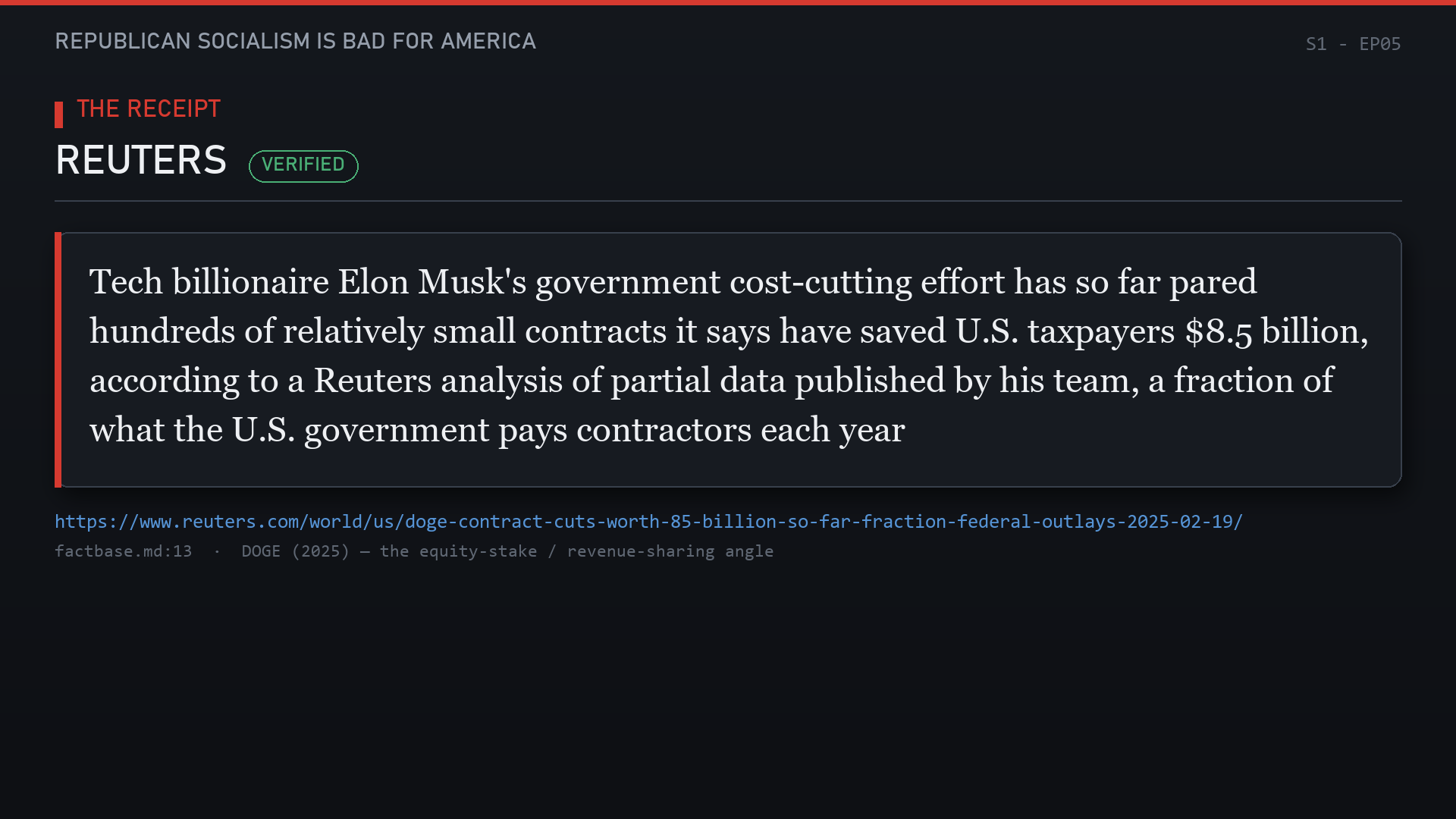
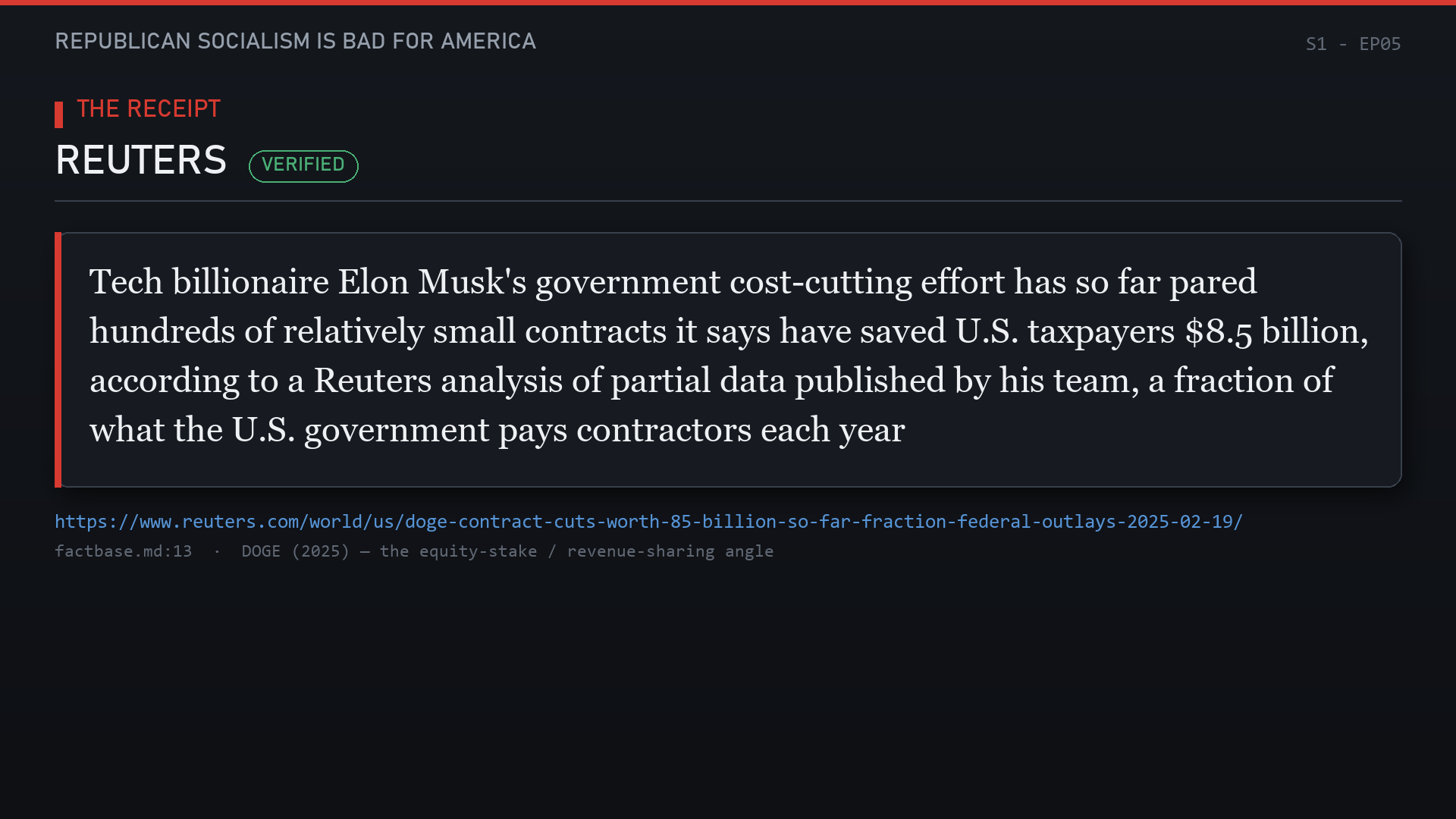
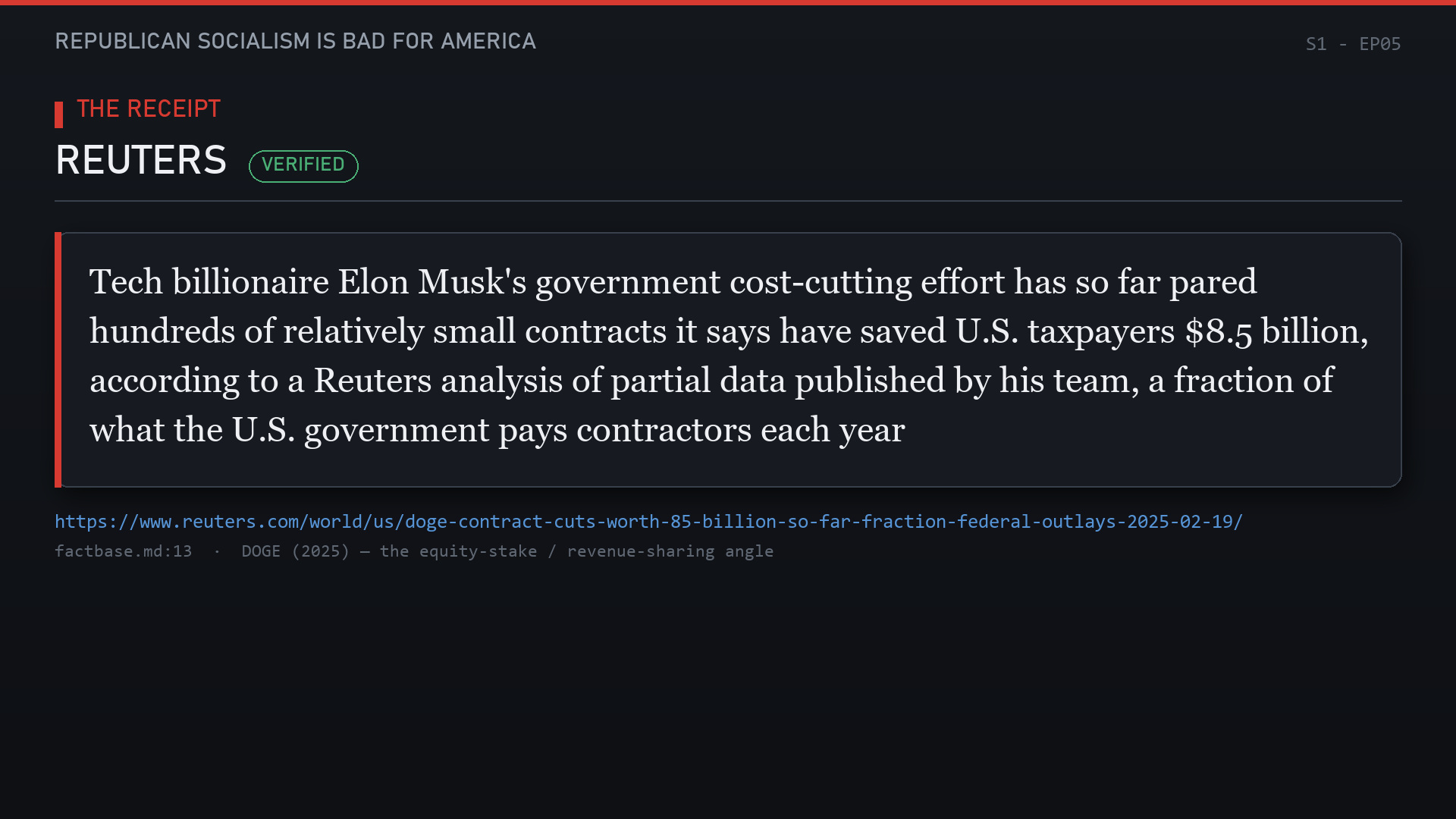
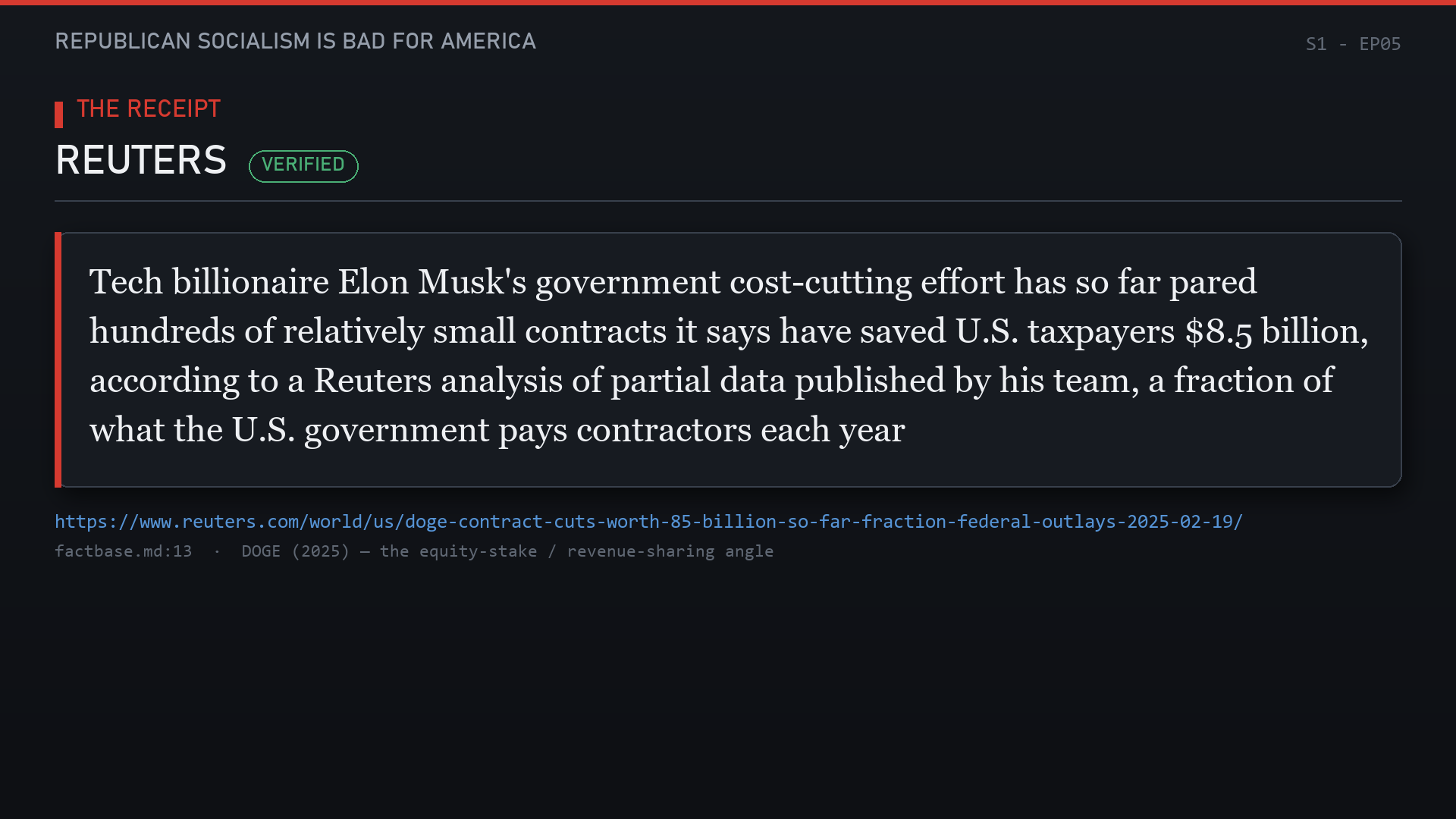
The headline number is $8.5 billion. That's what Reuters tallied from DOGE's own partial contract-cut data — DOGE's real figure, DOGE's own accounting.
But the number DOGE actually put on its public "Wall of Receipts" was $110 billion — and the GAO checked it. Their verdict: "some savings estimates are incorrect or lack supporting evidence." 2,503 of those contracts, worth $27.4 billion, were never actually terminated at all. Reuters has a name for the outfit behind the number: "the secretive unit operating in the public eye."
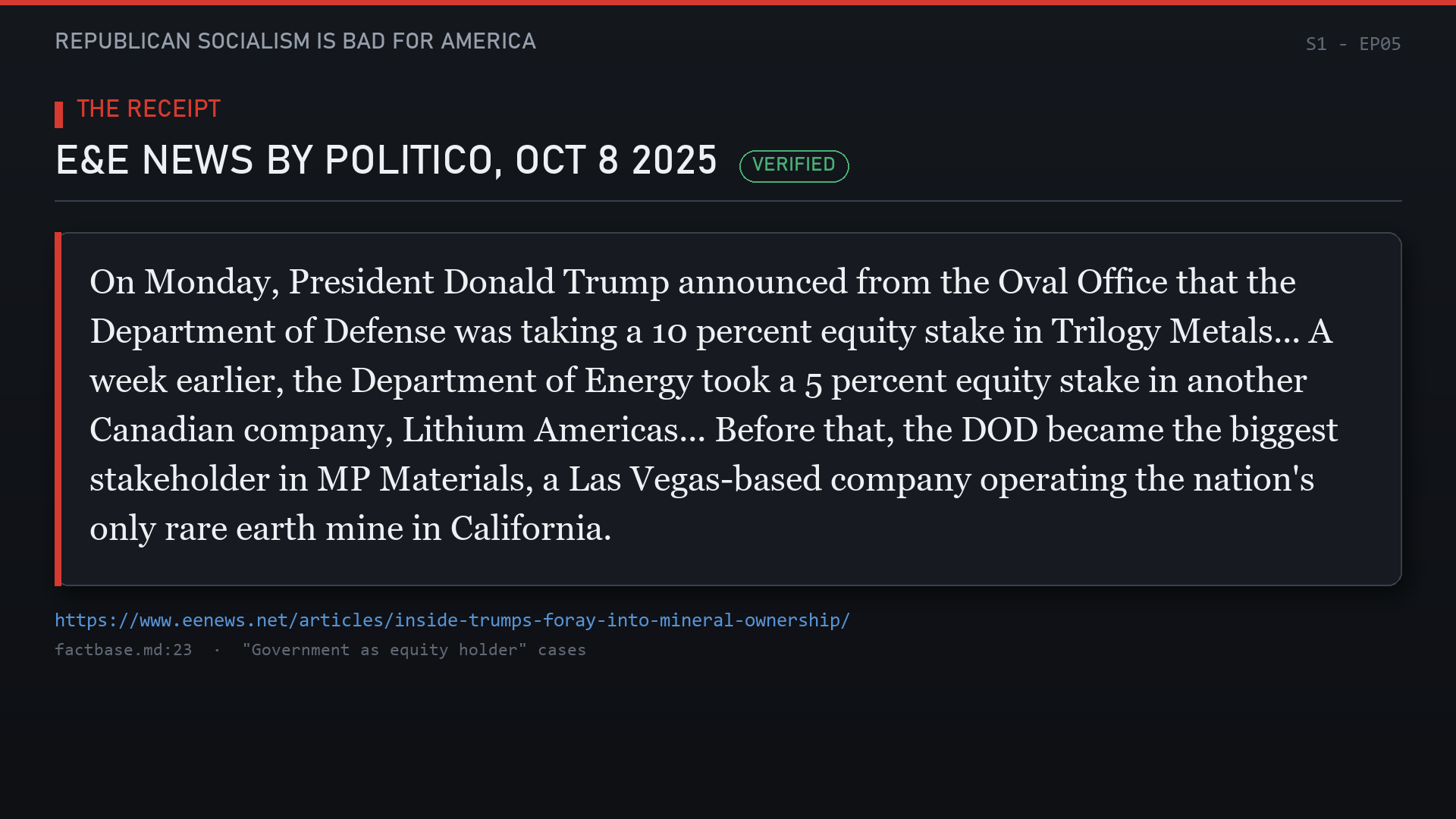
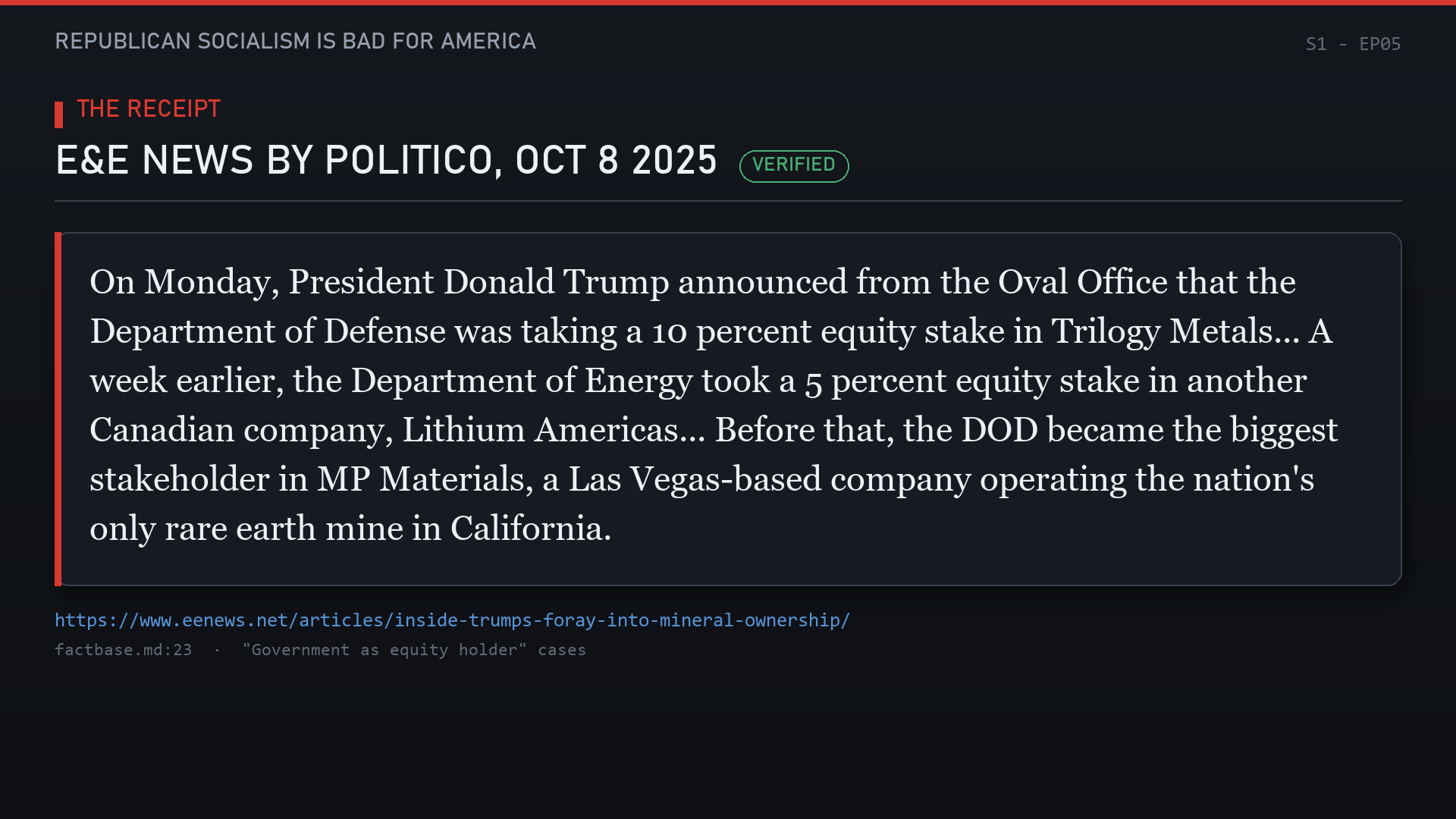
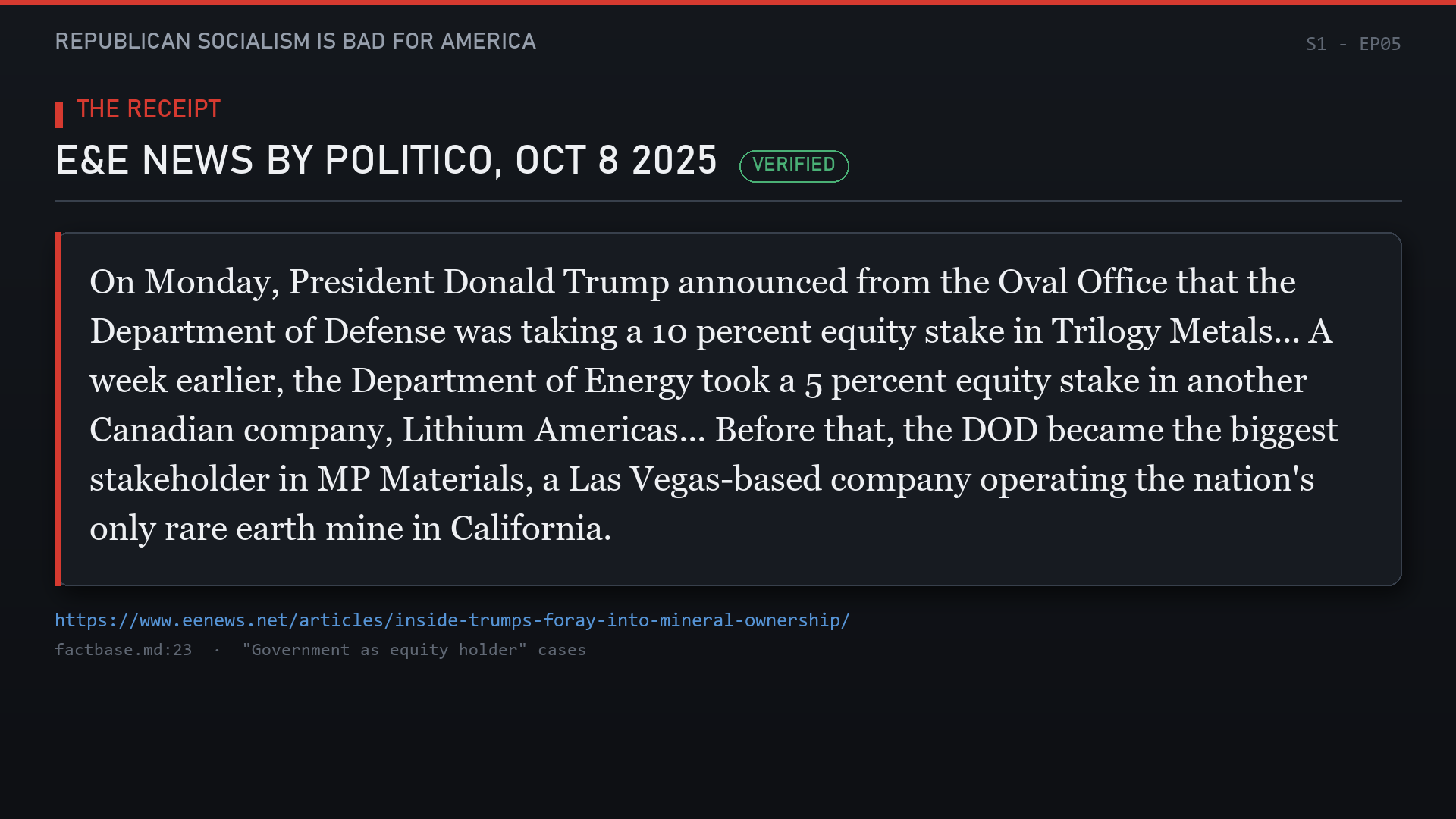
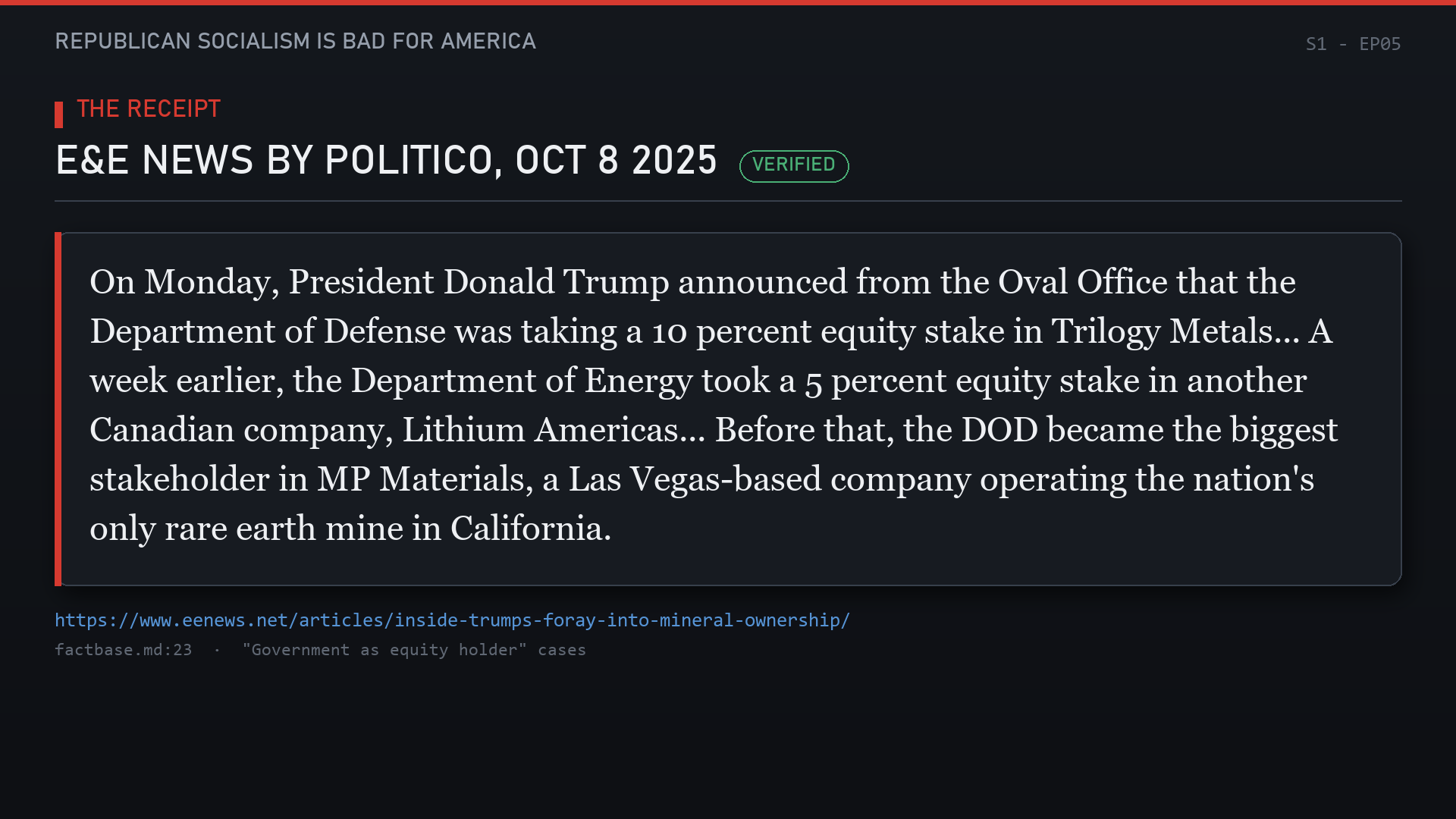
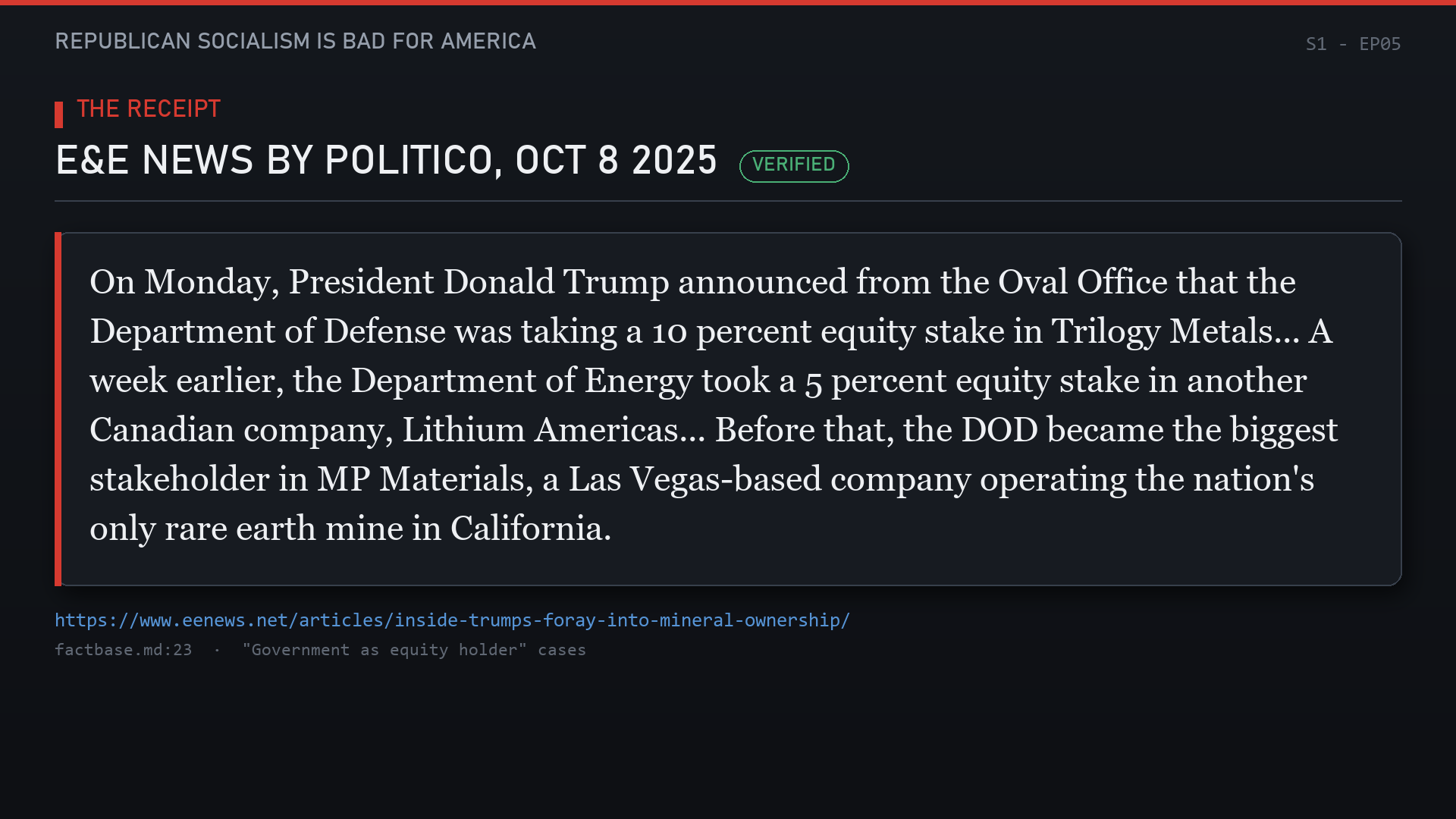
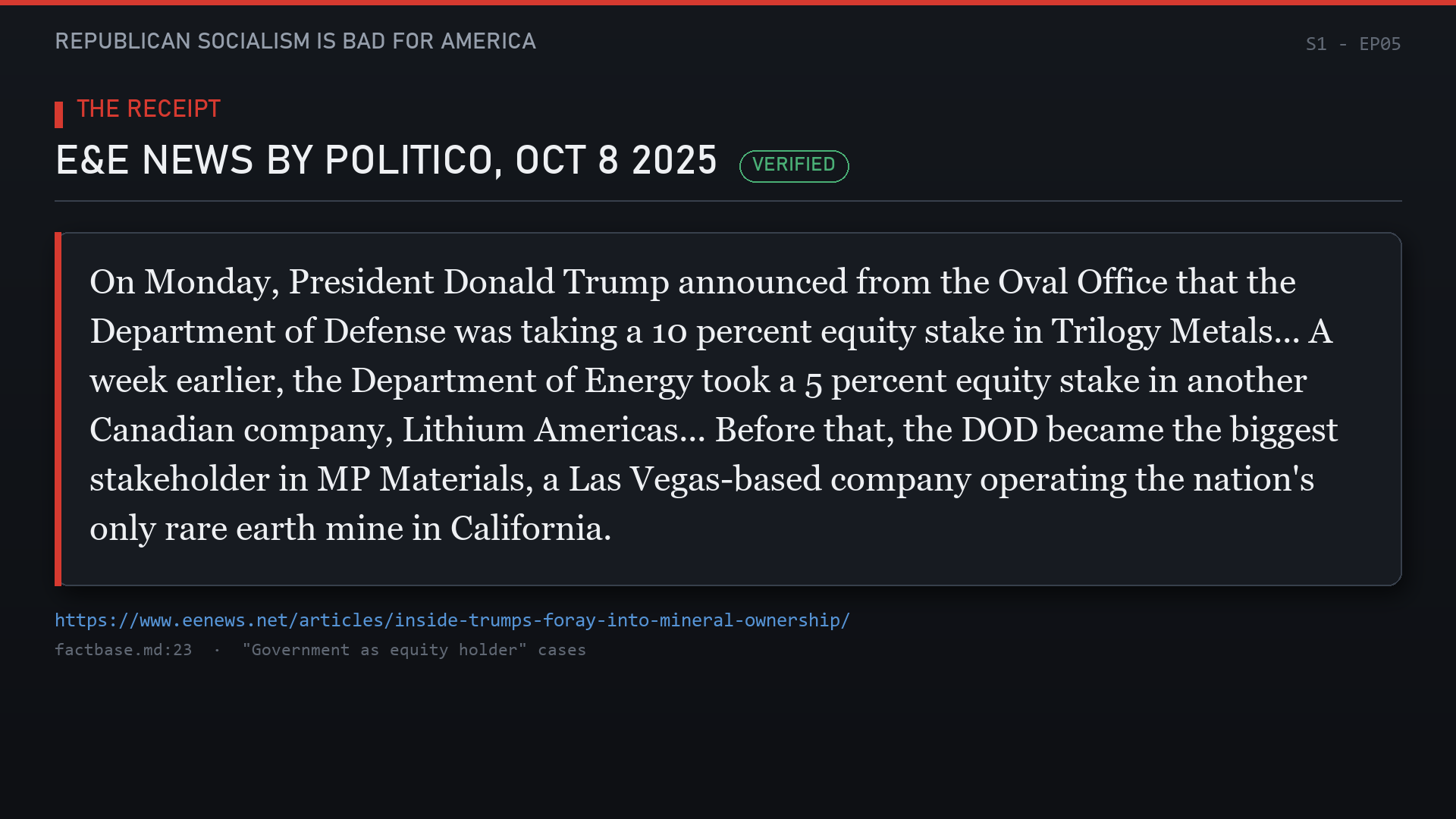
While the savings claim was being contested, a different transaction was moving quietly. The Department of Defense took a 10% equity stake in Trilogy Metals. A week earlier, Energy took 5% of Lithium Americas. Before that, DOD became the biggest shareholder in MP Materials, the nation's only rare-earth mine. Not loans. Not grants. Ownership.
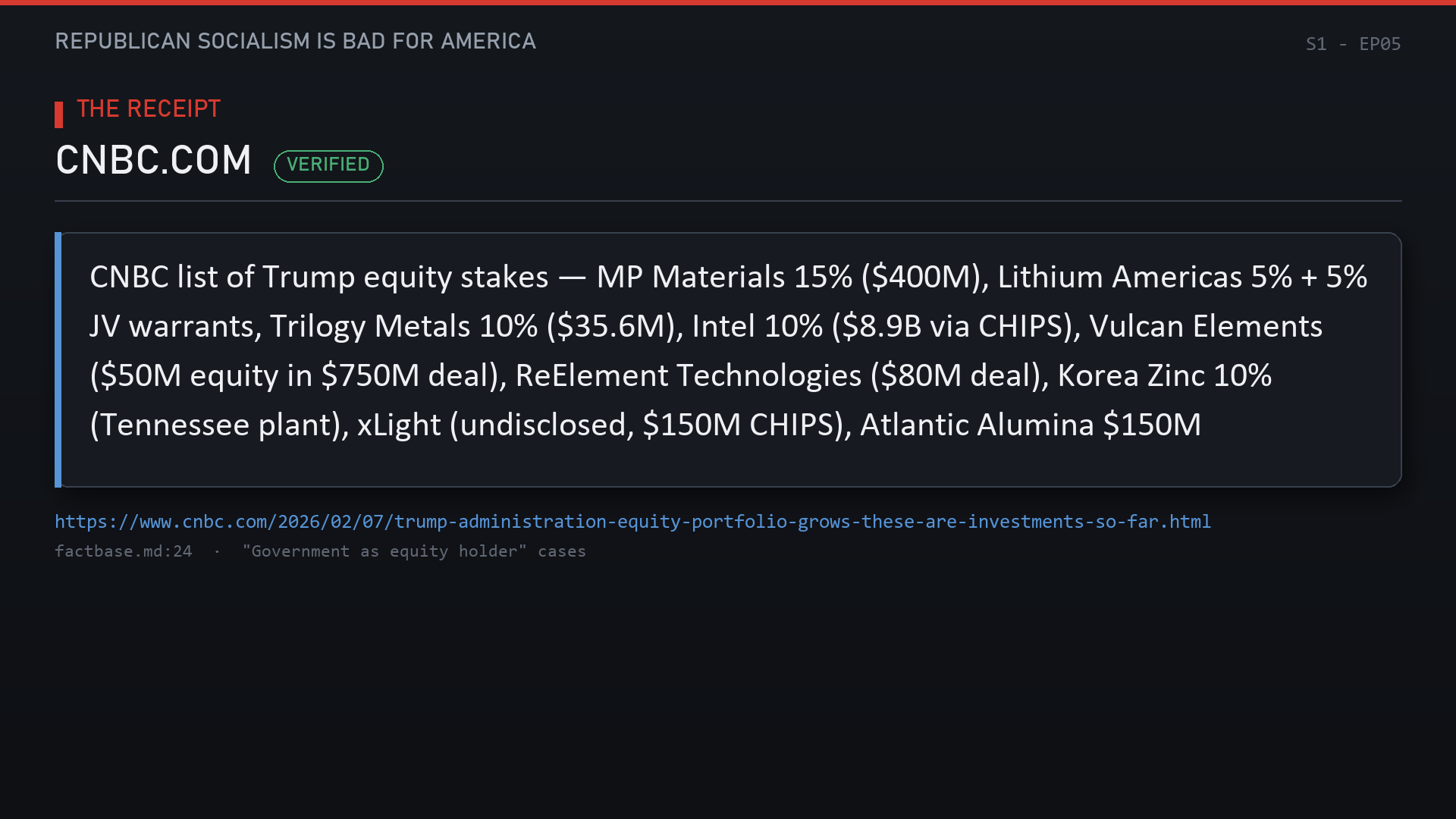
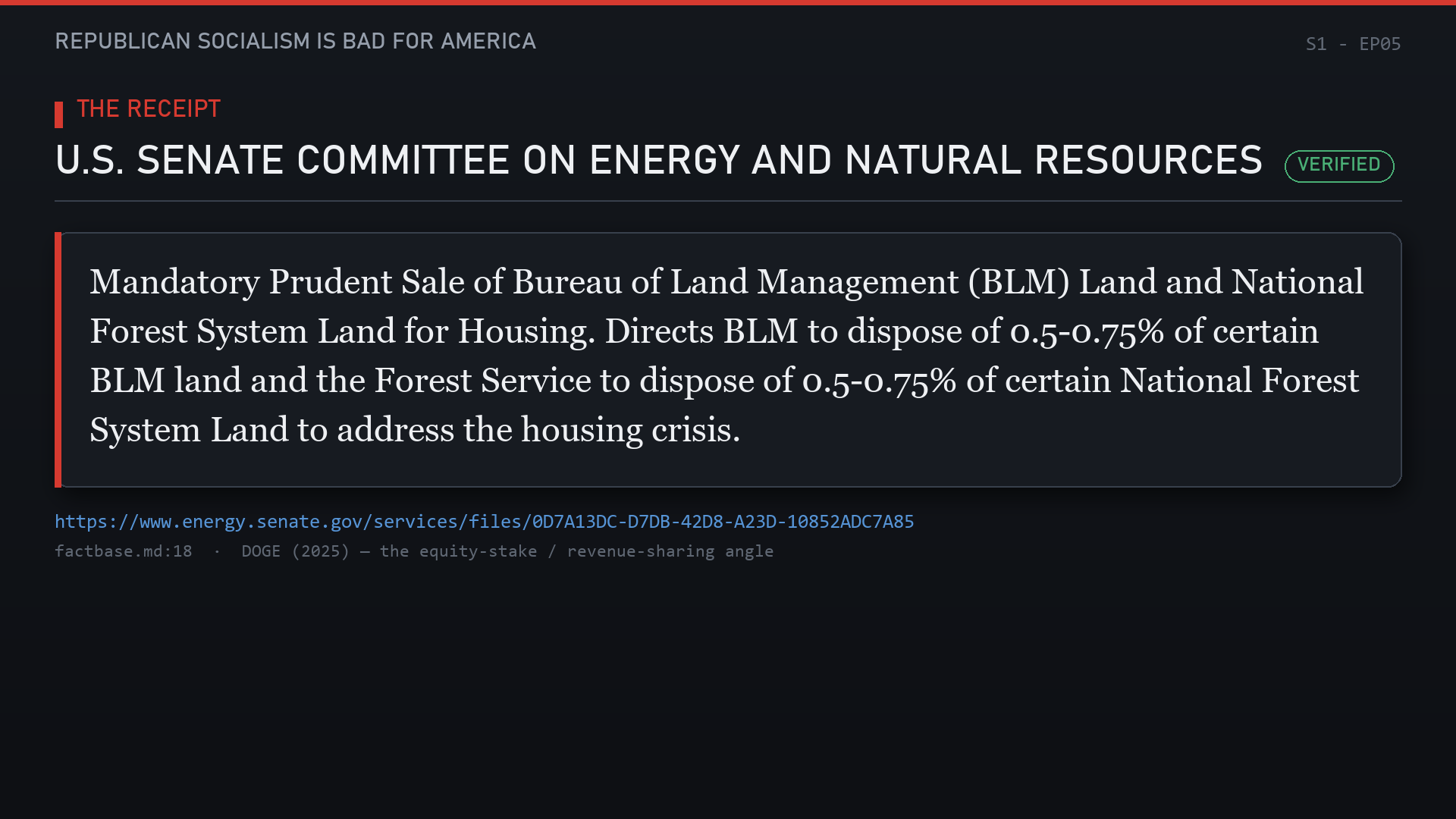
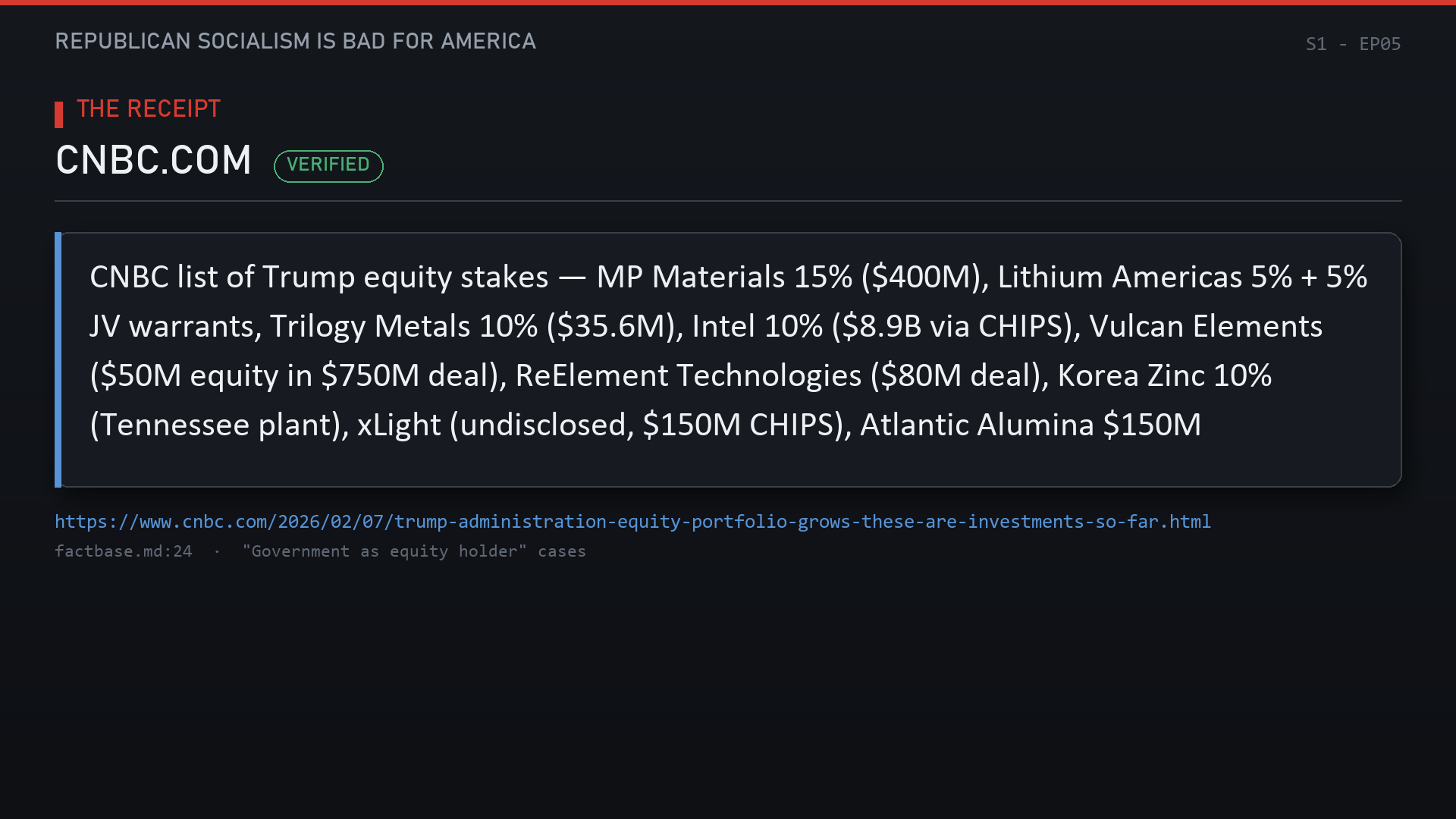
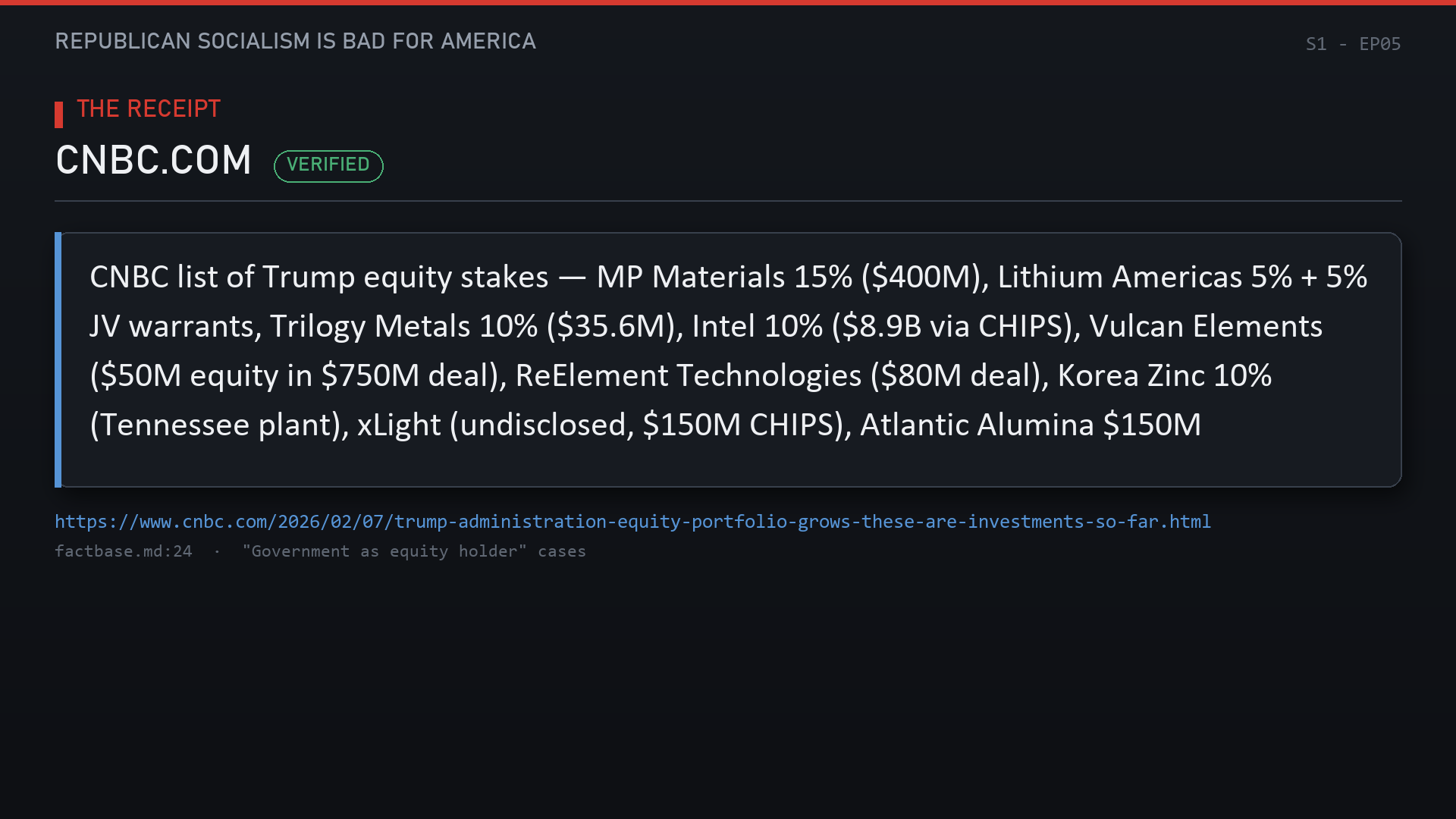
The full running tab, per CNBC's count: MP Materials 15% ($400M), Lithium Americas 5% + warrants, Trilogy Metals 10% ($35.6M), Intel 10% ($8.9B via CHIPS Act), Vulcan Elements ($50M of a $750M deal), ReElement Technologies ($80M), Korea Zinc 10%, xLight ($150M), Atlantic Alumina ($150M). Nine companies. One government. Zero votes in Congress to authorize any of it.
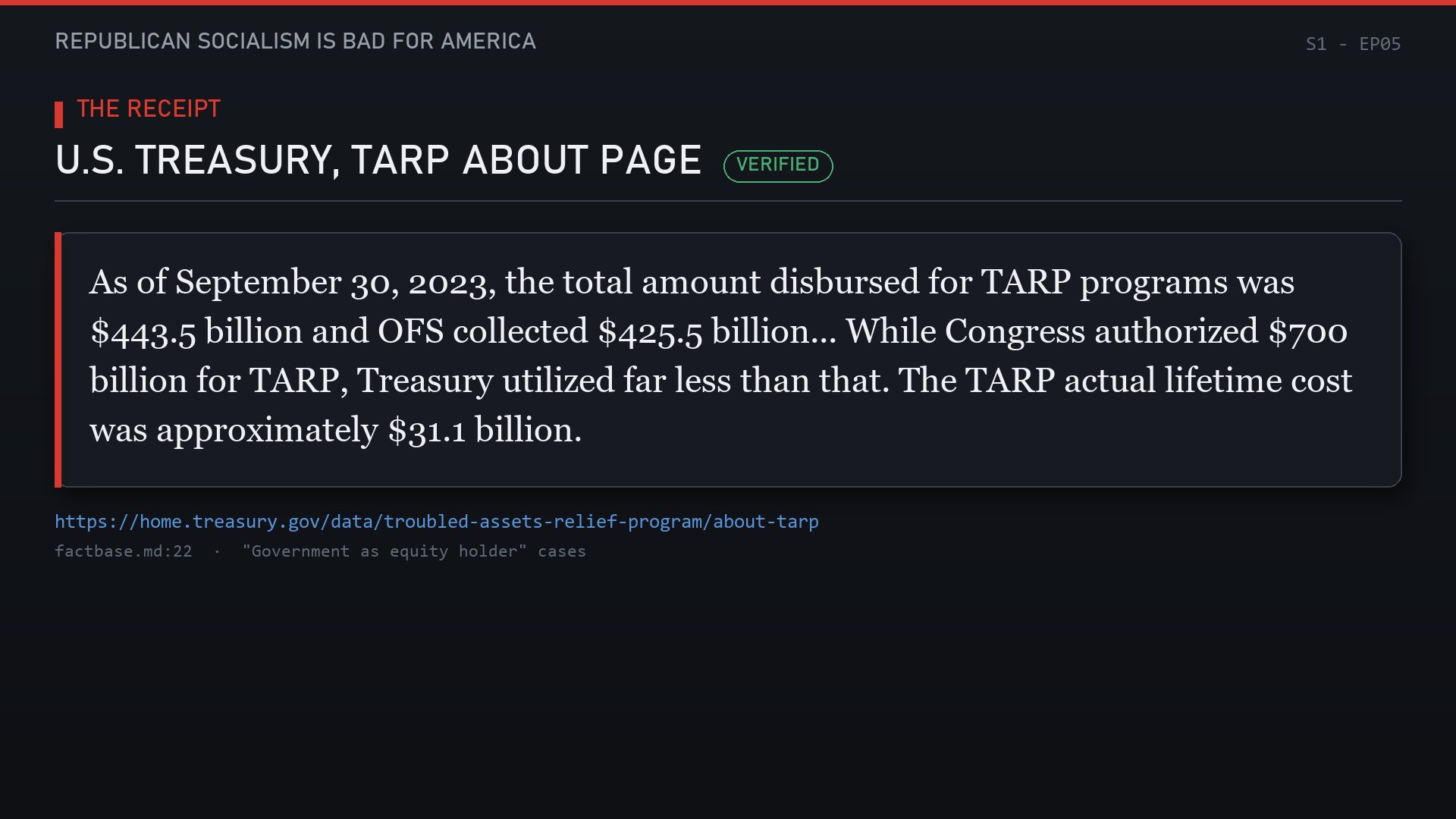
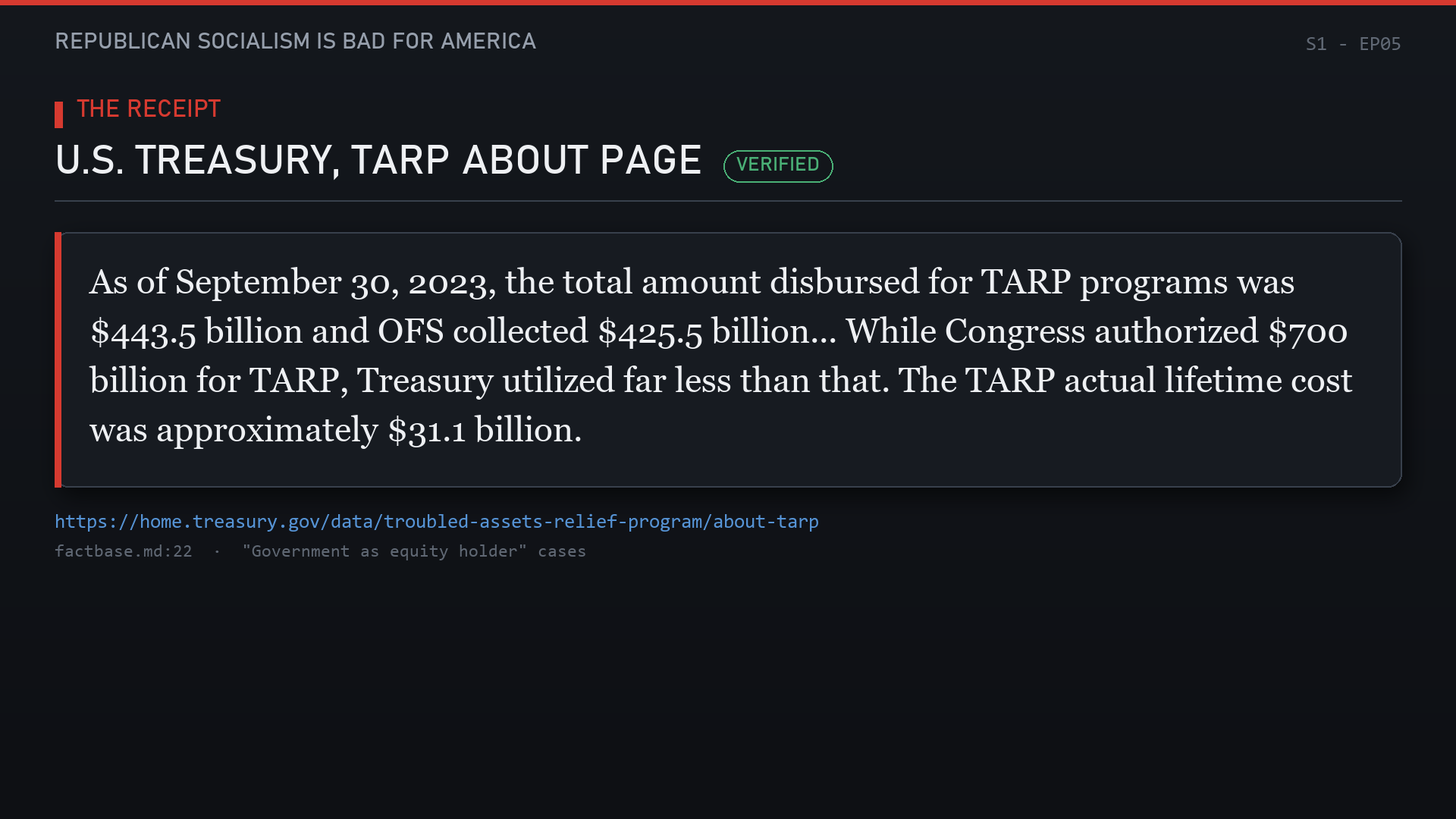
Compare that to the last time Washington bought into private companies at scale: $700 billion authorized for TARP in 2008 ($443.5B actually disbursed, $425.5B collected back, ~$31.1B lifetime cost). TARP was sold as emergency medicine — temporary, and it ended. This portfolio isn't being sold as an emergency. It's being built as permanent industrial policy, one quiet stake at a time.
Meanwhile the ledger nobody's talking about: $7.010 trillion in FY2025 outlays against $5.235T in revenue — a $1.775T deficit, projected to widen to $1.853T (5.8% of GDP) in FY2026, with debt hitting 100.6% of GDP. And the $2,000 tariff dividend promised to help pay it down? On Feb 20, 2026 the Supreme Court ruled the tariffs themselves illegal under IEEPA. ~$100B already refunded; CBO now expects 2026 tariff revenue $250B (60%) below what was promised. The dividend check was never going to clear.
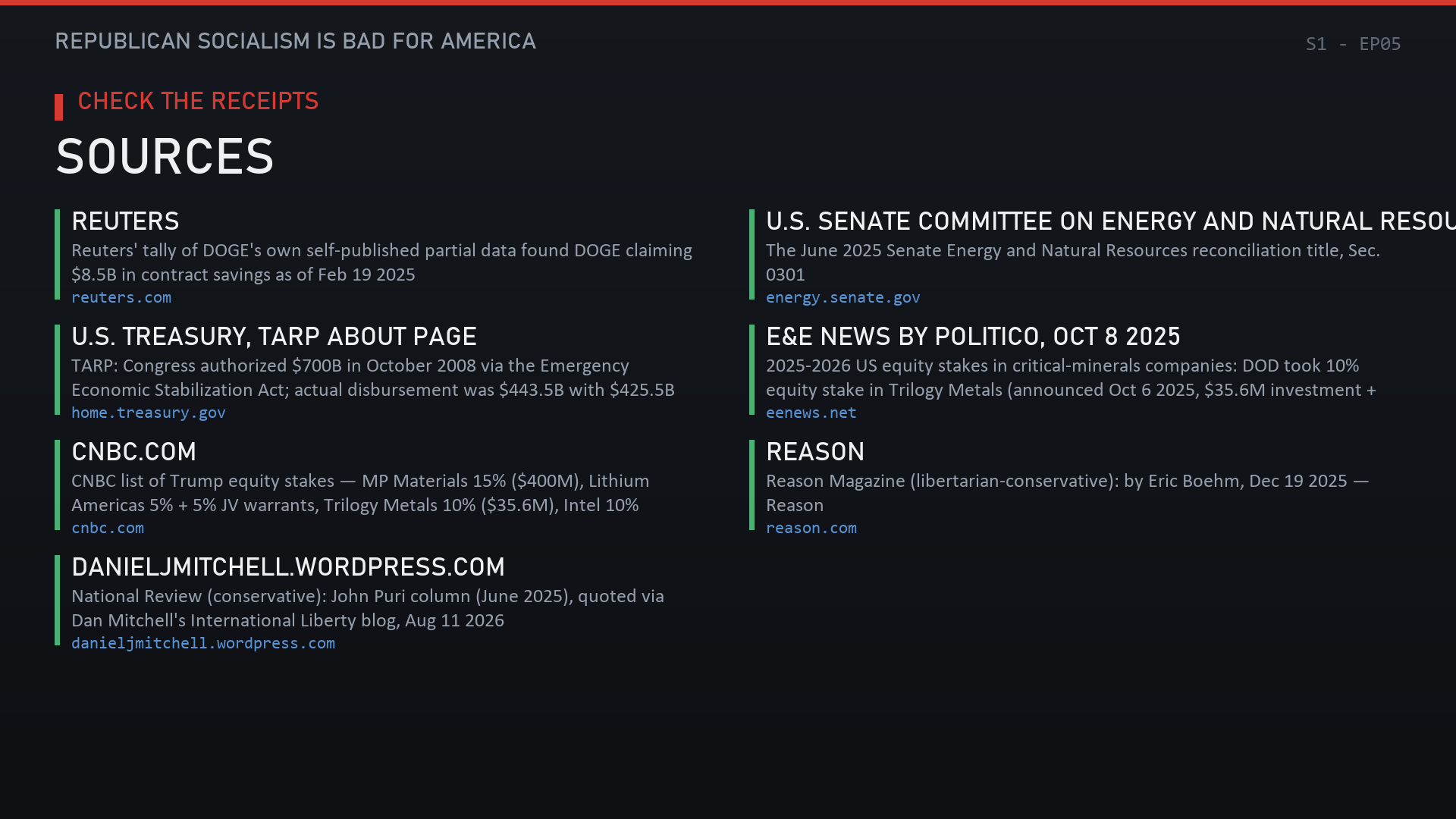
Receipts: Reuters · GAO-26-108615 · E&E News/POLITICO · CNBC · U.S. Treasury · CBO open data · PBS/PolitiFact · CBO Monthly Budget Review, July 2026.
The steelman
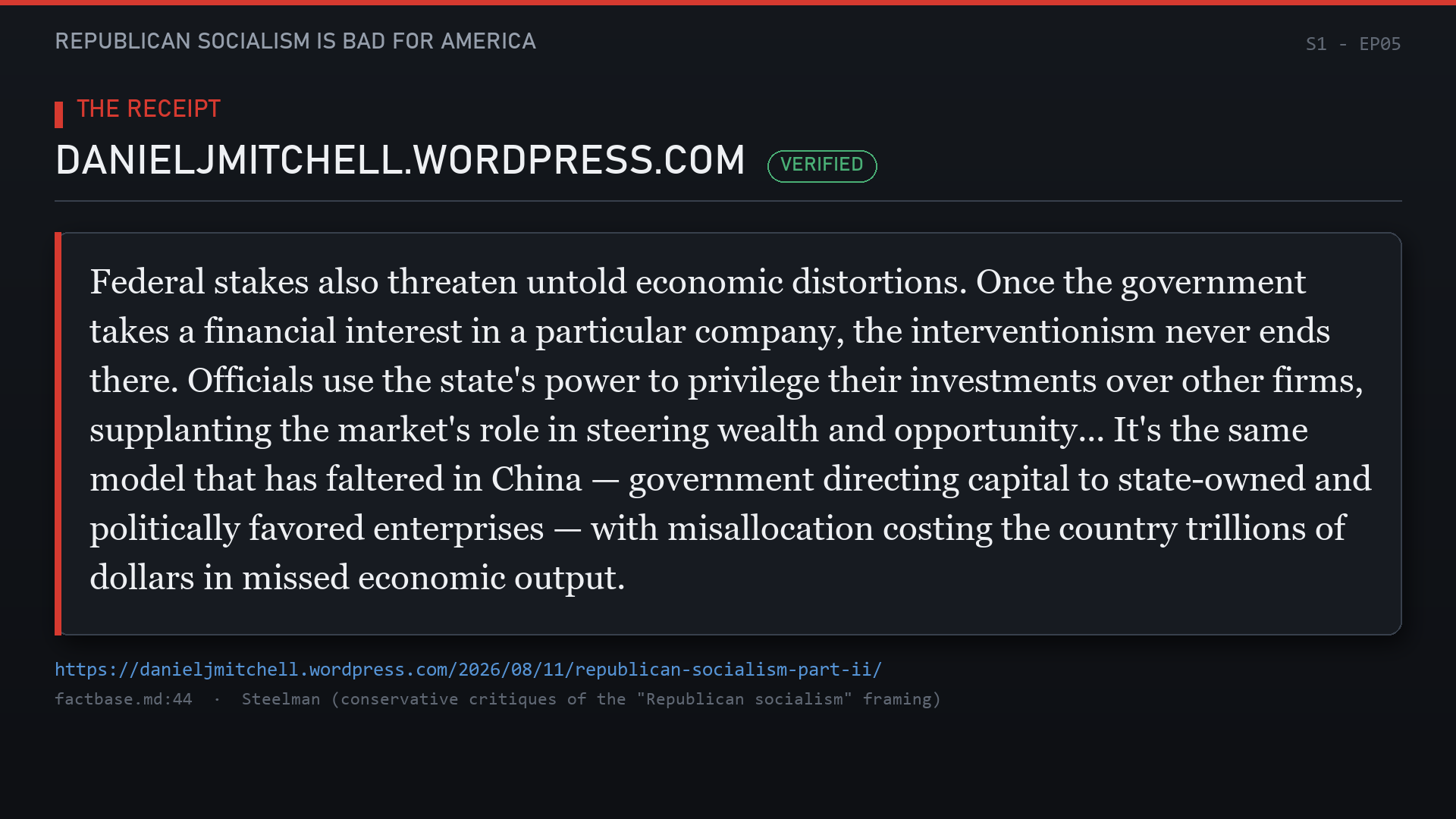
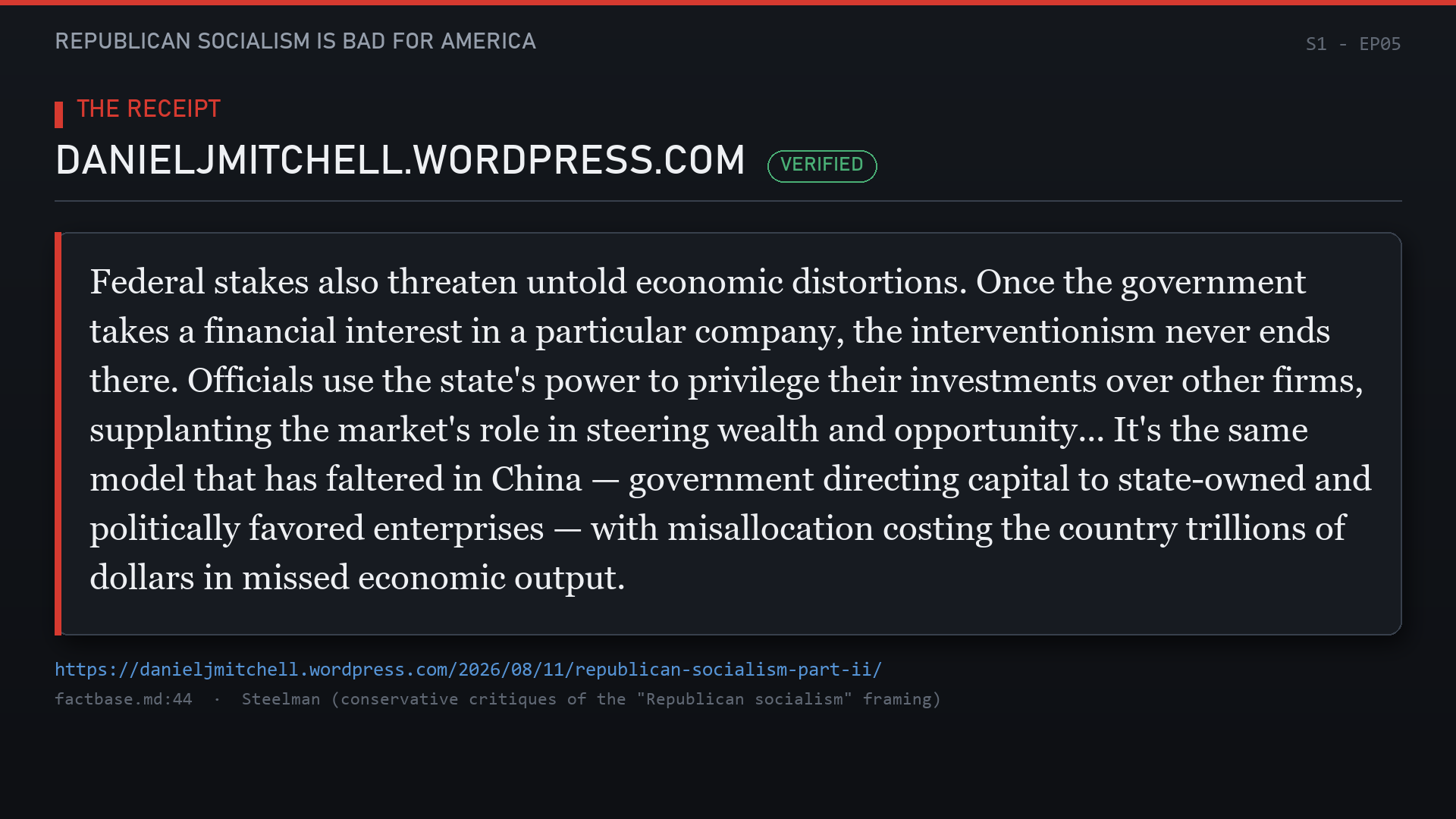
Conservative outlets make the strongest case against the episode's own thesis, and the script takes it seriously rather than dodging it. Reason's Eric Boehm argues the administration "has not made a convincing case for why it is buying stakes in these companies—and why these companies in particular" and says Congress should have to authorize the purchases. National Review's John Puri (via economist Dan Mitchell) warns that federal equity stakes "threaten untold economic distortions" and mirror the Chinese model of state-directed capital, which has "faltered" and cost "trillions of dollars in missed economic output." Veronique de Rugy cites a Cato Institute count putting the federal corporate portfolio at roughly 30 firms. The Wall Street Journal's Greg Ip notes that firms aligning with the administration's agenda get better treatment on tariffs, regulation, and mergers. And the New York Times' Bret Stephens writes that if a Democratic president did this, Republicans "would call it a political shakedown, an assault on capitalism, a loser for taxpayers," and adds: "They'd be right."
The rebuttal
Answered honestly, the steelman doesn't rebut the episode's thesis — it strengthens it. The most rigorous conservative critics agree that buying private companies without congressional authorization, privileging politically favored firms, and calling it free-market policy is exactly the kind of state capitalism Republicans would condemn if the other party did it.
Contested savings, permanent ownership. Socialism for the well-connected.
Documents Used to Produce This Episode
No matching research-list documents found for this topic. The-53-list research folders (the-53-list/*) were checked against EP05's actual subject — DOGE's contested savings claims and the new federal equity-stake portfolio — and none topically match; the closest hits (ep03_tarp-bank-bailout, ep06_auto-bailout, ep23_chips-act) are either about a different episode's own primary topic or are unverified drafts with no facts filled in. This episode's facts are sourced directly from its own master script and handoff receipts, linked below.
Full production materials (internal — scripts, shot lists, sources) →