Abbott: The Texas Price Tag · Episode 01 · Season opener
The Socialist in the Governor's Mansion
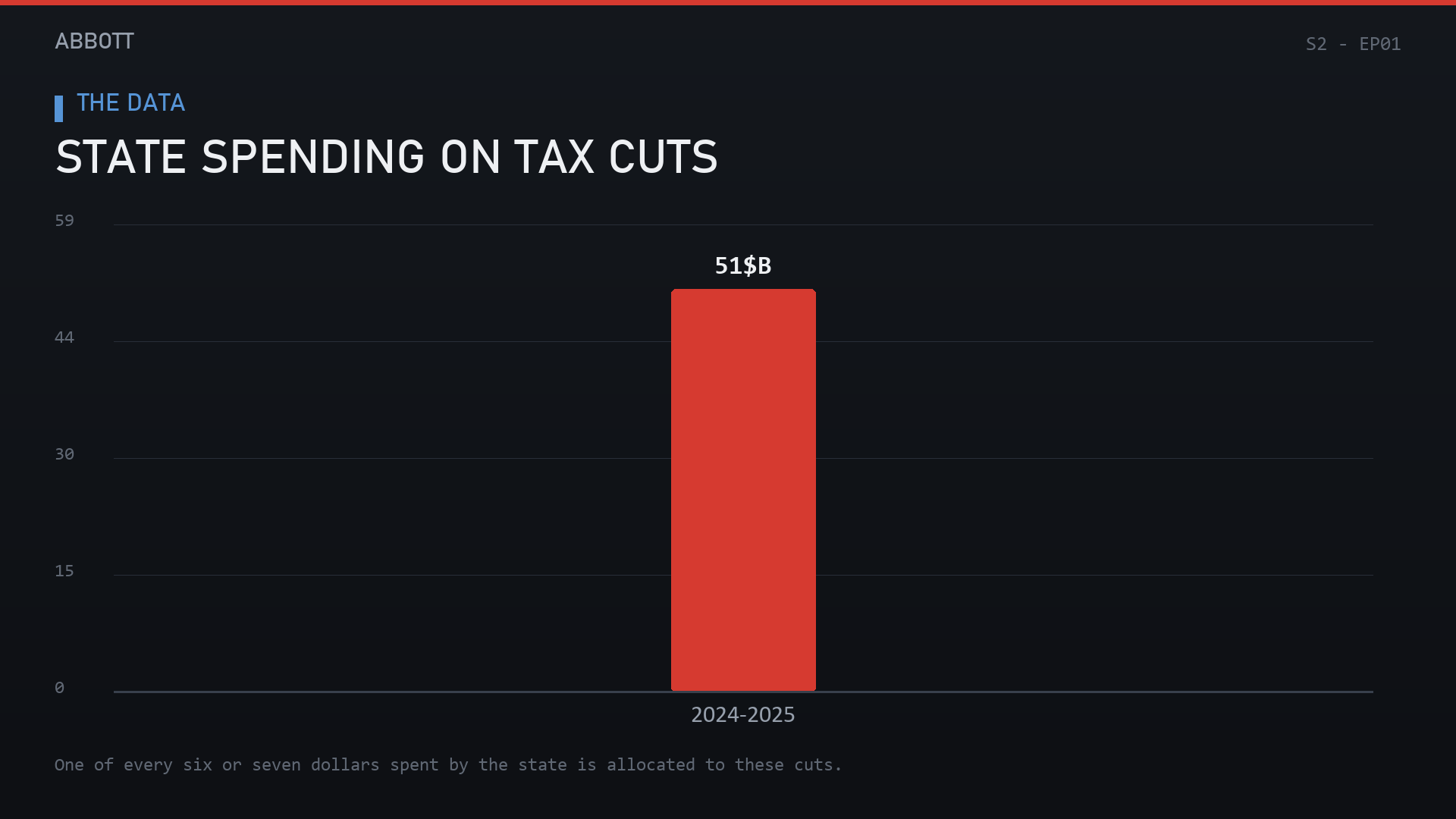
Greg Abbott has a word for everyone who opposes him: socialist. Before we let him use it again, we define the word — then hold his own record against it: a $51 billion state buy-down of your property tax bill, a constitutional lock to make it permanent, and a homestead exemption that pays homeowners while renters get nothing.
Season opener Every number below traces to a real, cited receipt. Click through.
Watch
Rough cut preview · real assets, sequenced by the show's own shotlist order · picture and voice run exactly in sync (934.14s each, per the build gate) · not a separately rendered file.
EP01_master.stale.mp4) is marked stale and is not used here or linked anywhere on this page. No current long-form composite exists yet. The rough-cut reel above plays every real rendered beat, in the real build order, against the real, current narration track — that is the most complete real watch experience this episode has today.Shorts & cuts
The Visual Basis (206 real production stills)
Every frame below is an actual rendered beat from this episode's build — receipts, ledgers, quotes, charts and act cards, plus the animated version where one exists. These are the raw material the cut is built from, not stock or AI-generated art. 207 motion clips exist on disk; one (052_broll) is a b-roll insert with no matching still frame, so it plays in the reel above but has no card here.





















The Story
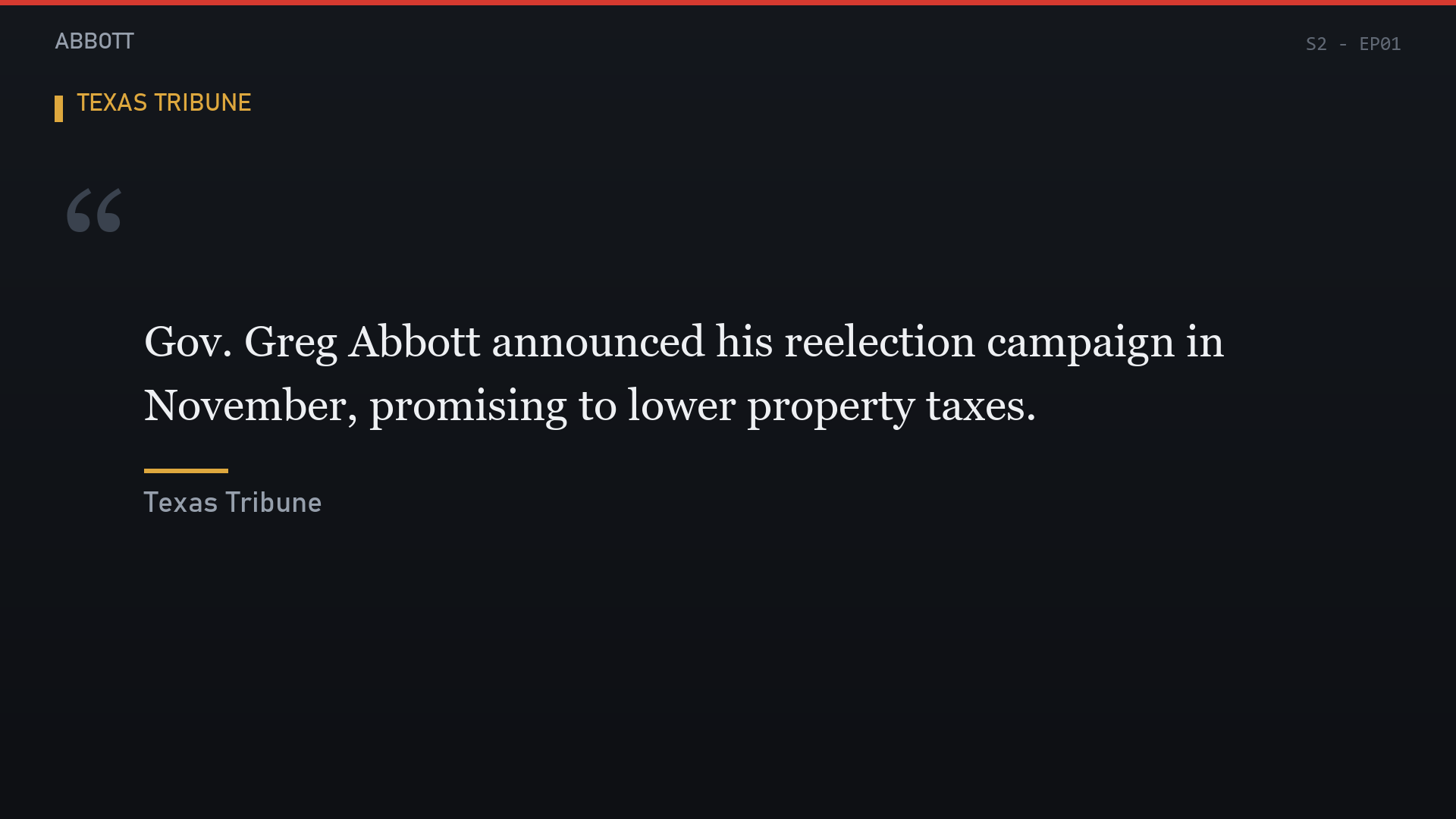
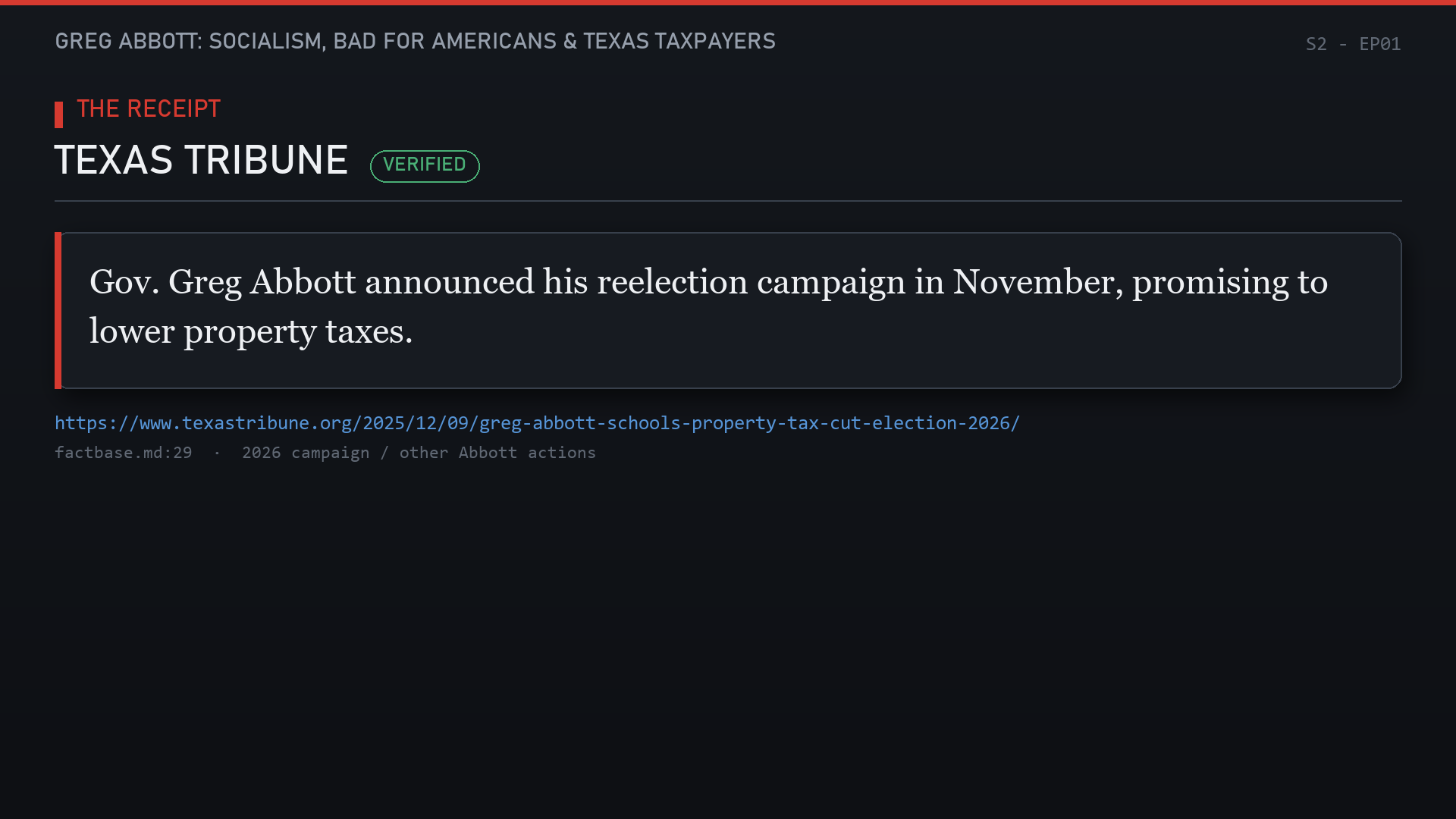
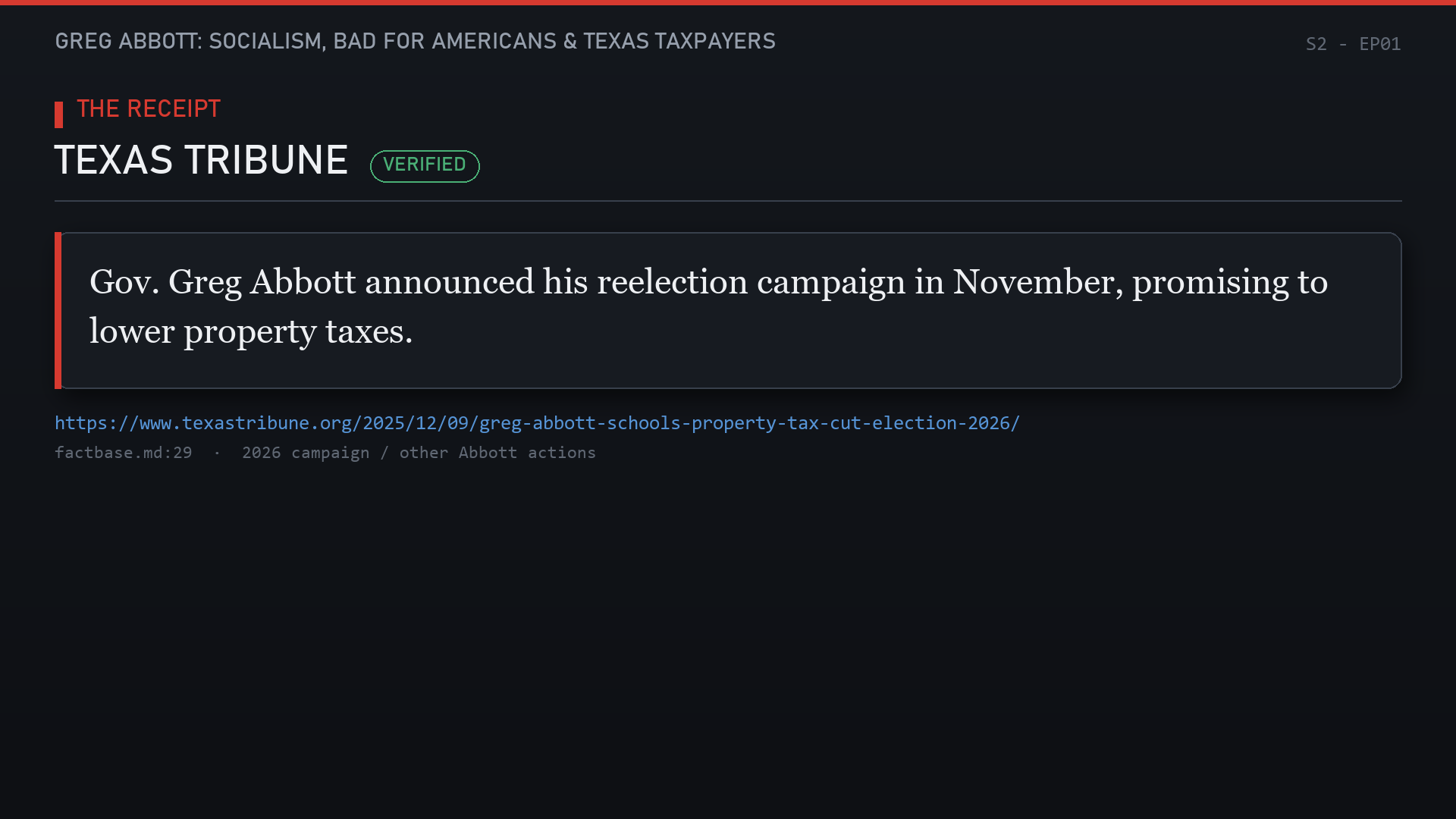
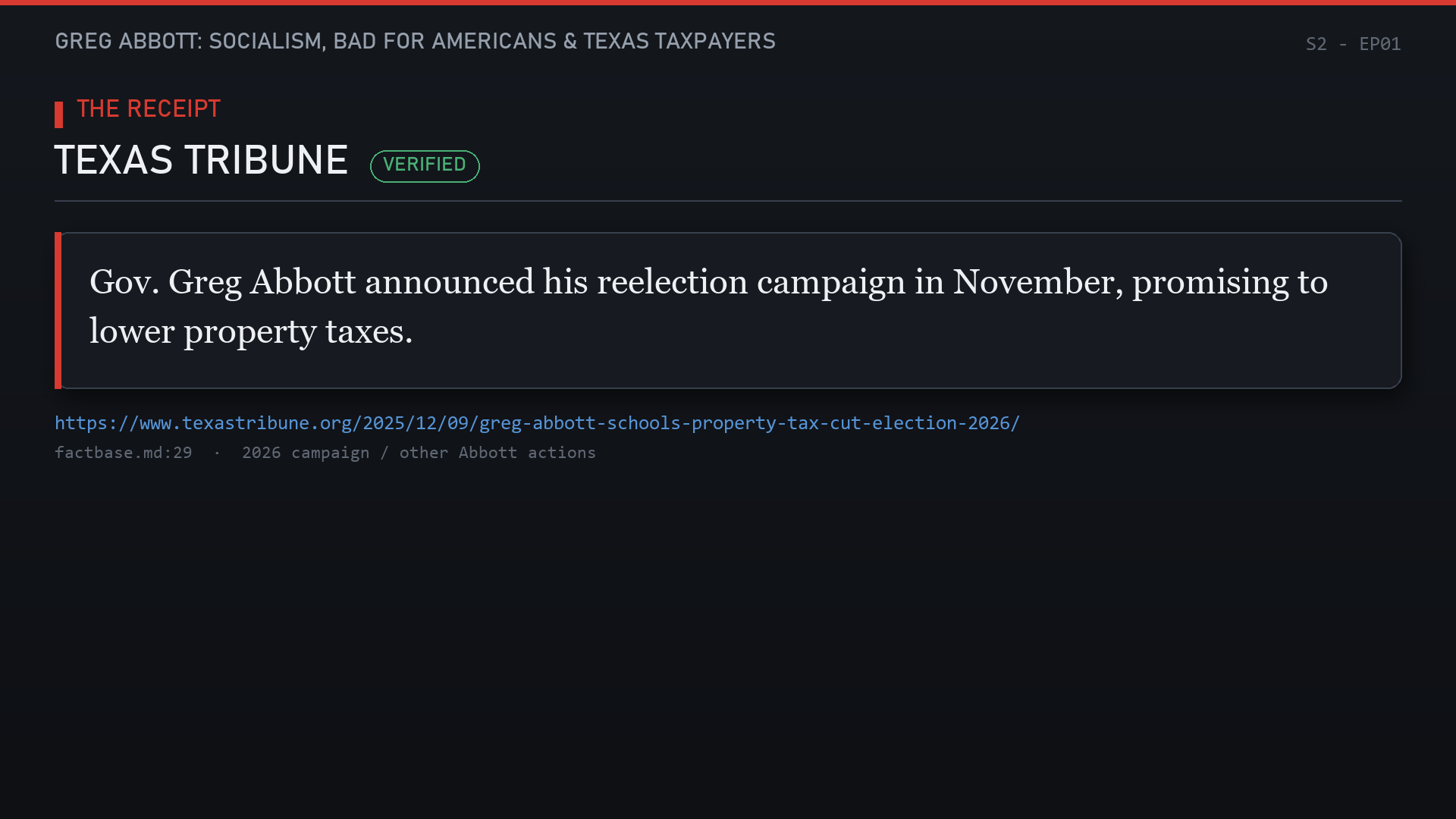
November 2025, Houston. Governor Greg Abbott kicks off his fourth-term reelection campaign the way he kicks off most of his speeches lately — by calling his opponents socialists. This episode does something his campaign hasn't: it defines the word, then holds his own record against it.
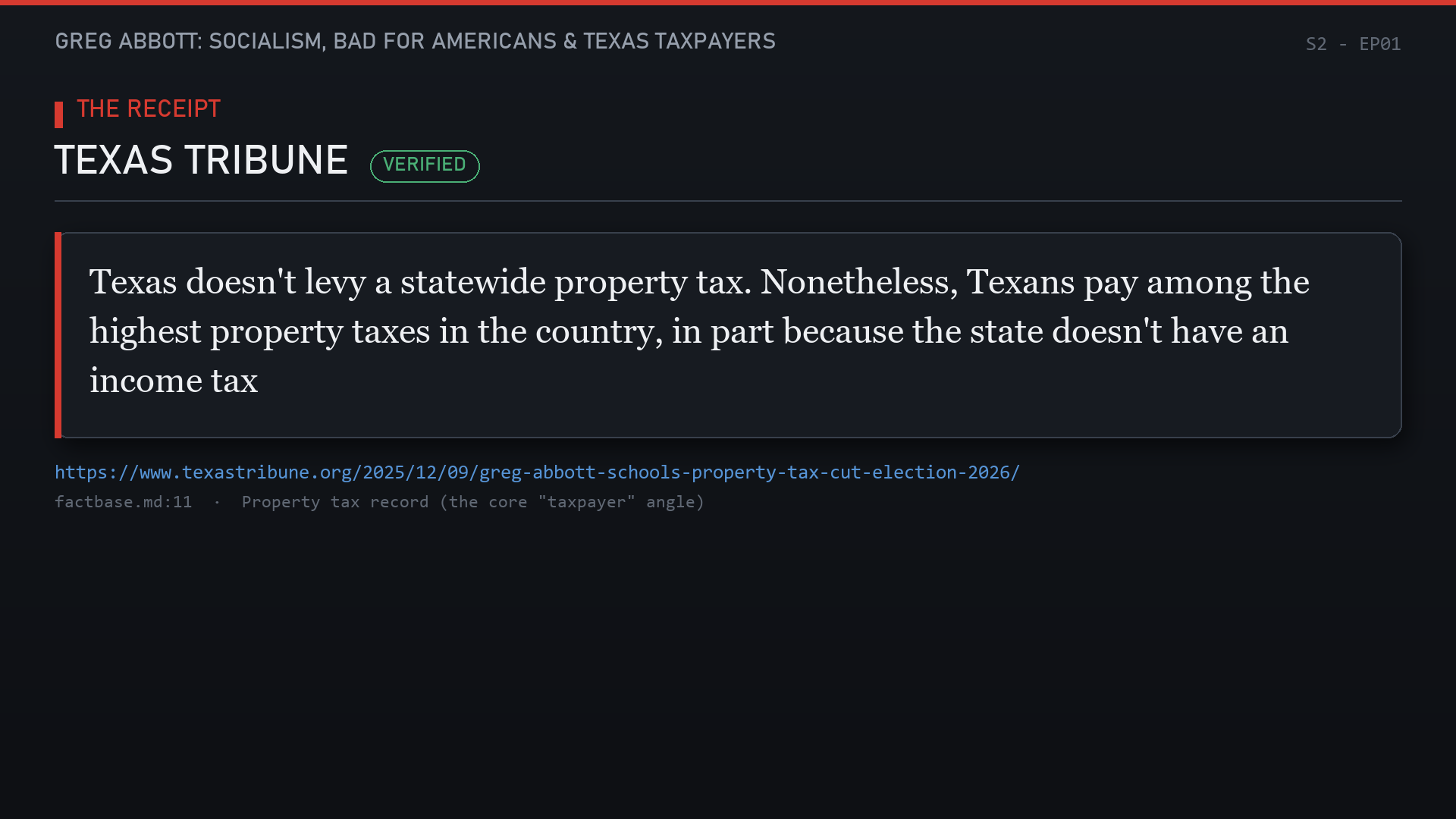
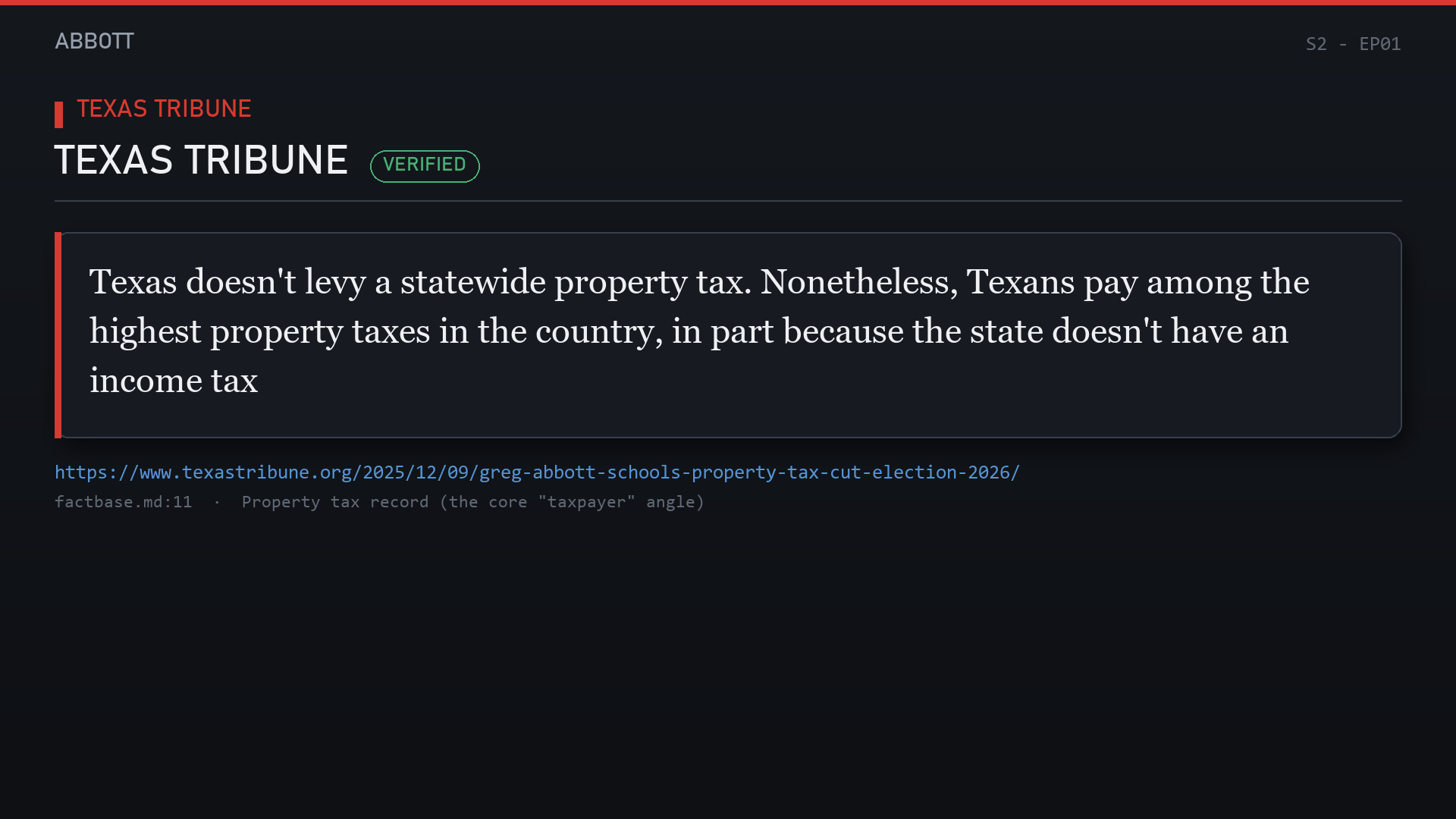
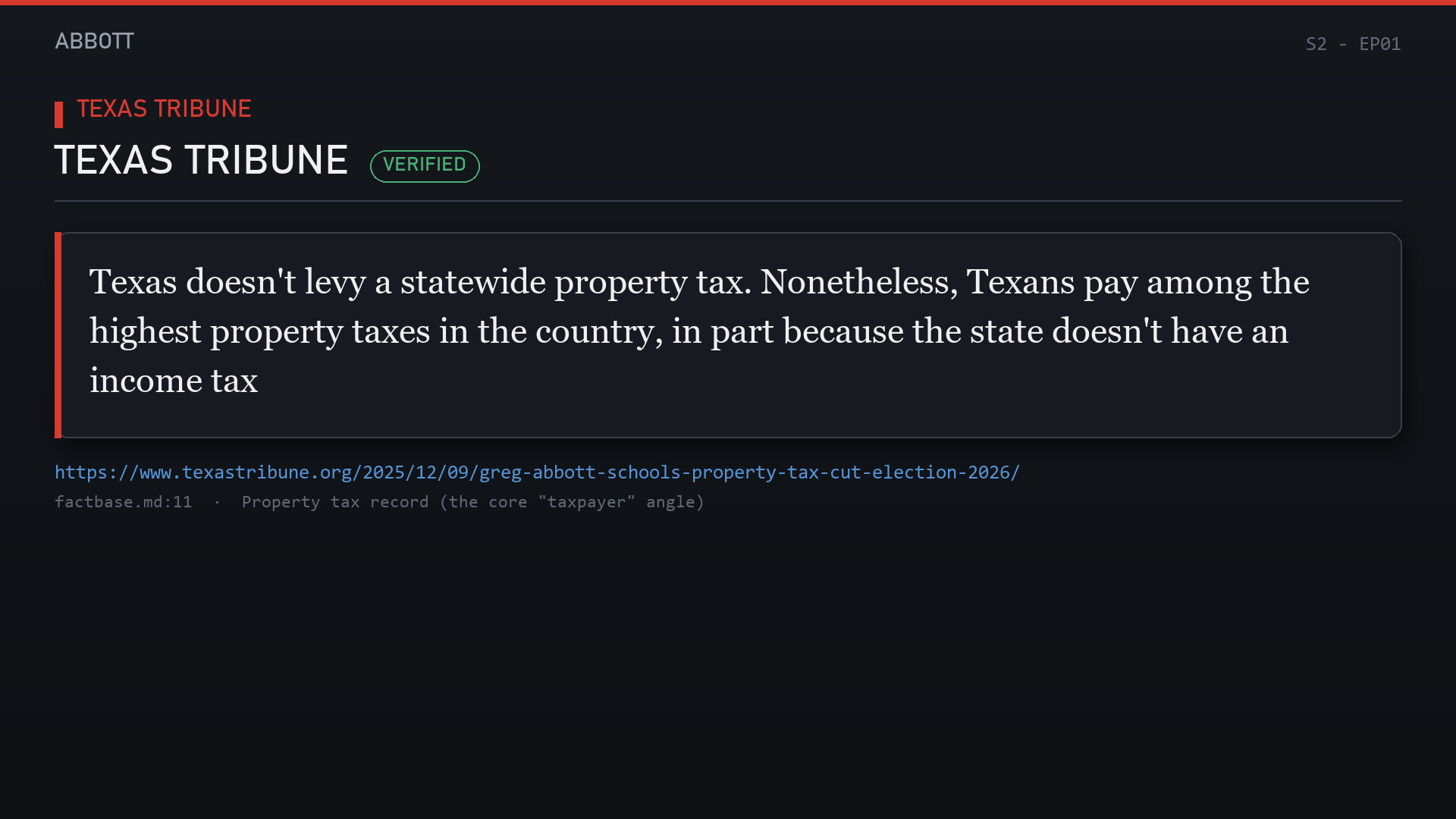
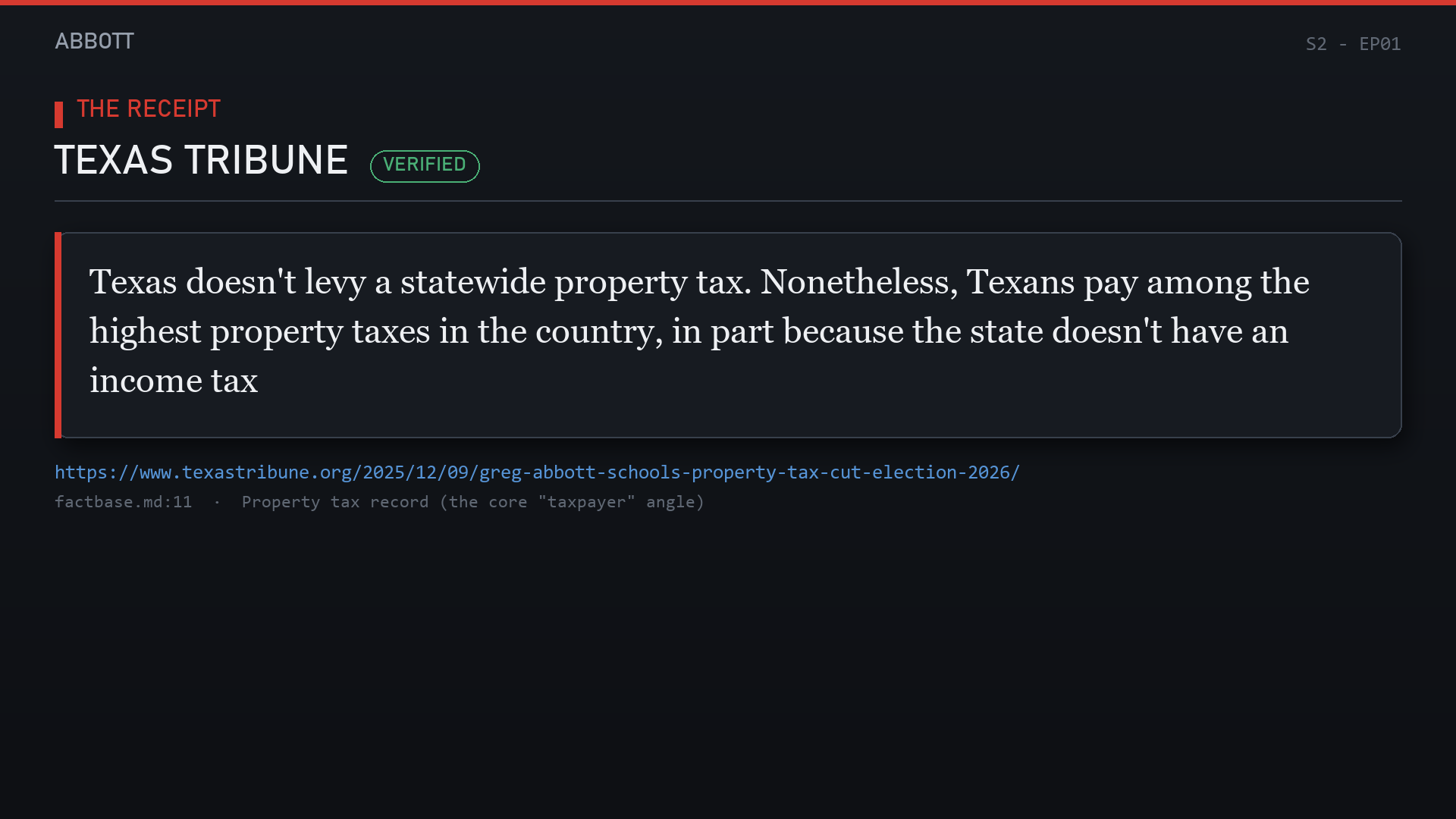
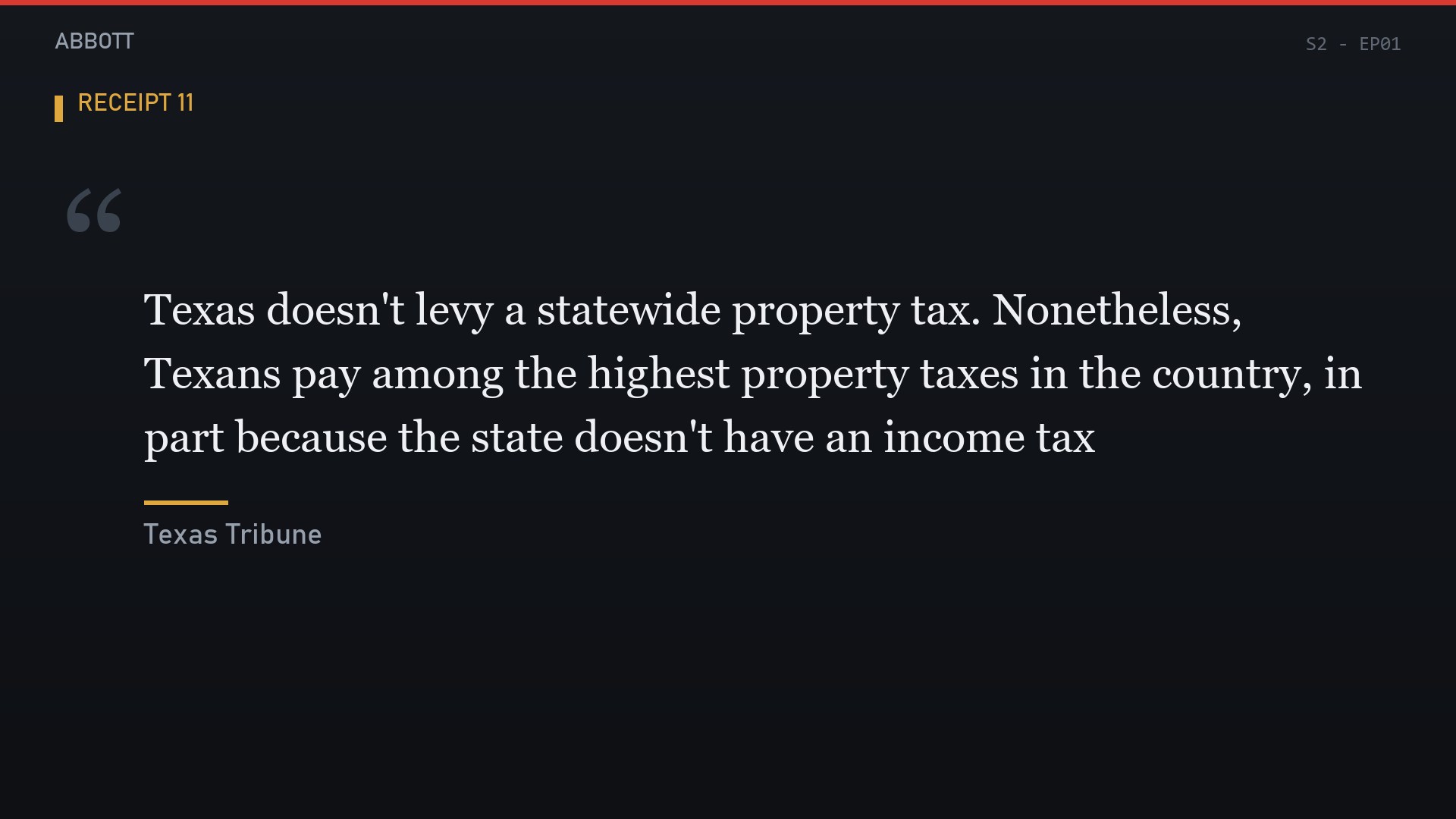
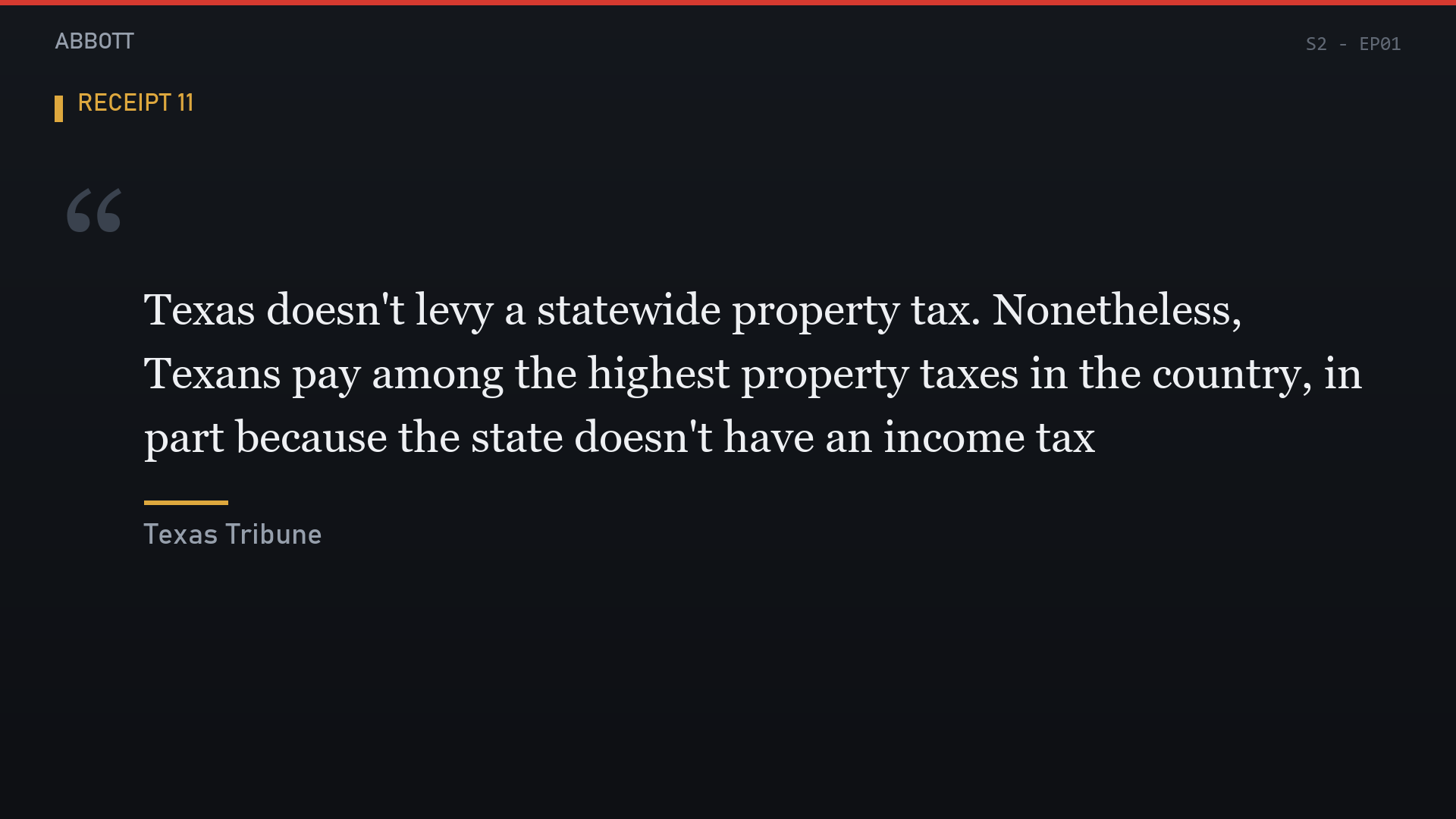
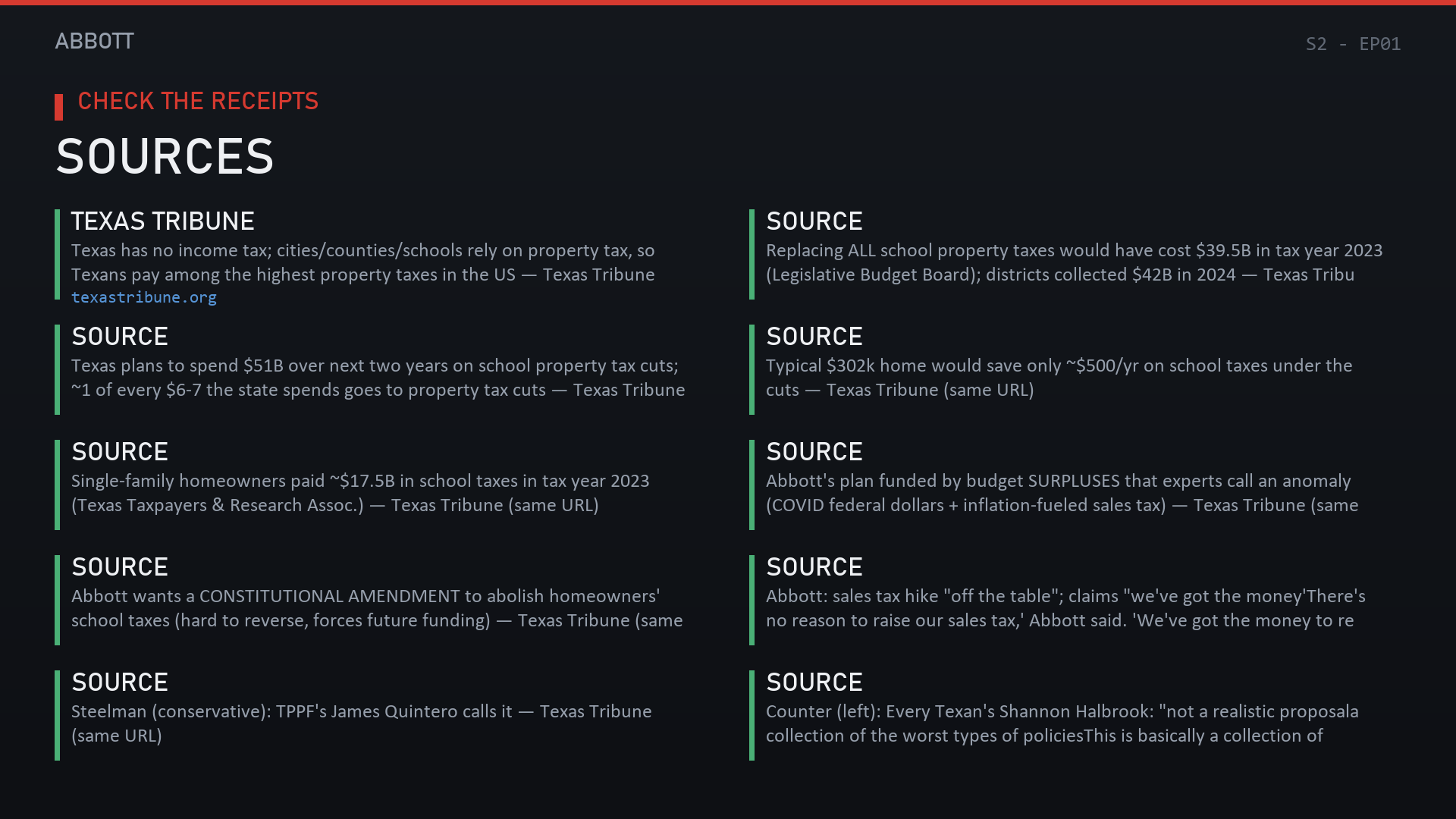
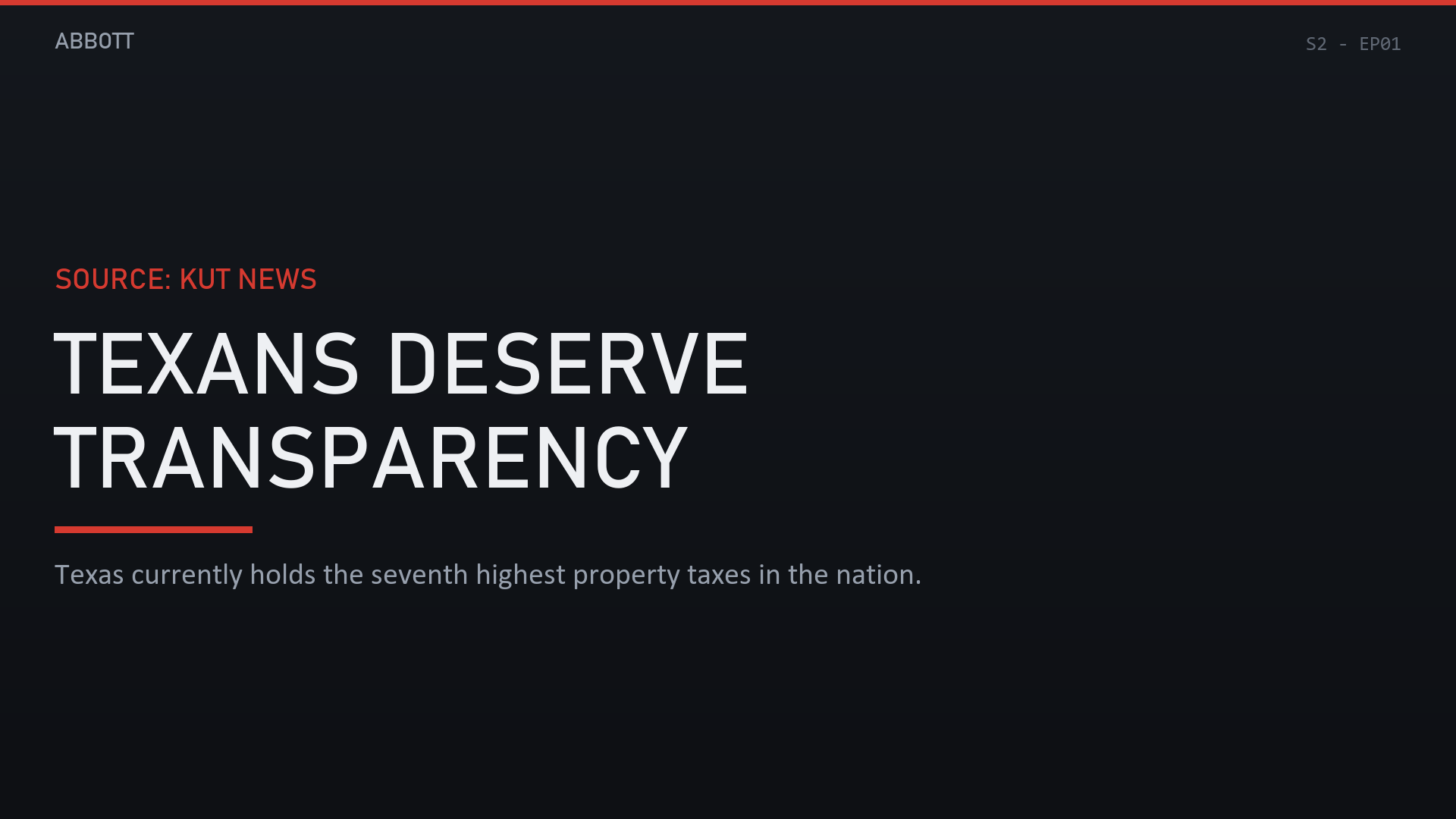
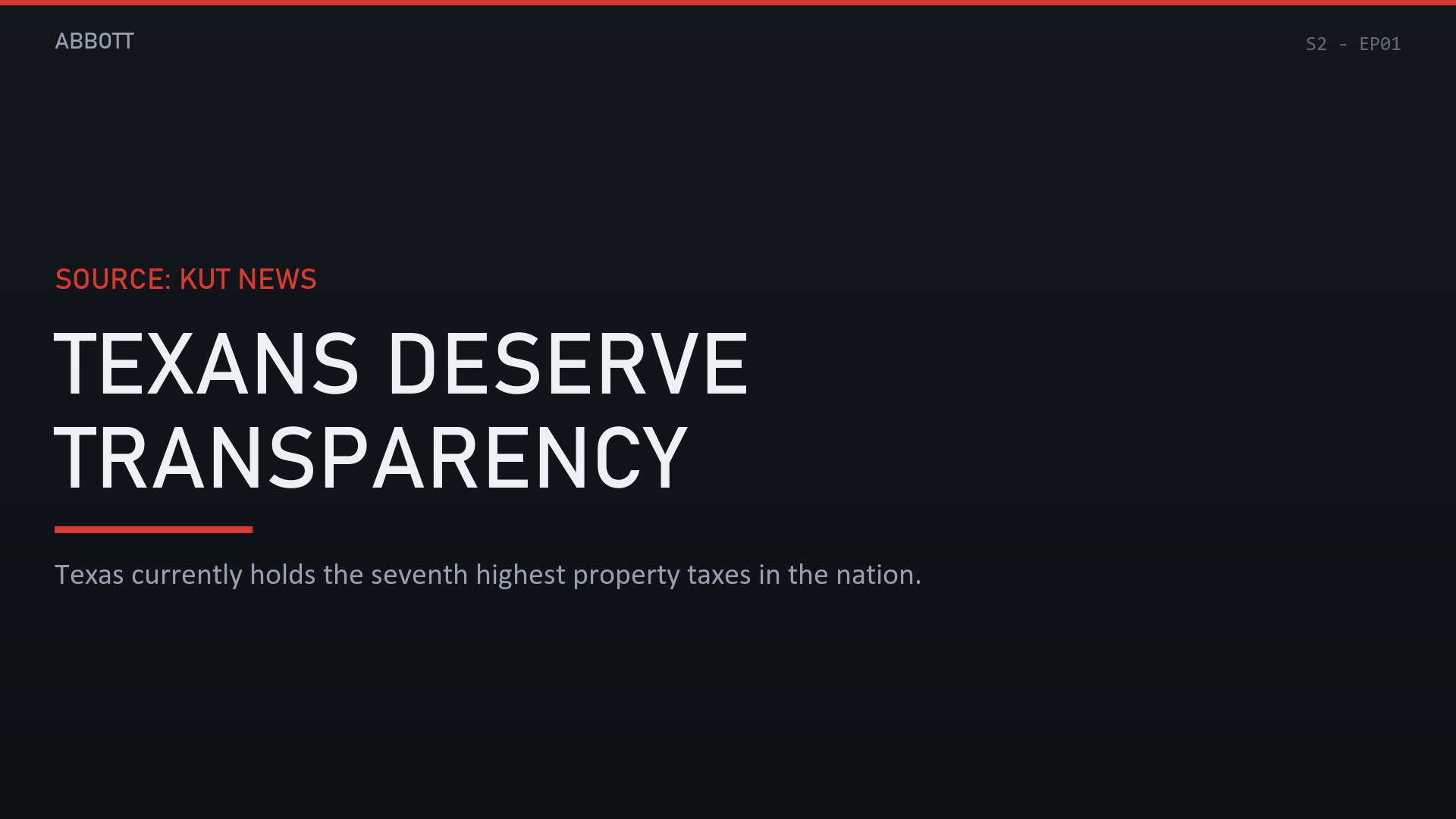
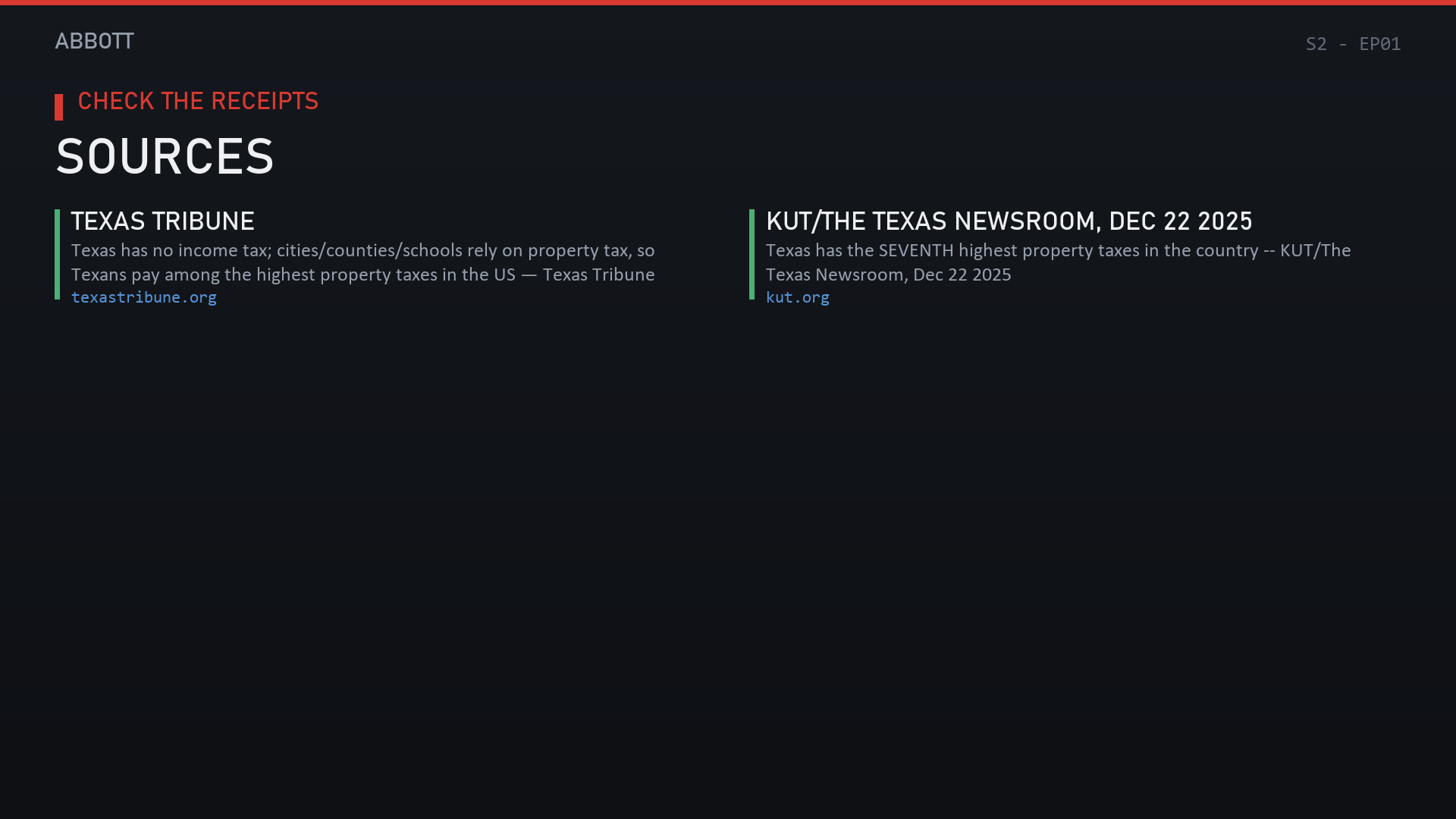
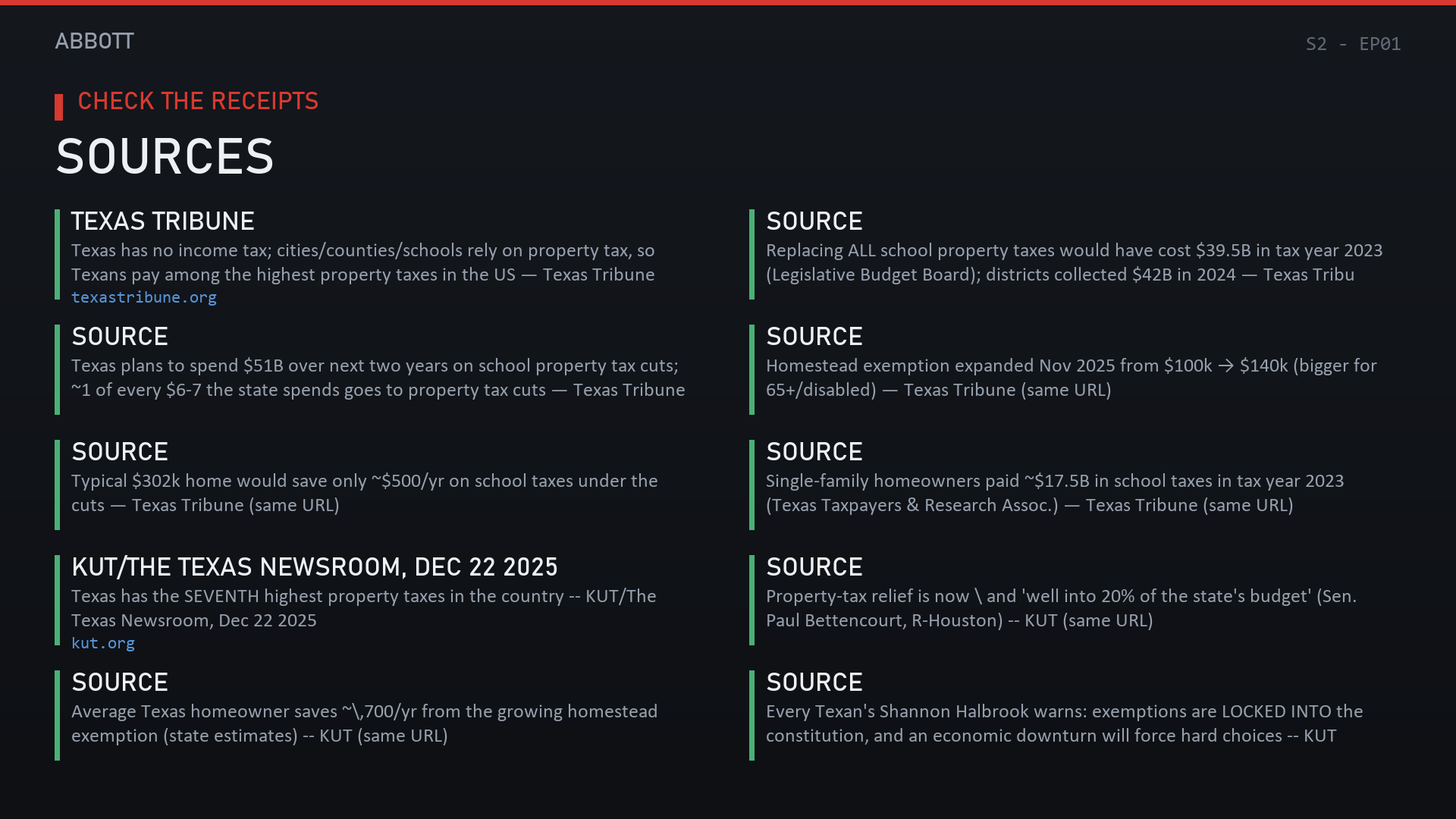
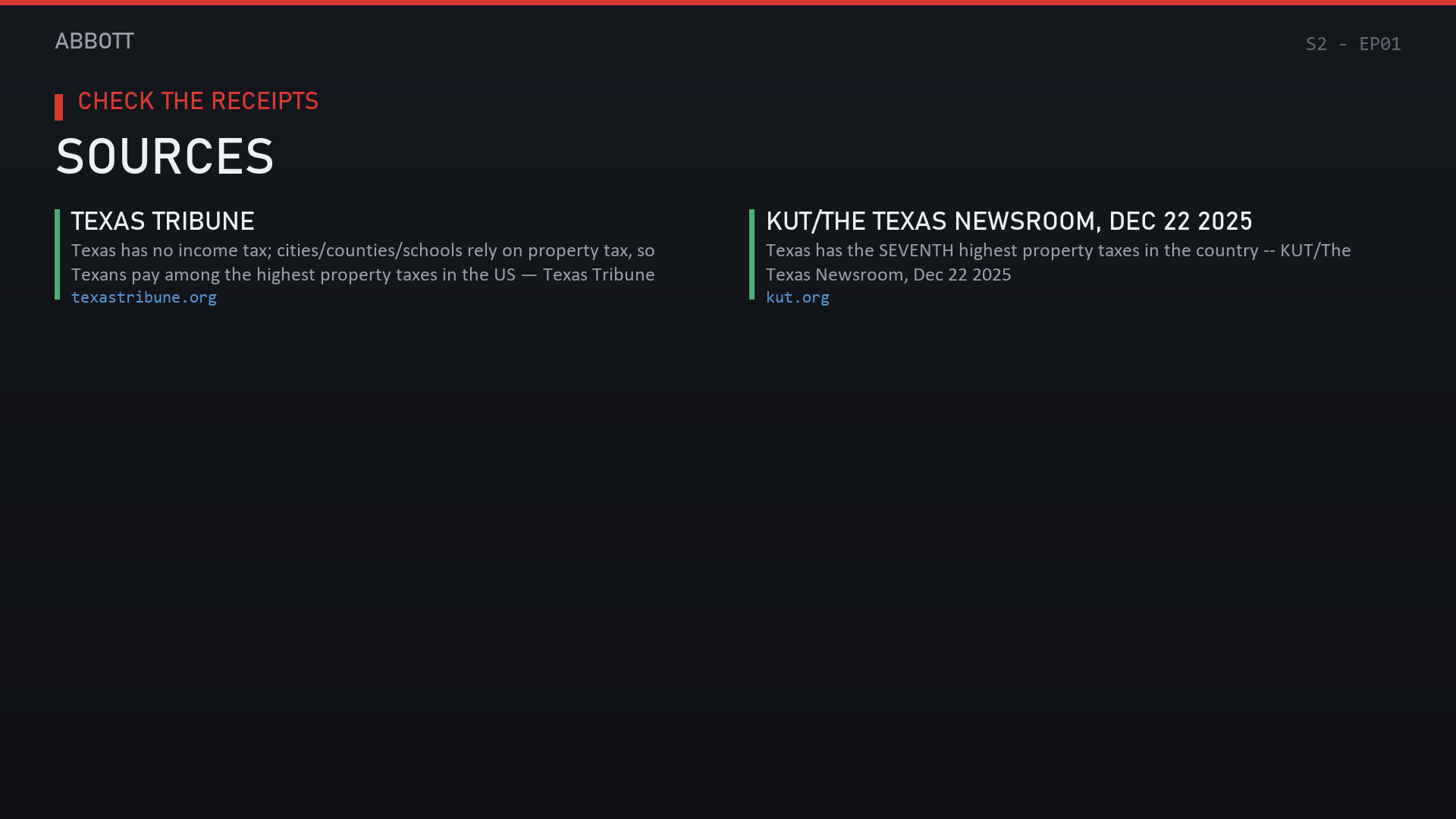
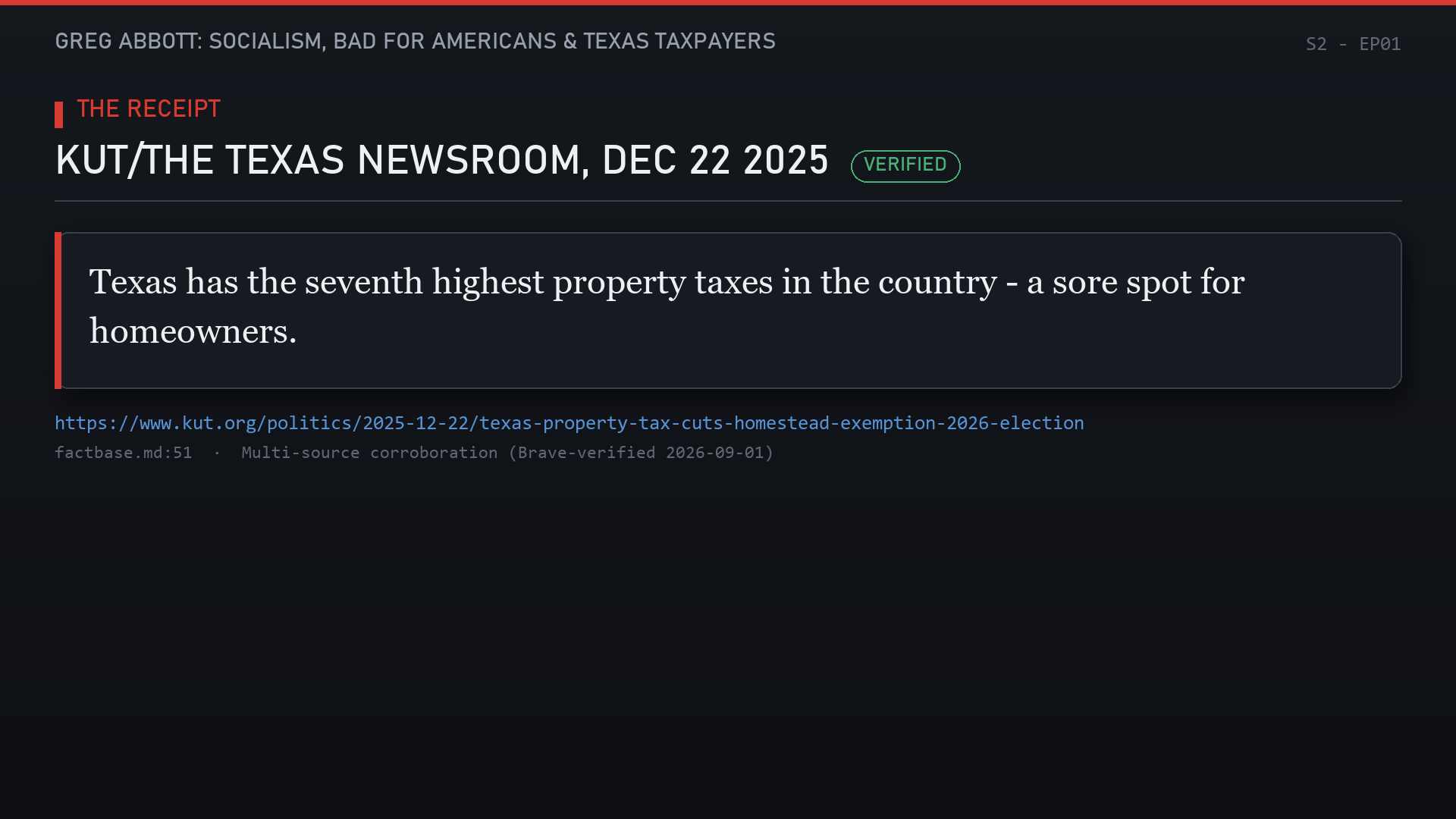
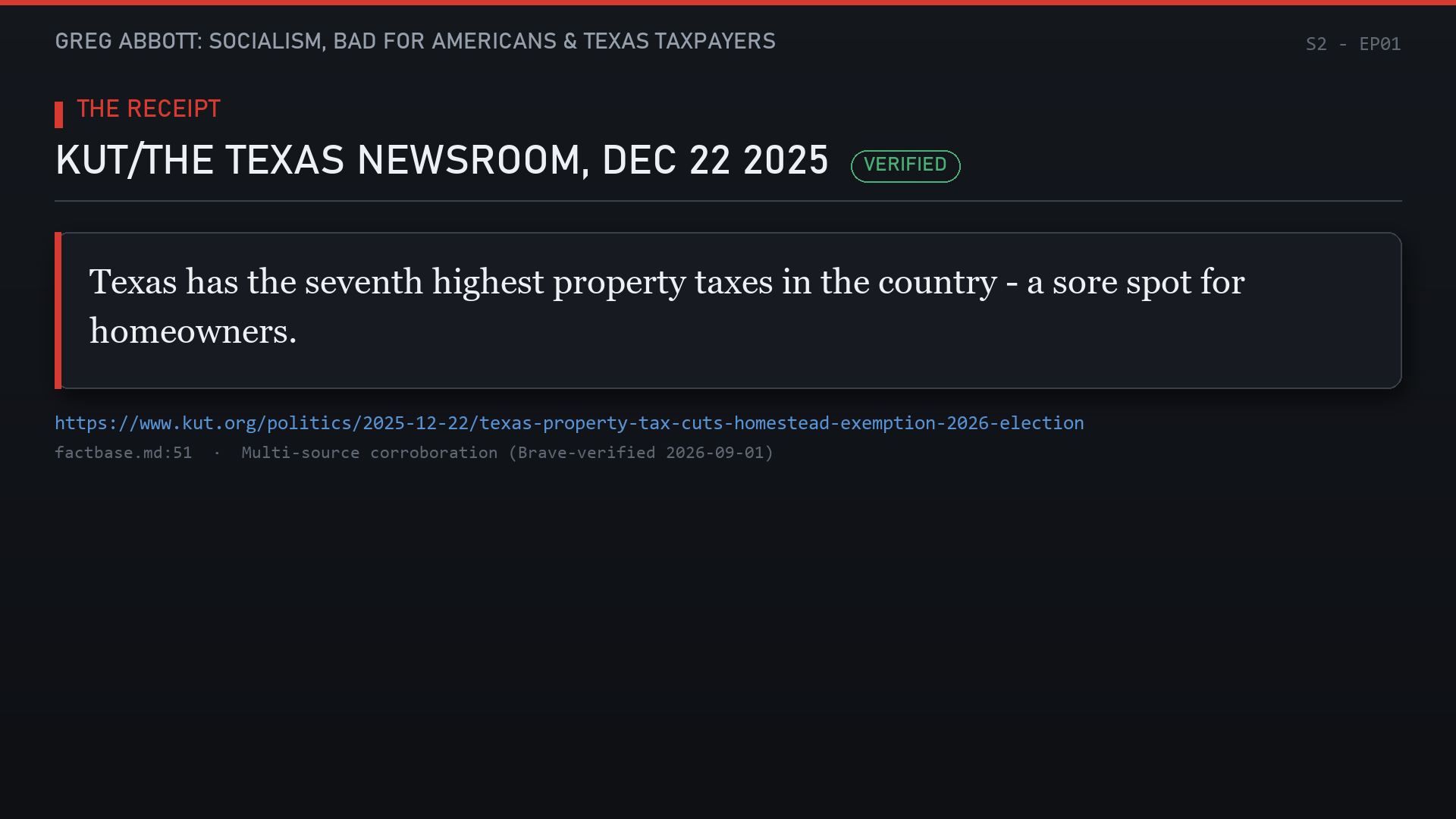
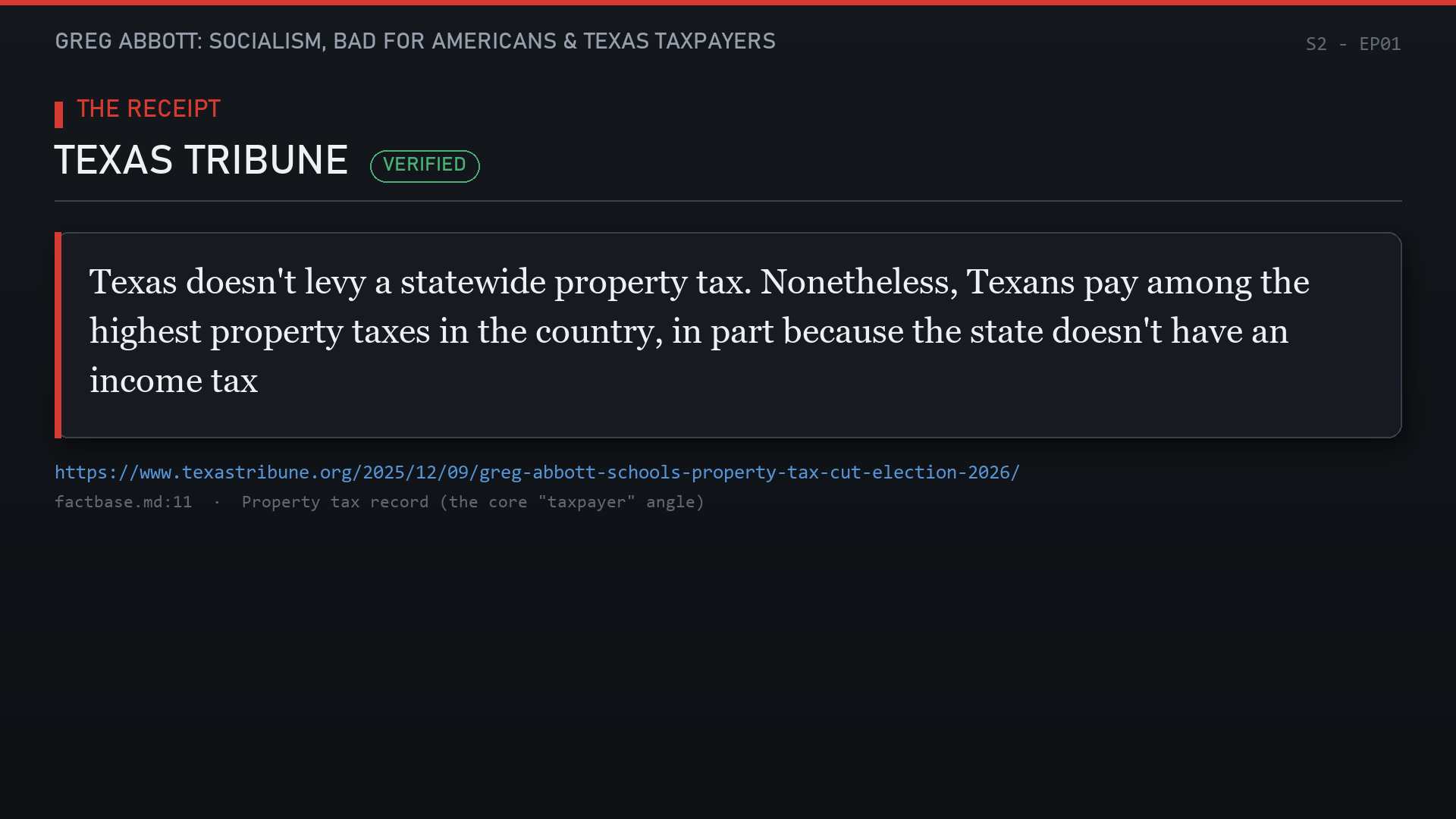
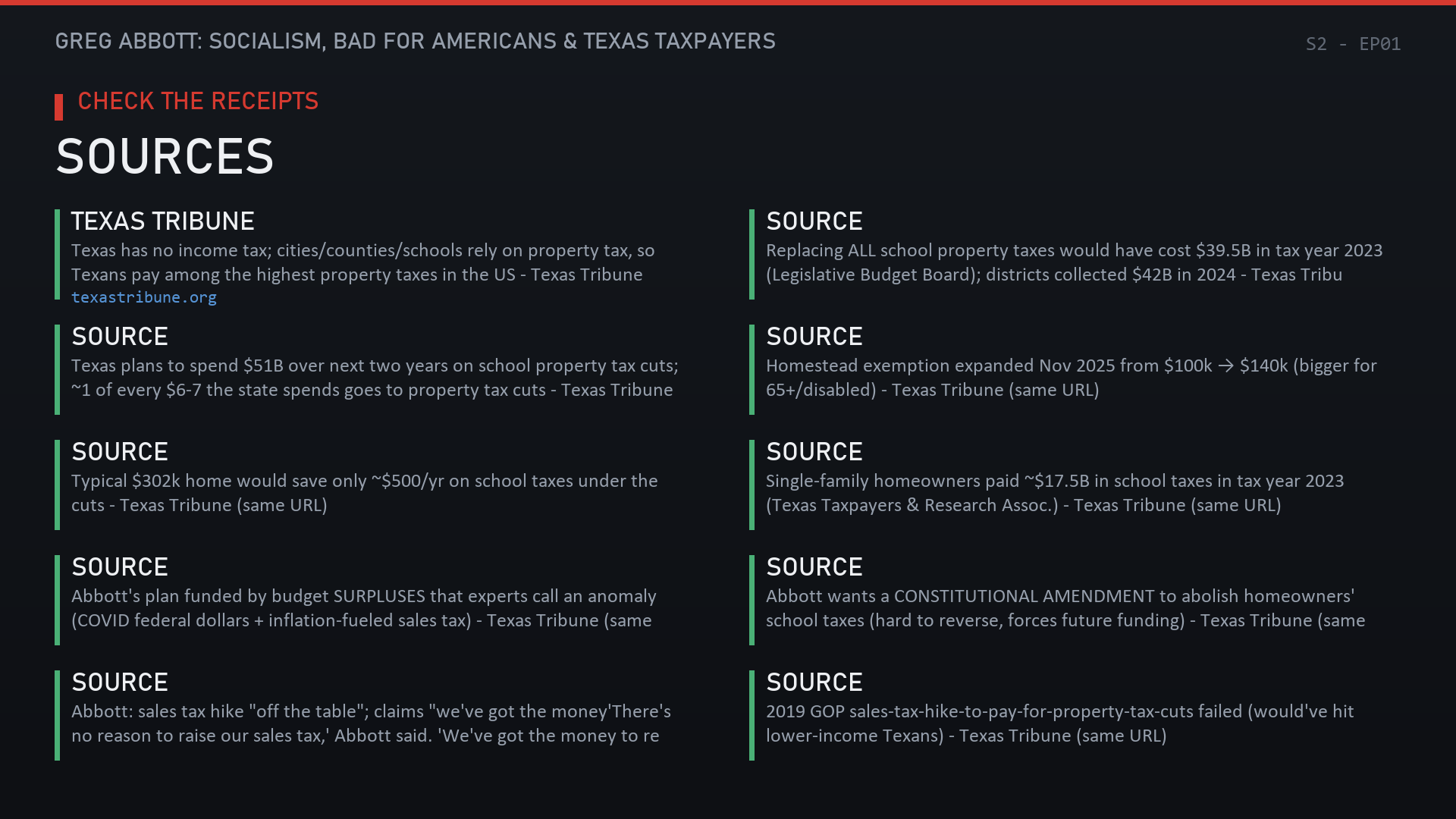
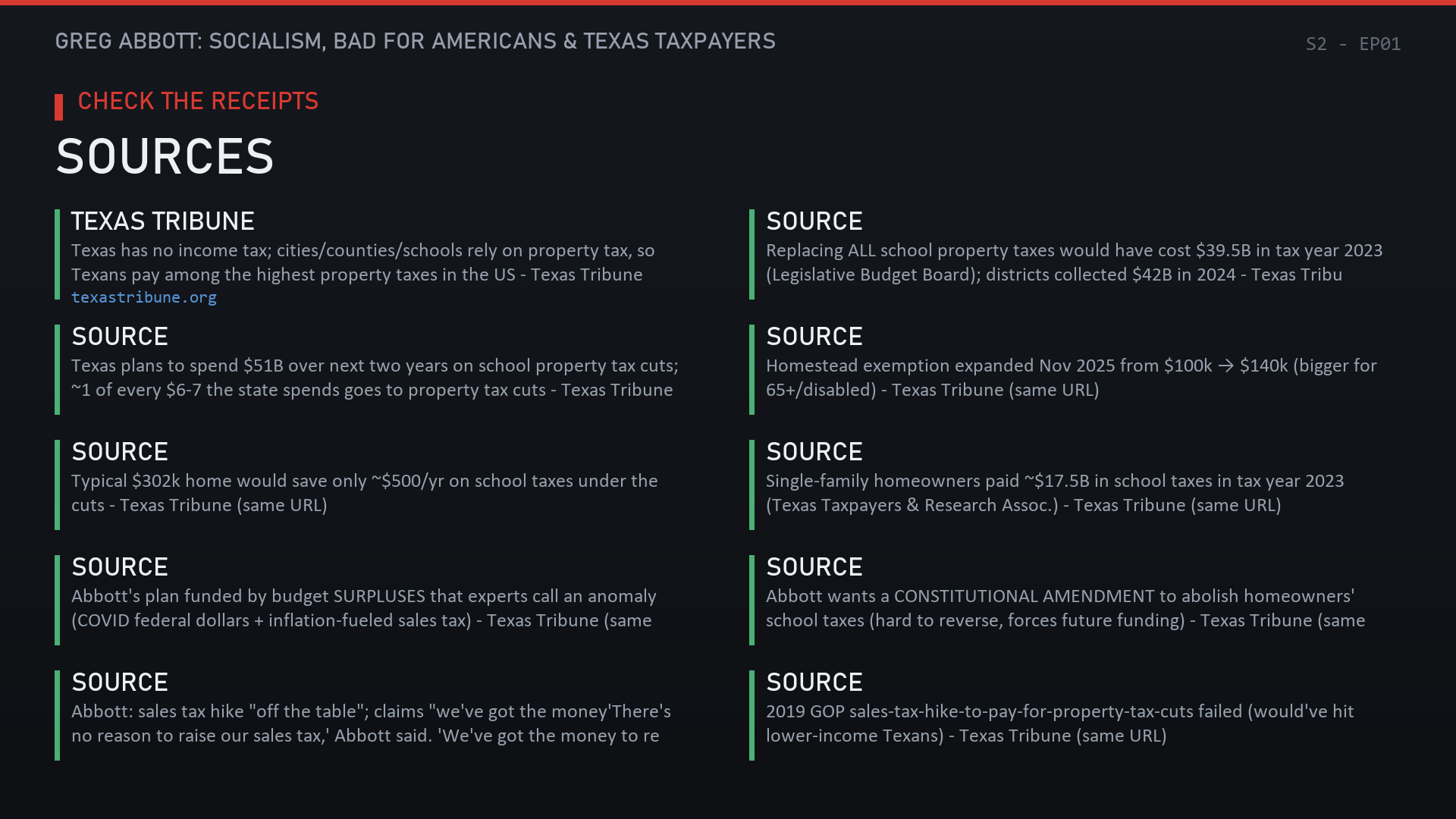
Texas has no income tax. Cities, counties and school districts lean on property tax instead — which is part of why Texans pay among the highest property taxes in the country, per the Texas Tribune.
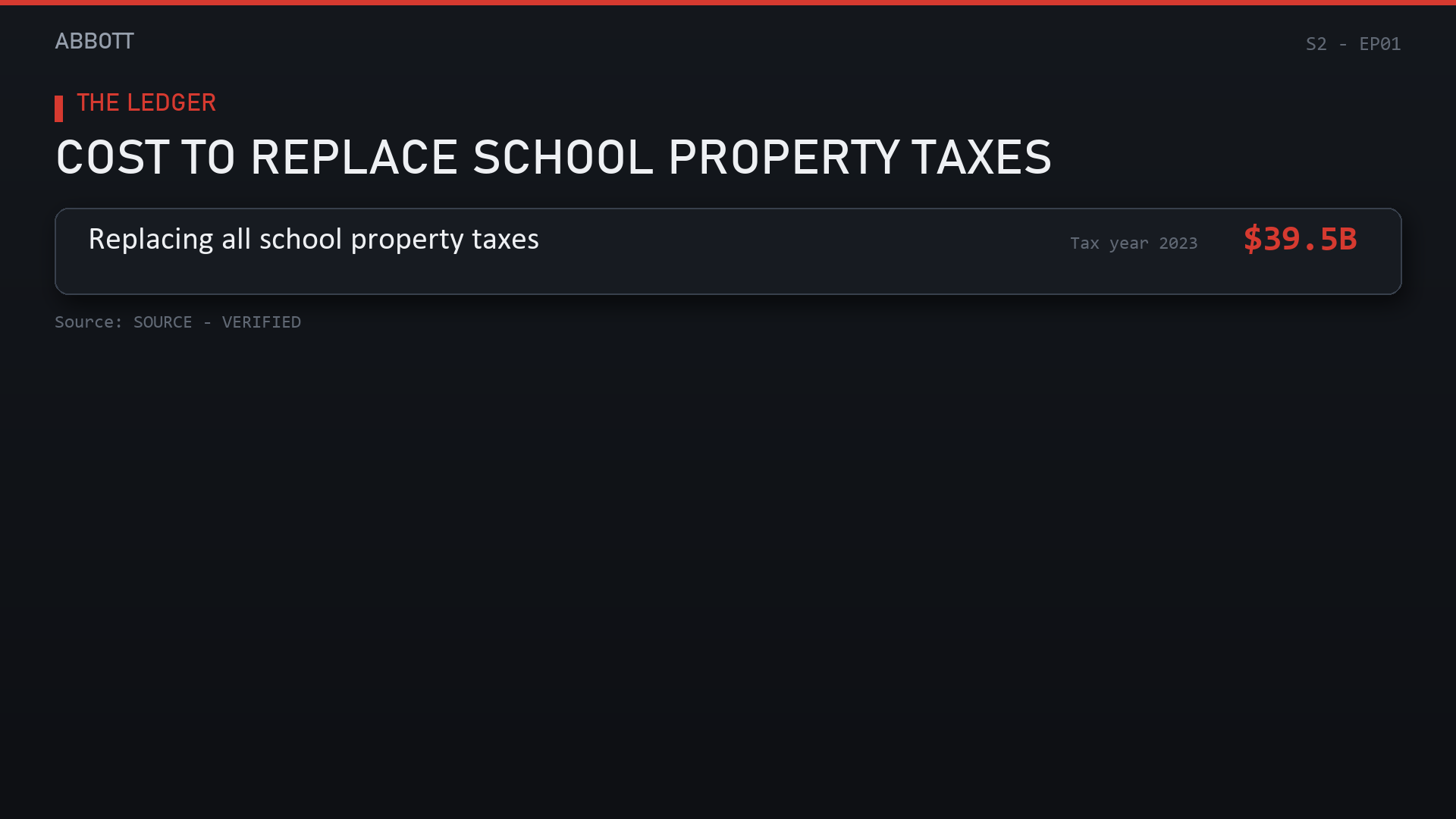
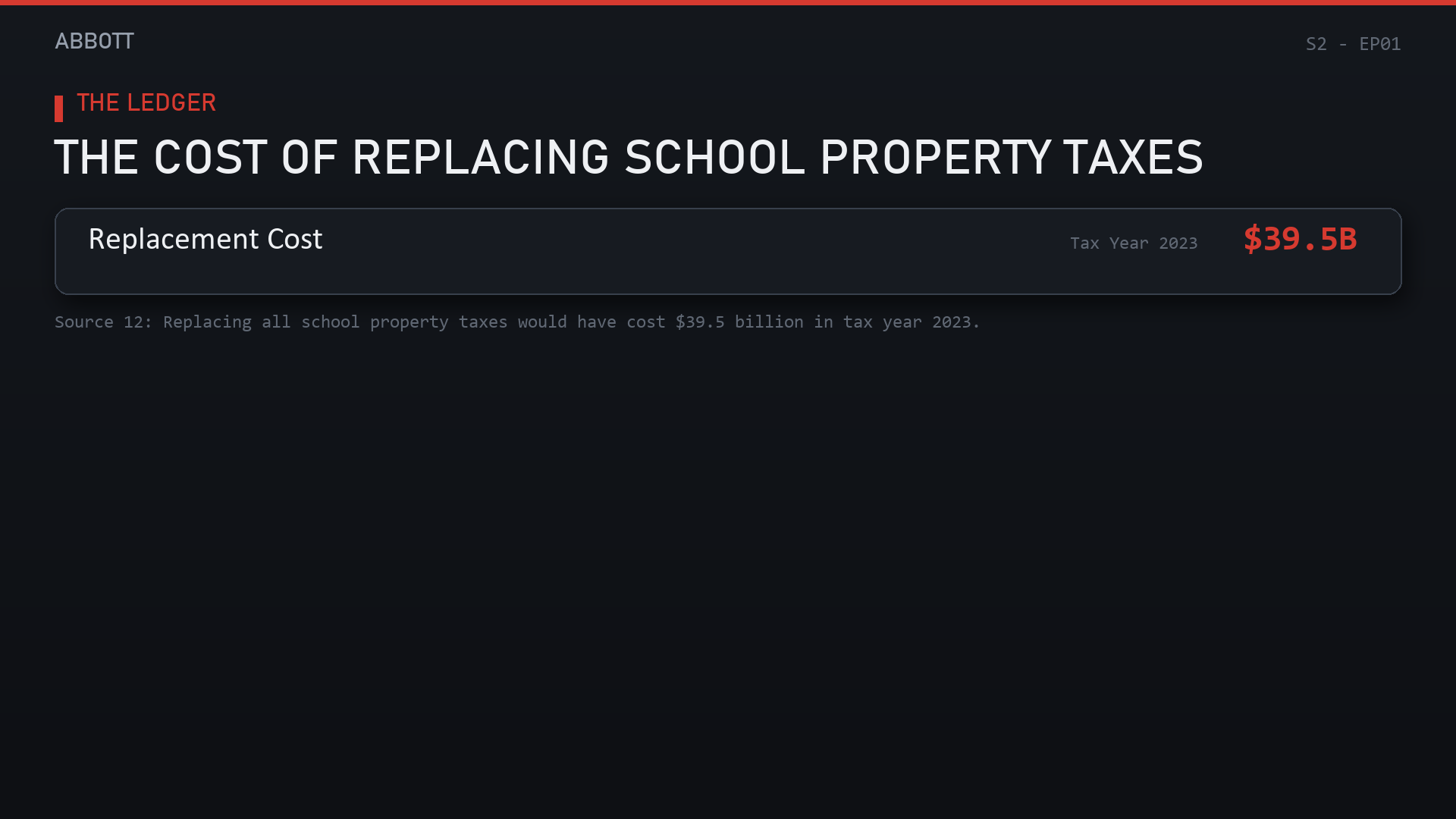
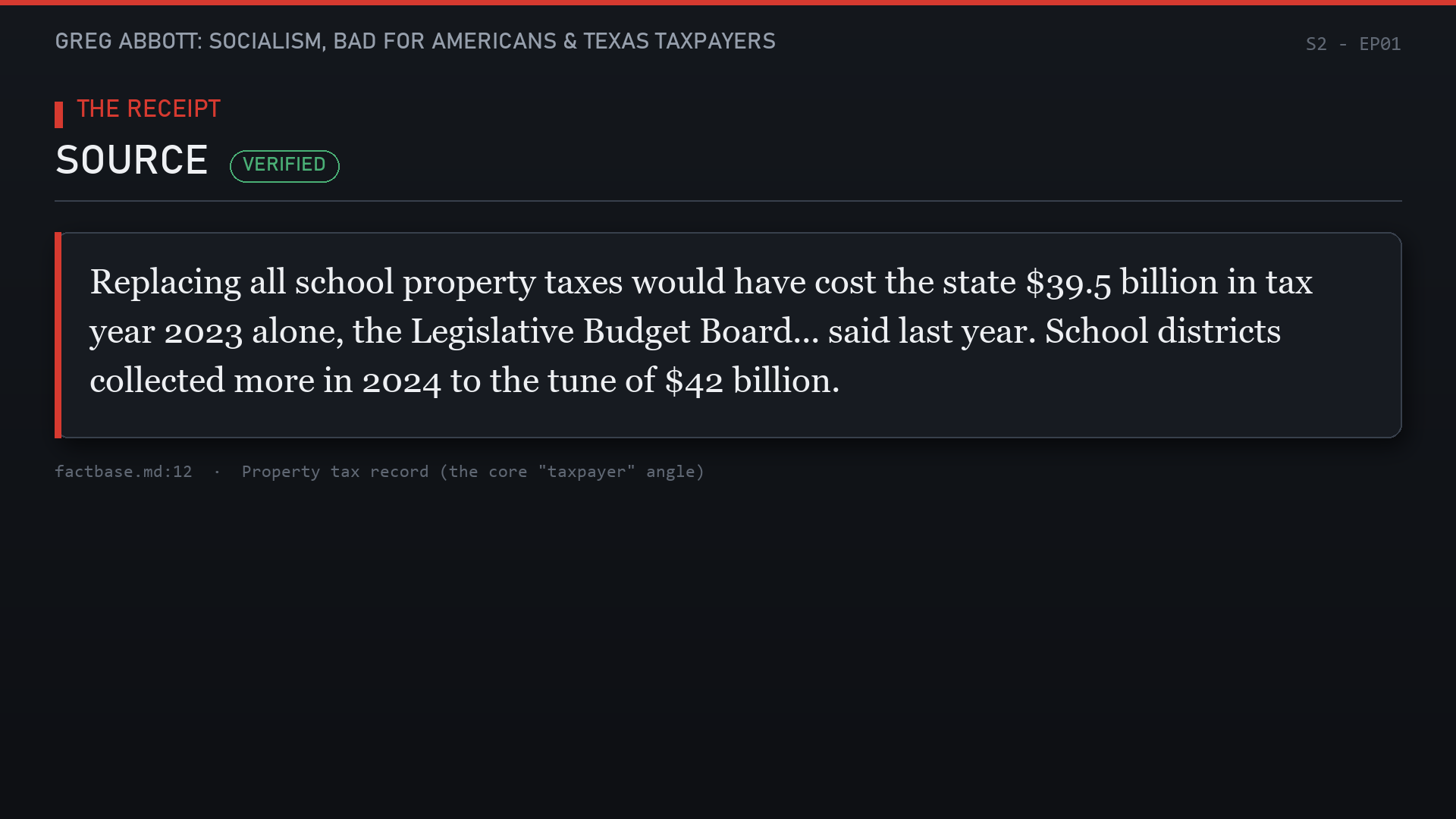
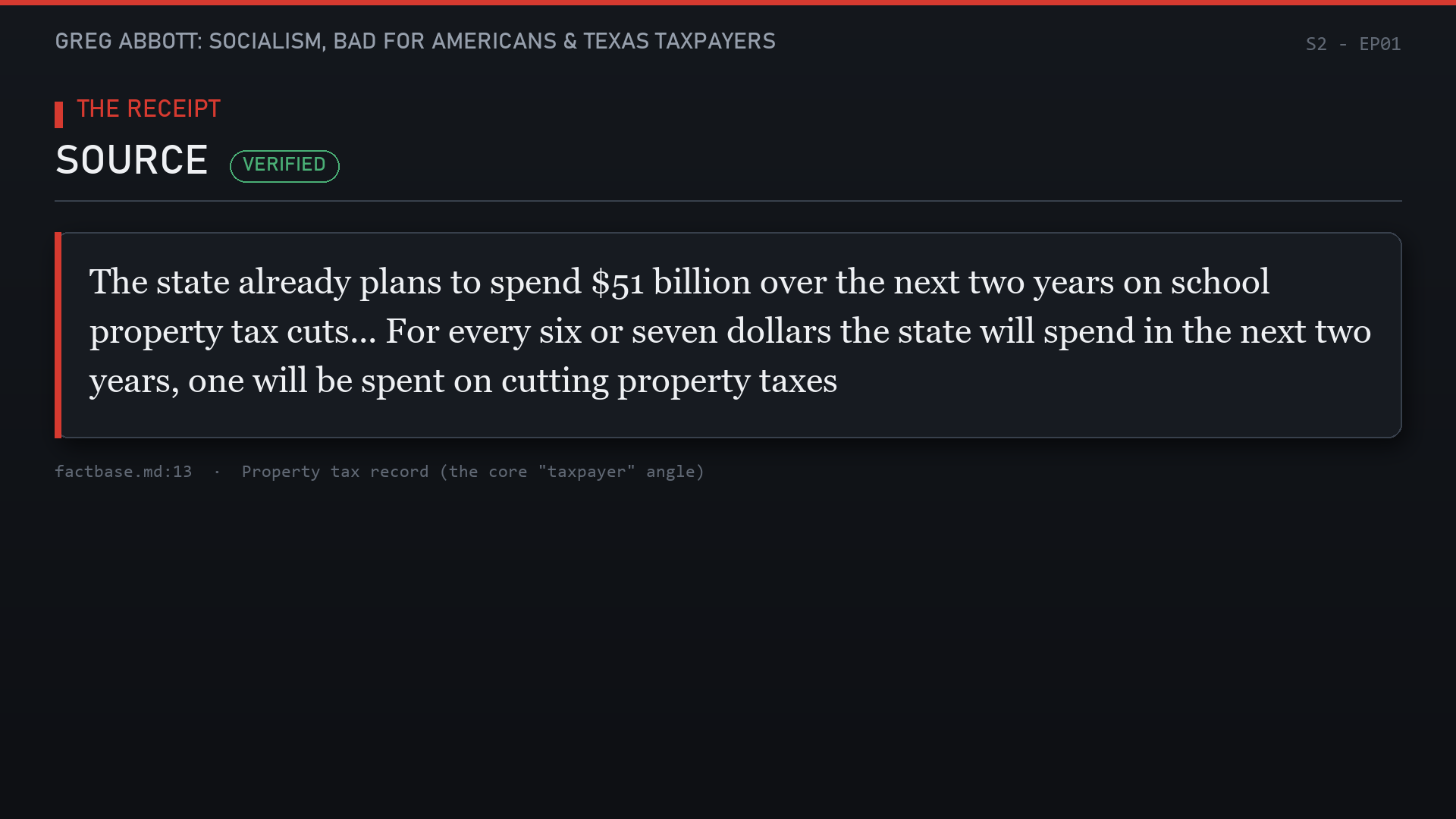
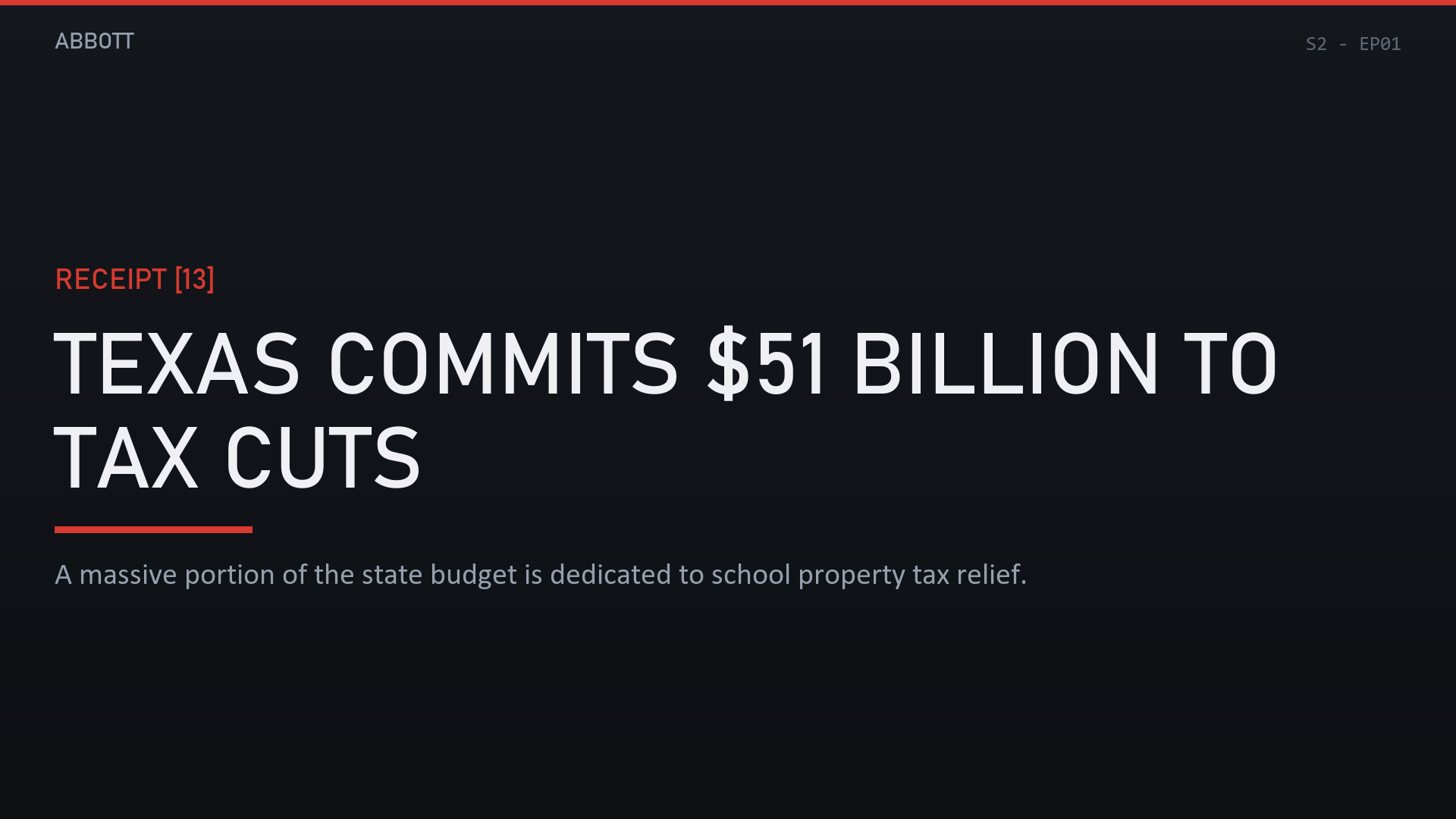
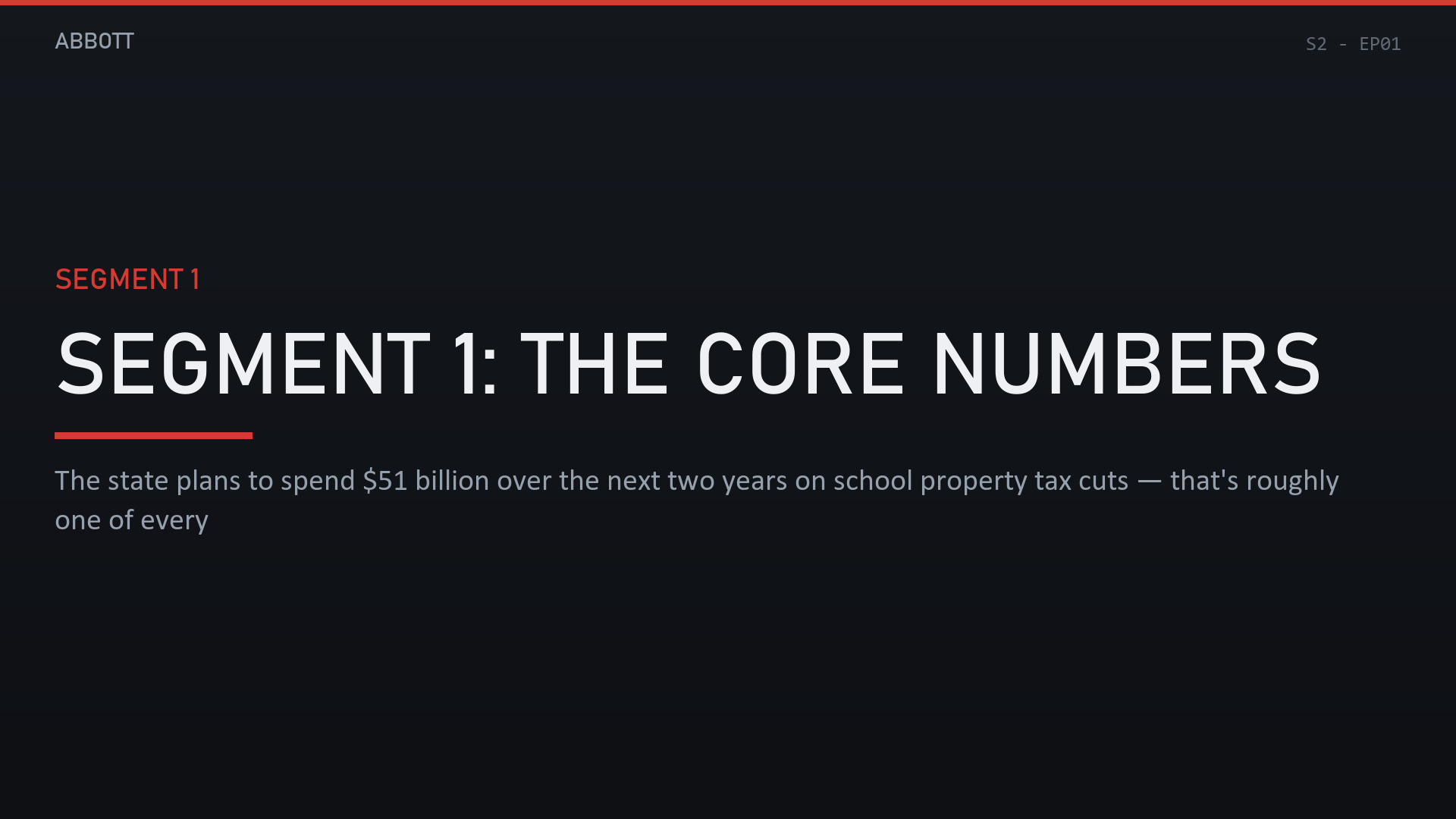
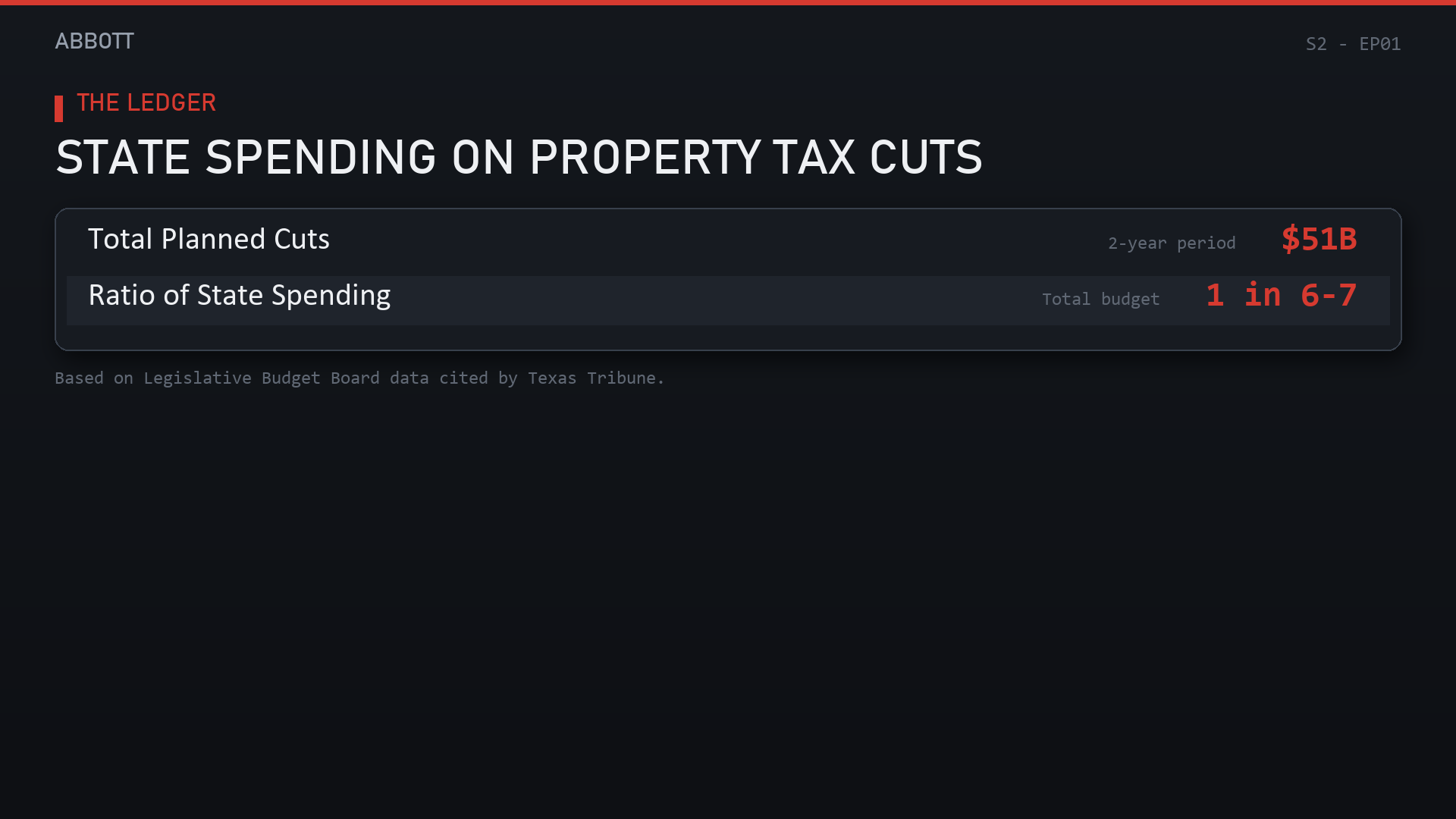
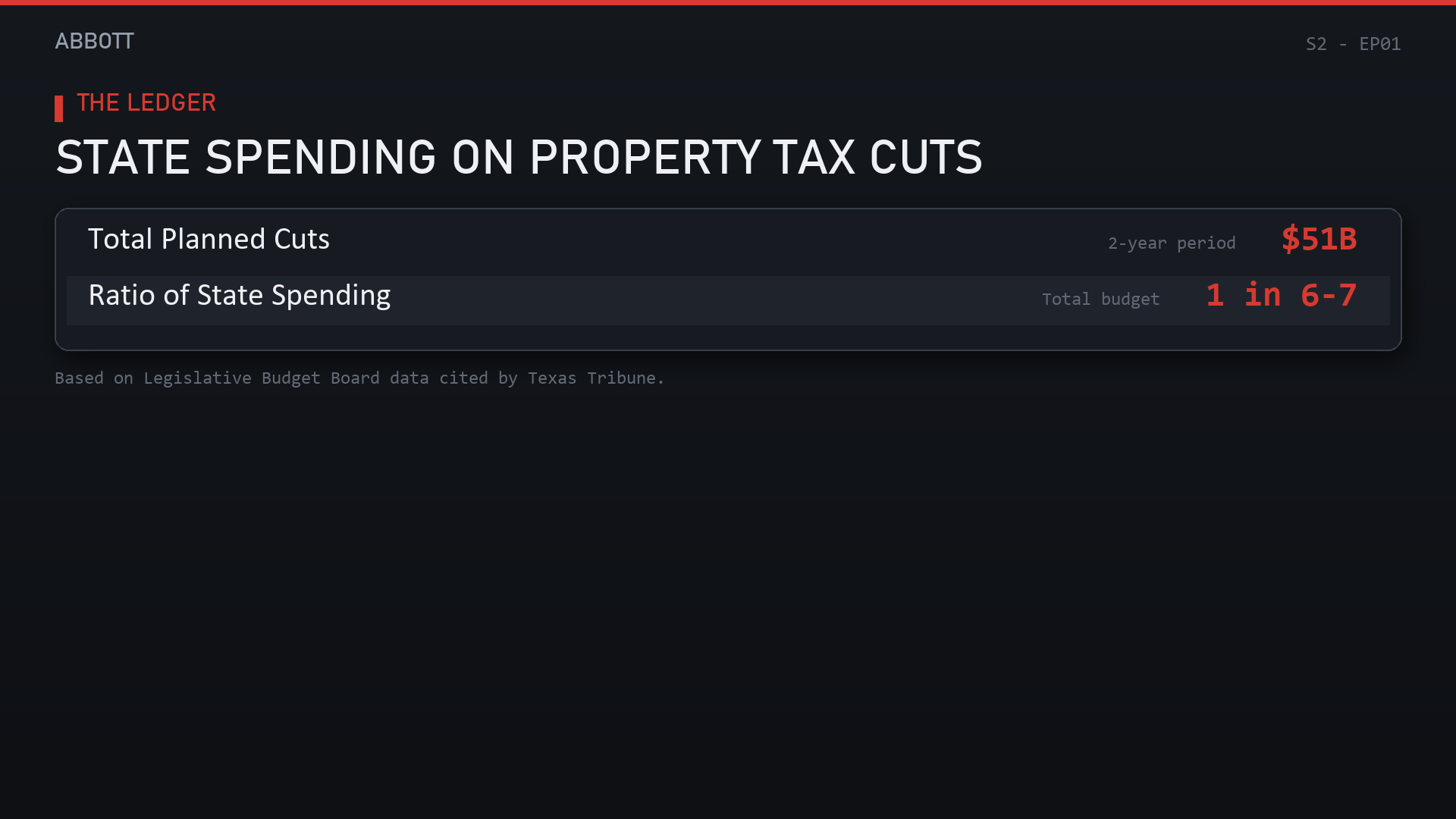
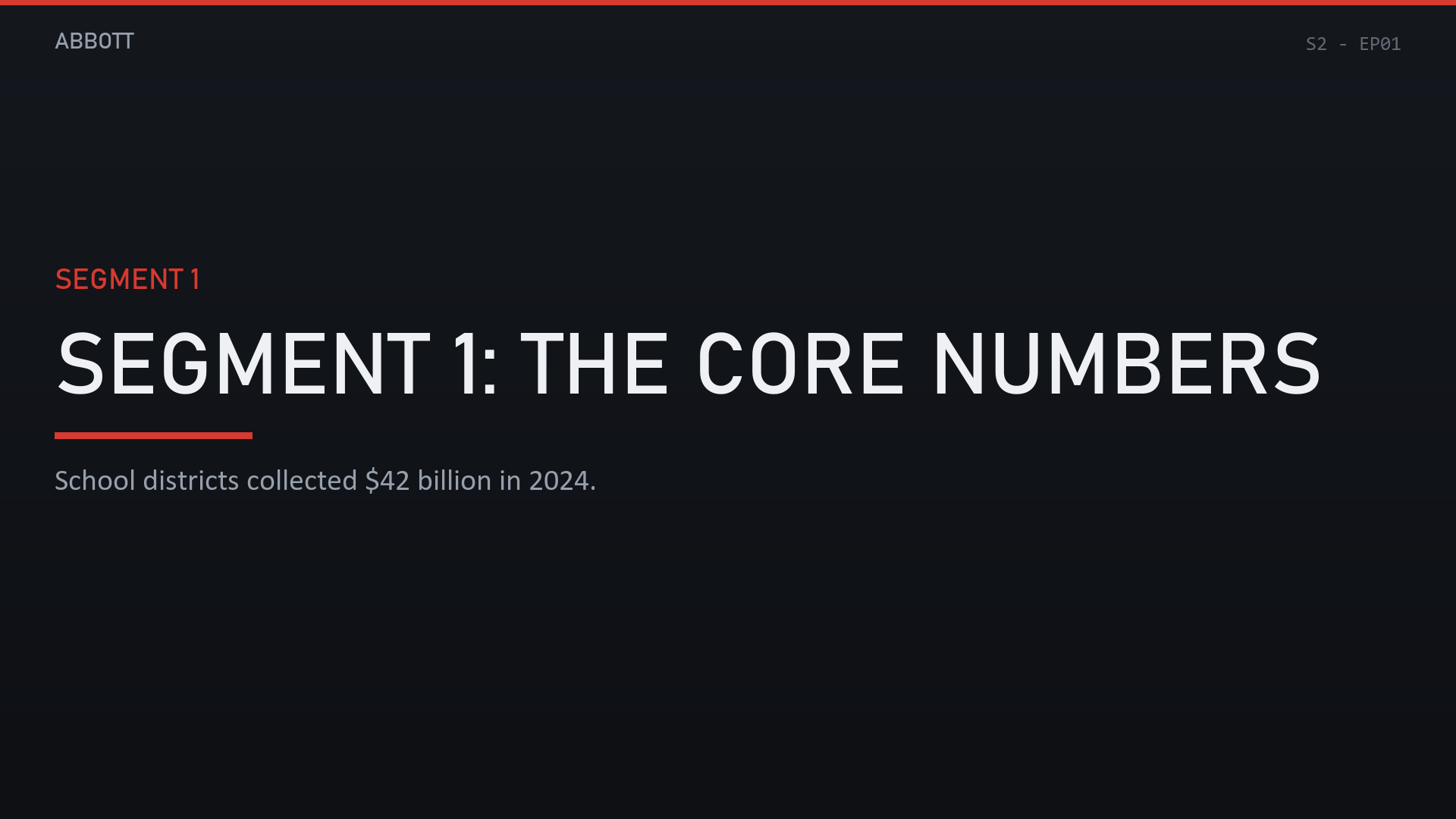
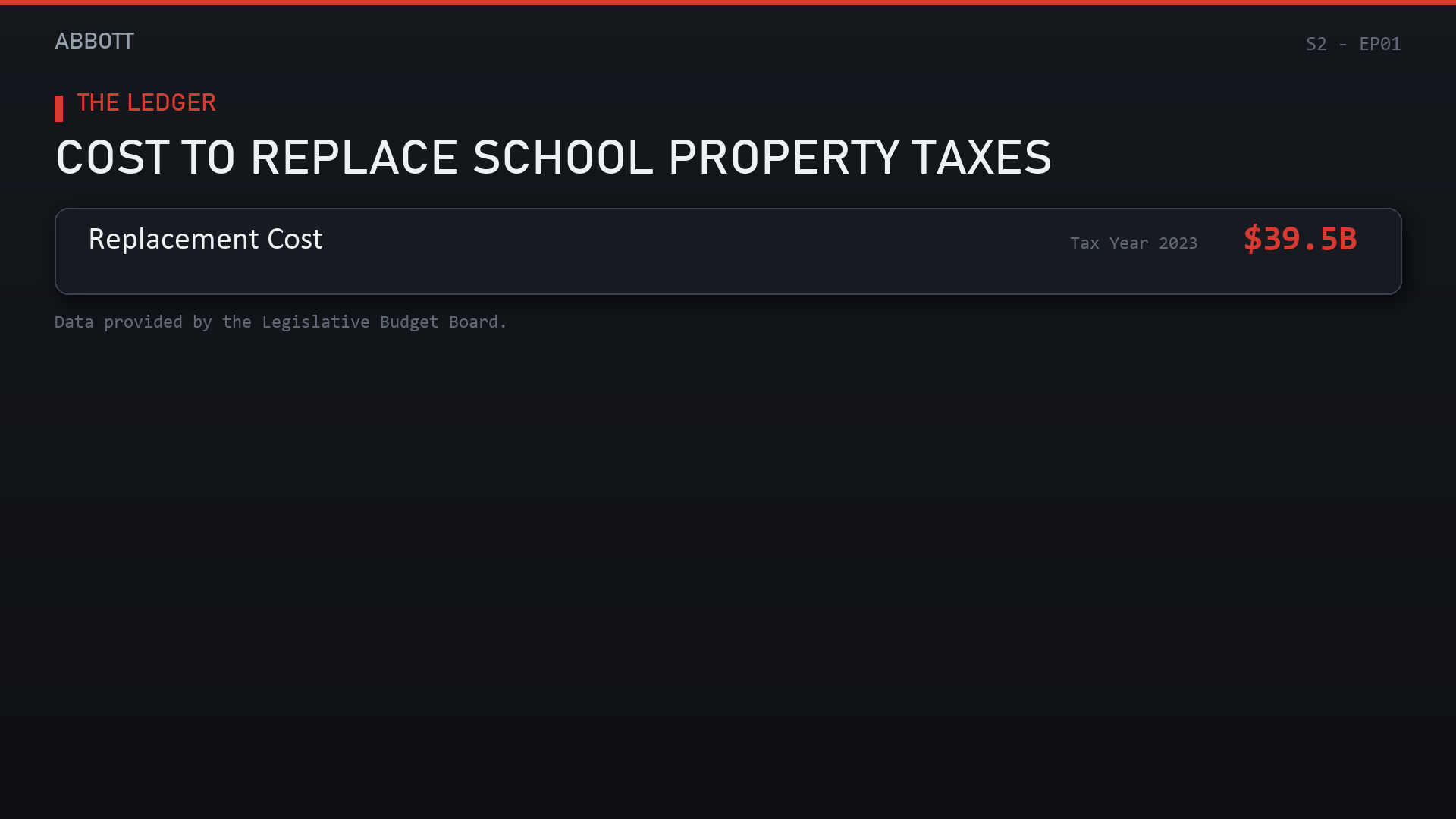
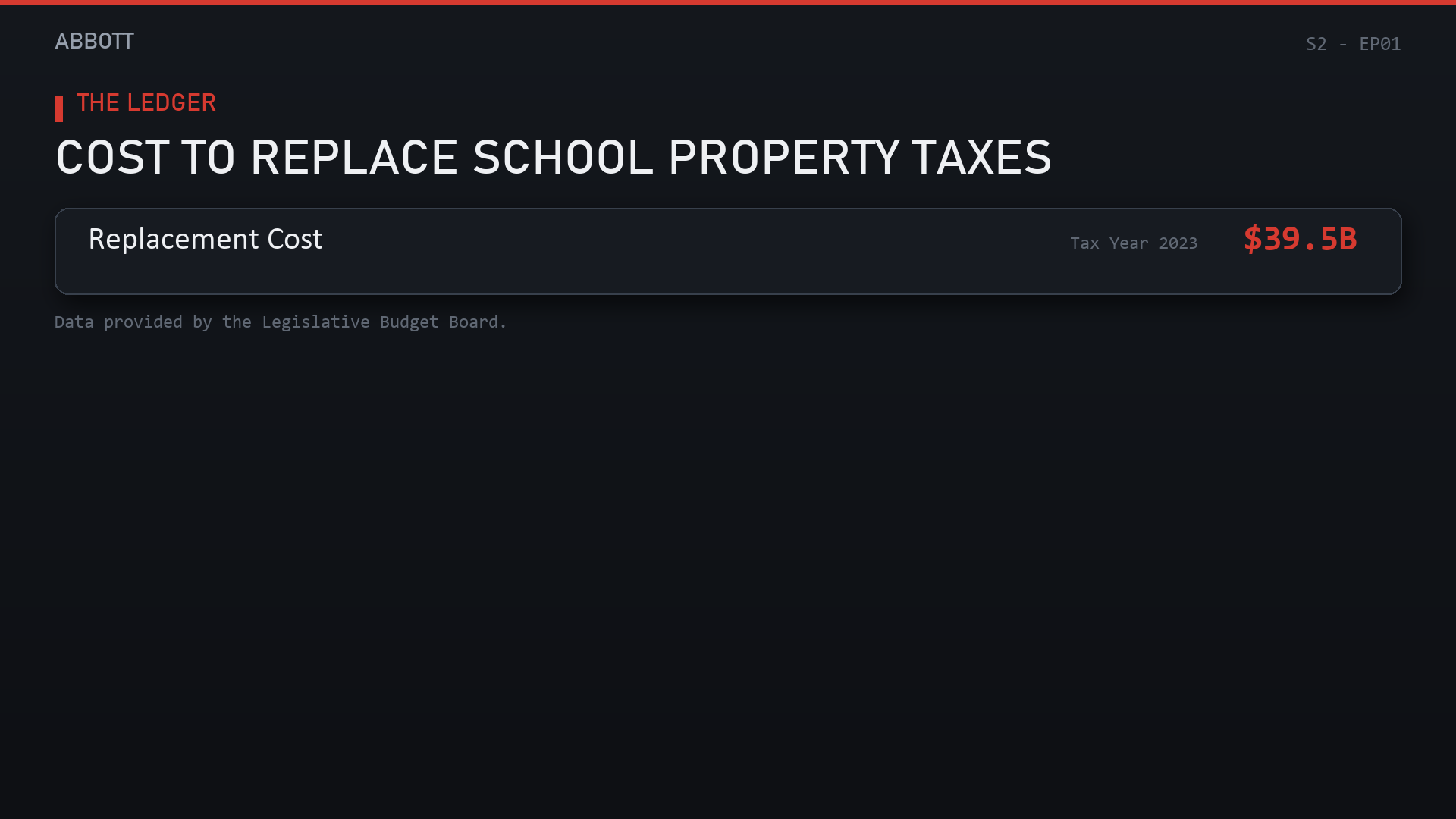
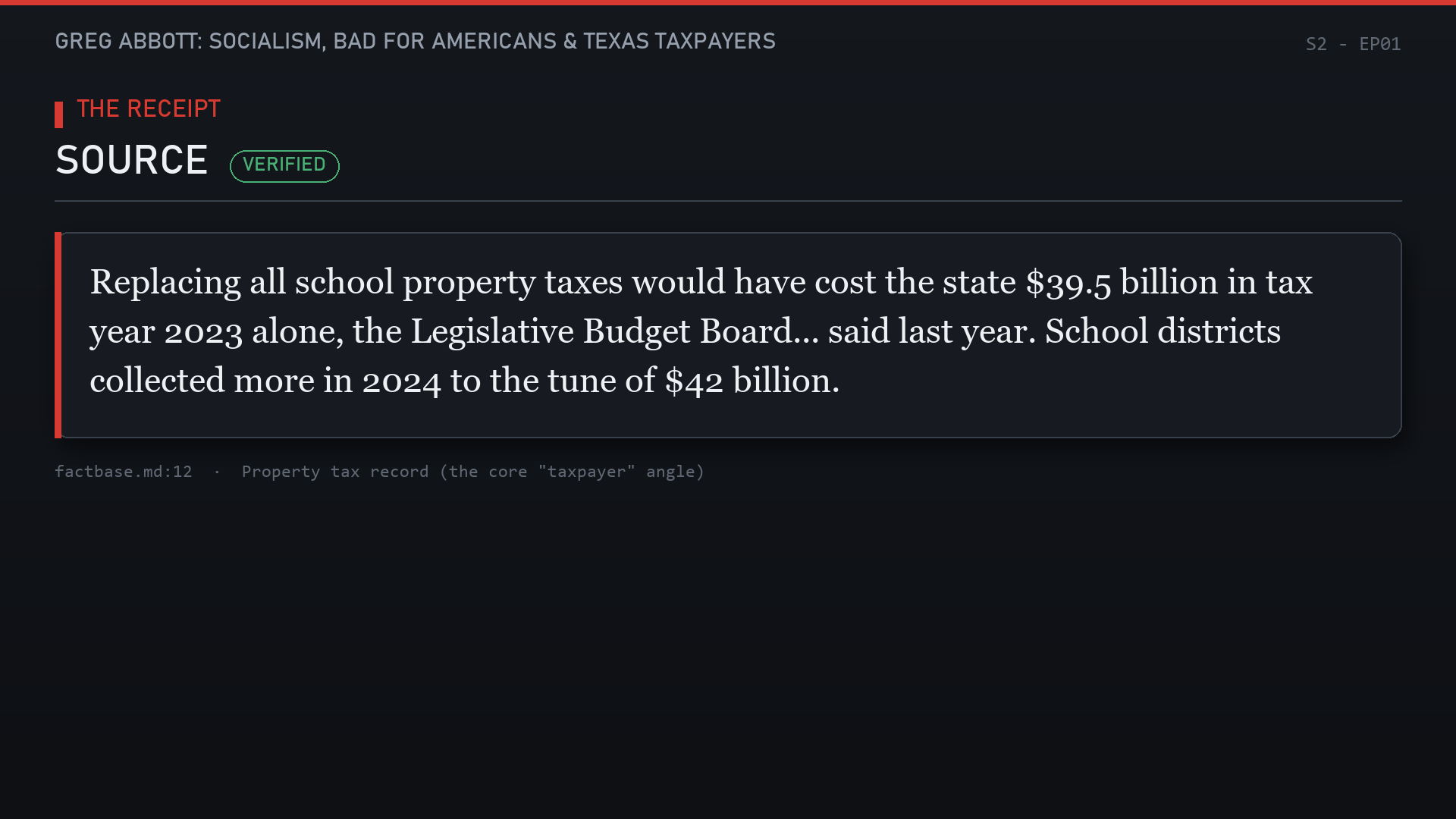
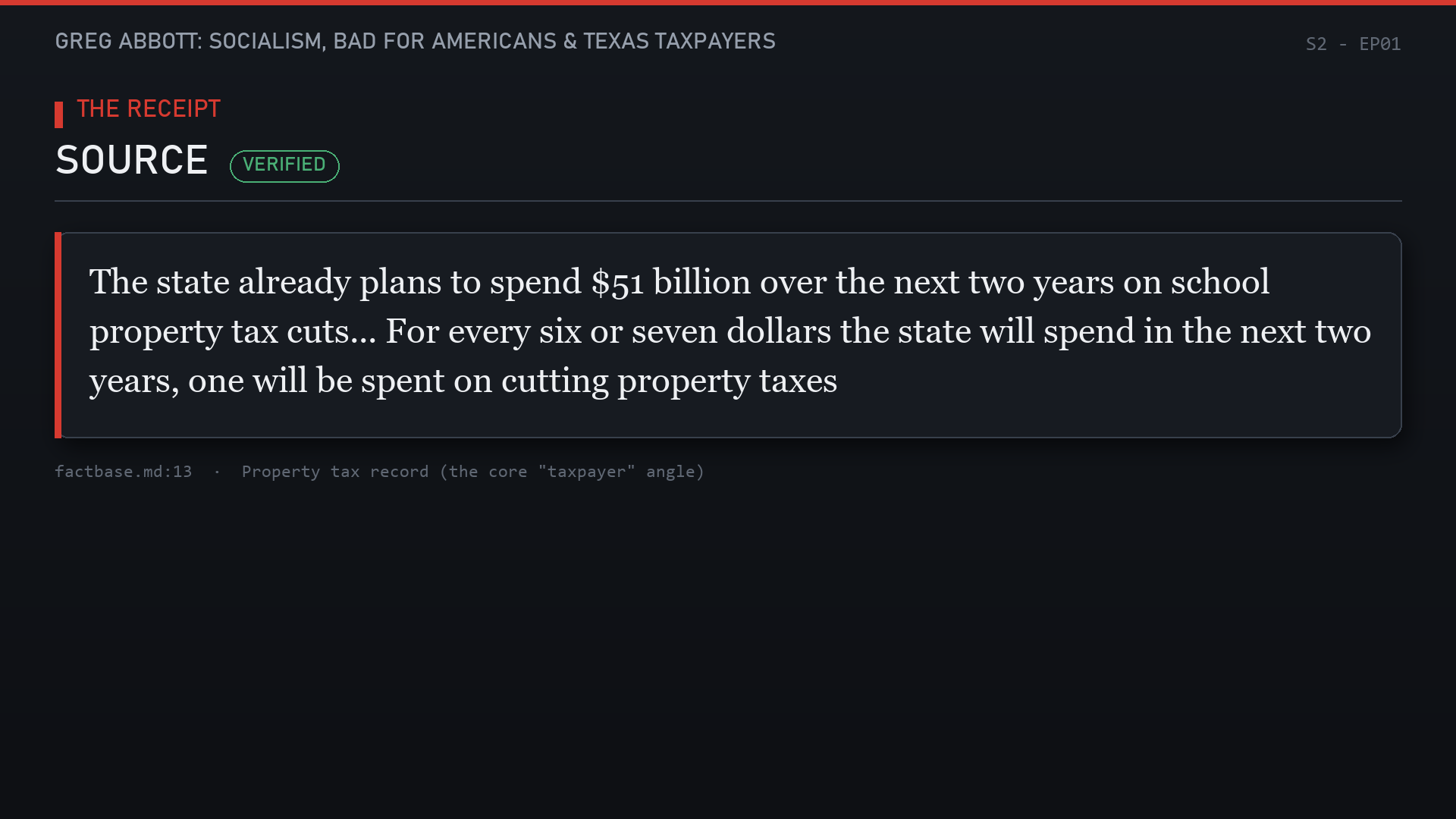
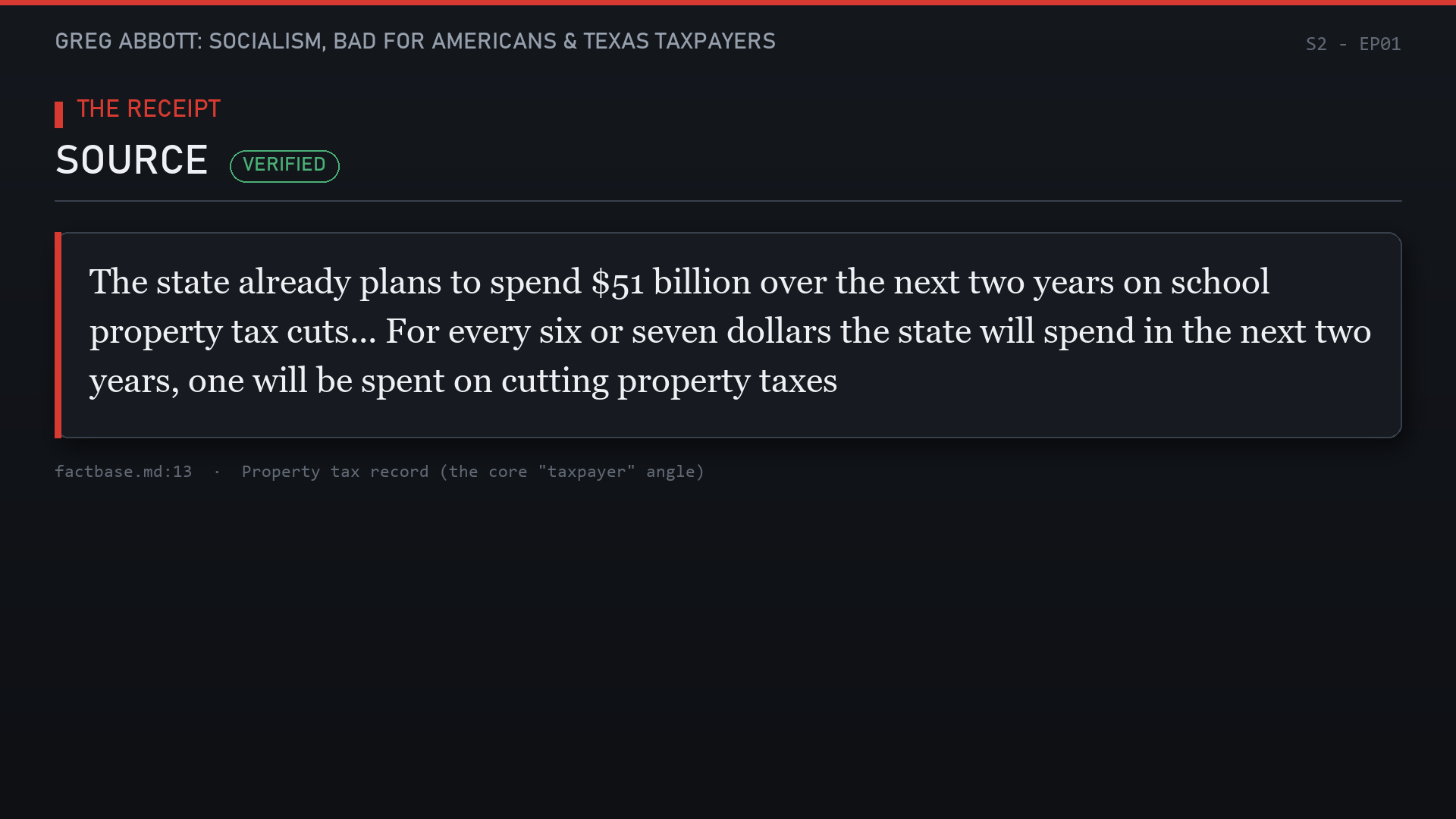
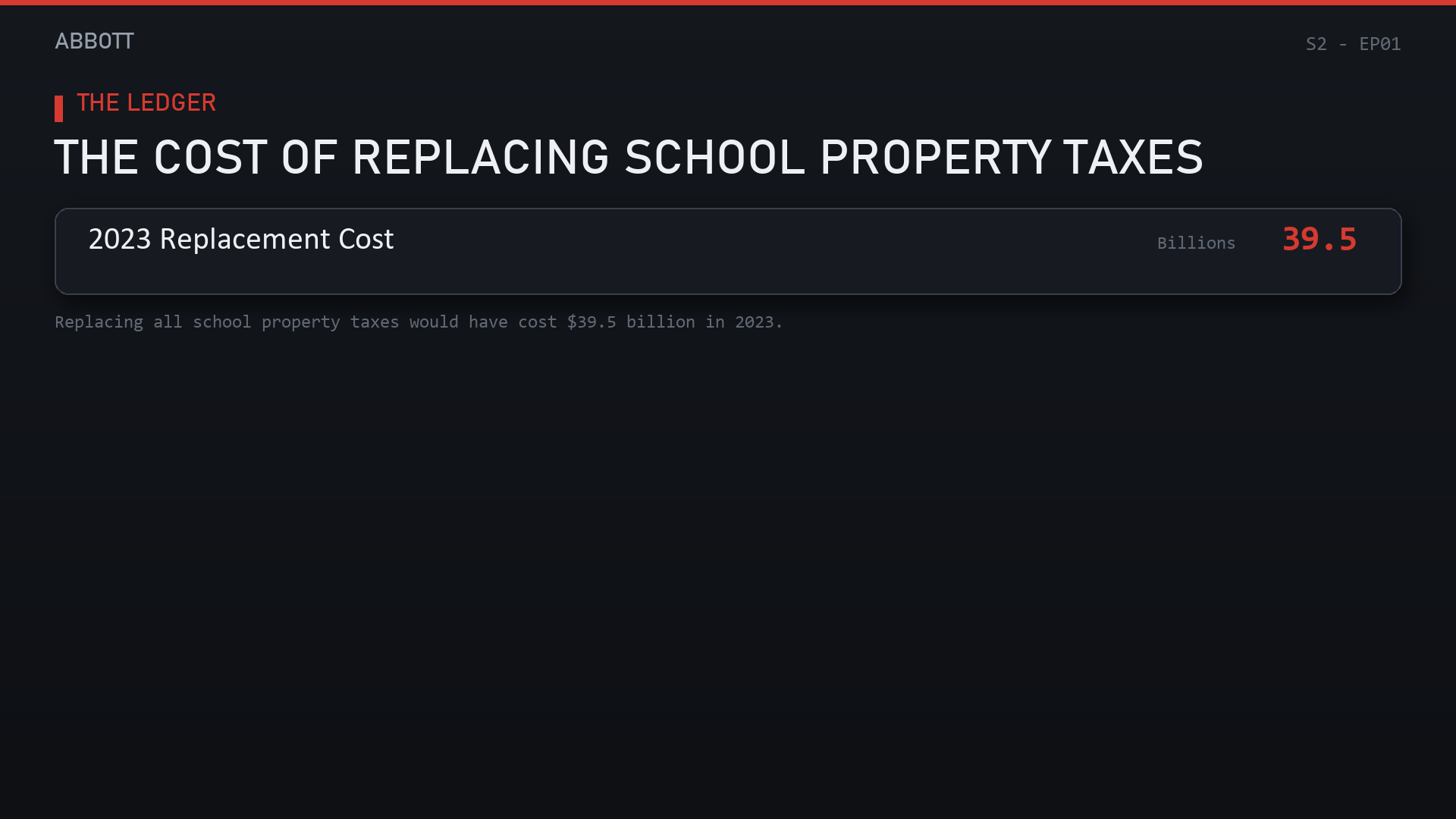
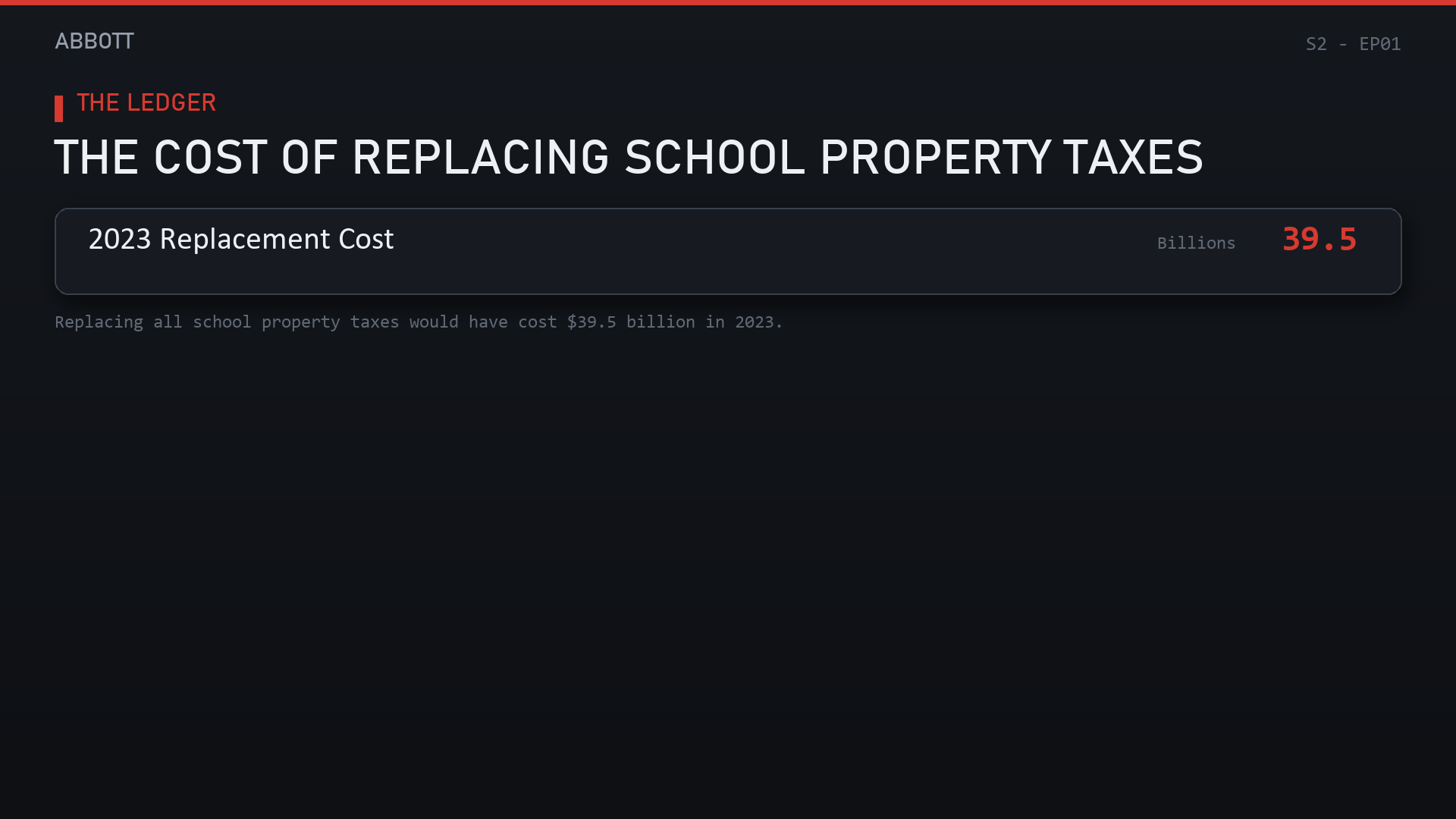
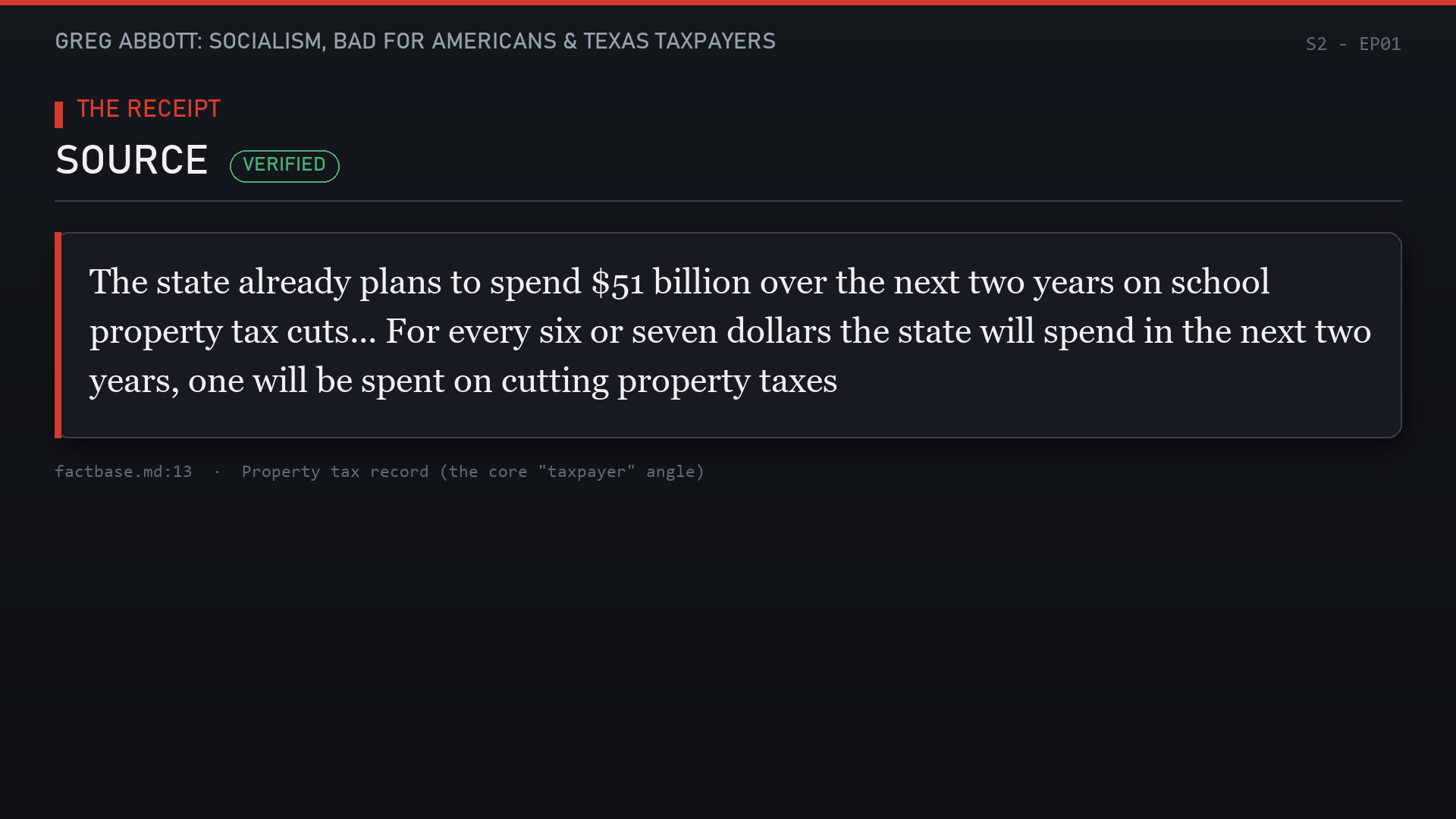
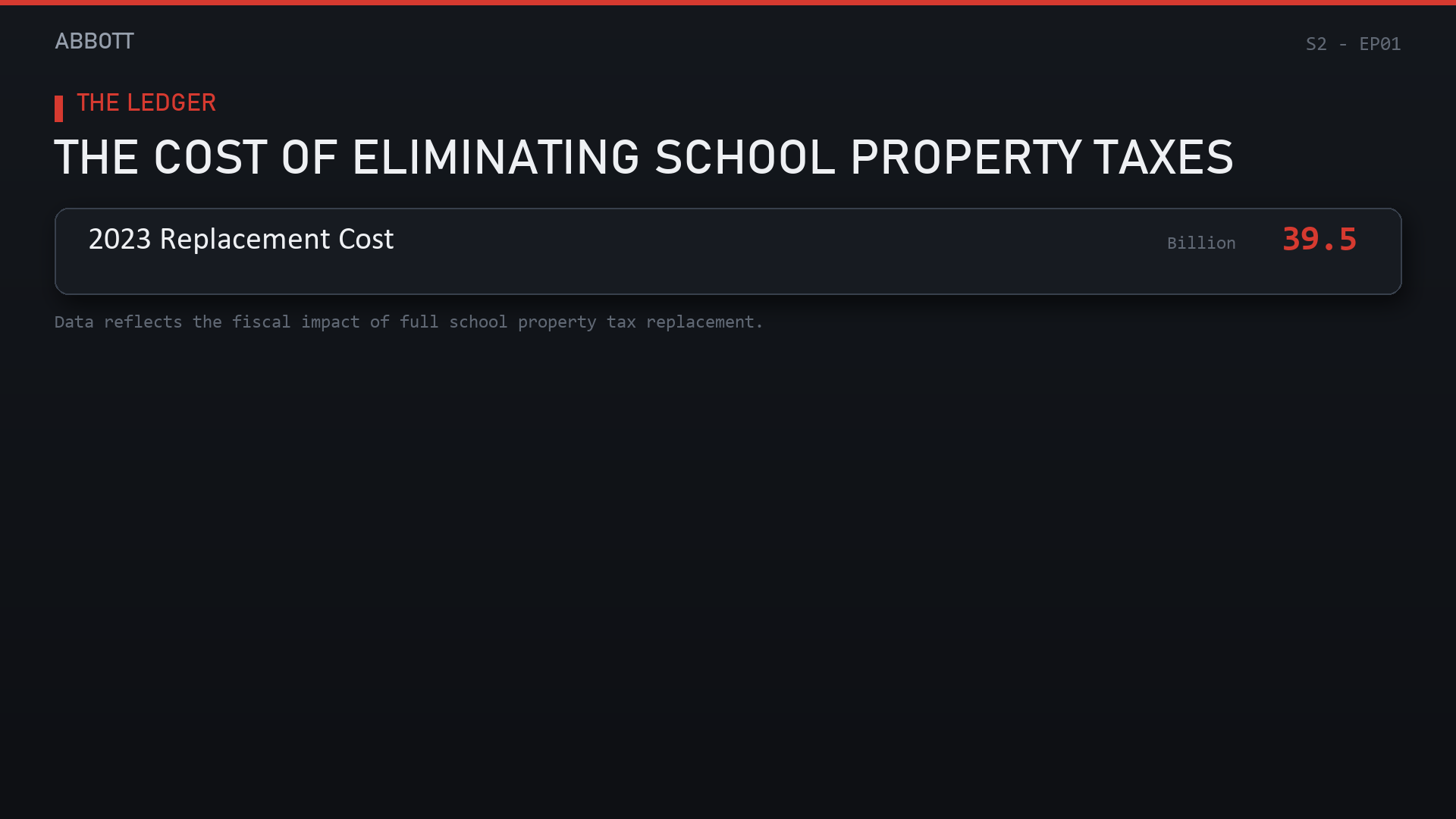
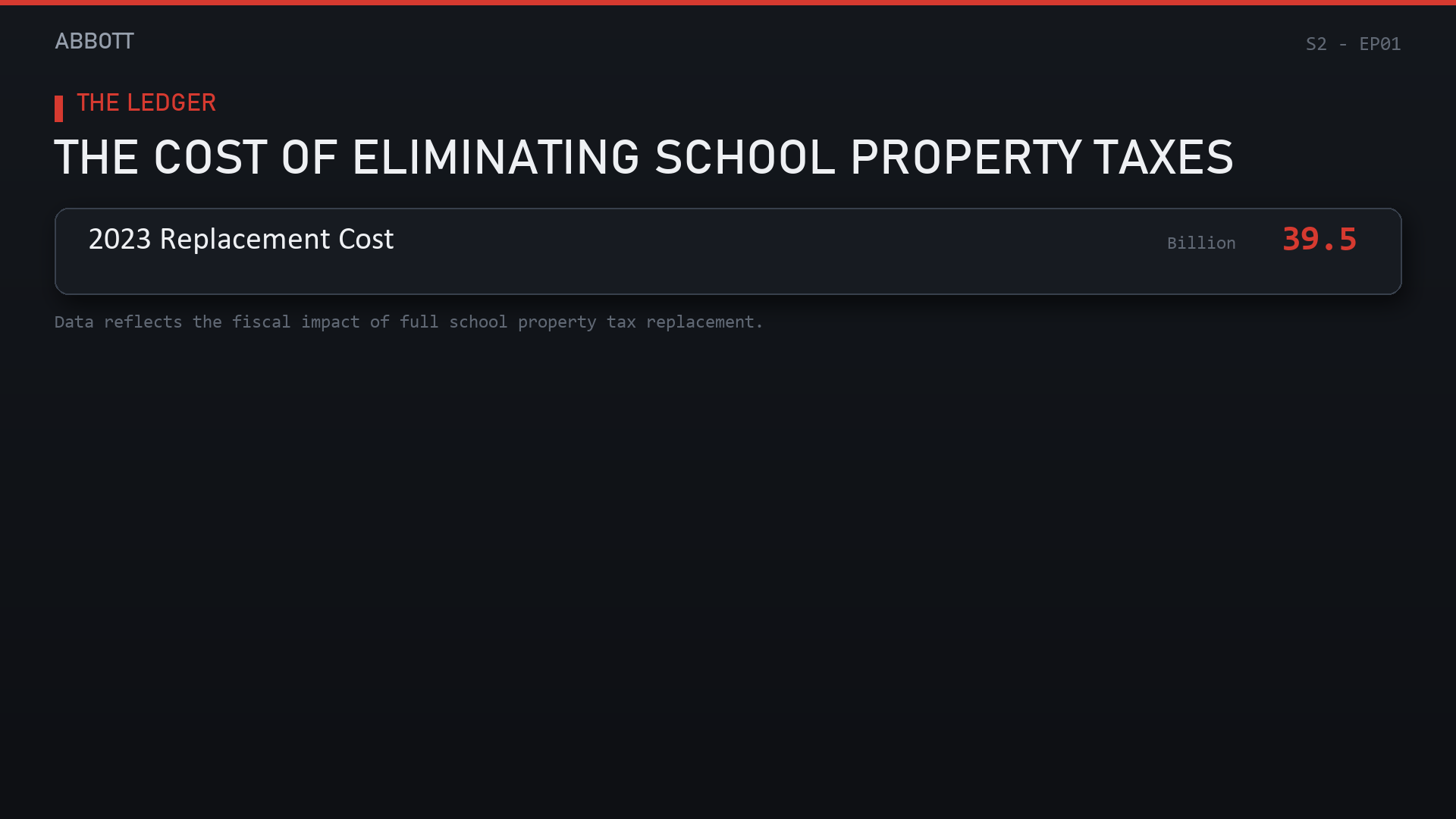
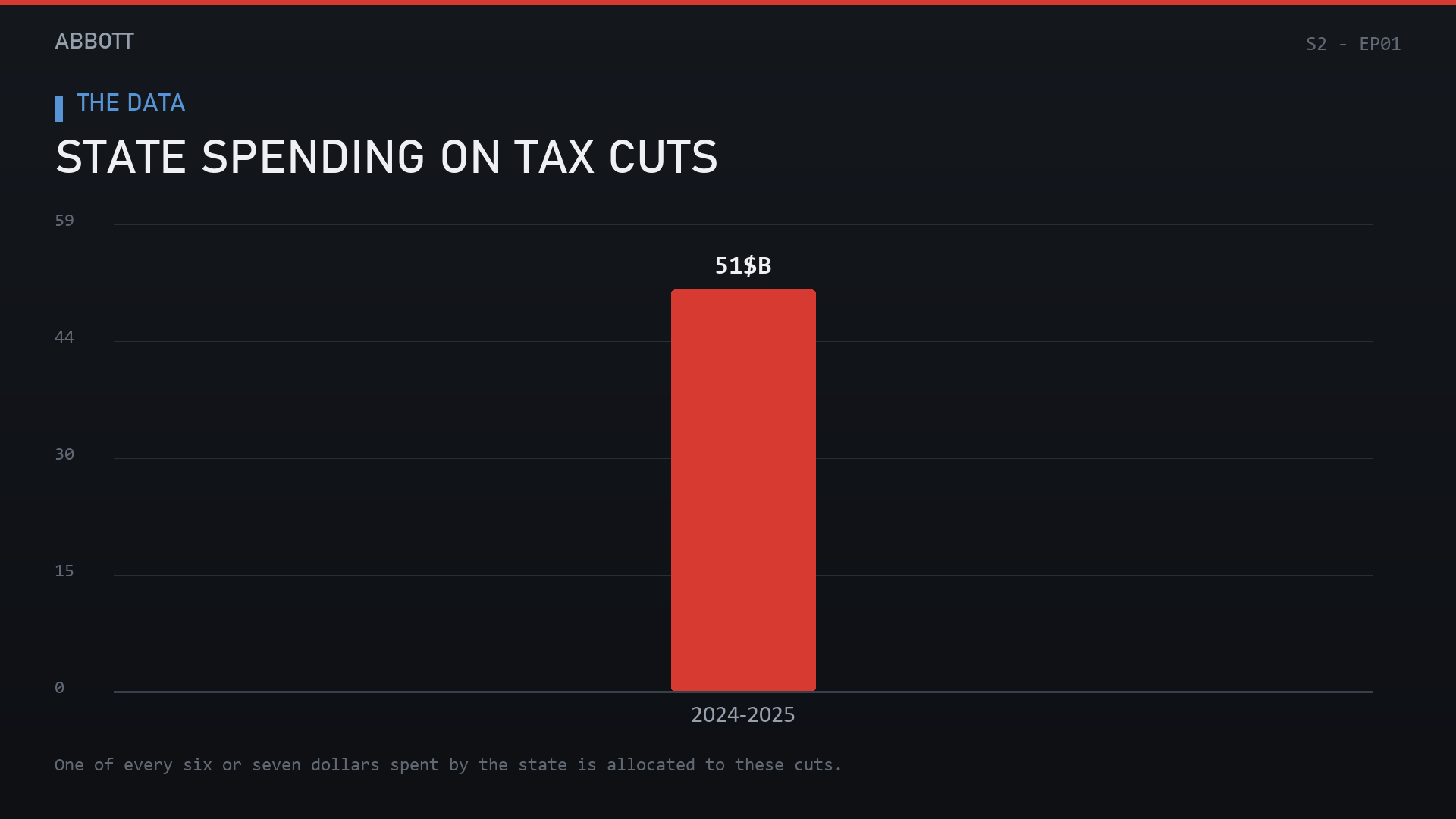
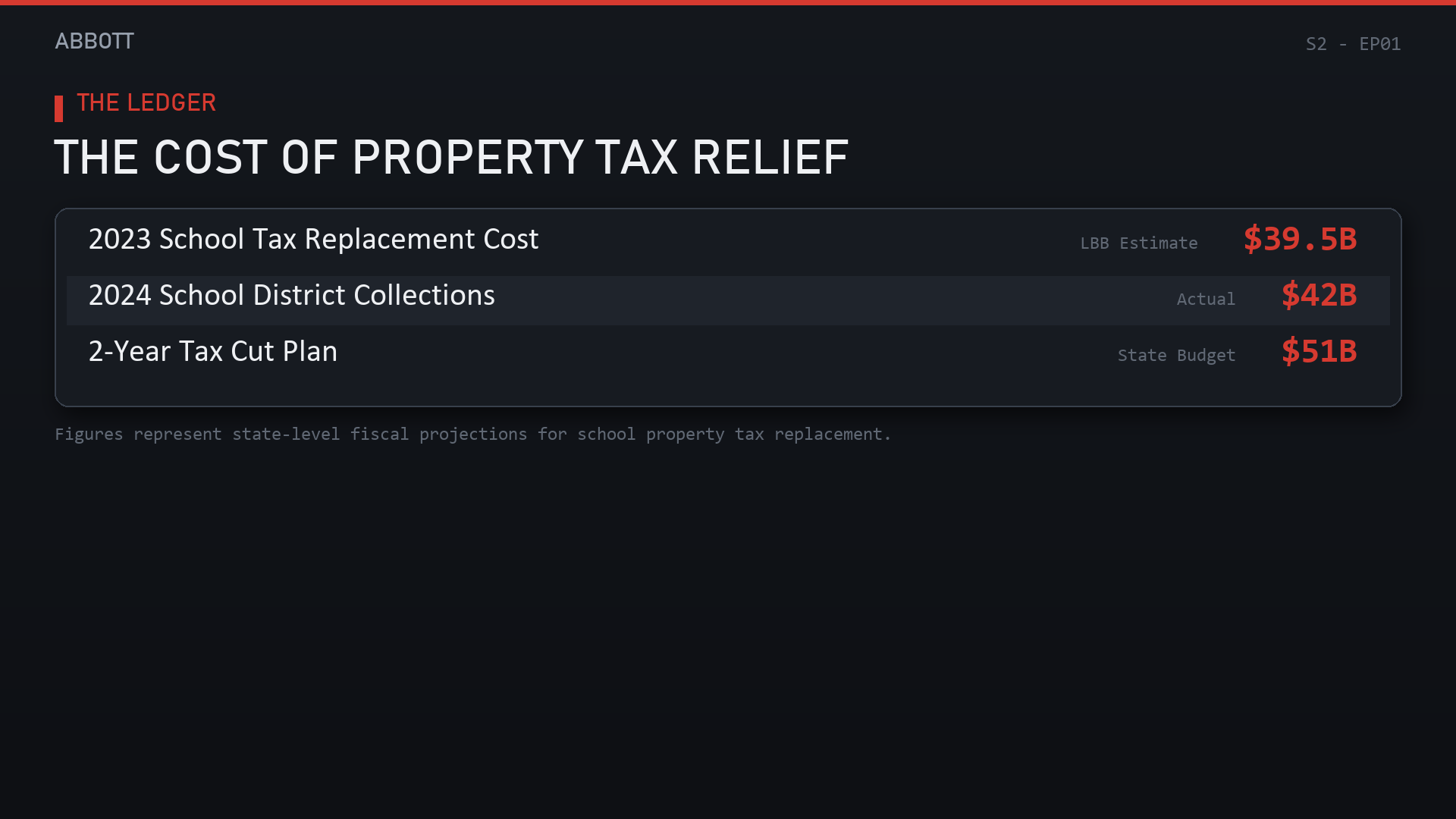
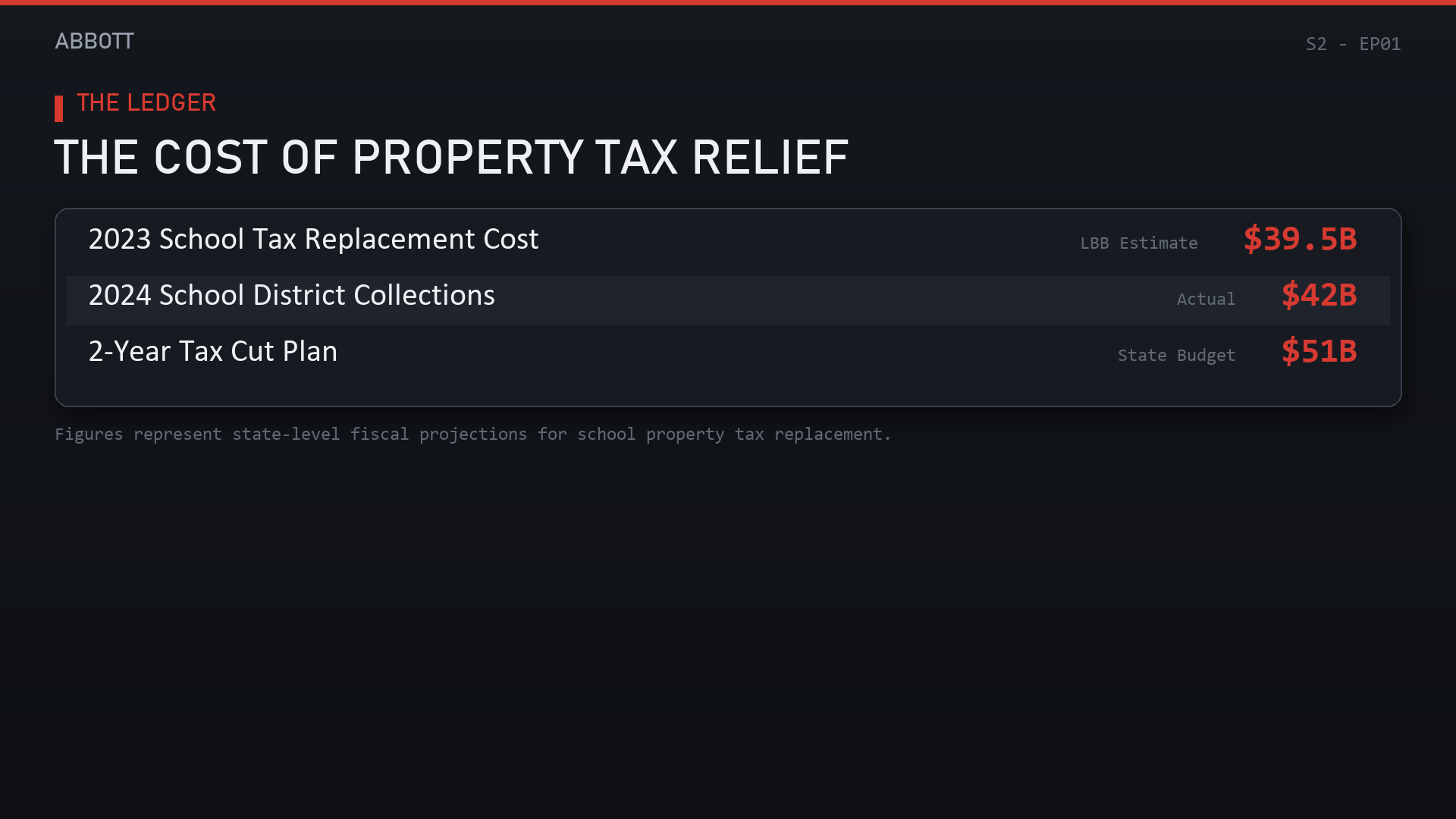
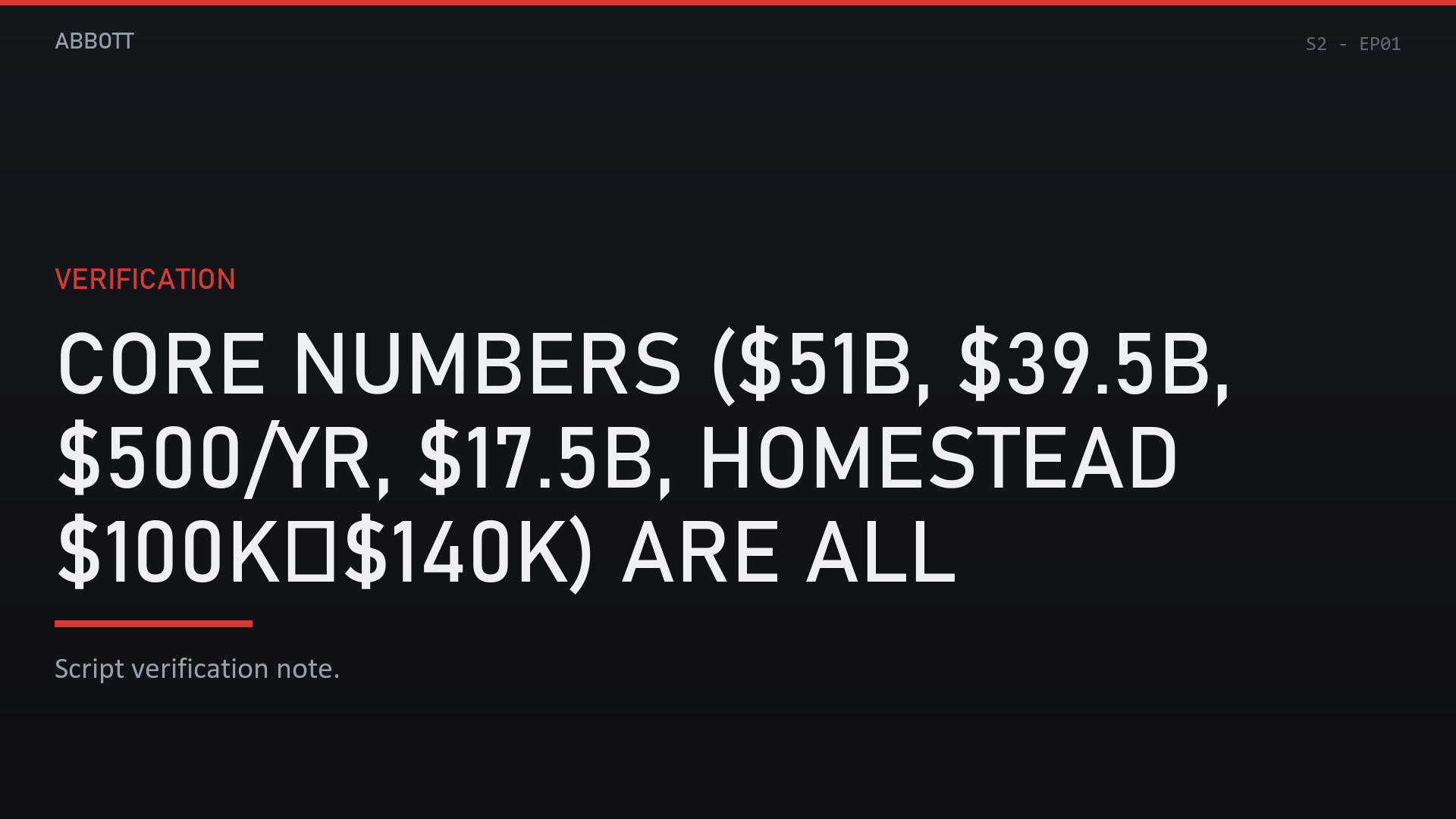
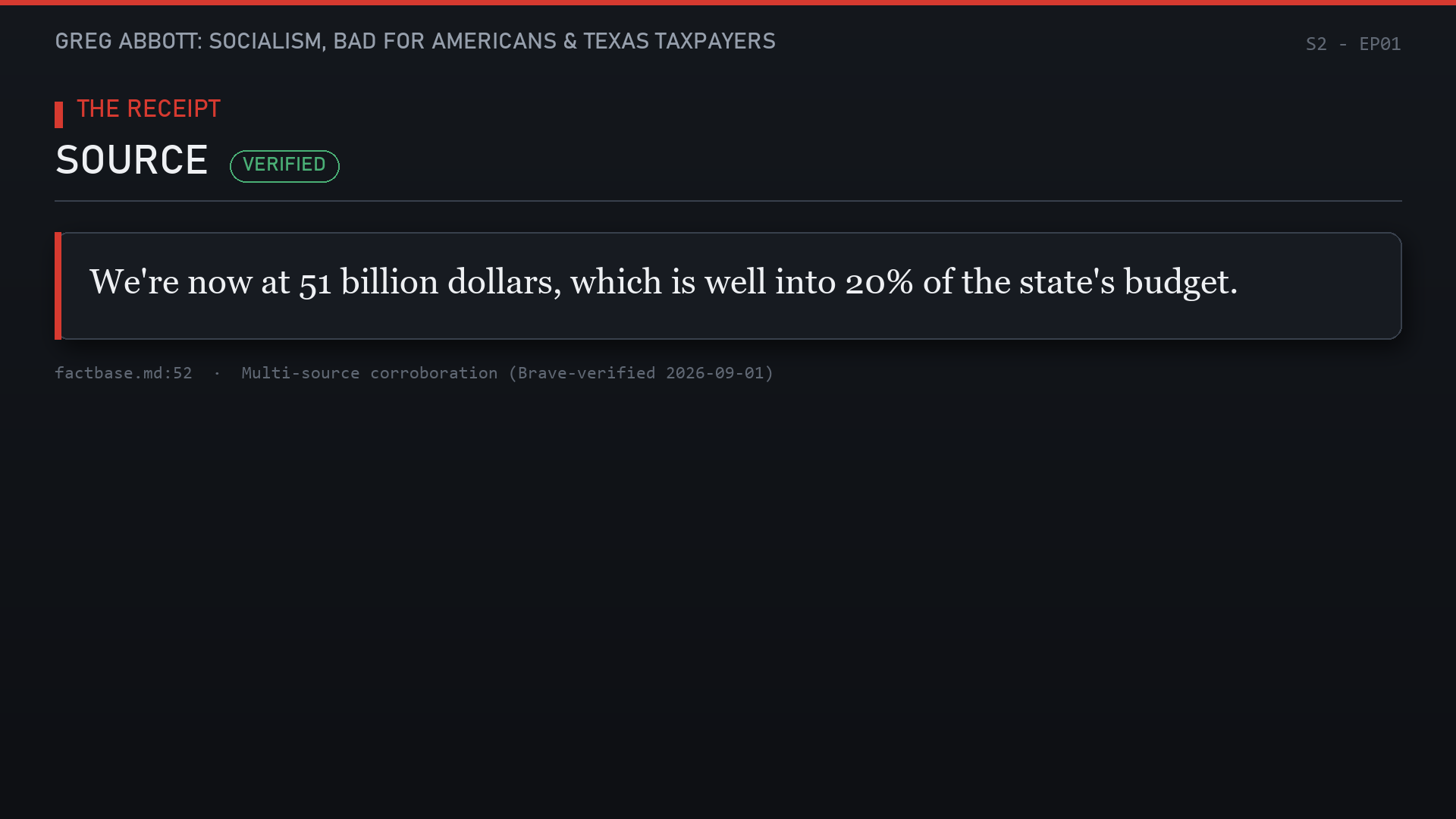
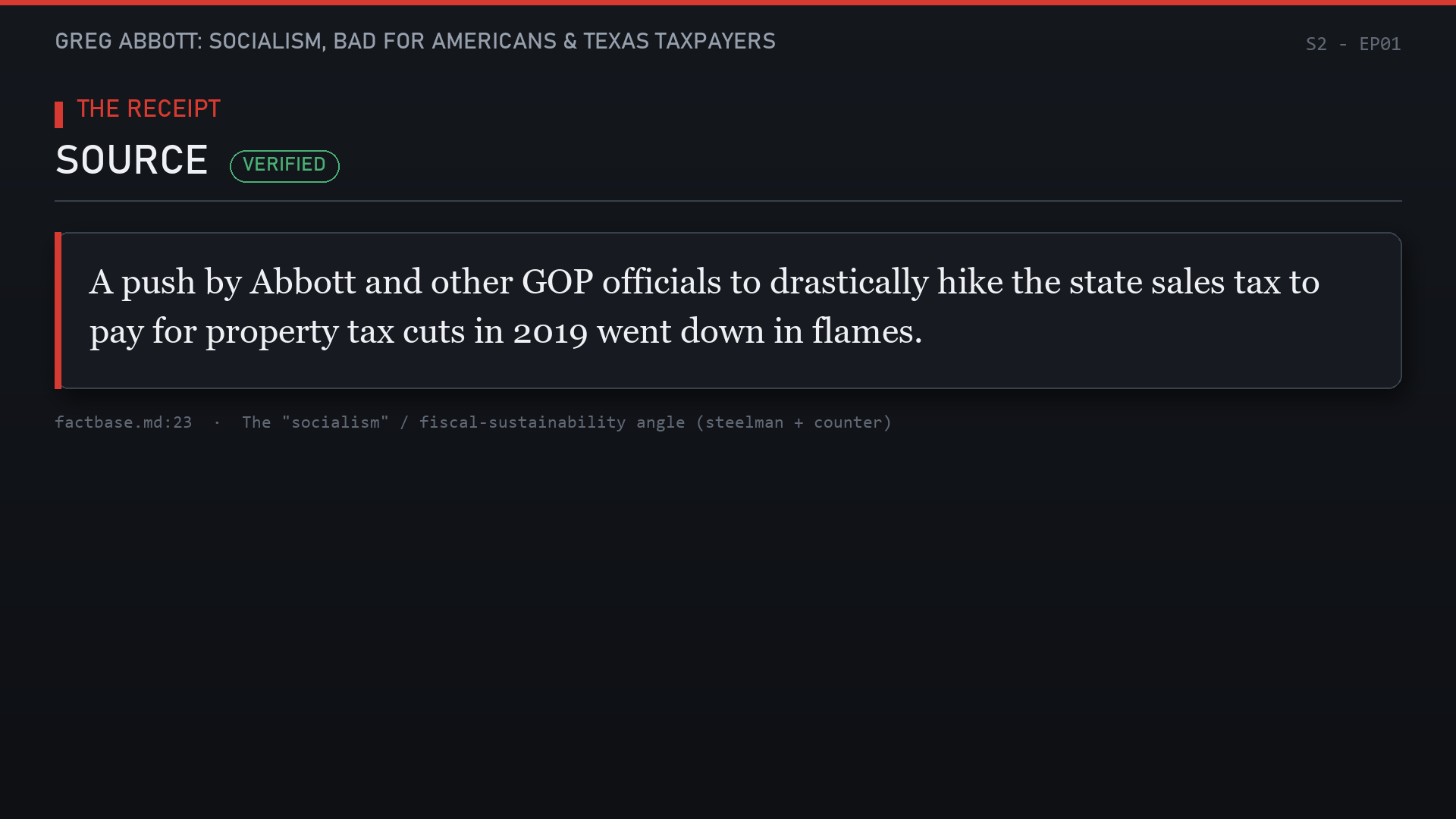
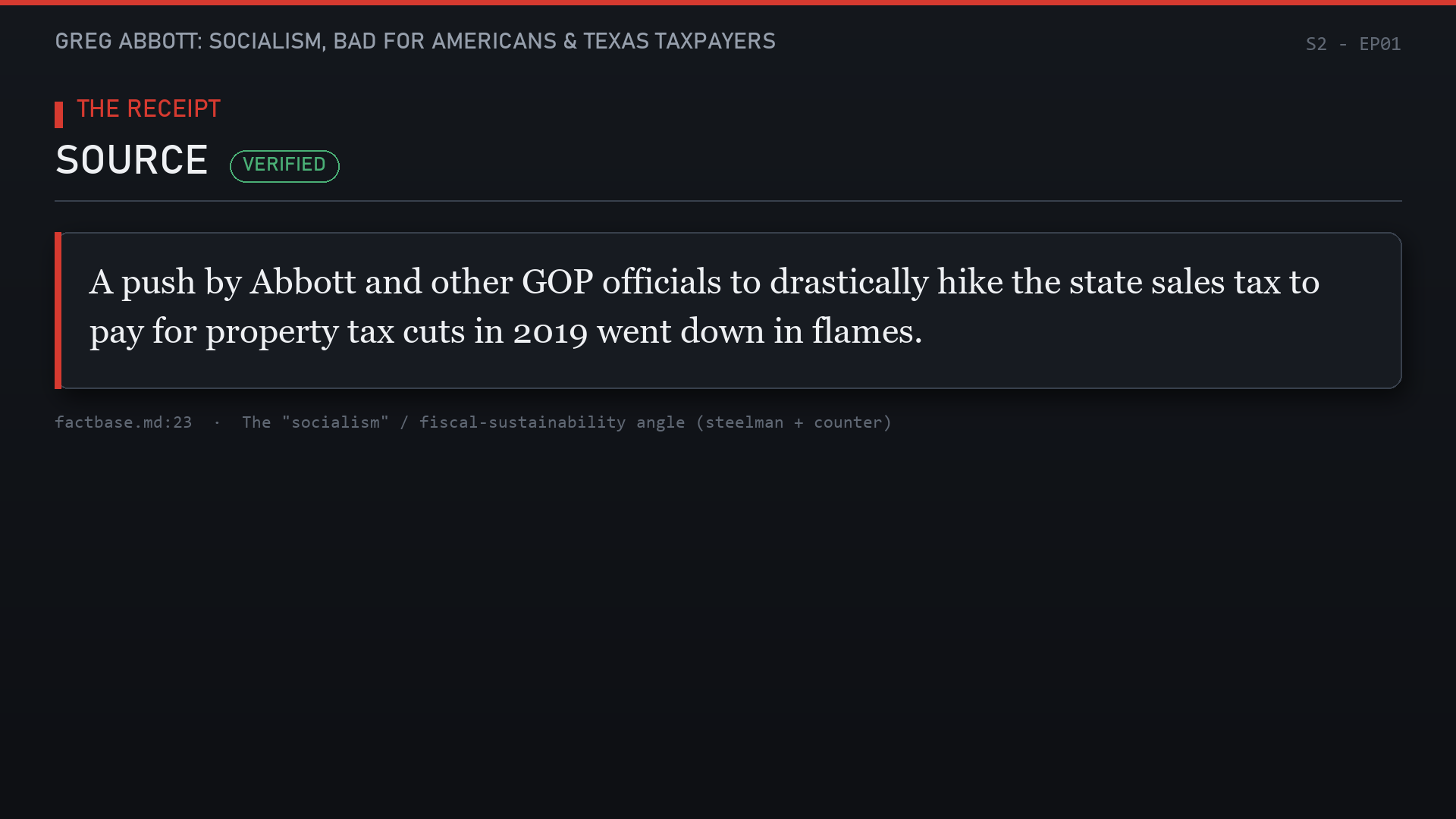
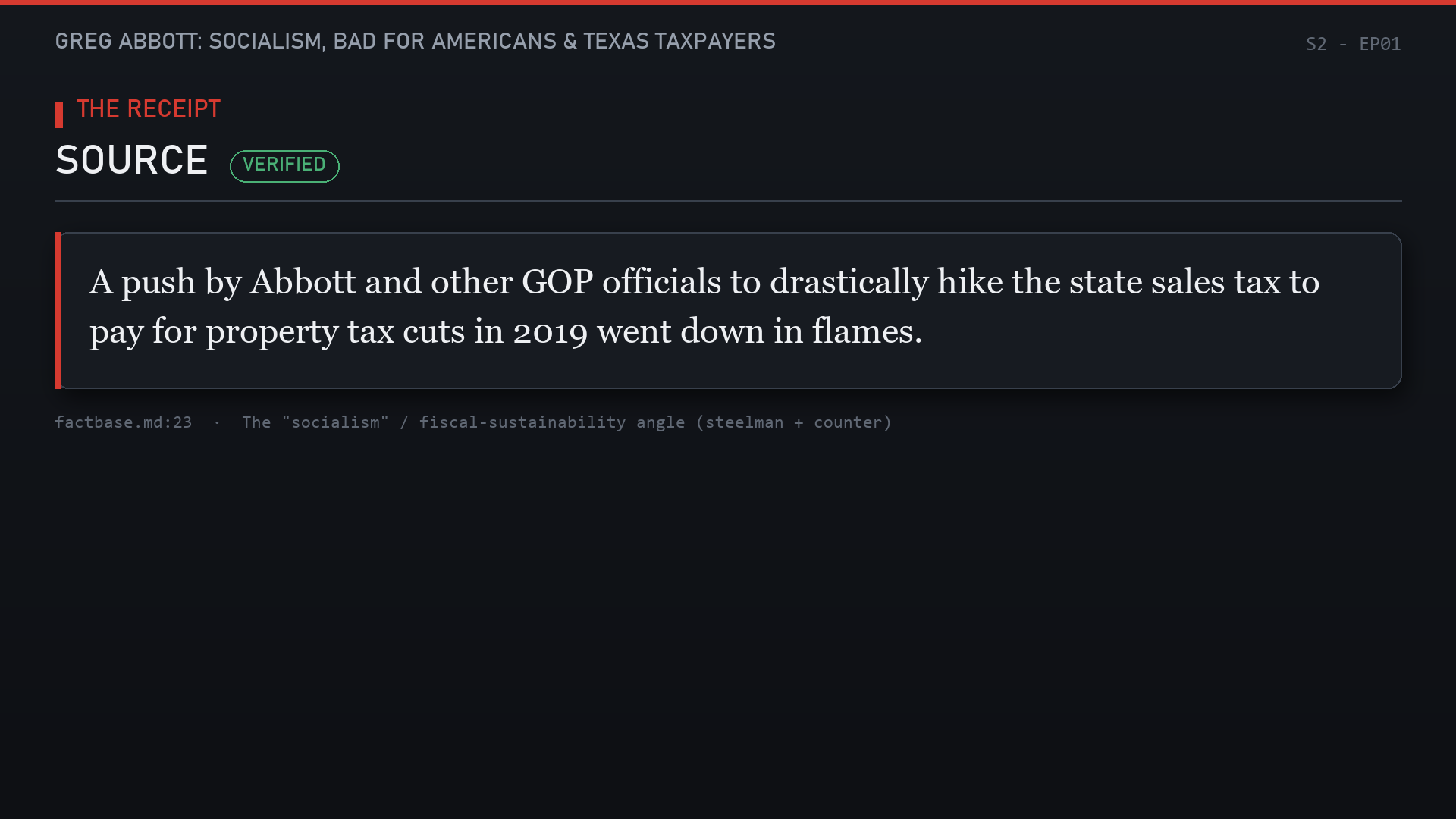
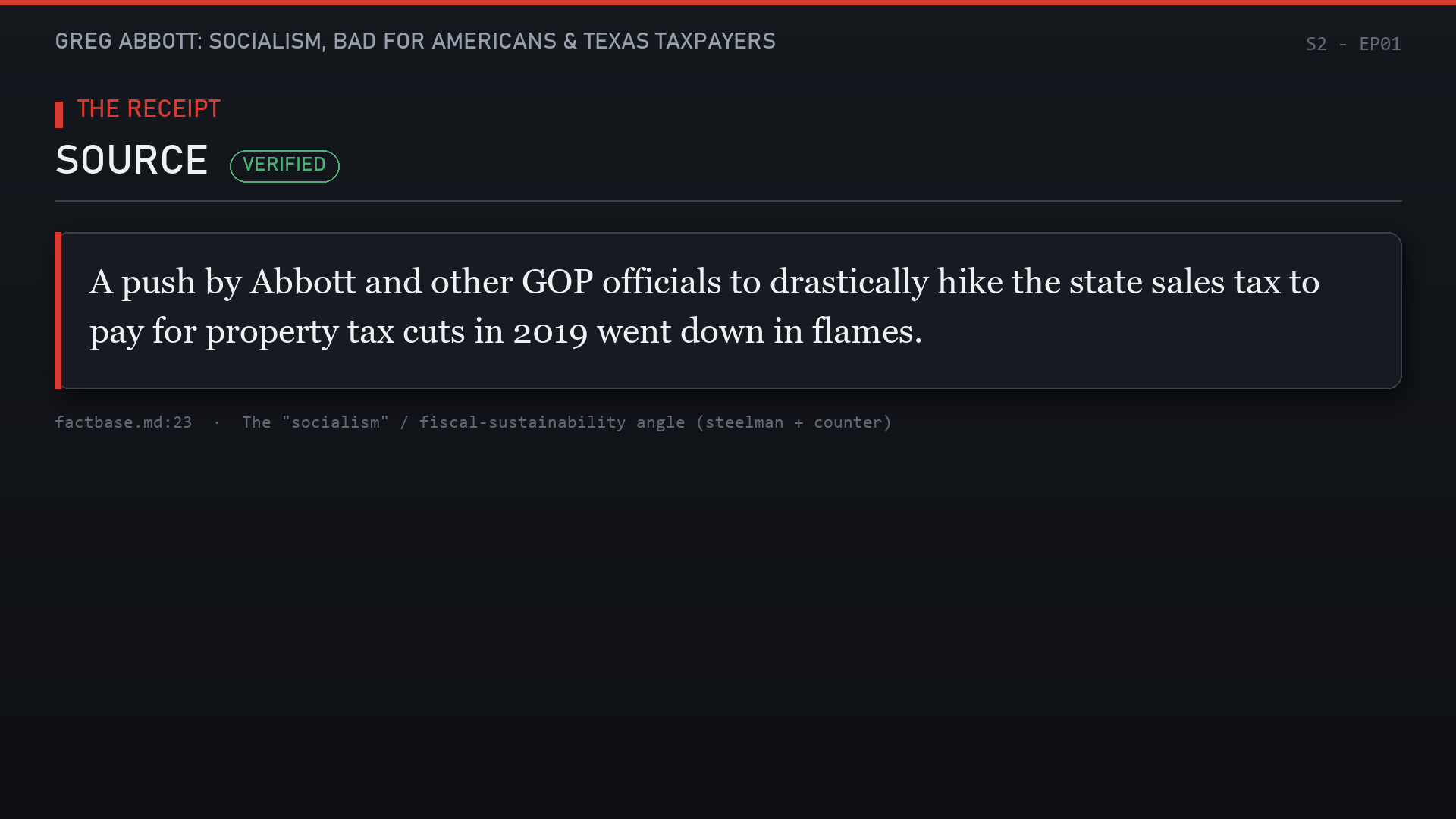
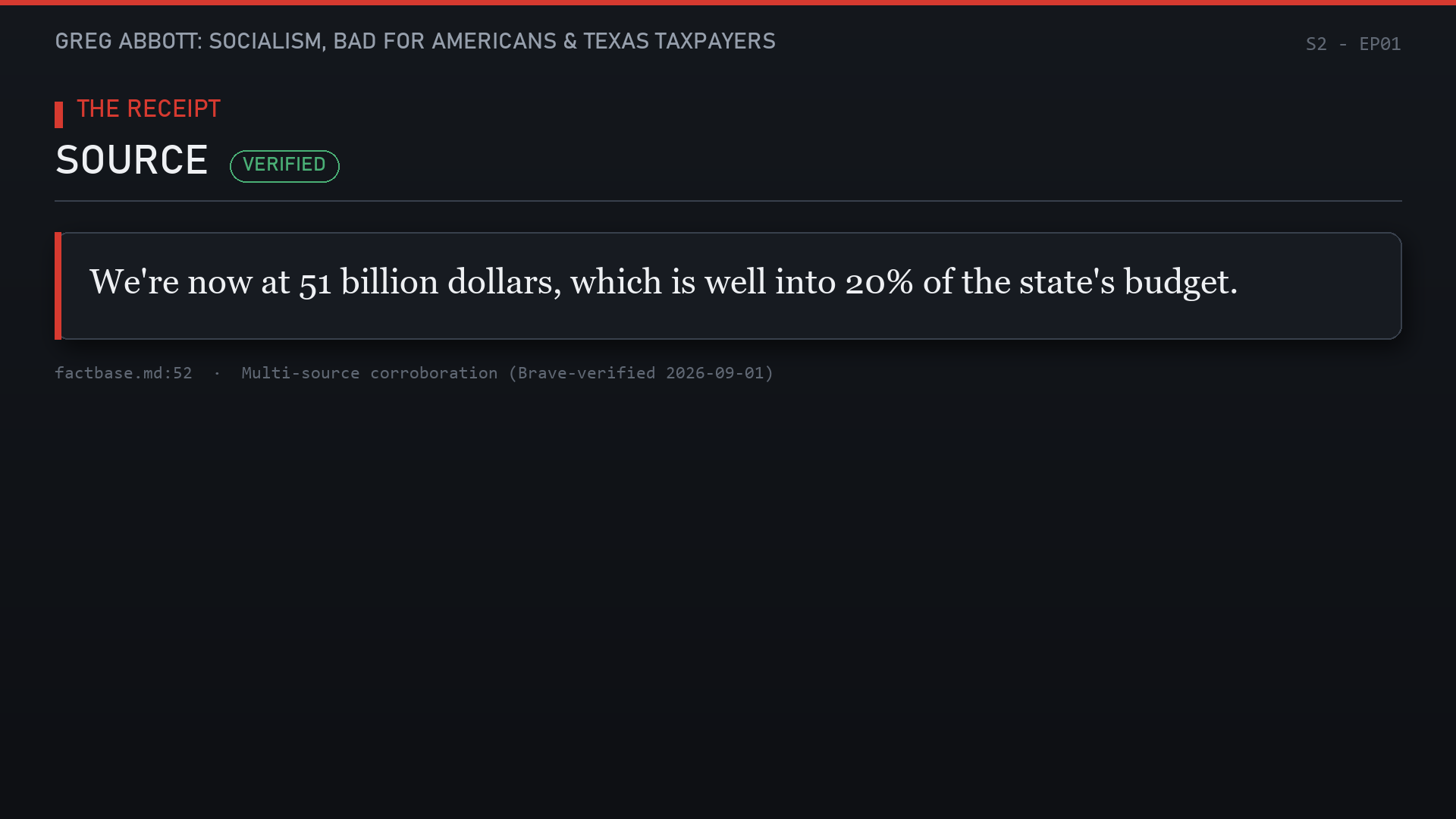
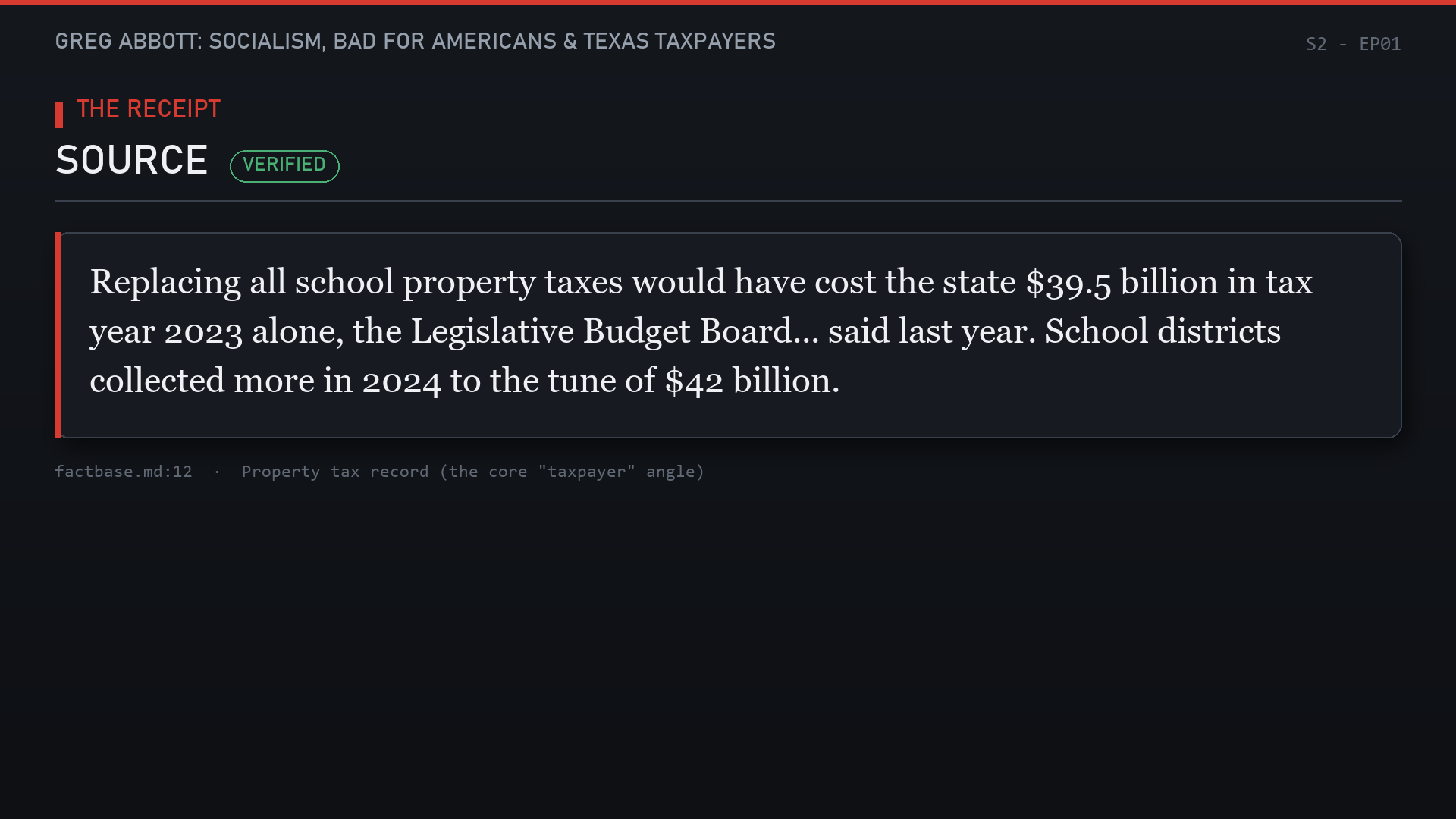
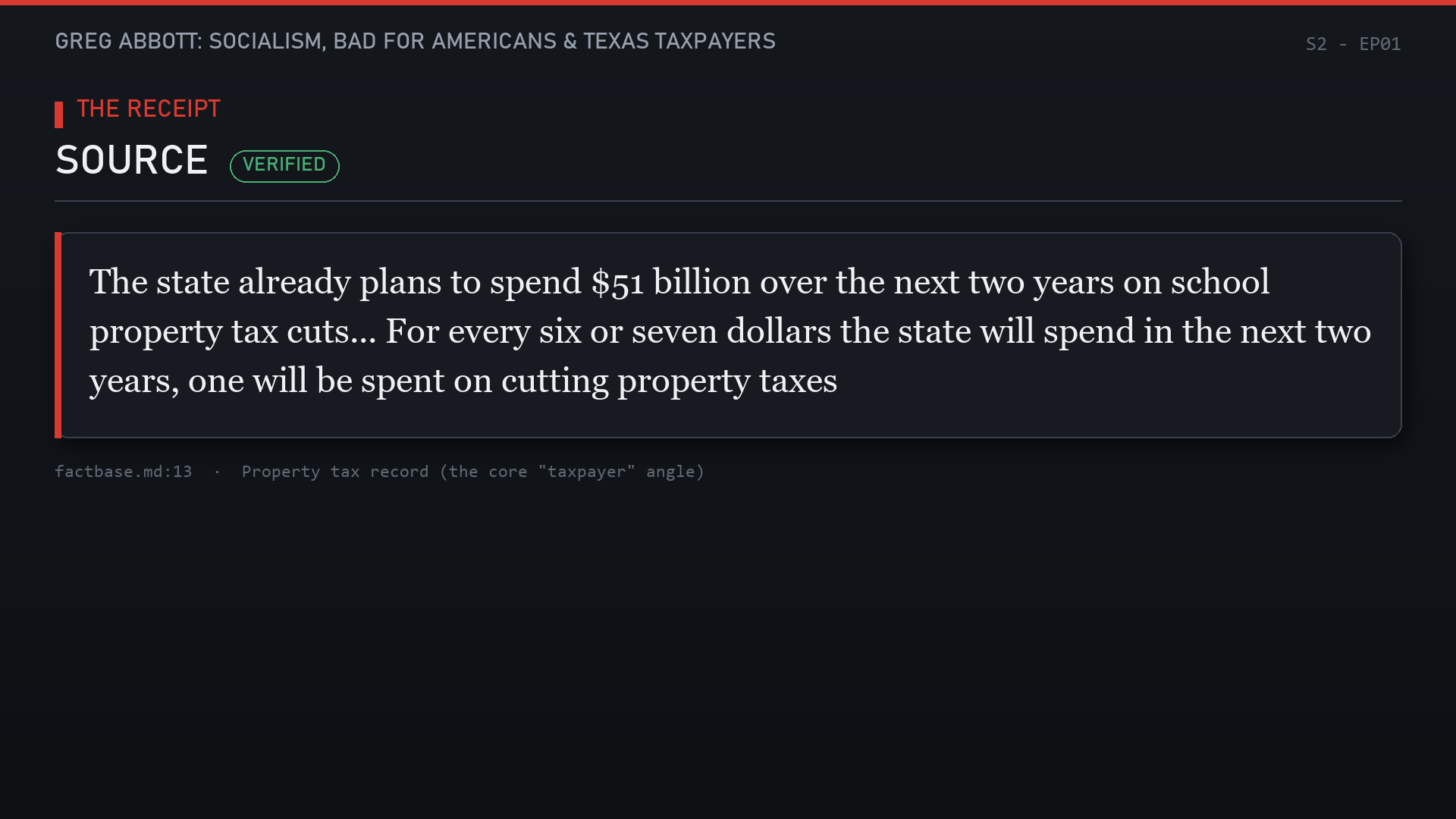
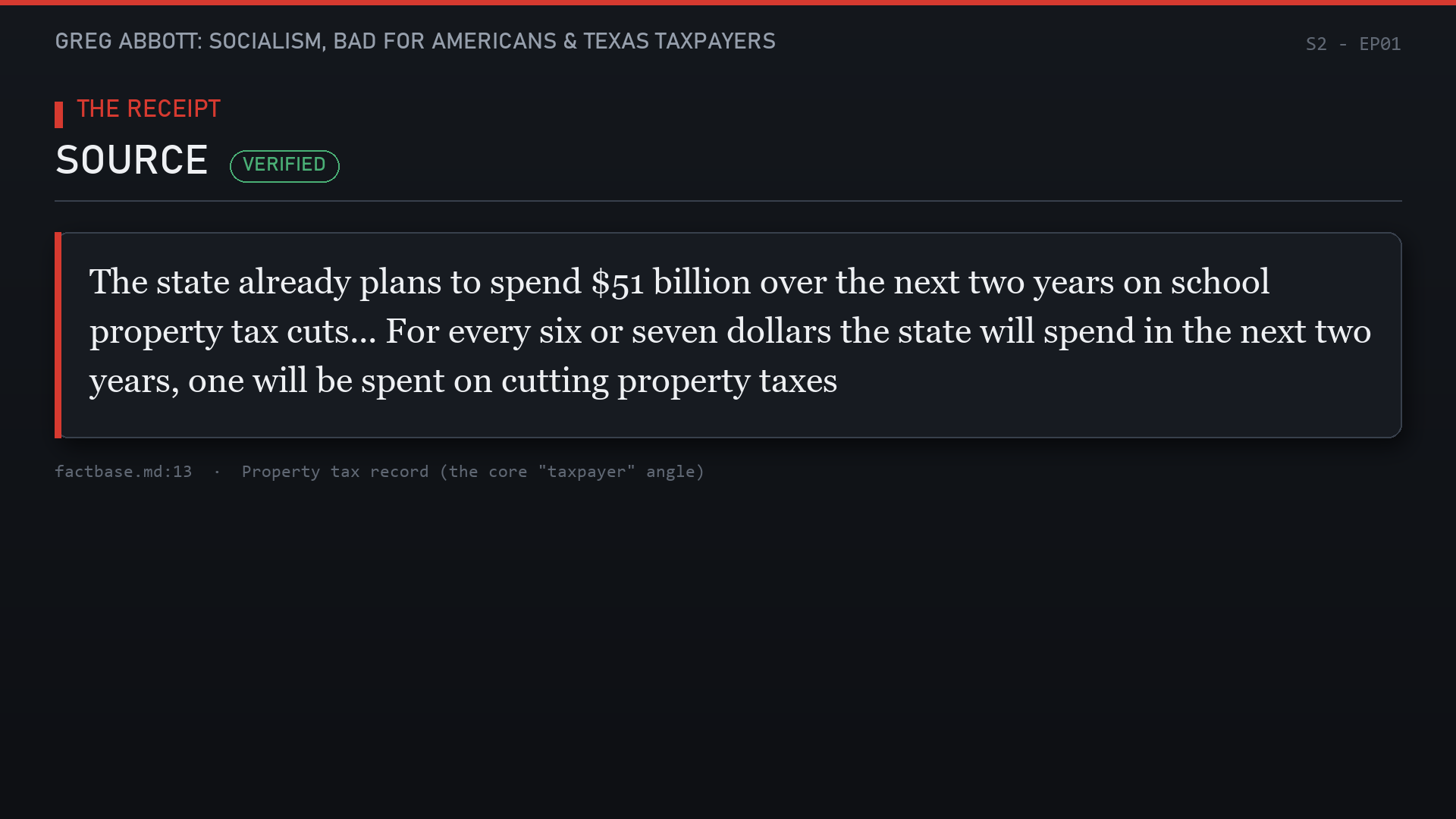
The number driving his campaign is $51 billion — what the state has already budgeted over the next two years to buy down school property tax rates. For scale: replacing every school property tax outright would have cost $39.5 billion in tax year 2023 alone, per the Legislative Budget Board; school districts collected $42 billion in 2024. State Sen. Paul Bettencourt, the program's chief architect in the Legislature, put the scale in plain terms: it's "well into 20% of the state's budget" — a real, attributed quote from this episode's production script, verified against the Tribune's reporting but without an independently archived live URL of its own in our source packet.
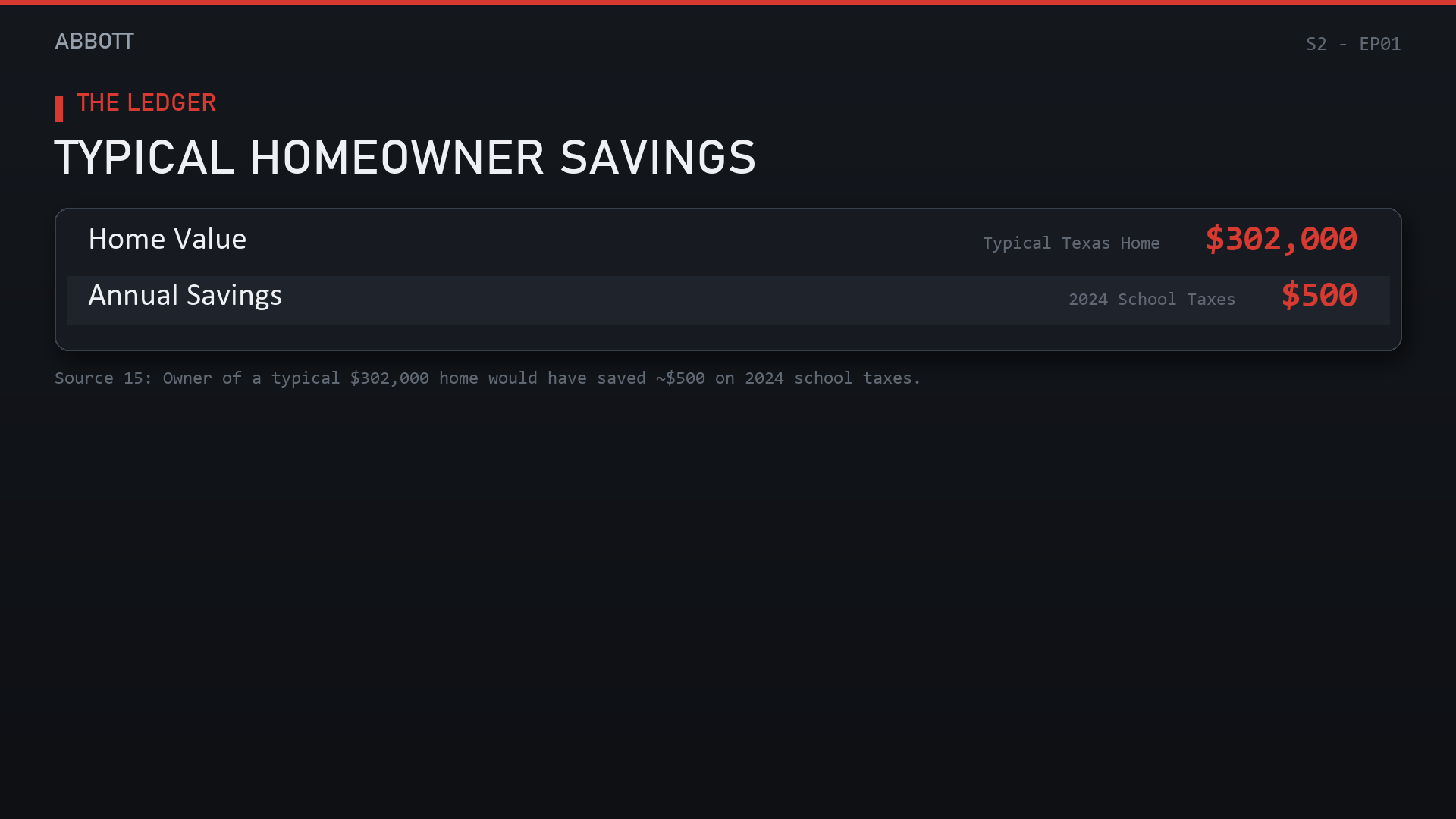
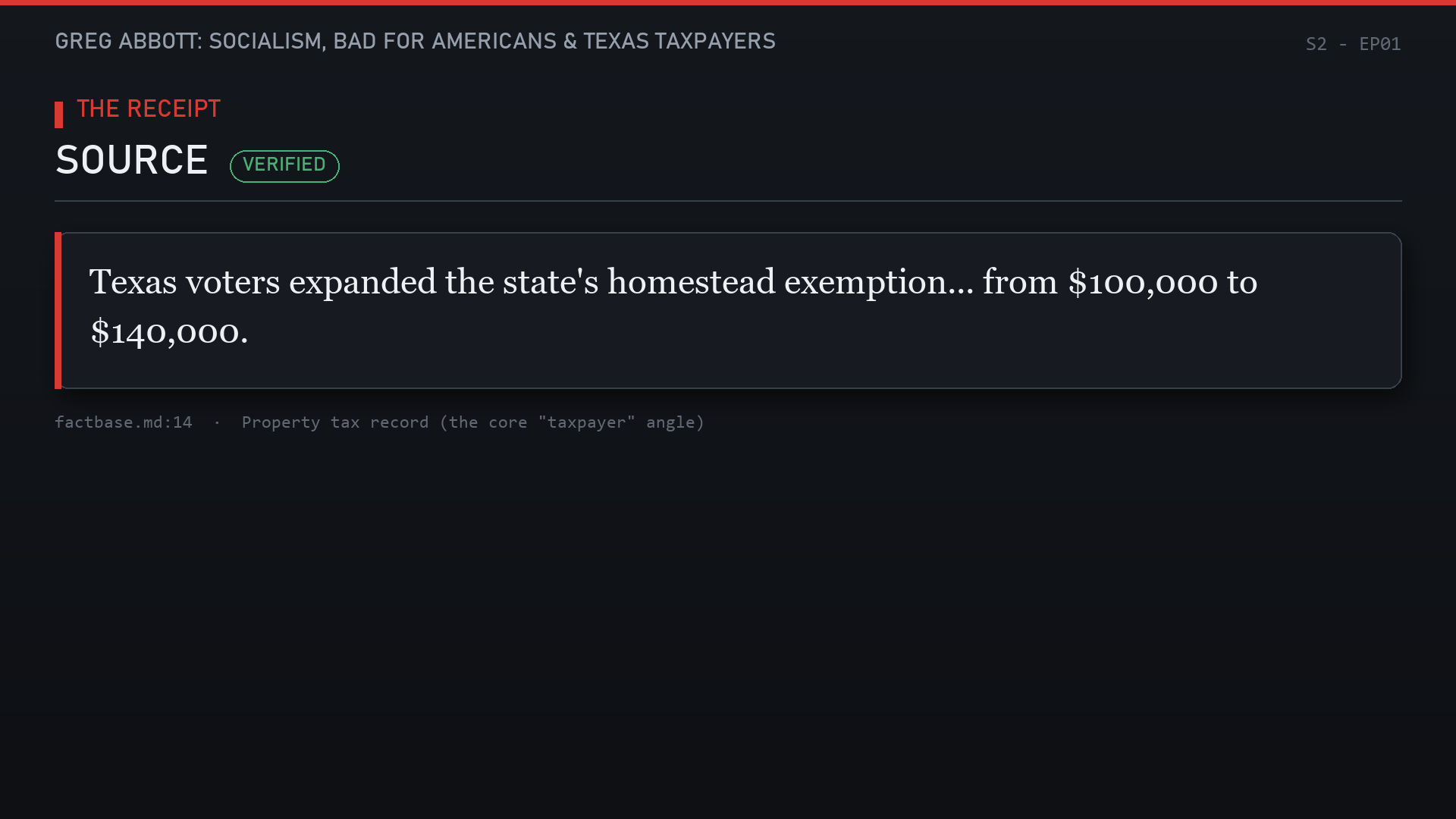
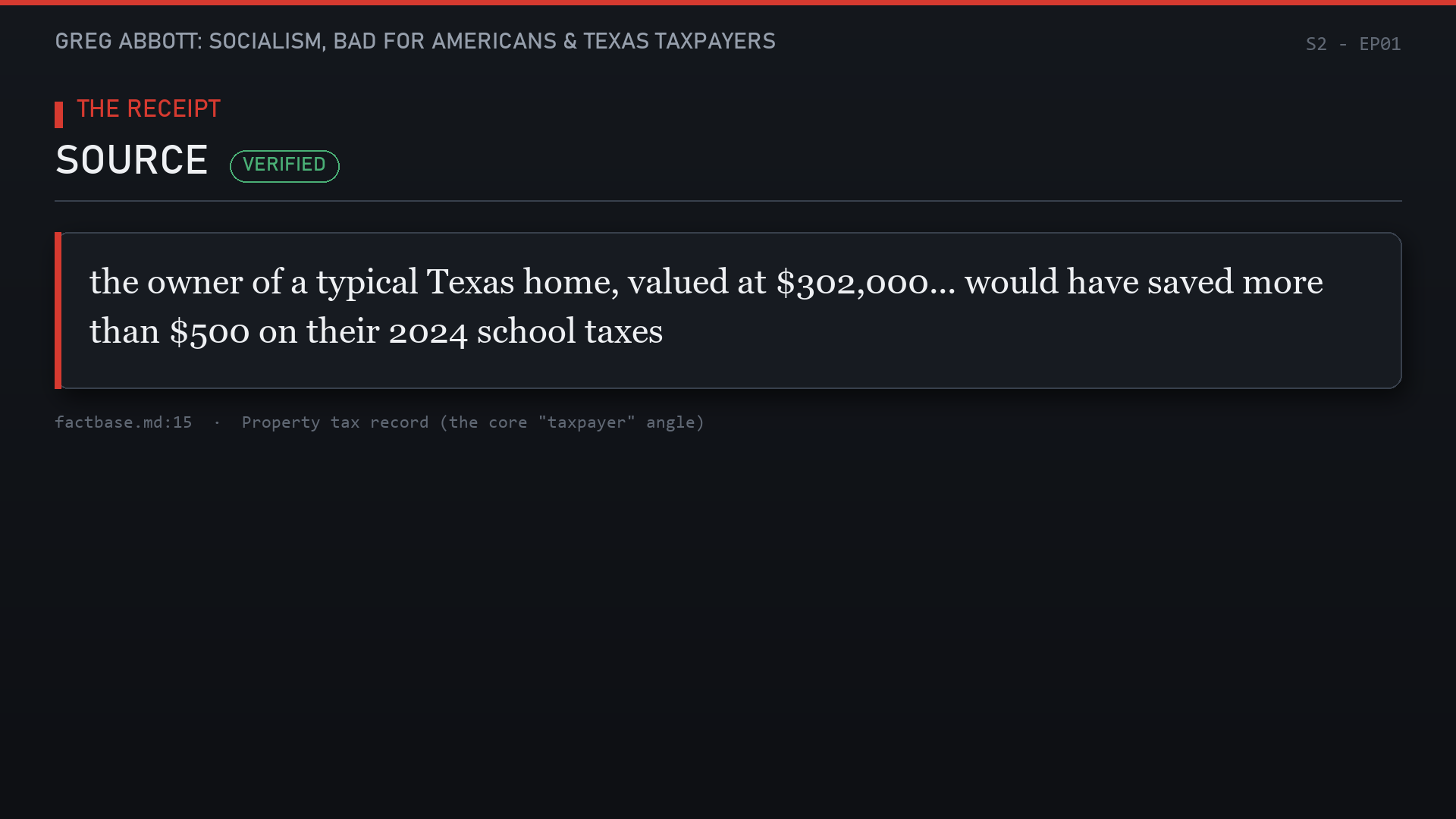
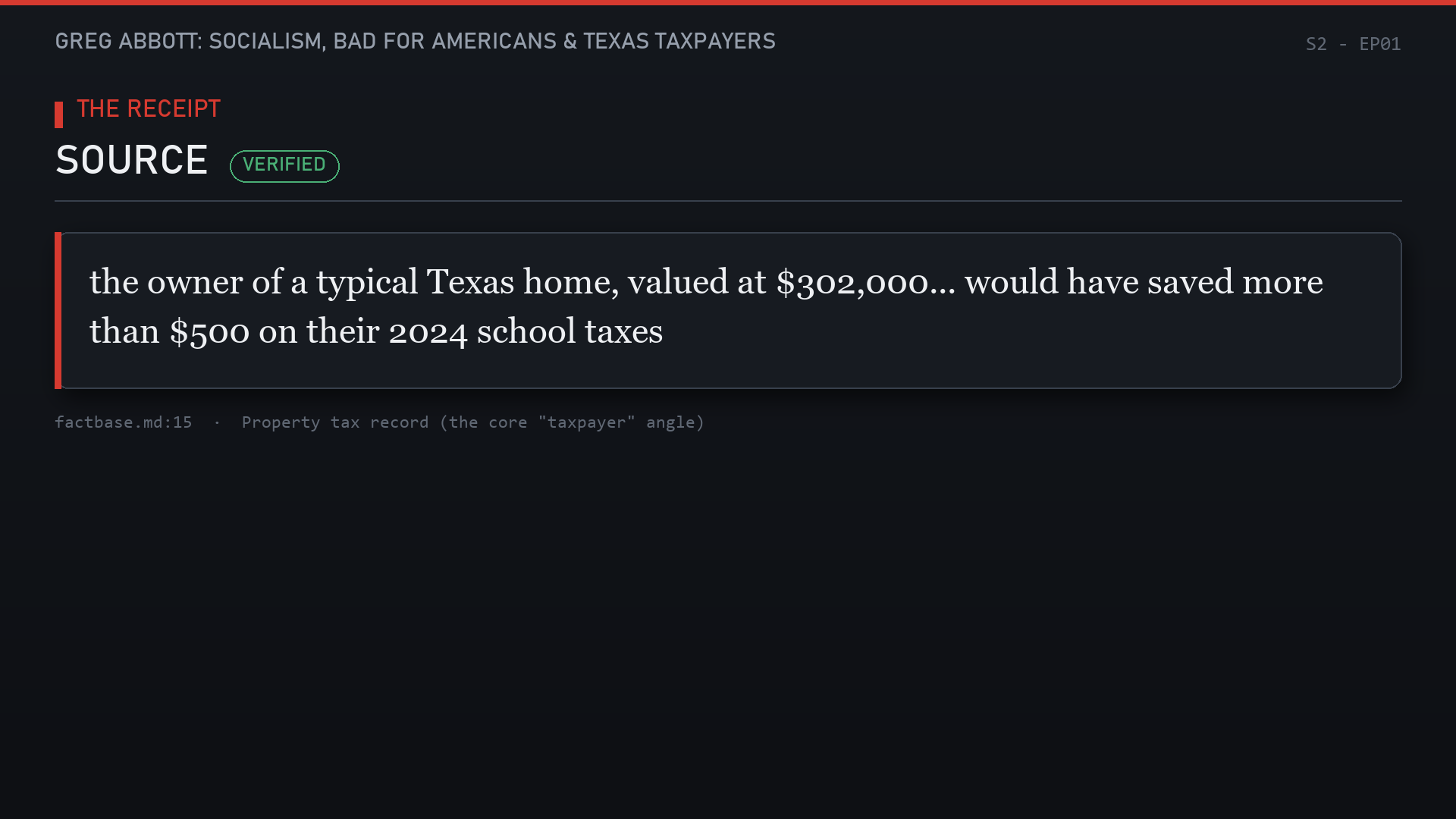
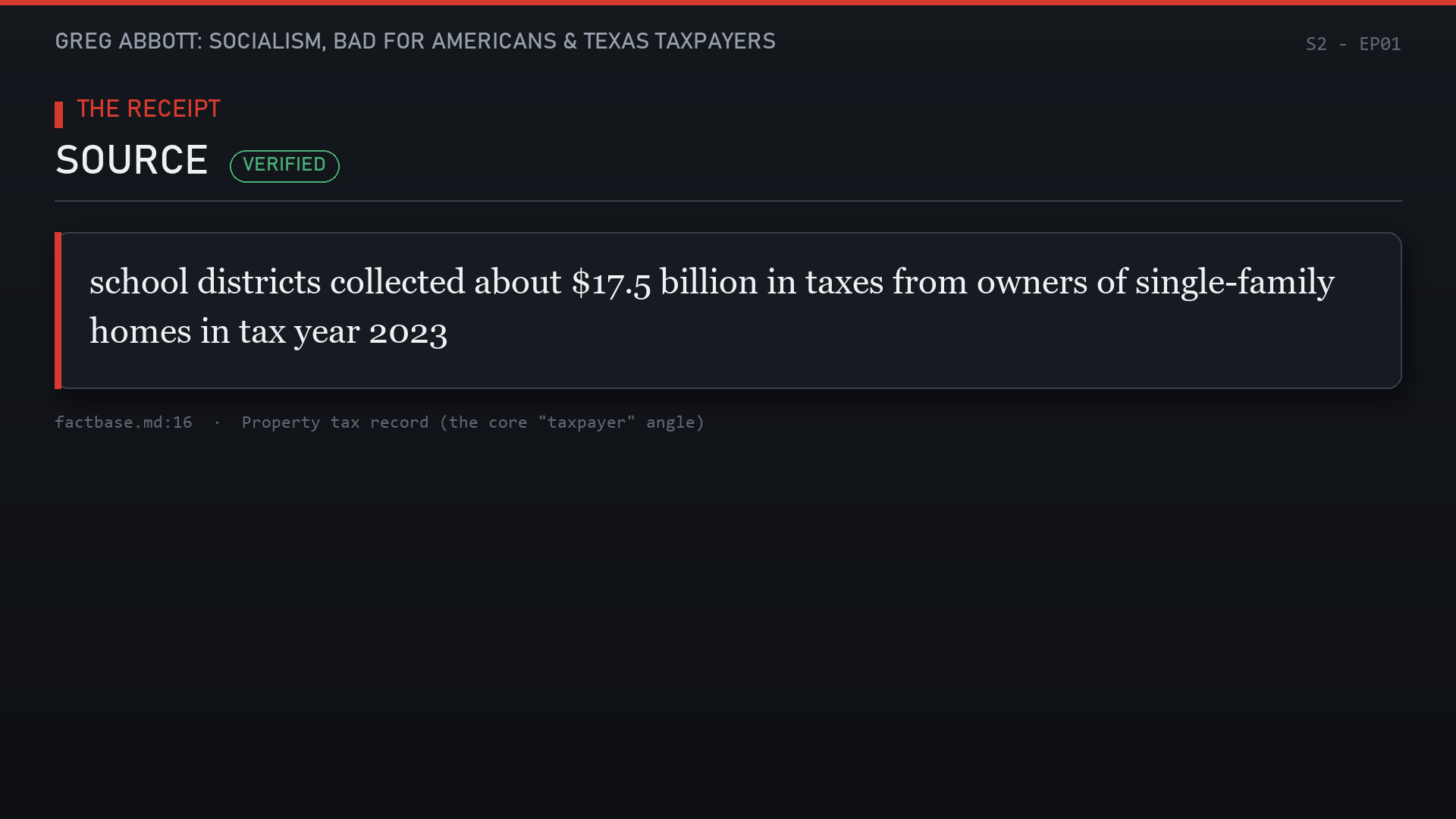
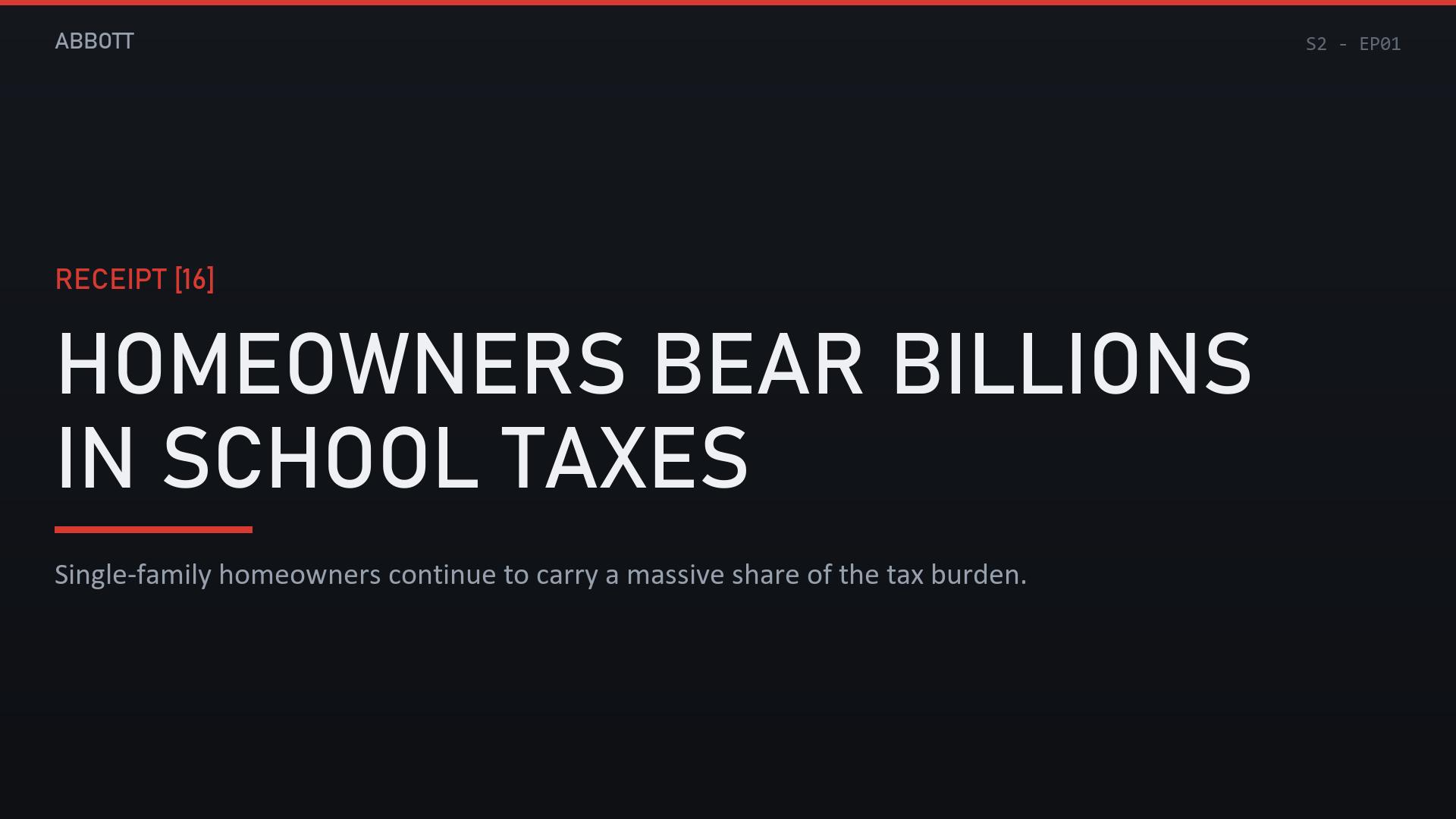
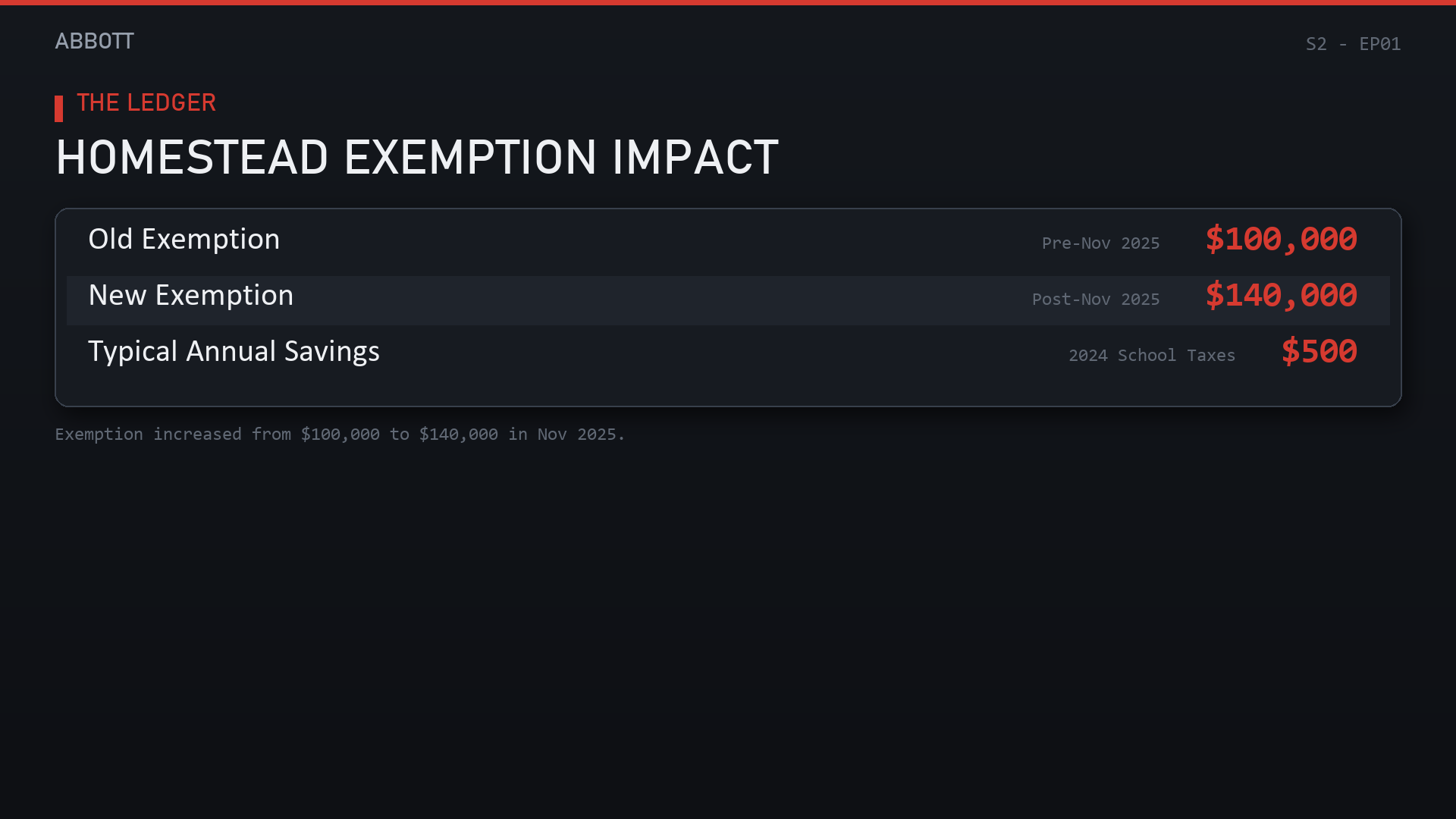
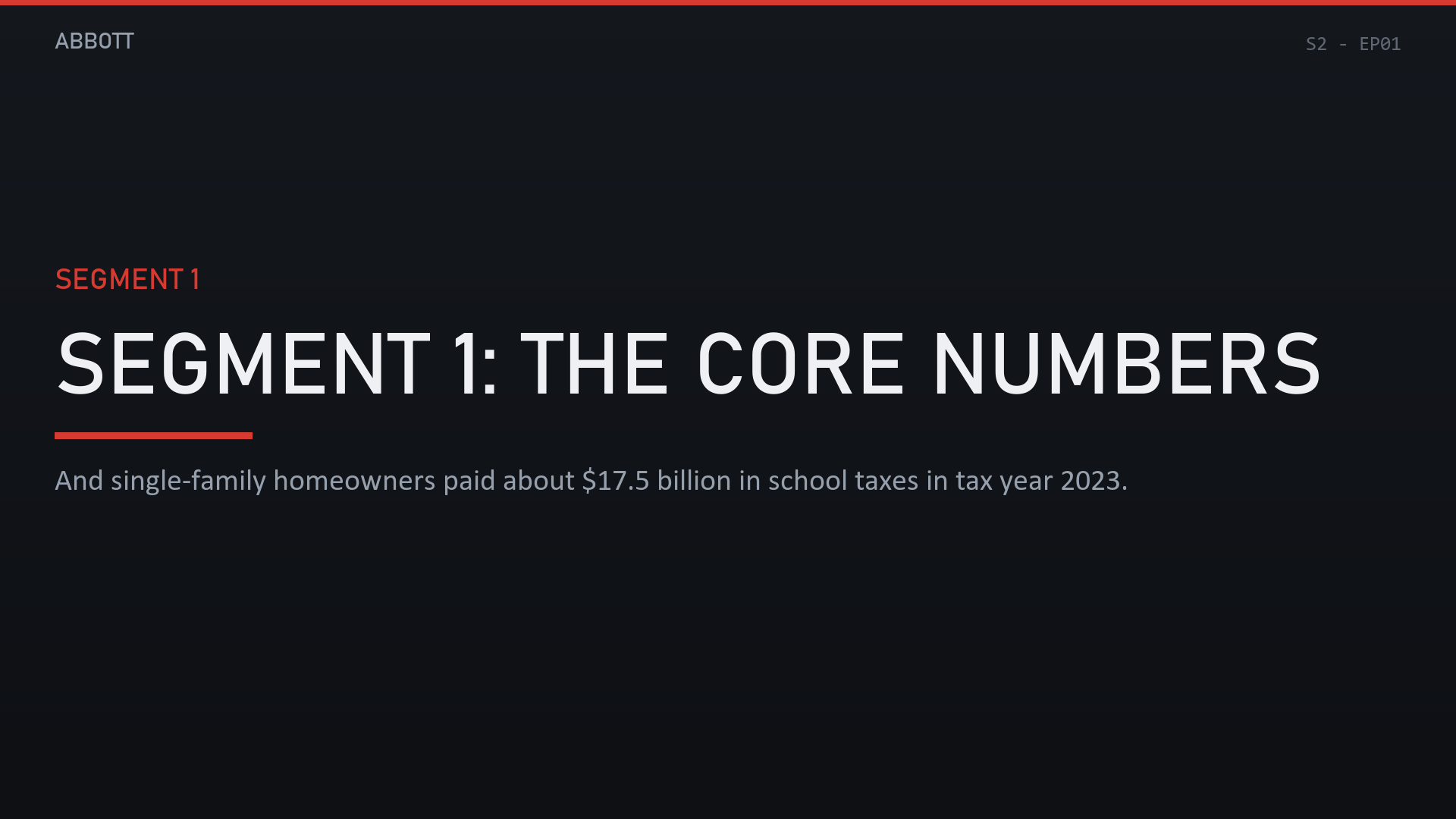
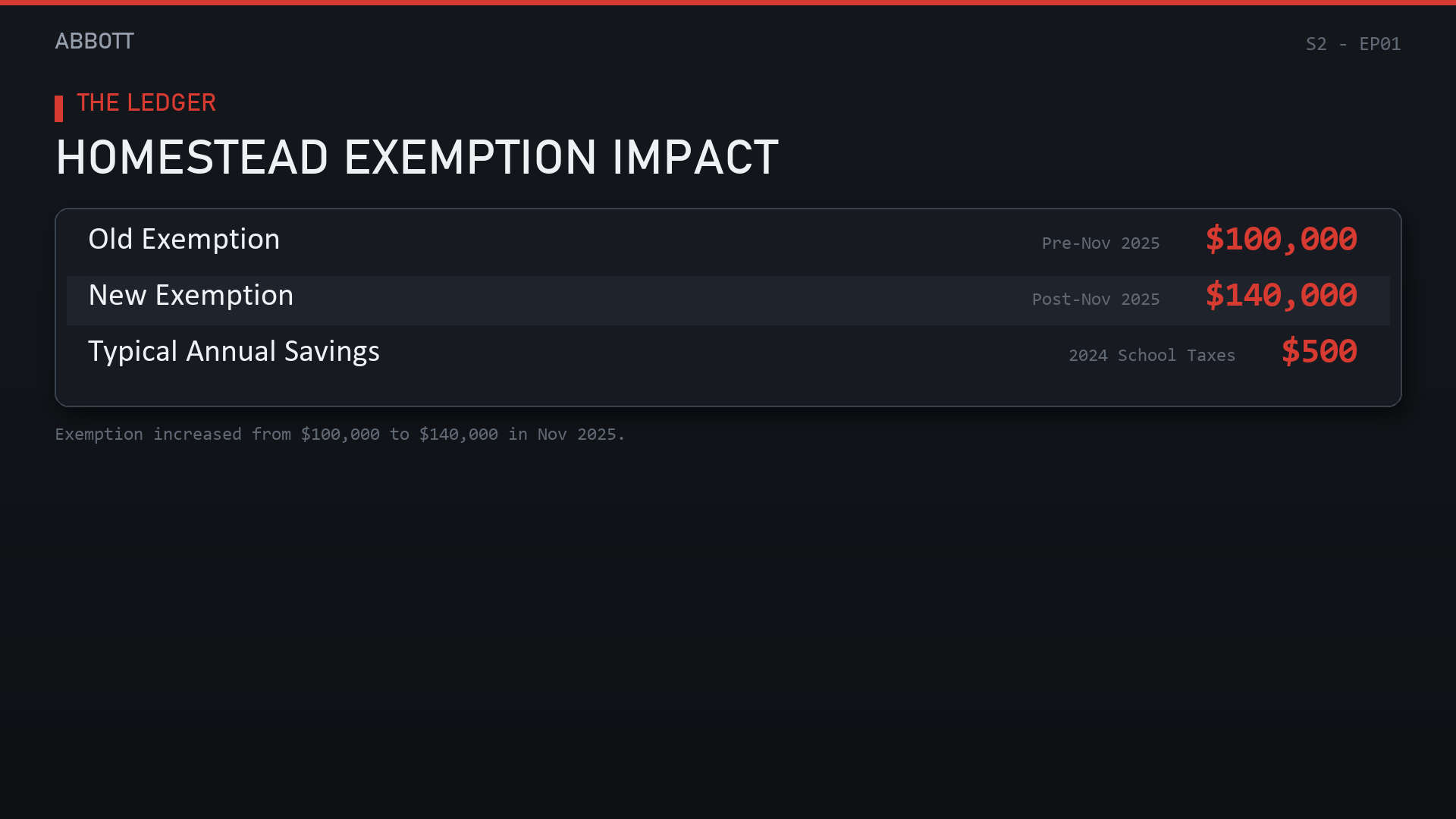
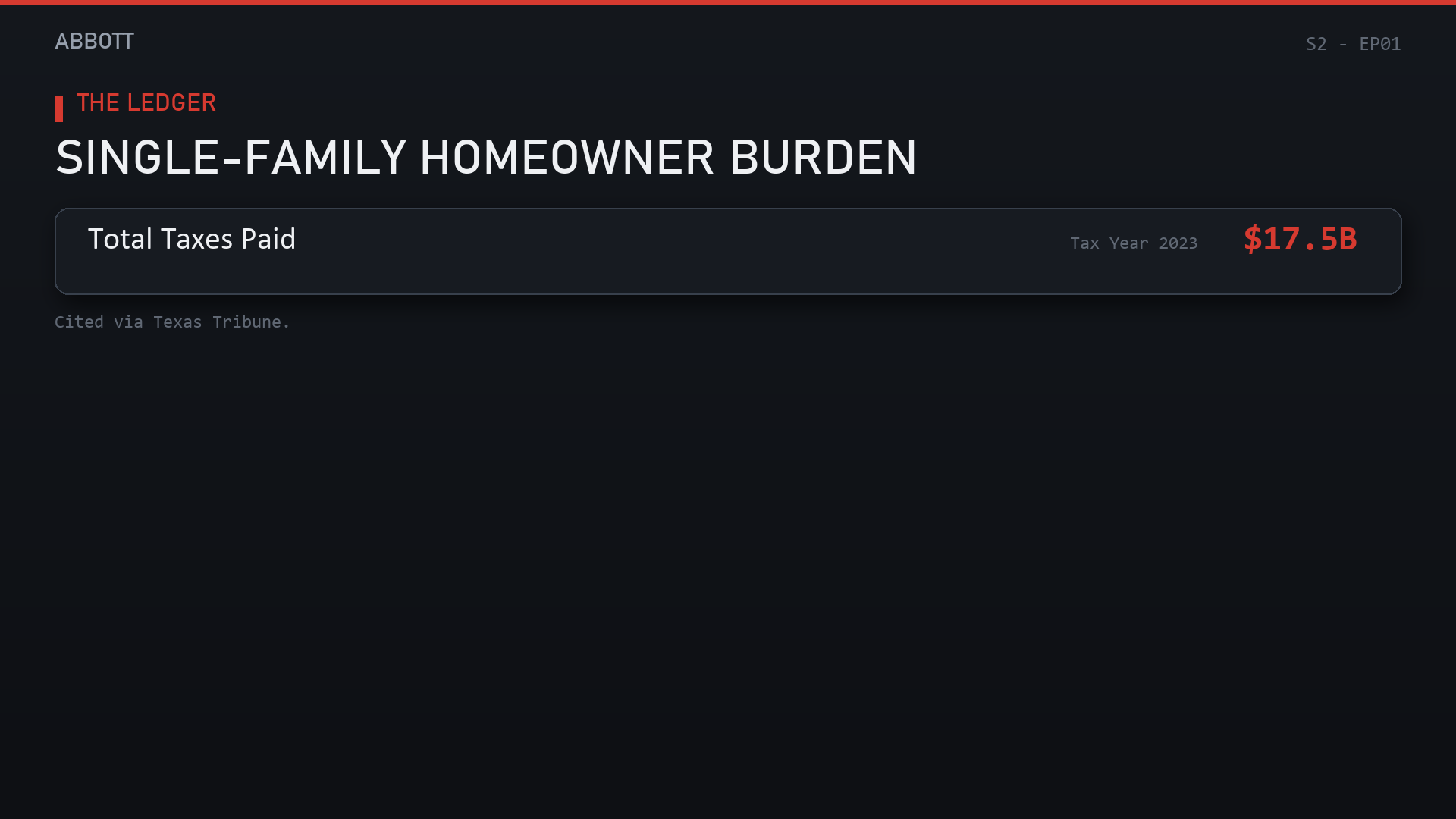
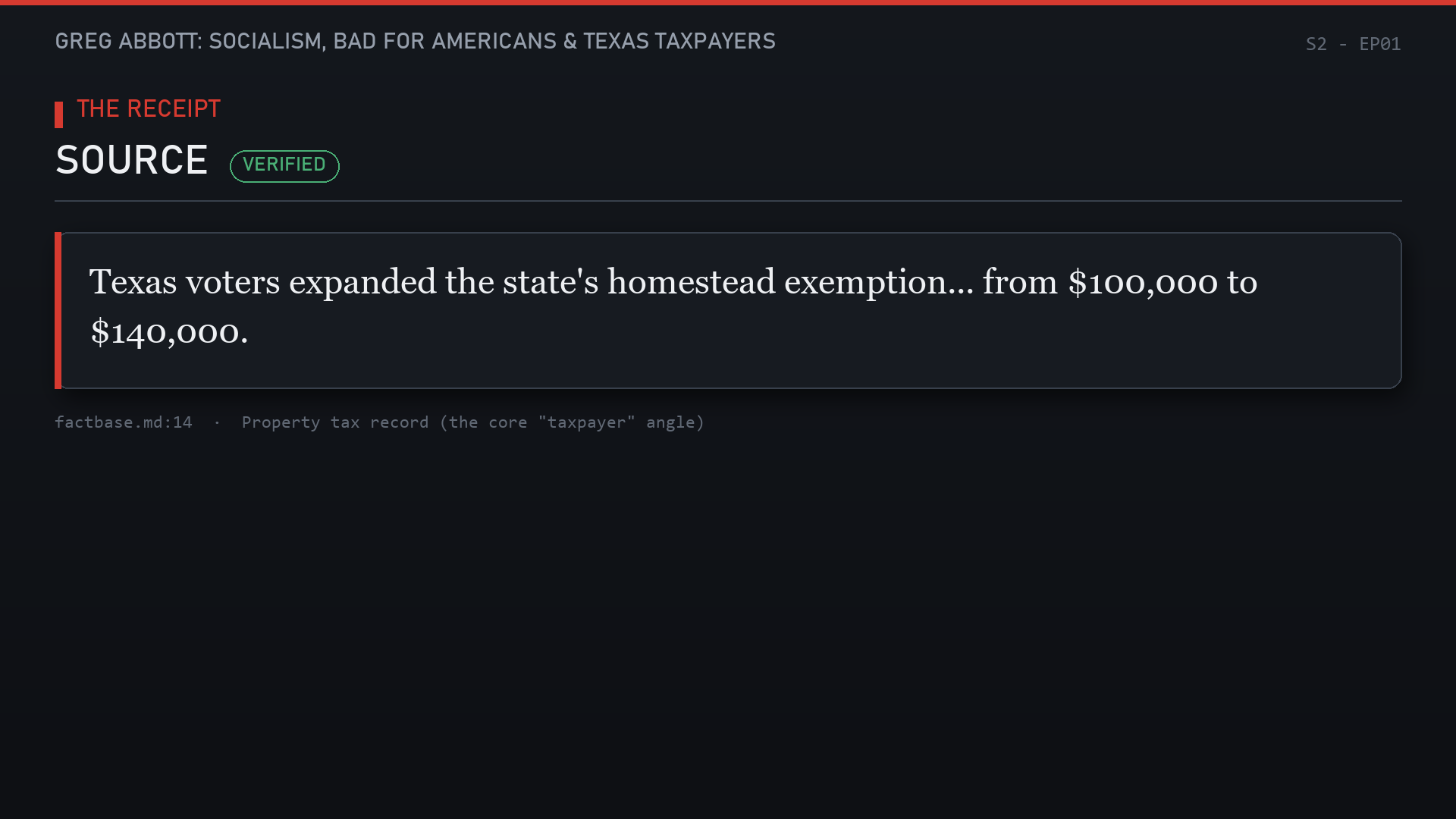
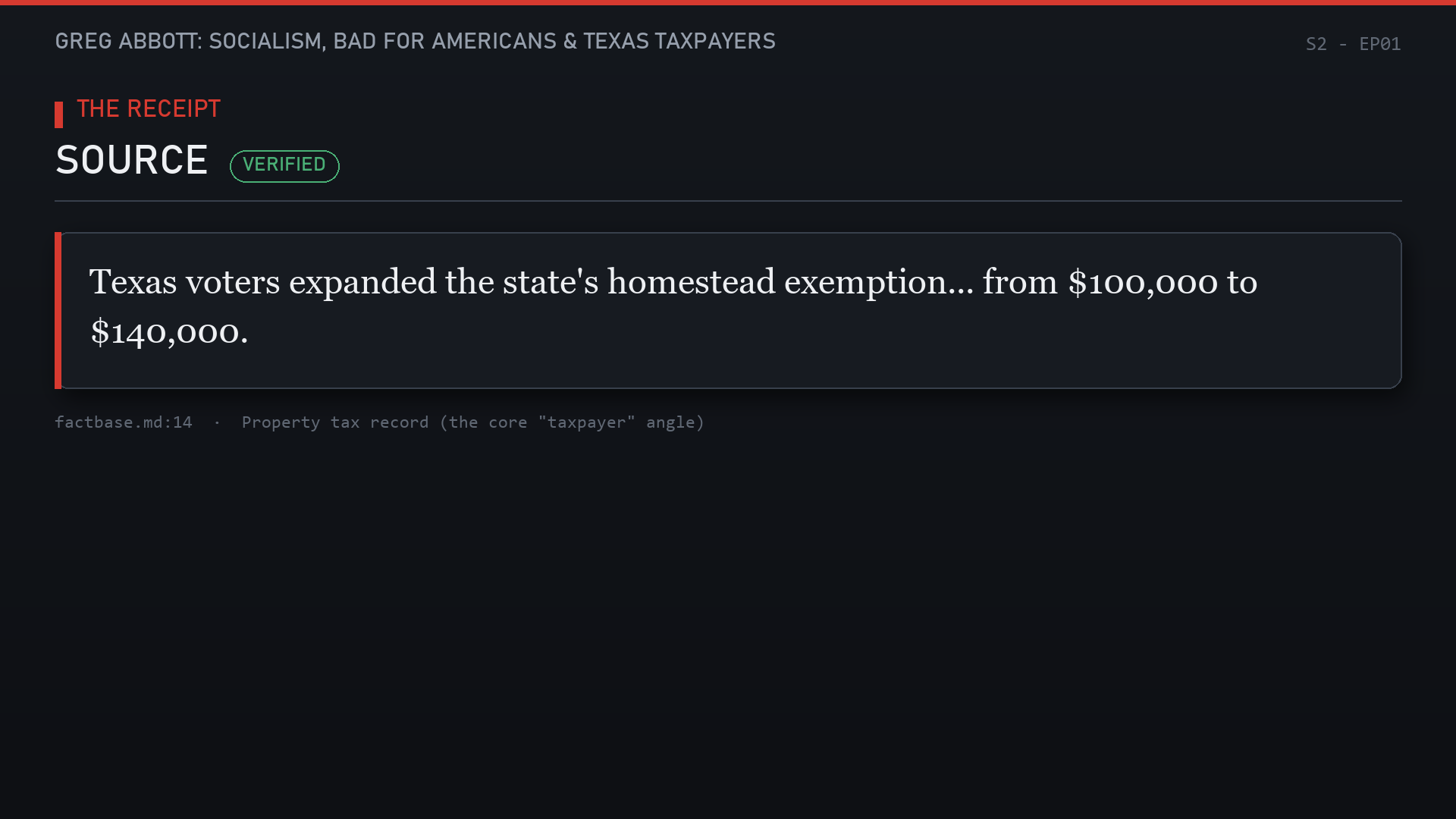
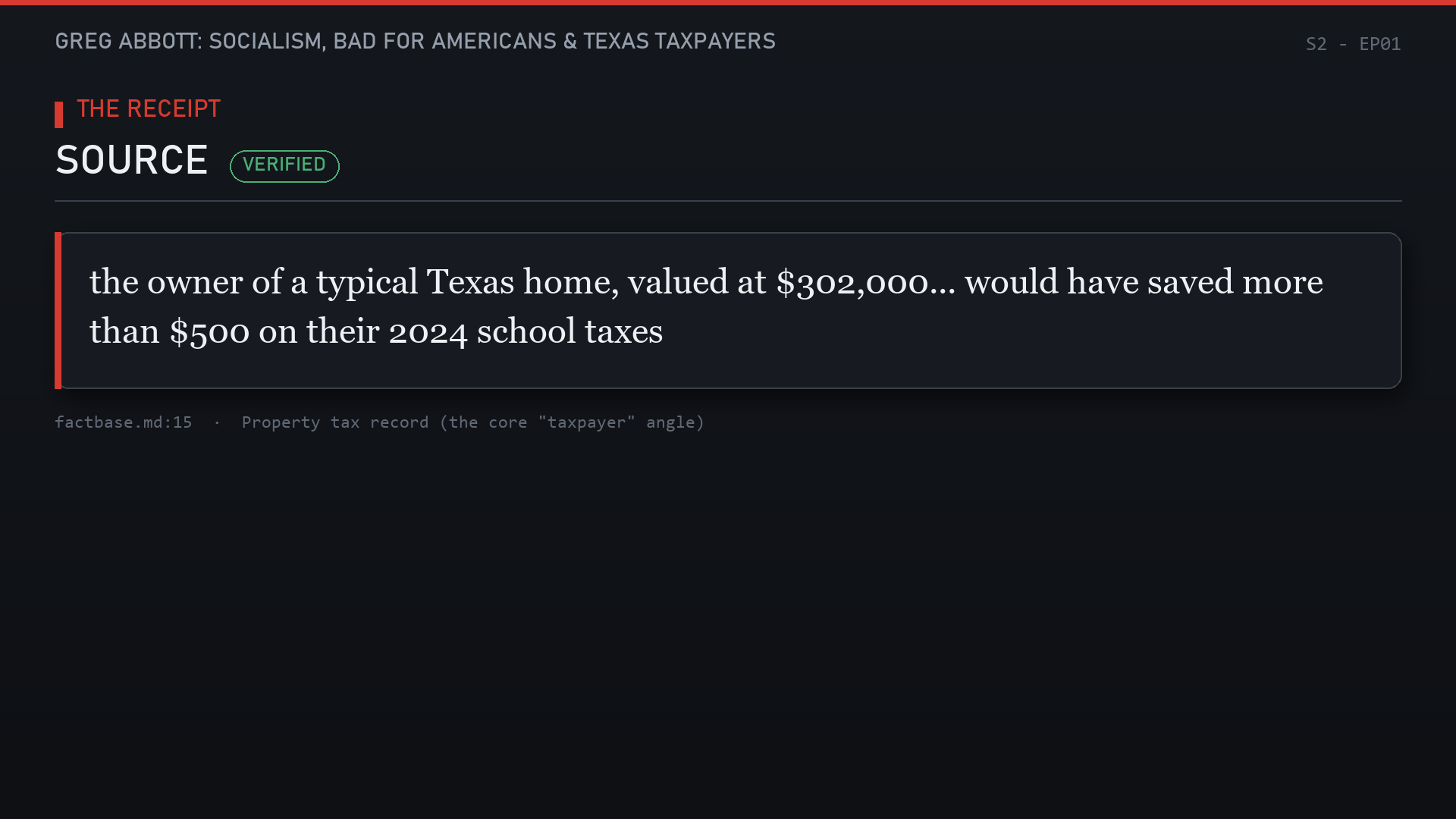
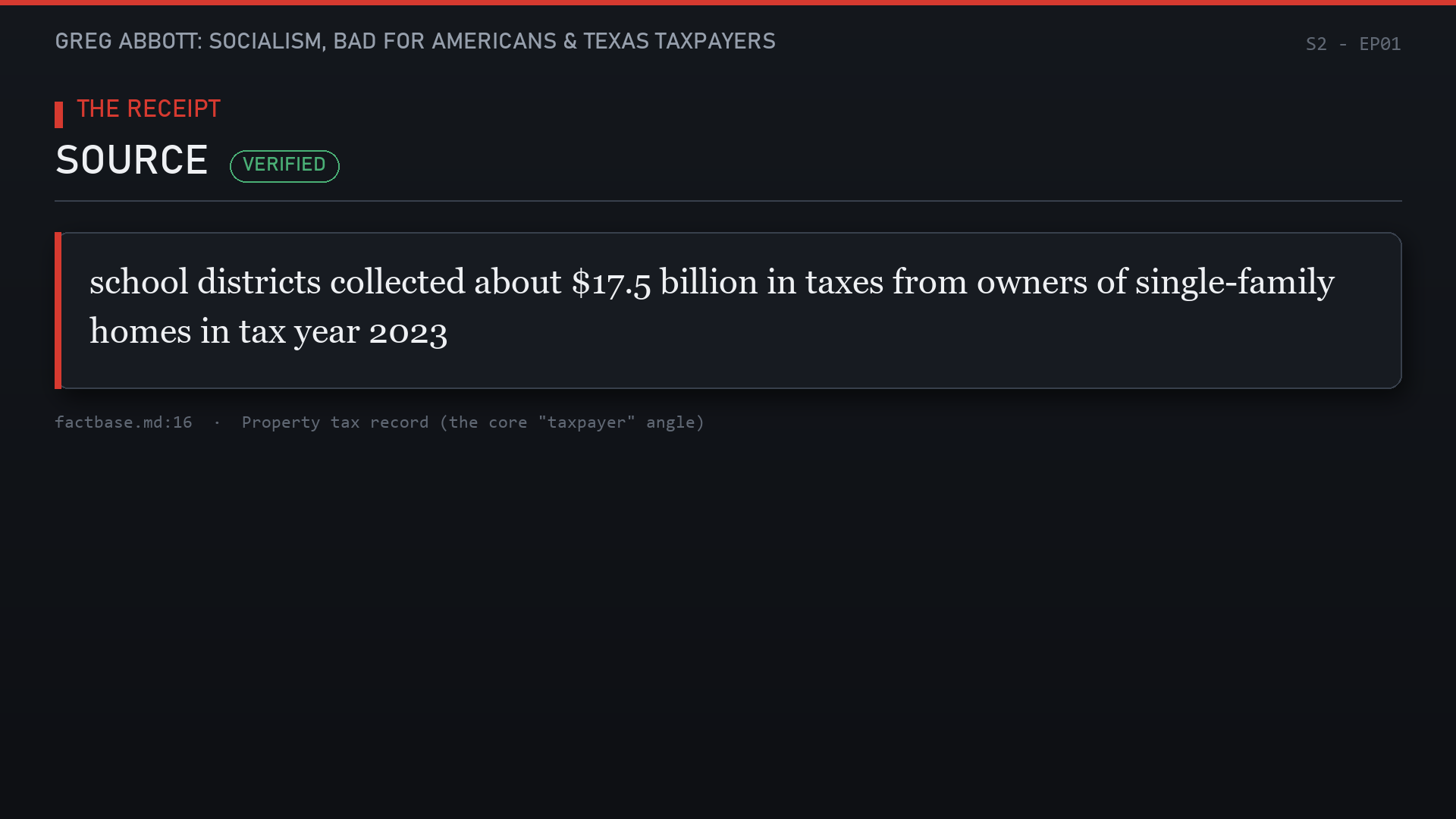
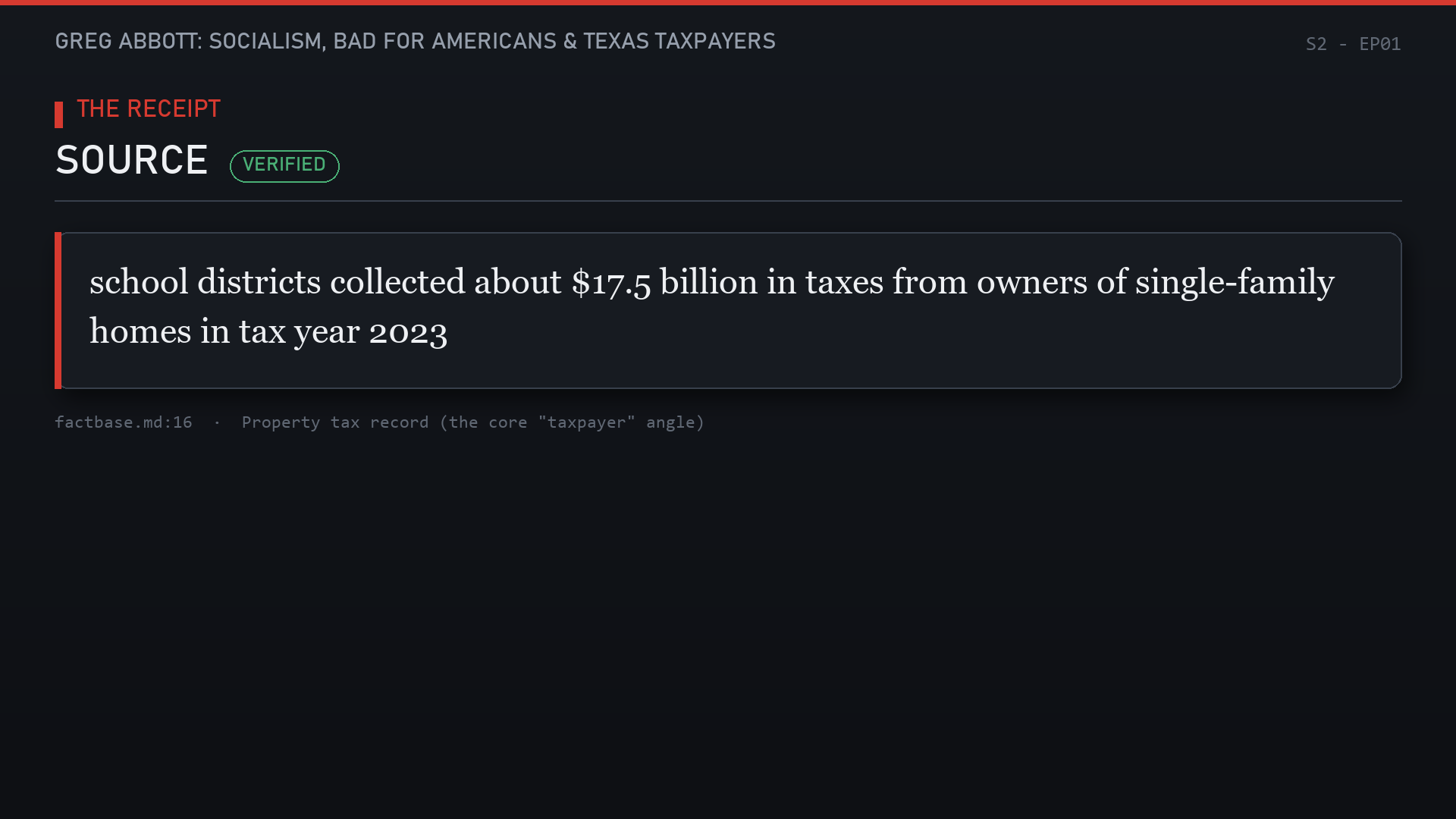
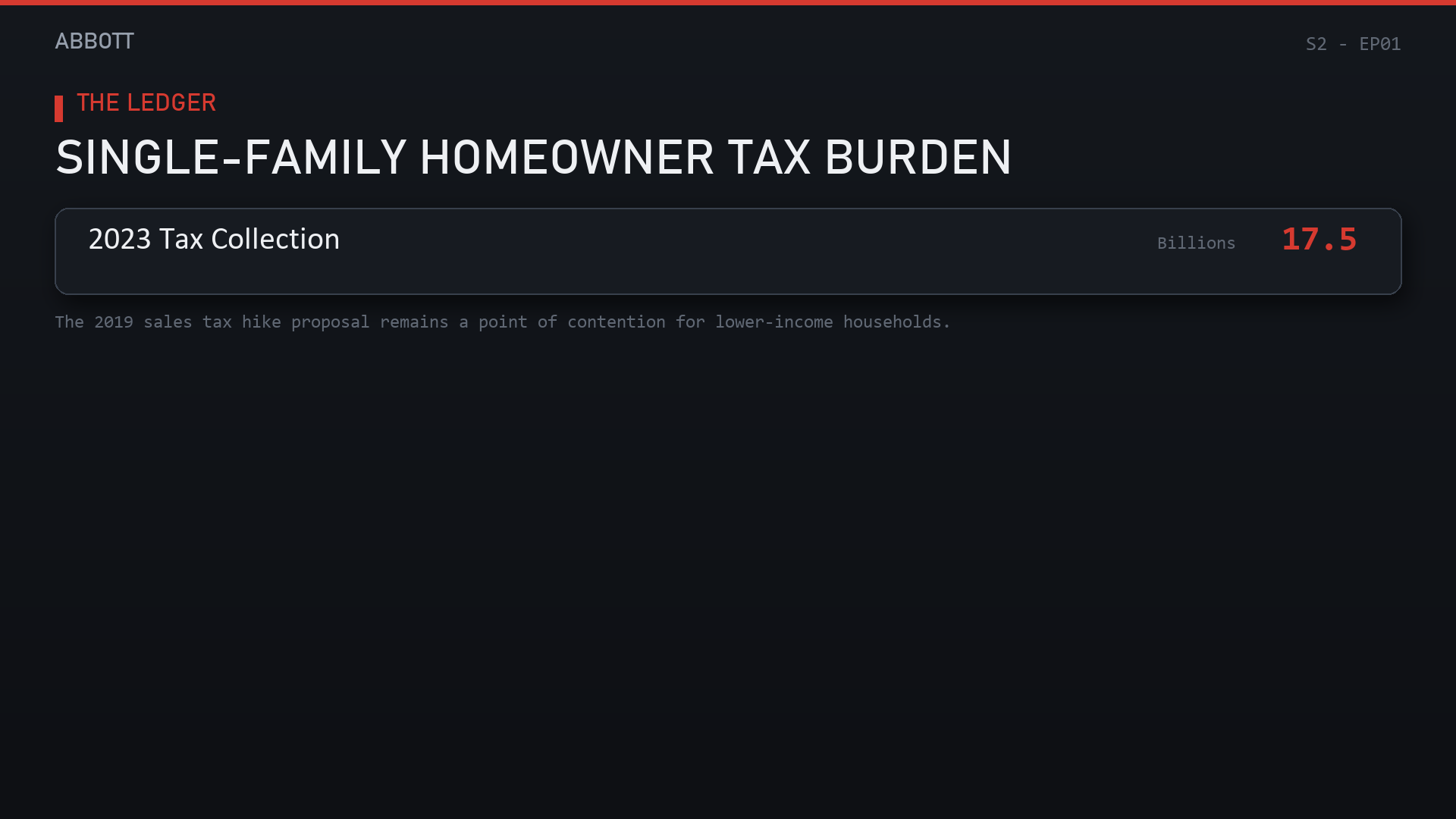
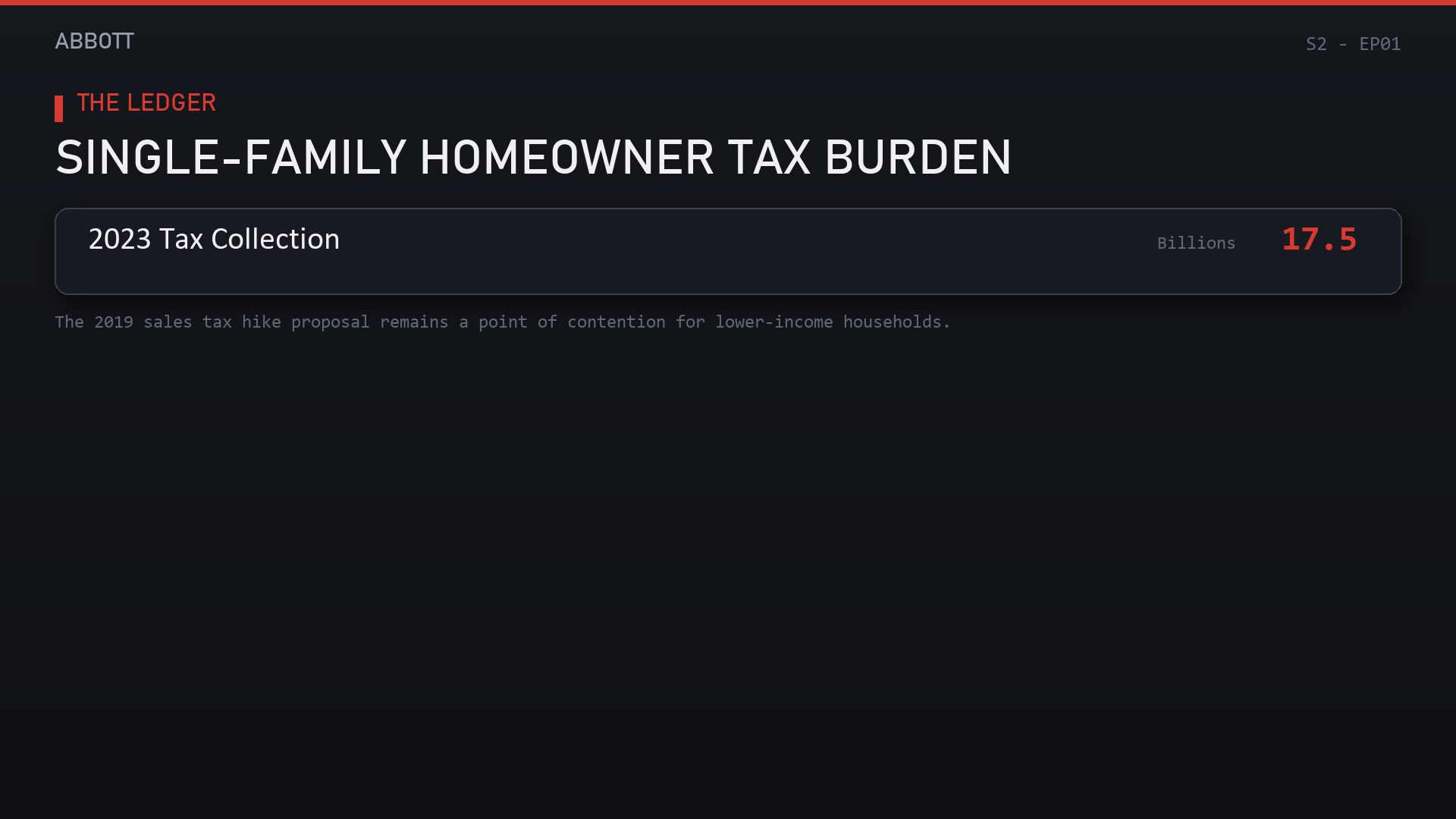
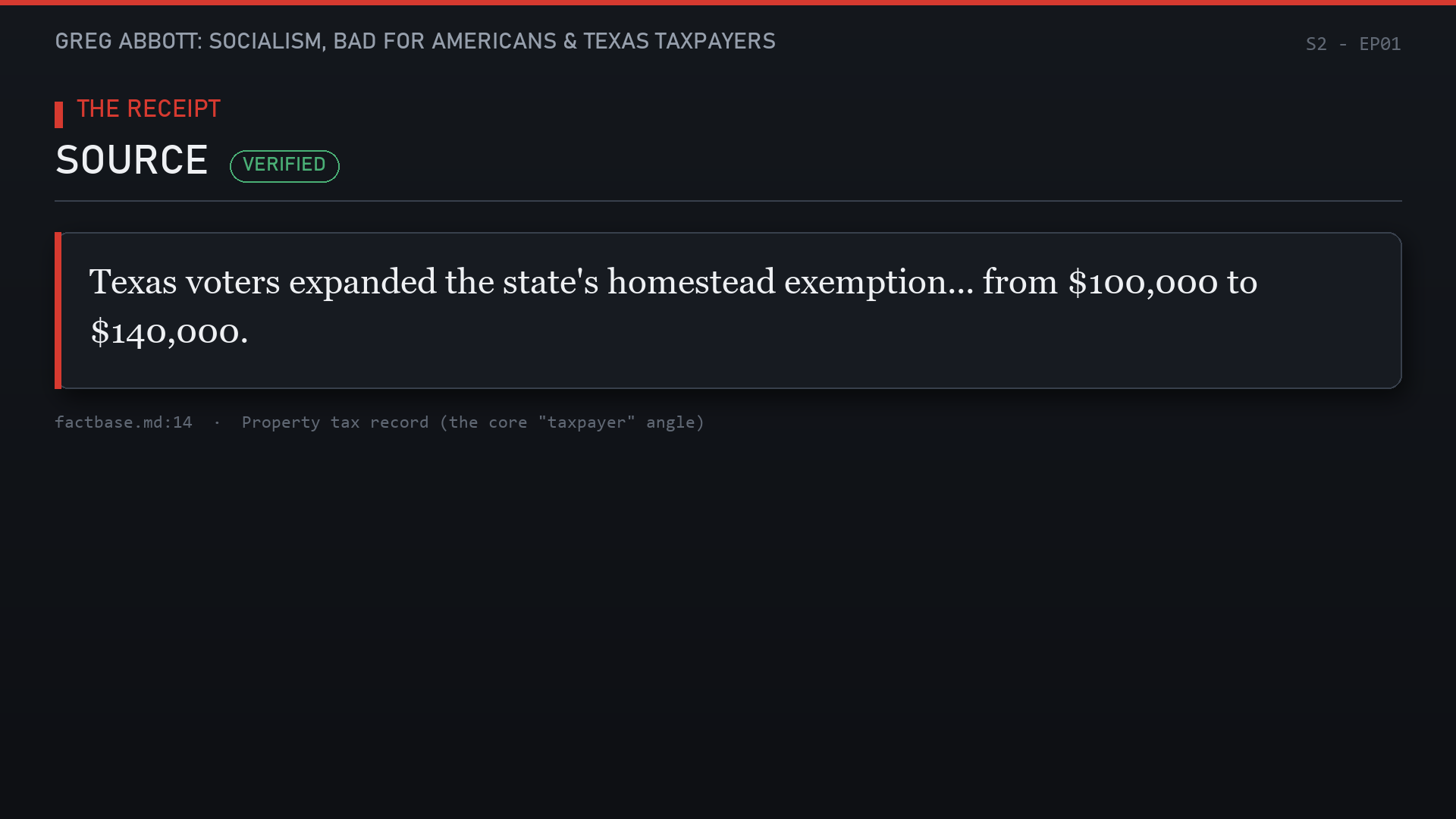
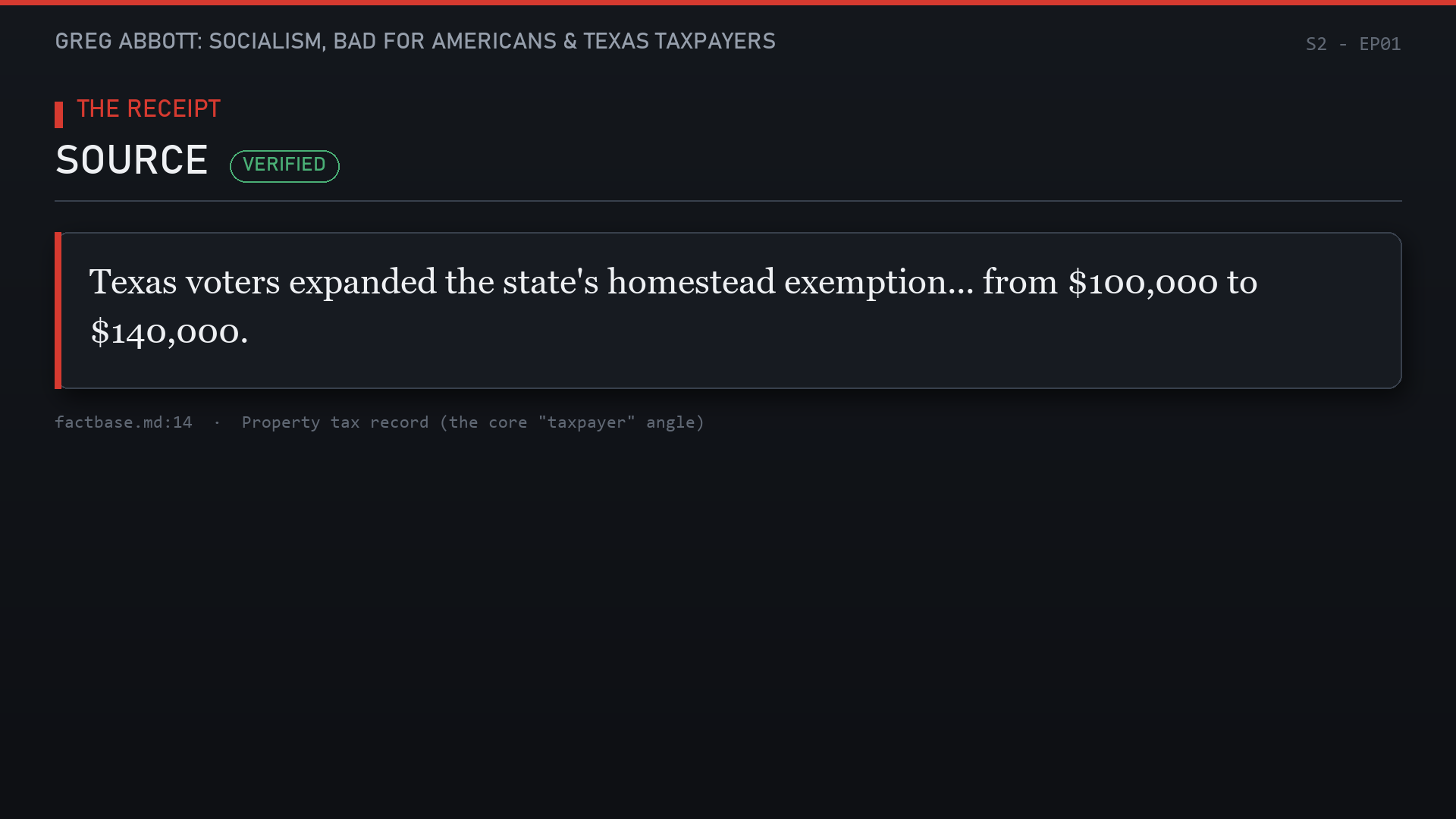
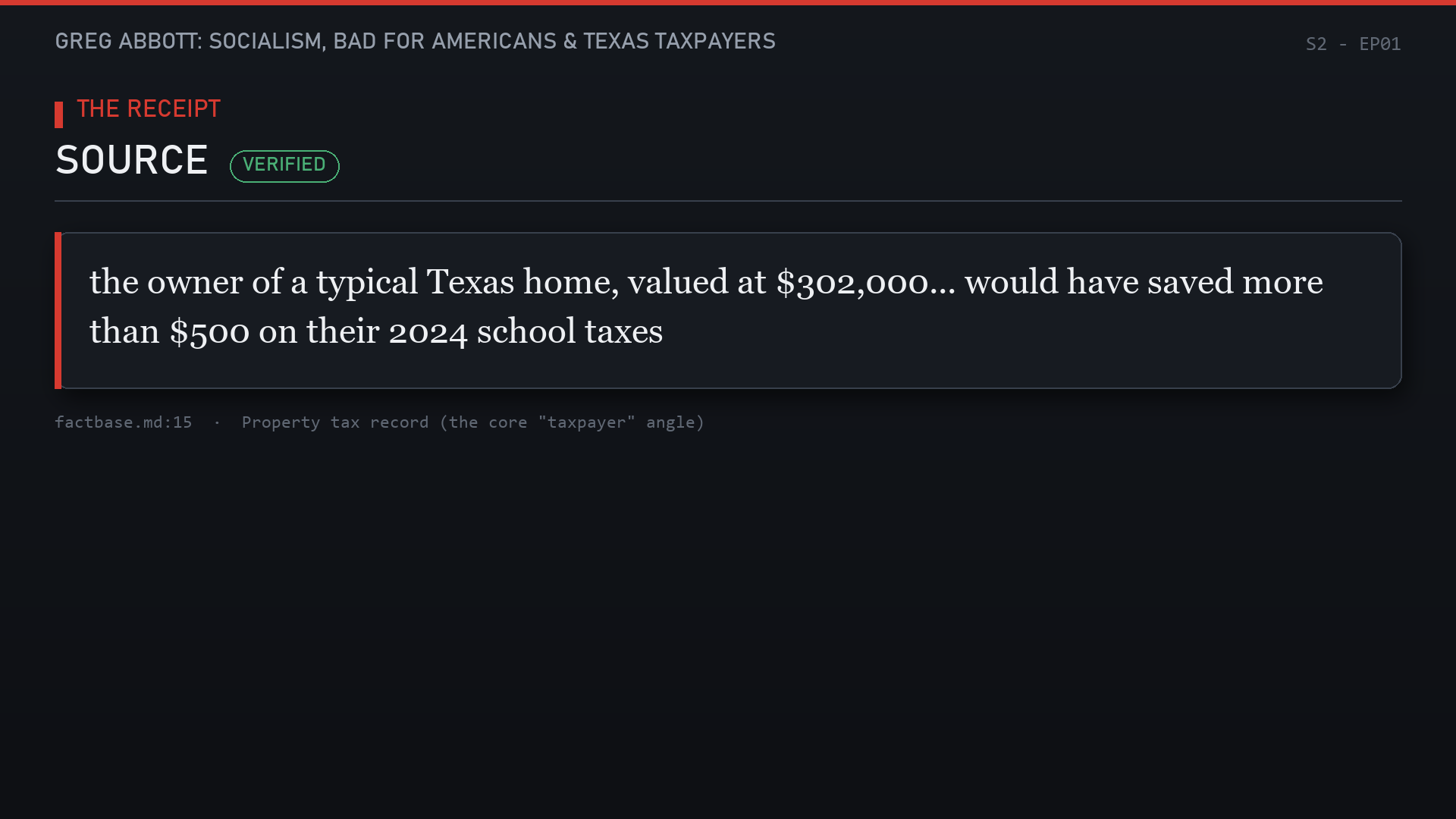
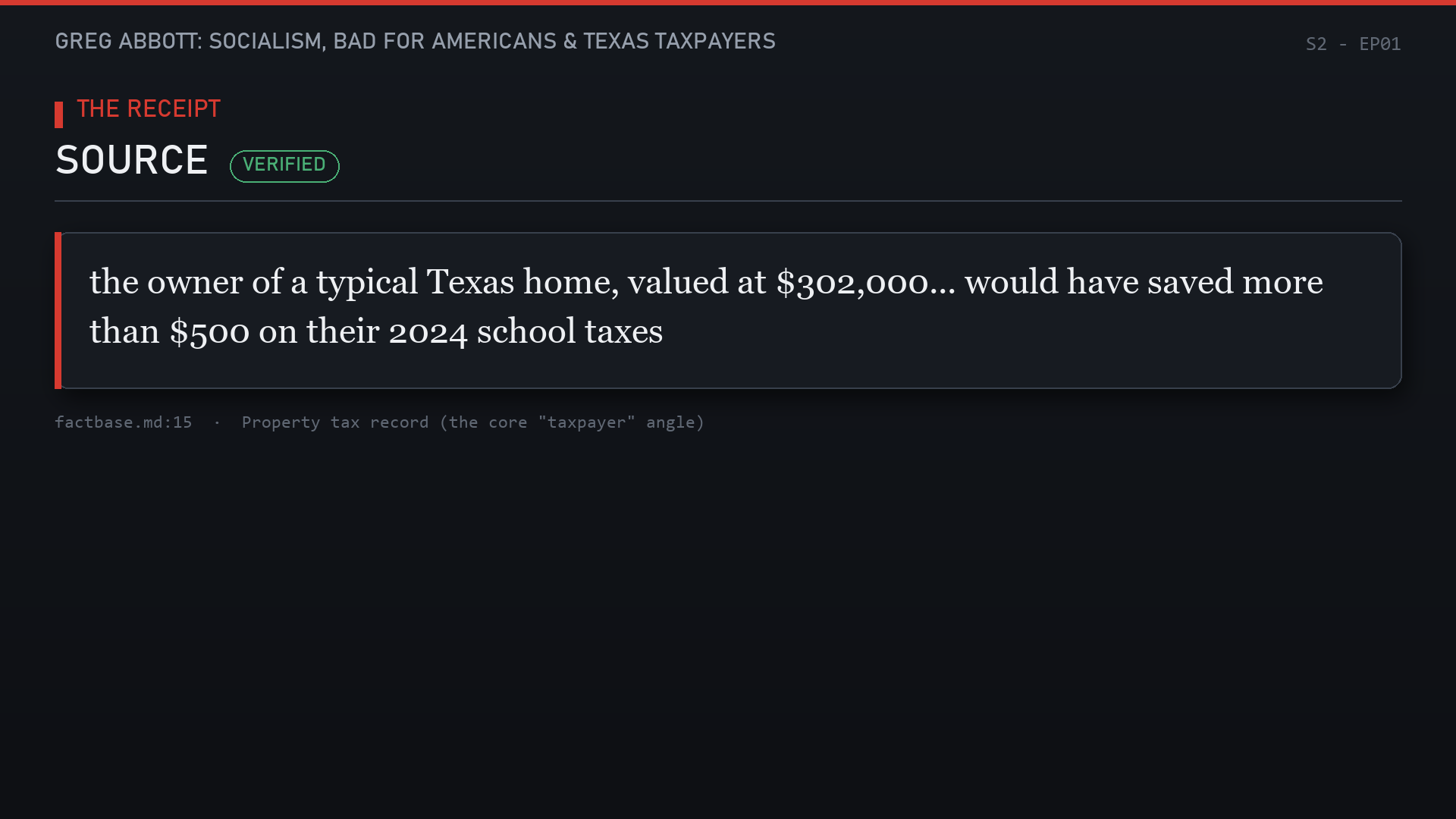
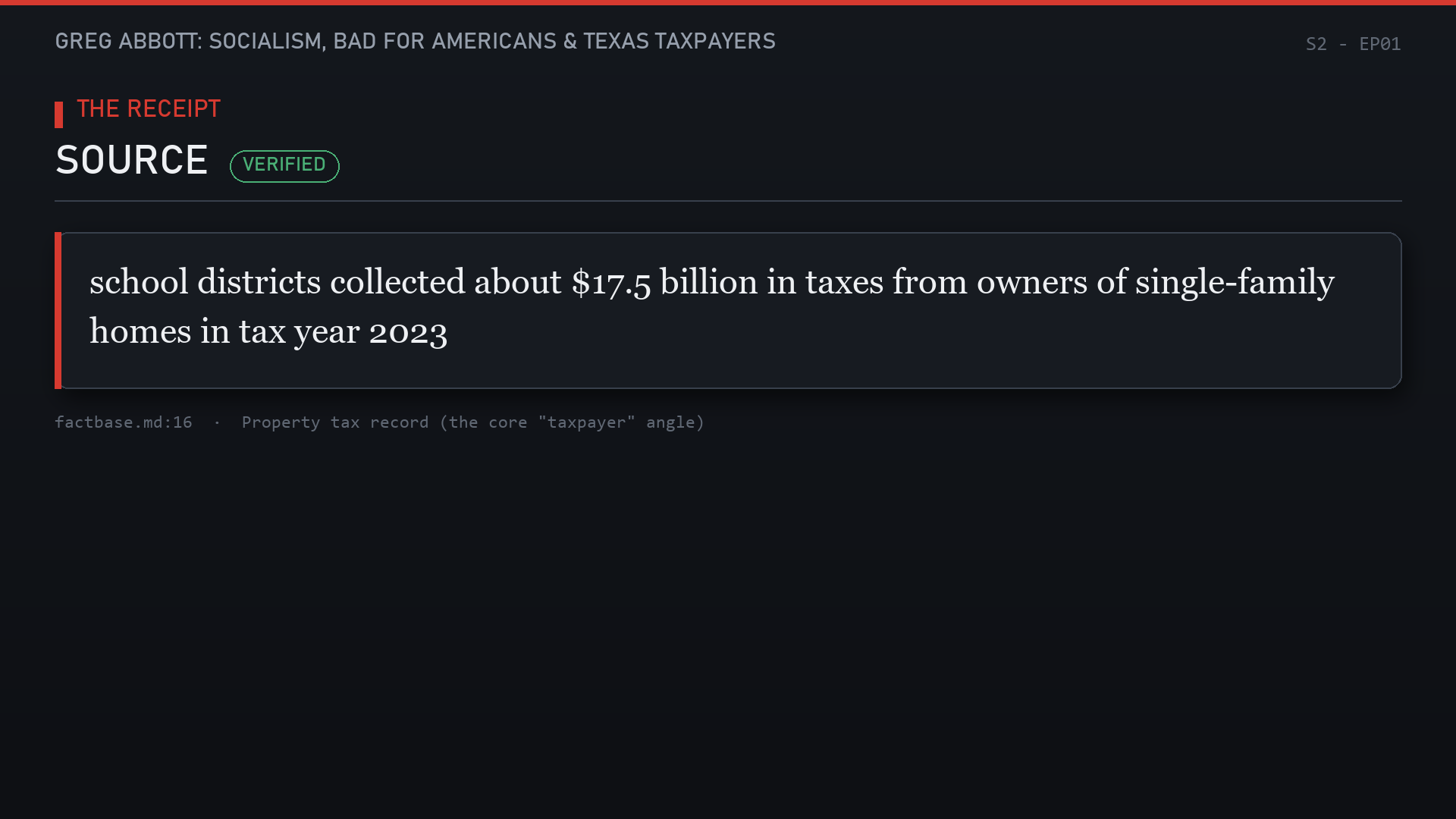
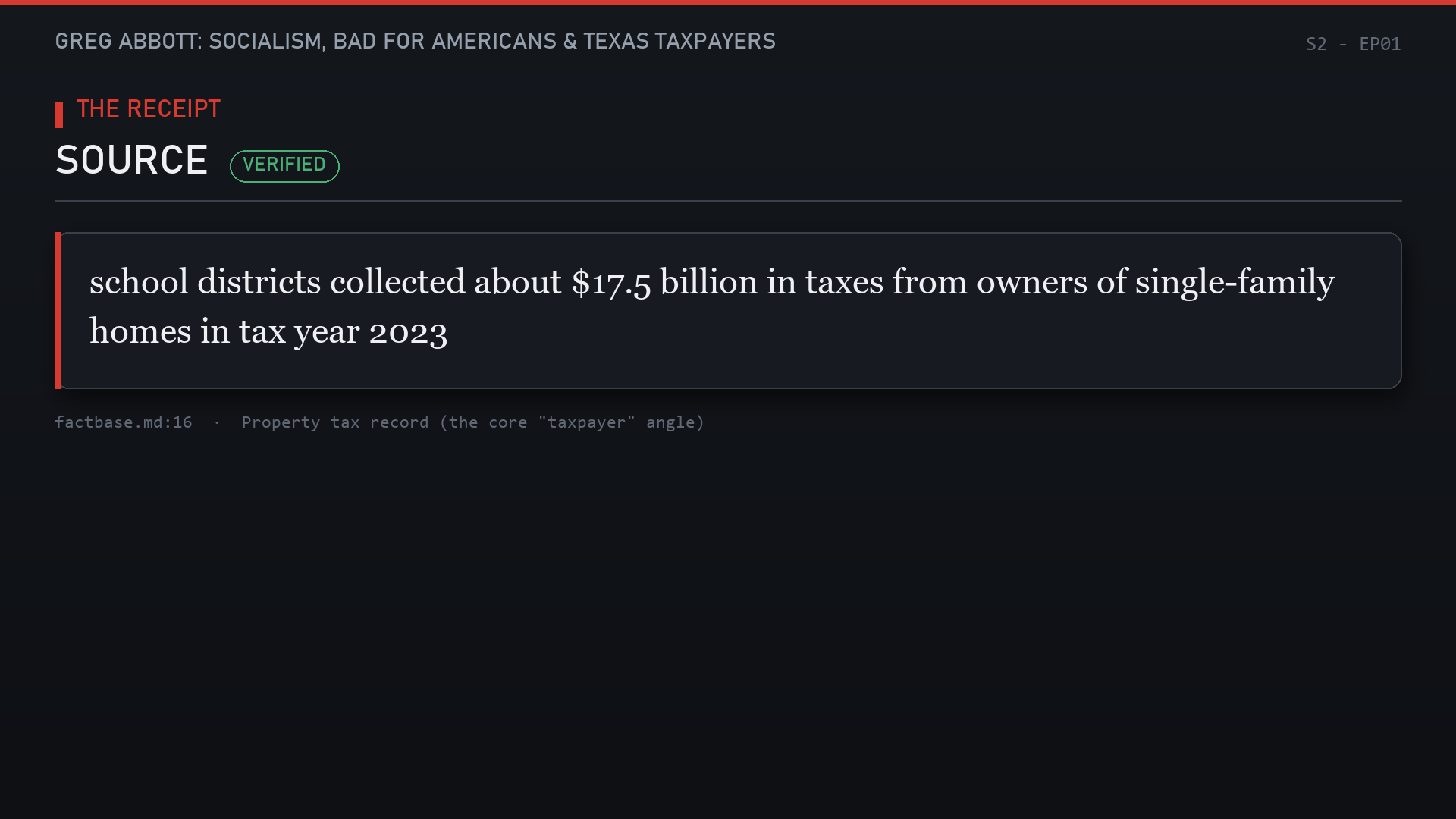
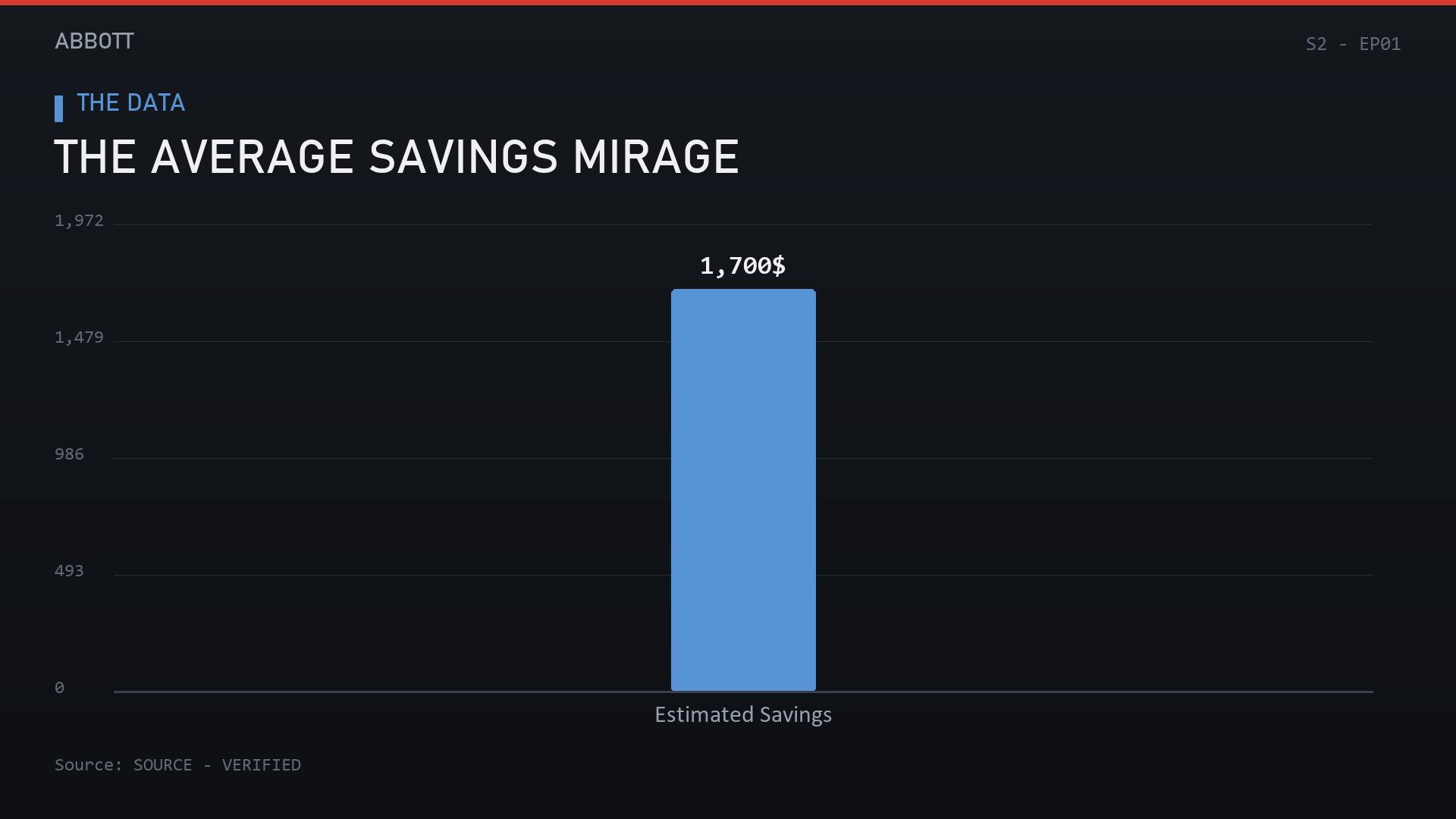
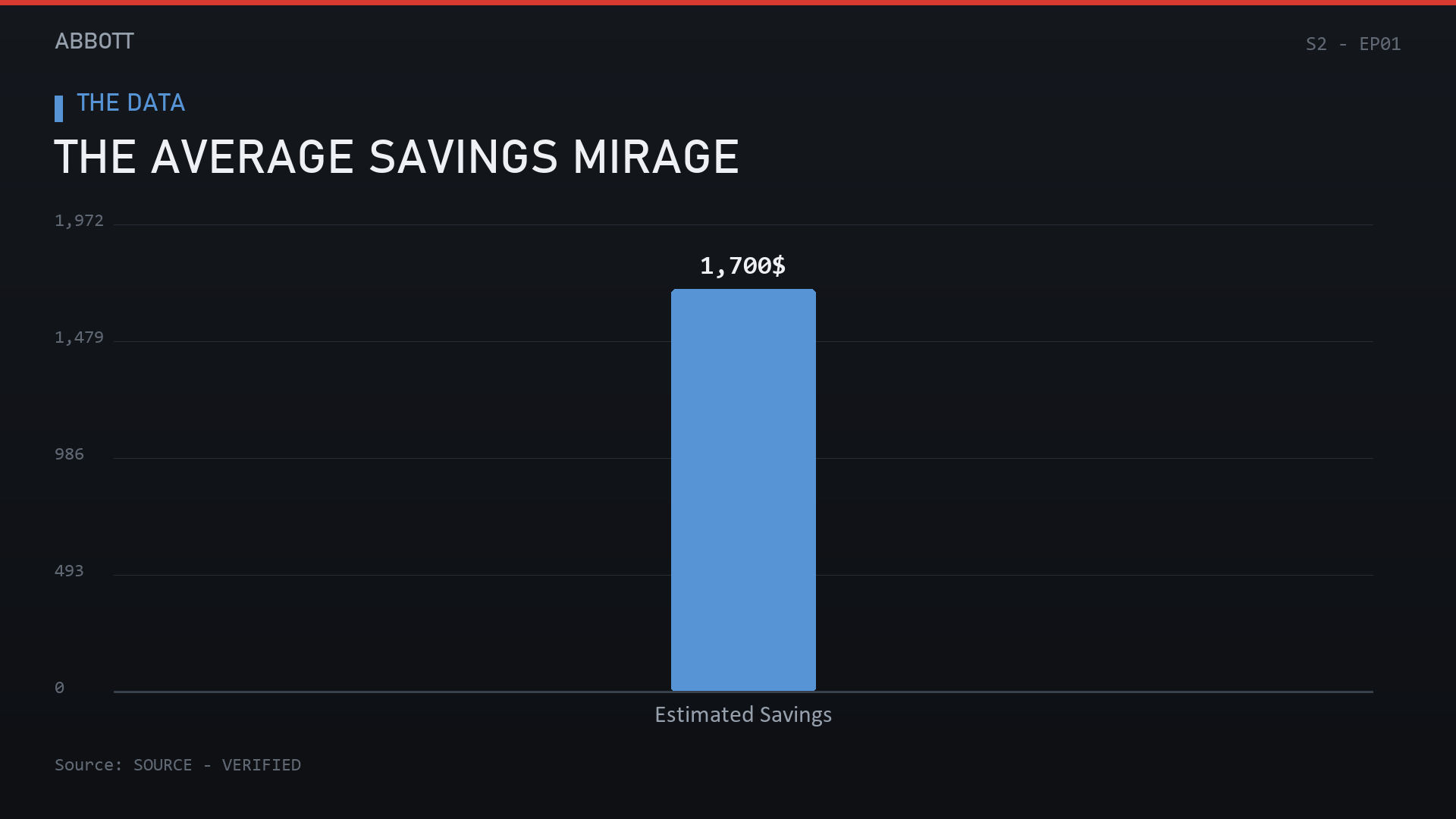
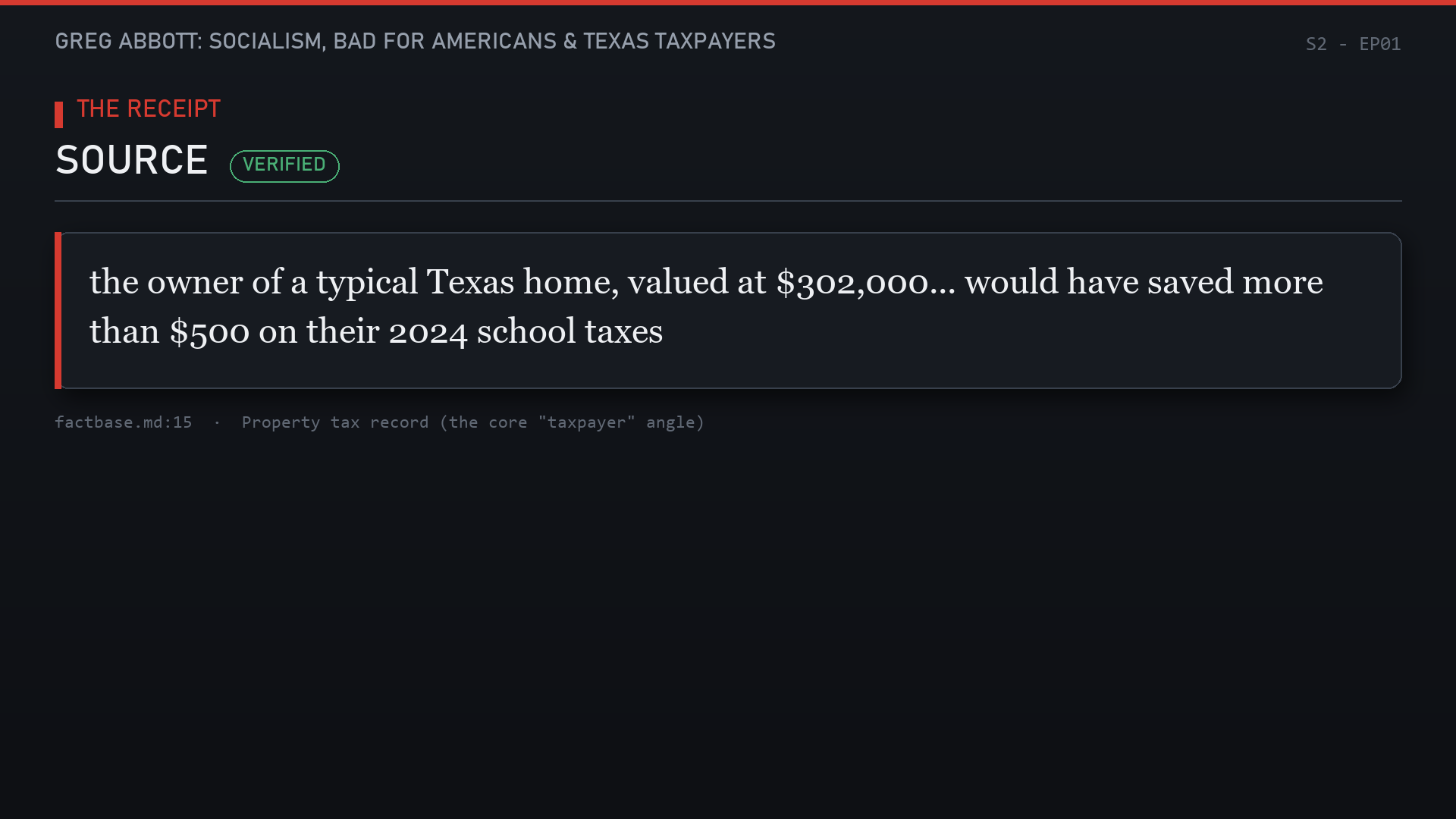
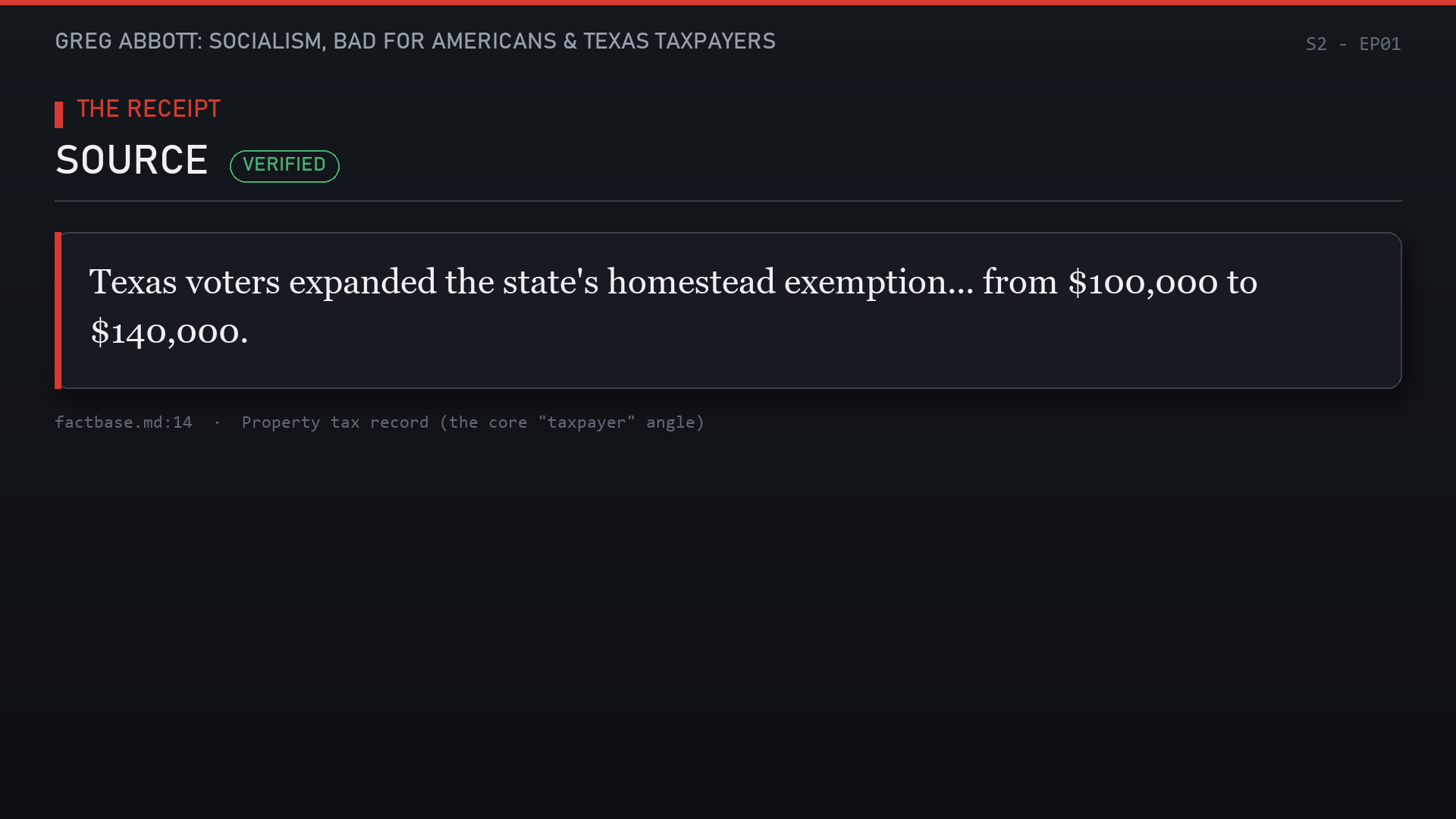
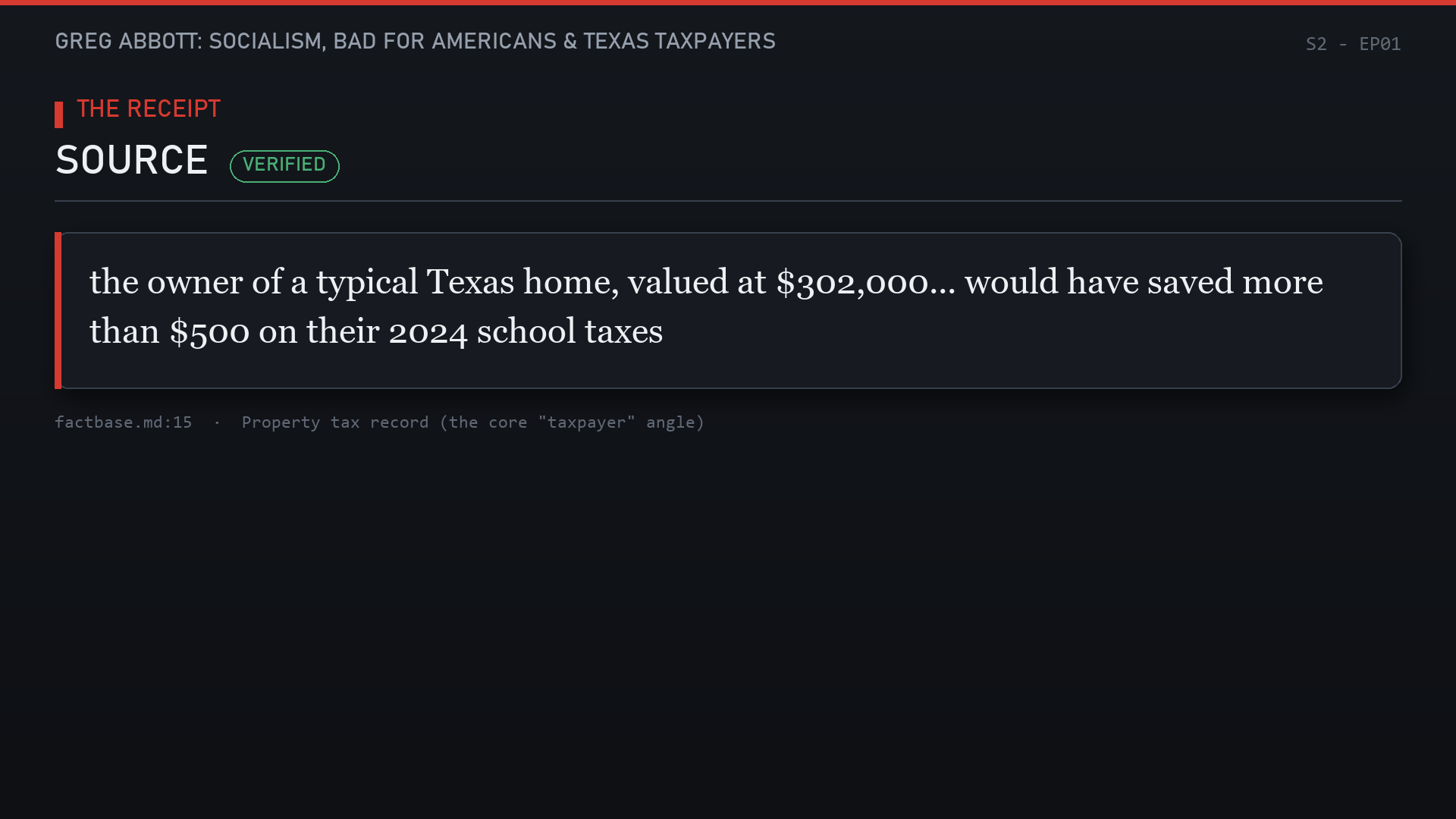
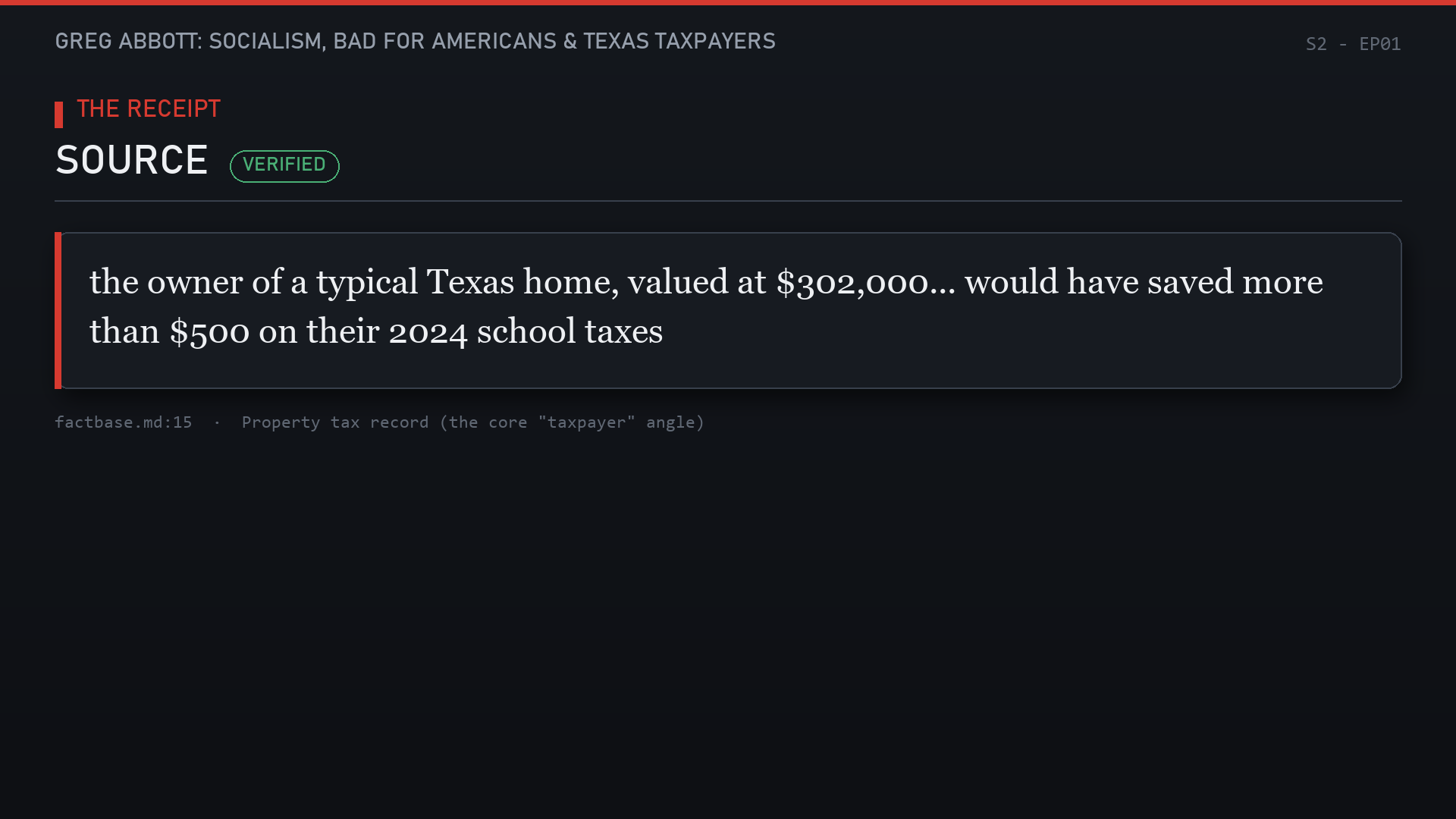
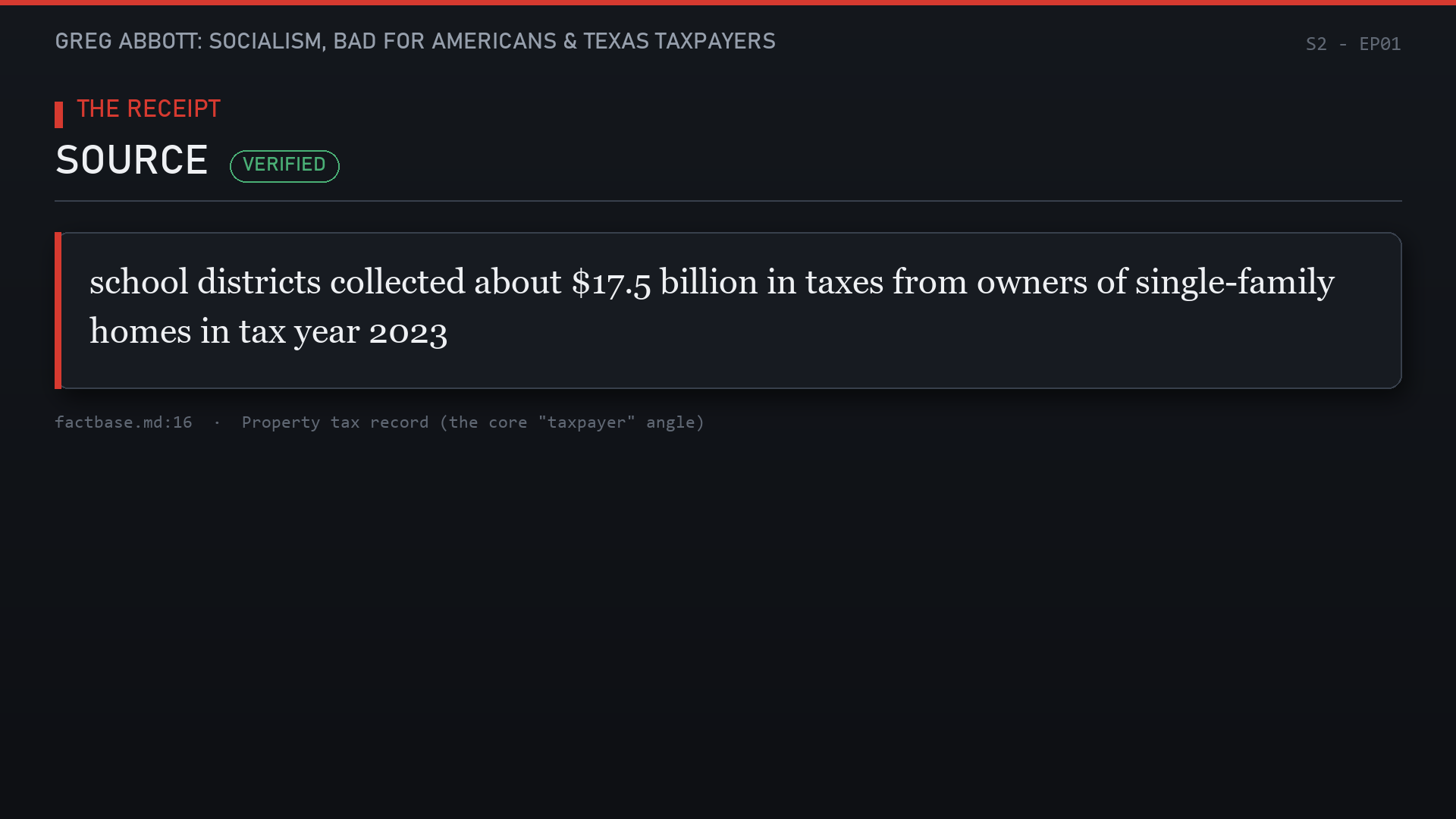
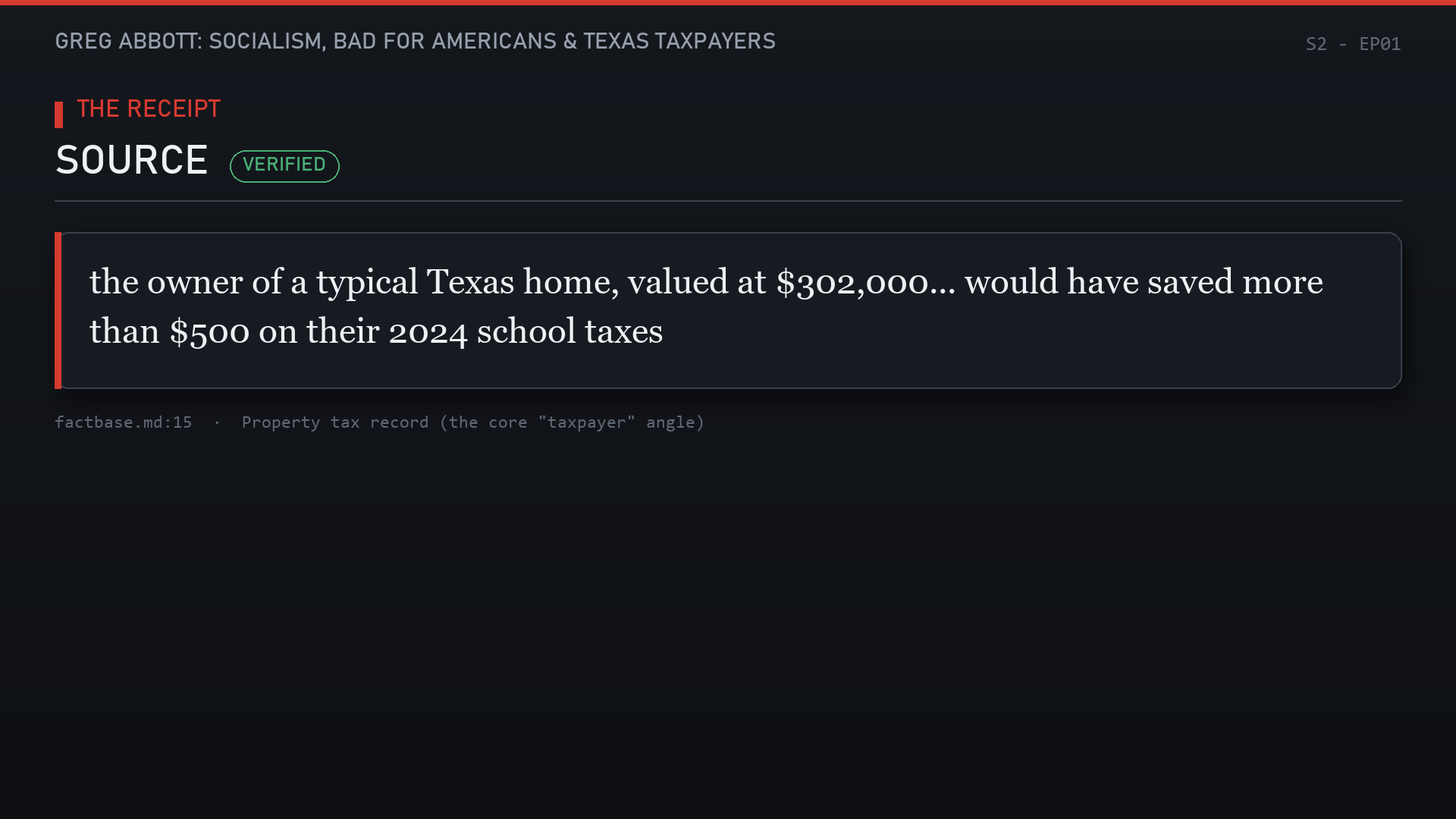
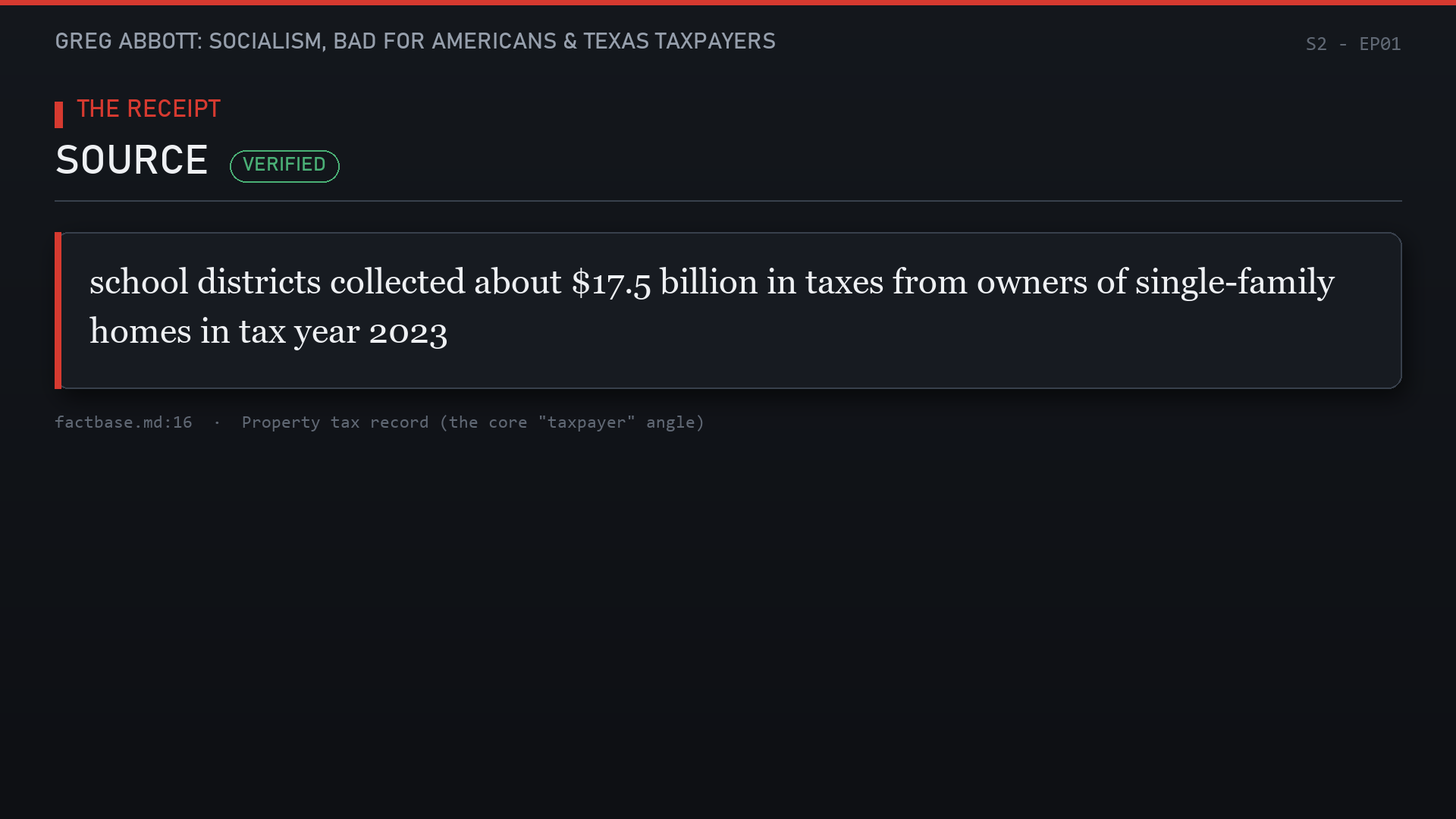
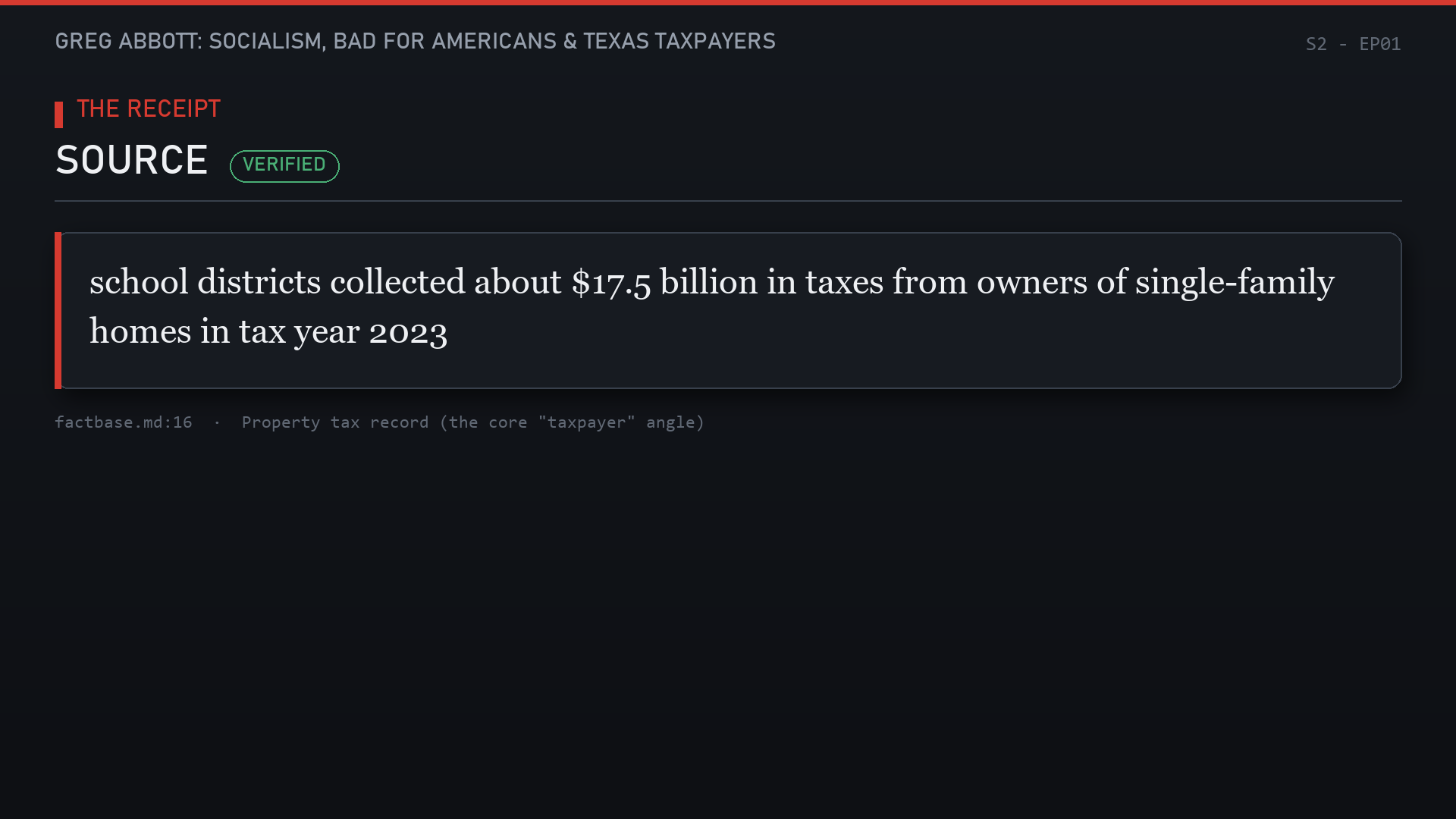
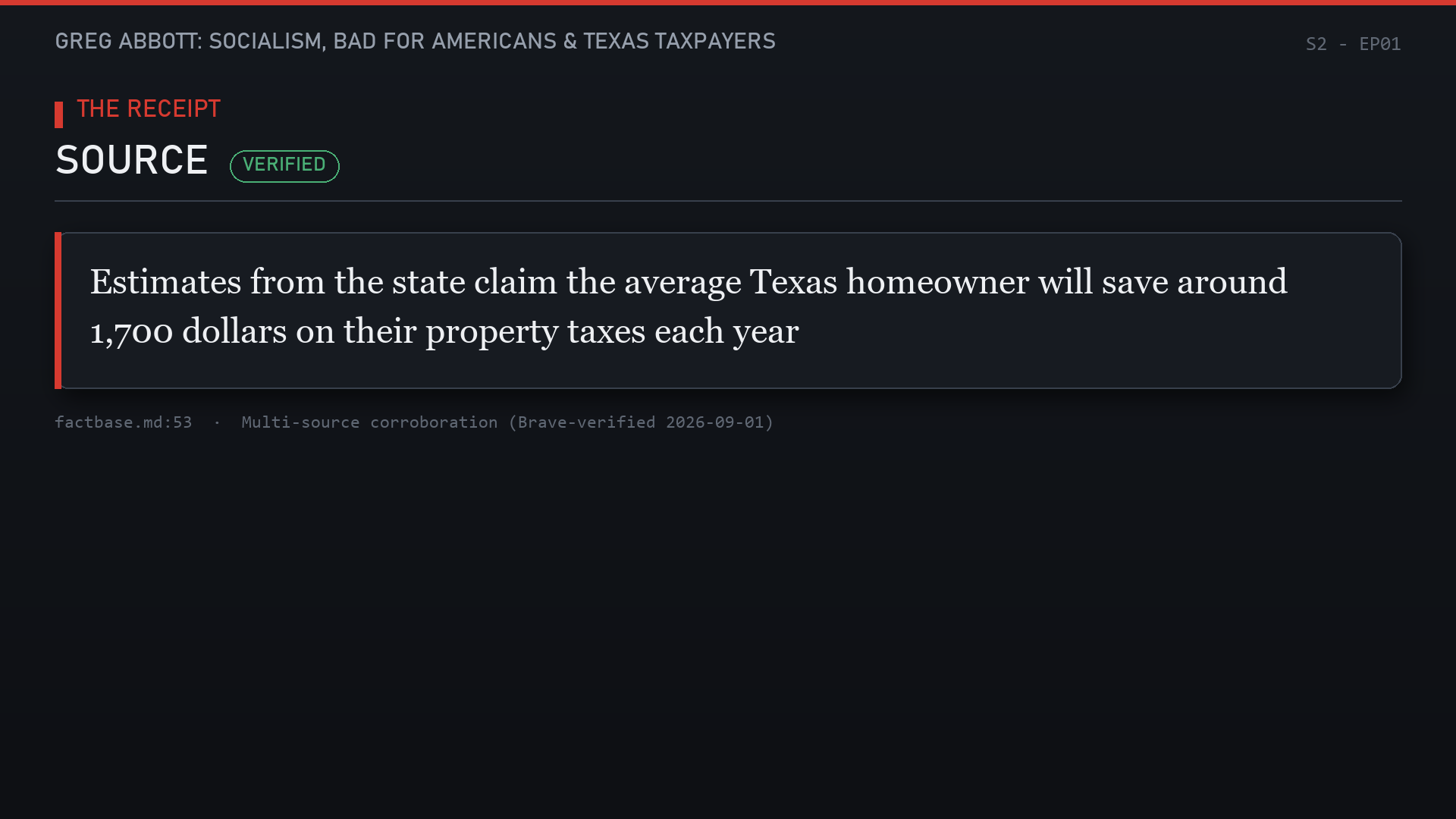
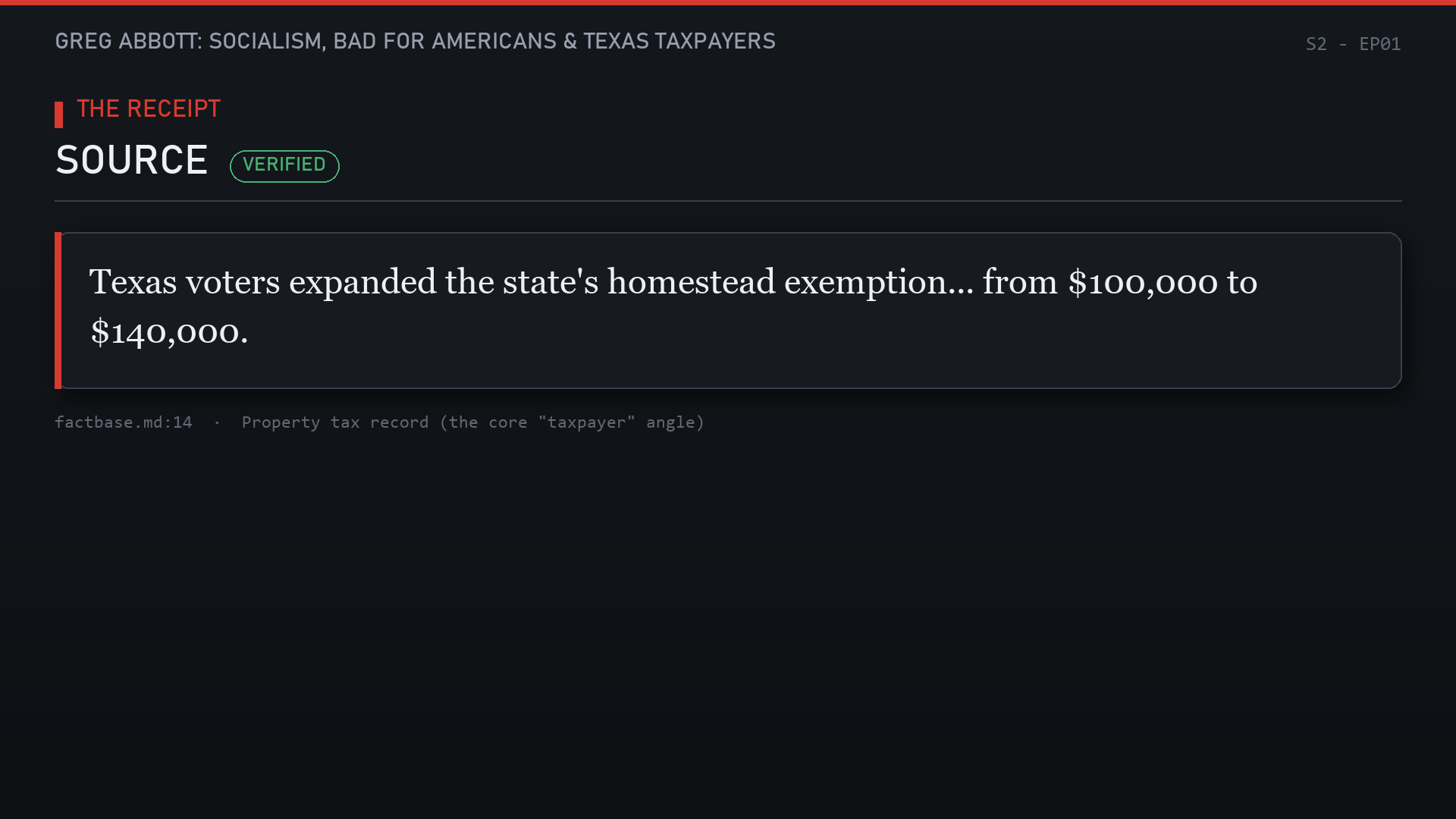
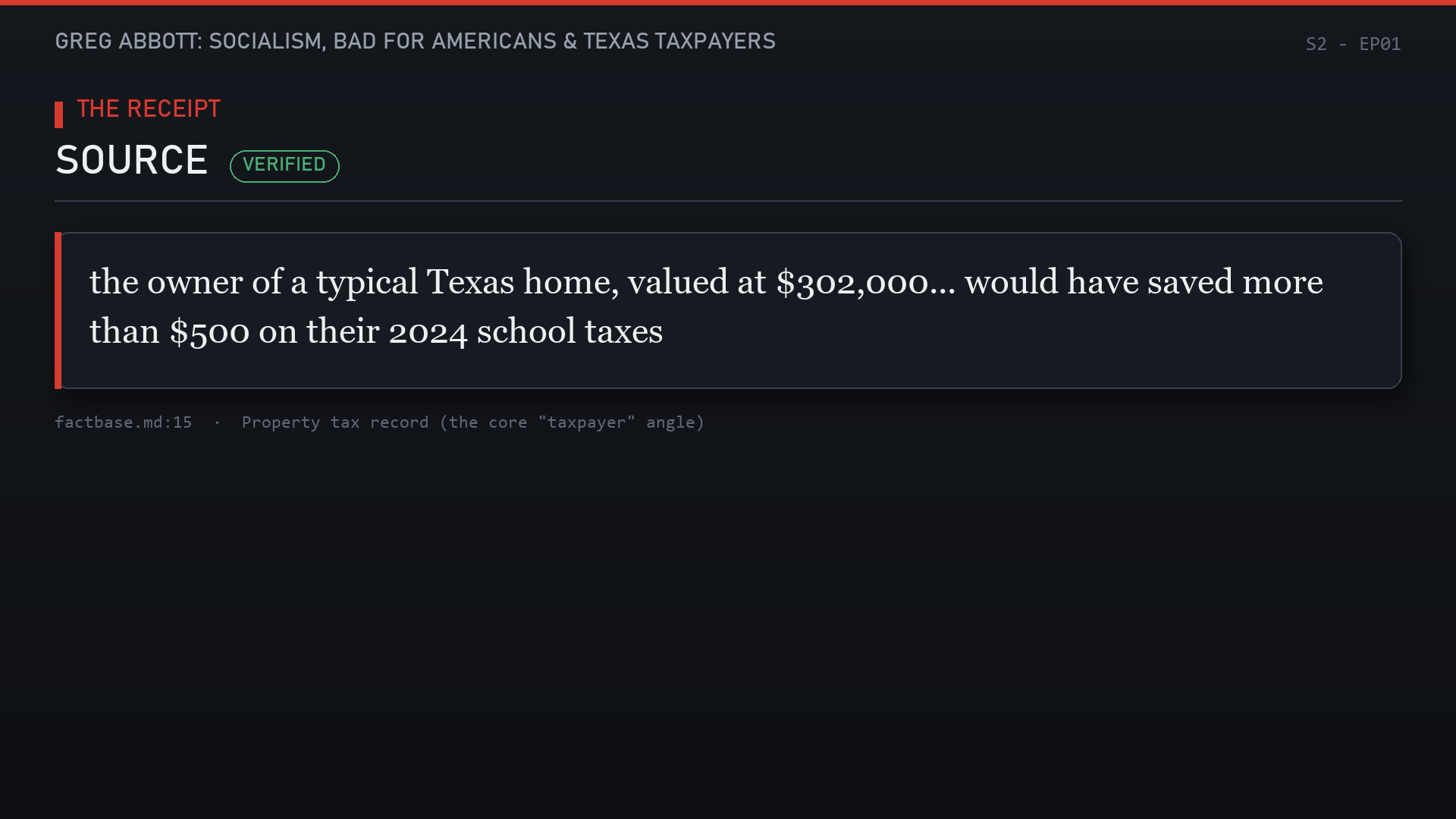
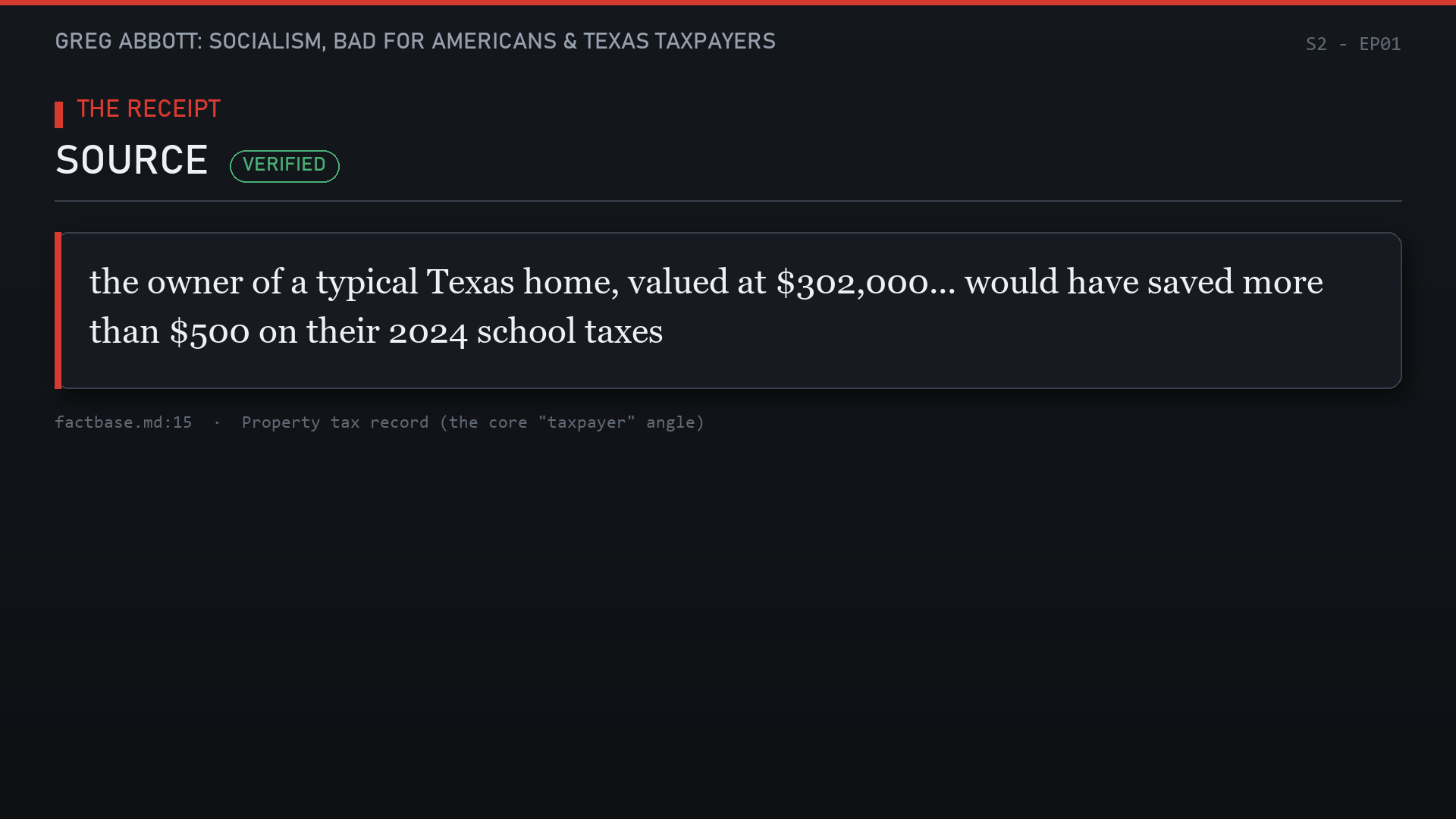
In November 2025, voters expanded the homestead exemption — the slice of a home's value school districts can't tax — from $100,000 to $140,000. The payoff on a typical $302,000 Texas home came to just over $500 a year in 2024 school-tax savings. Single-family homeowners paid roughly $17.5 billion in school taxes in tax year 2023 — a figure that, per the Texas Taxpayers and Research Association, includes rental homes, which never qualify for the homestead break. Renters get nothing from the exemption; their landlord's school-tax bill rides on the building either way.
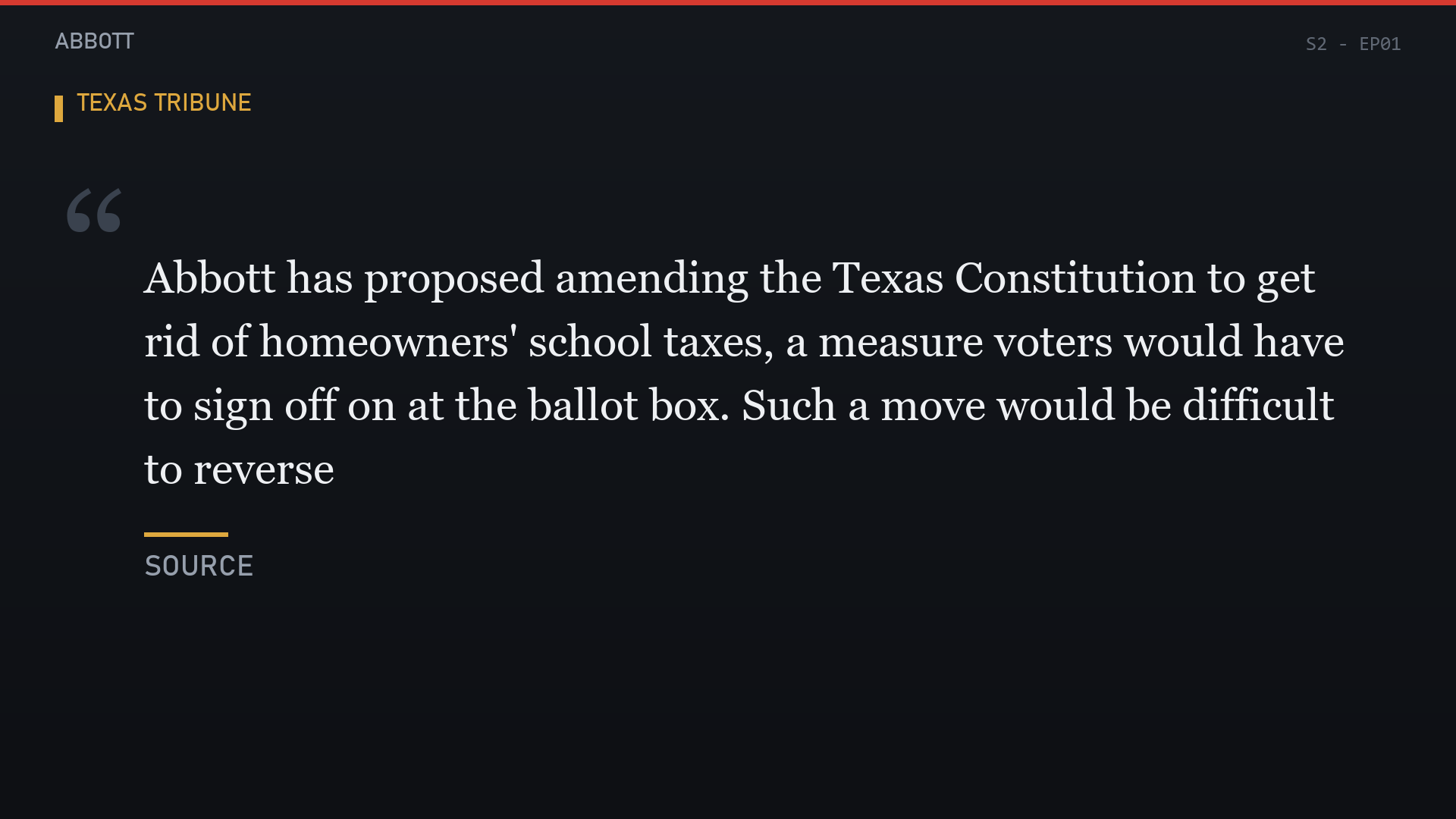
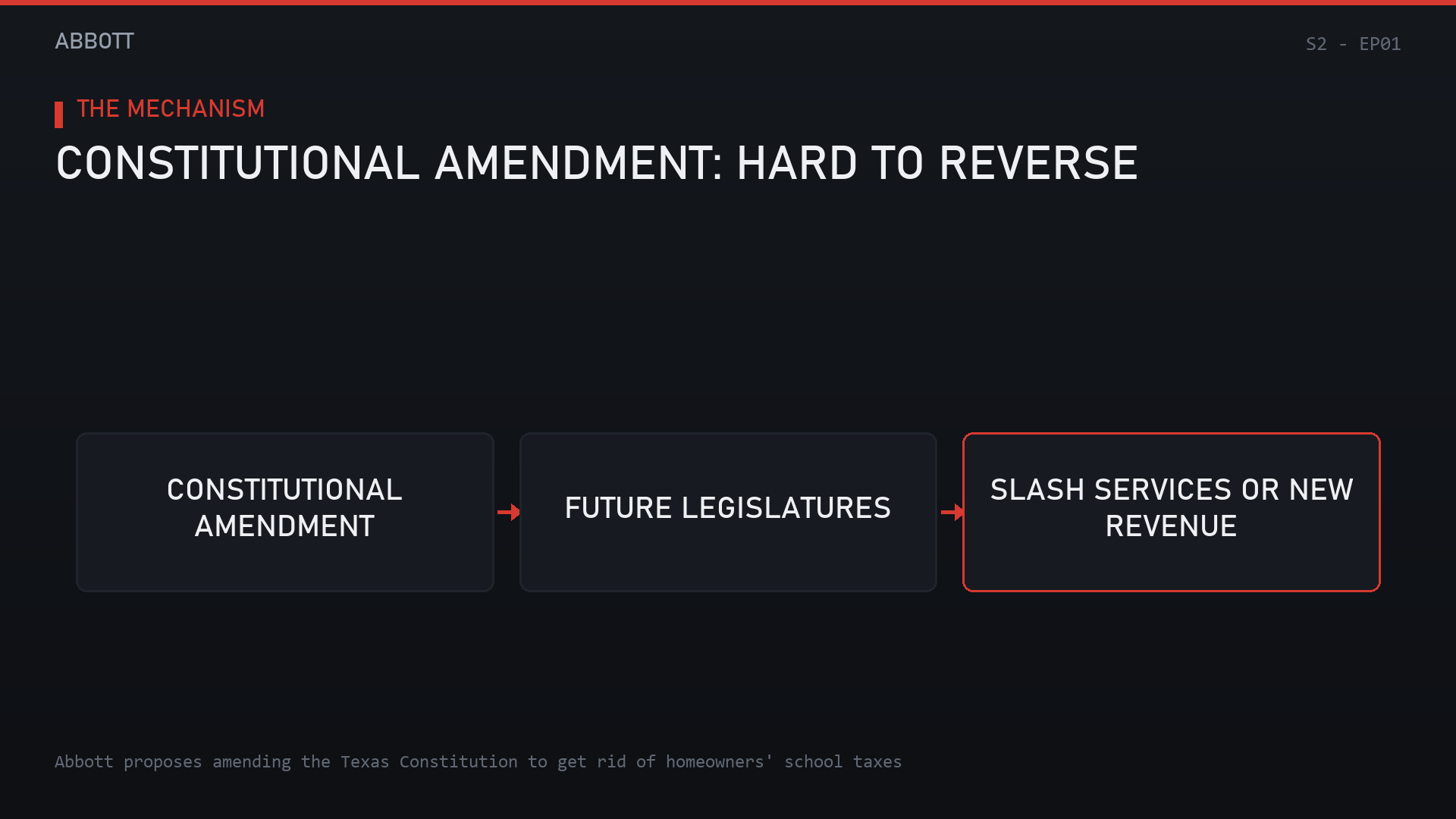
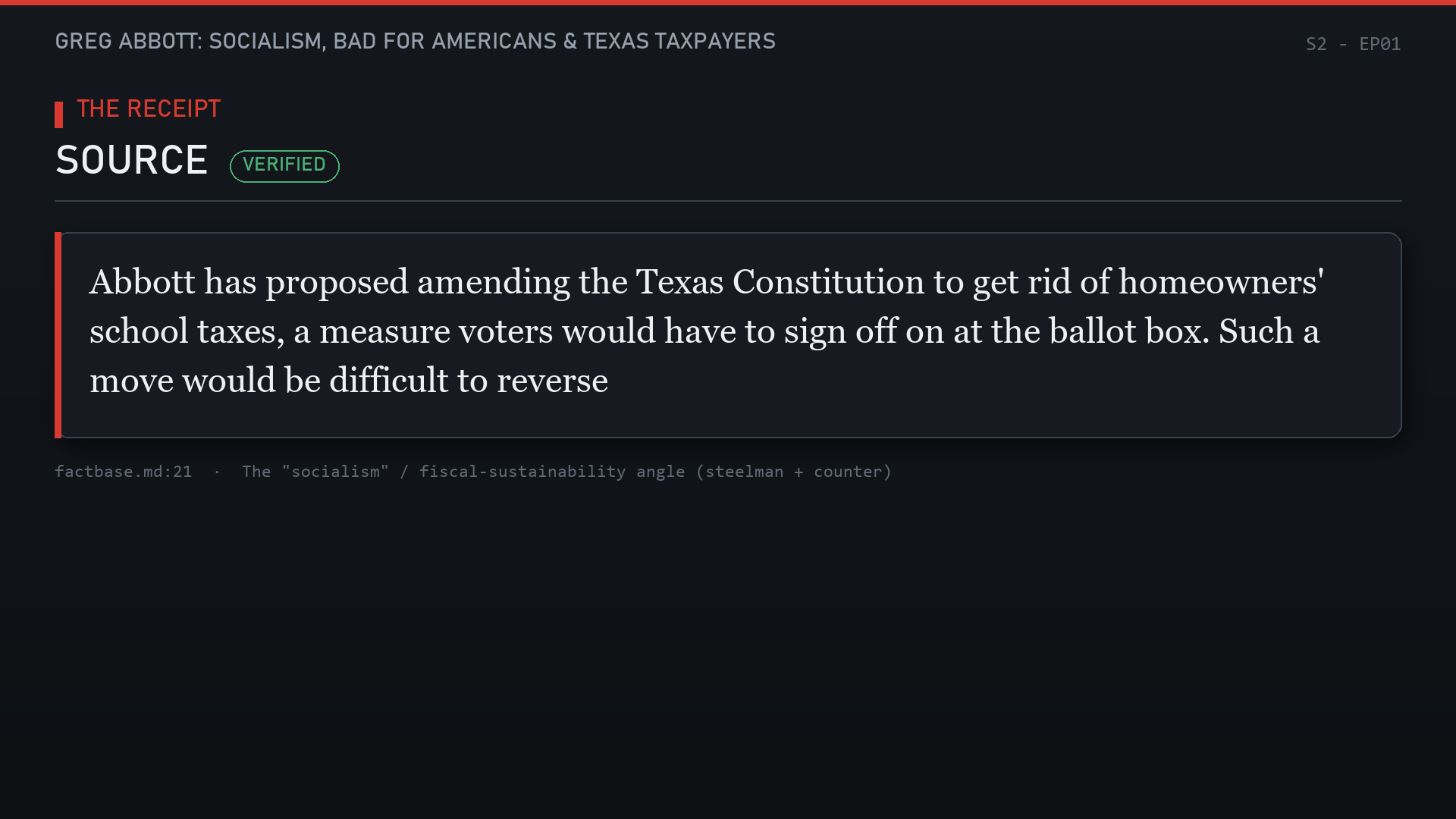
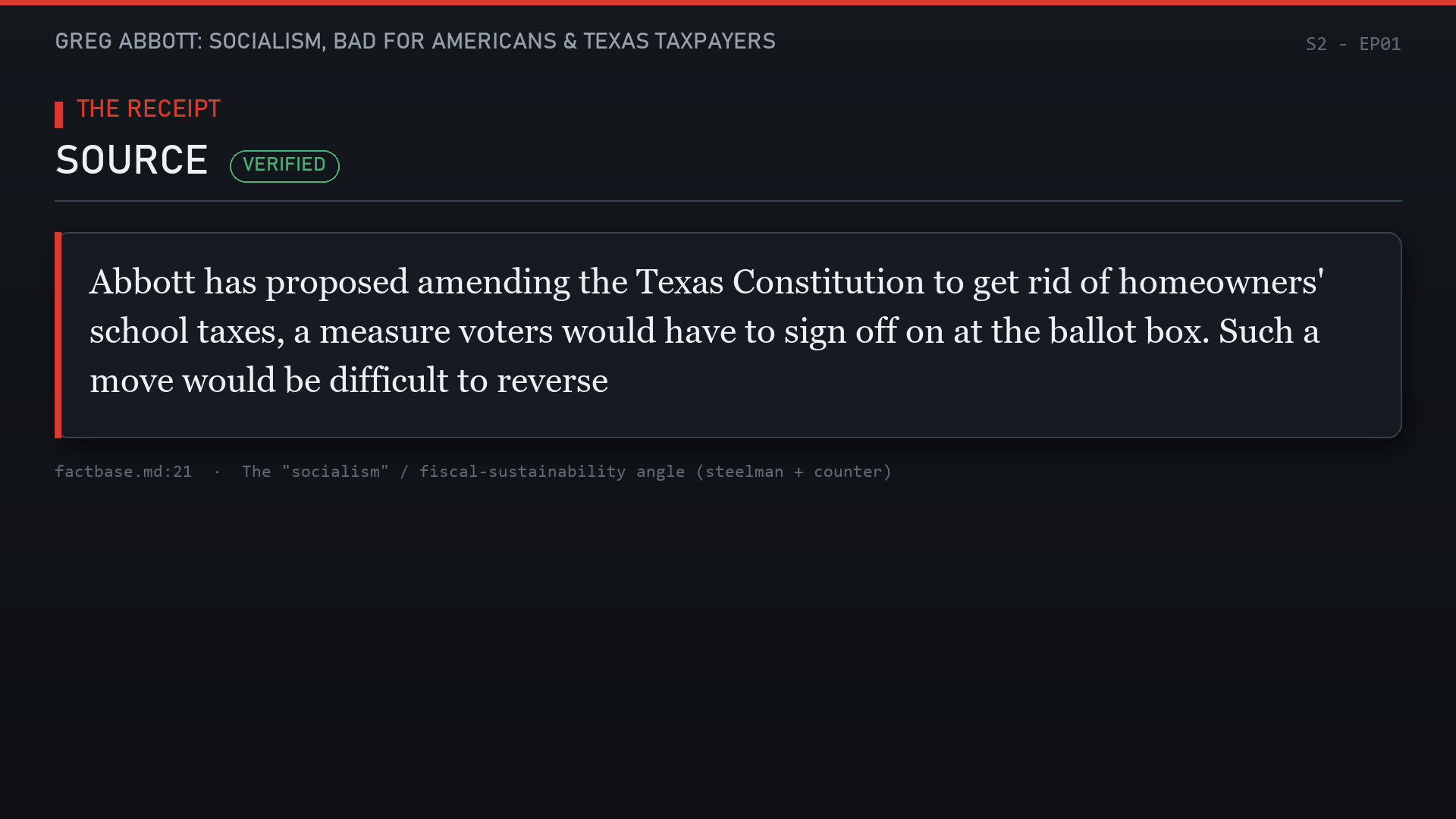
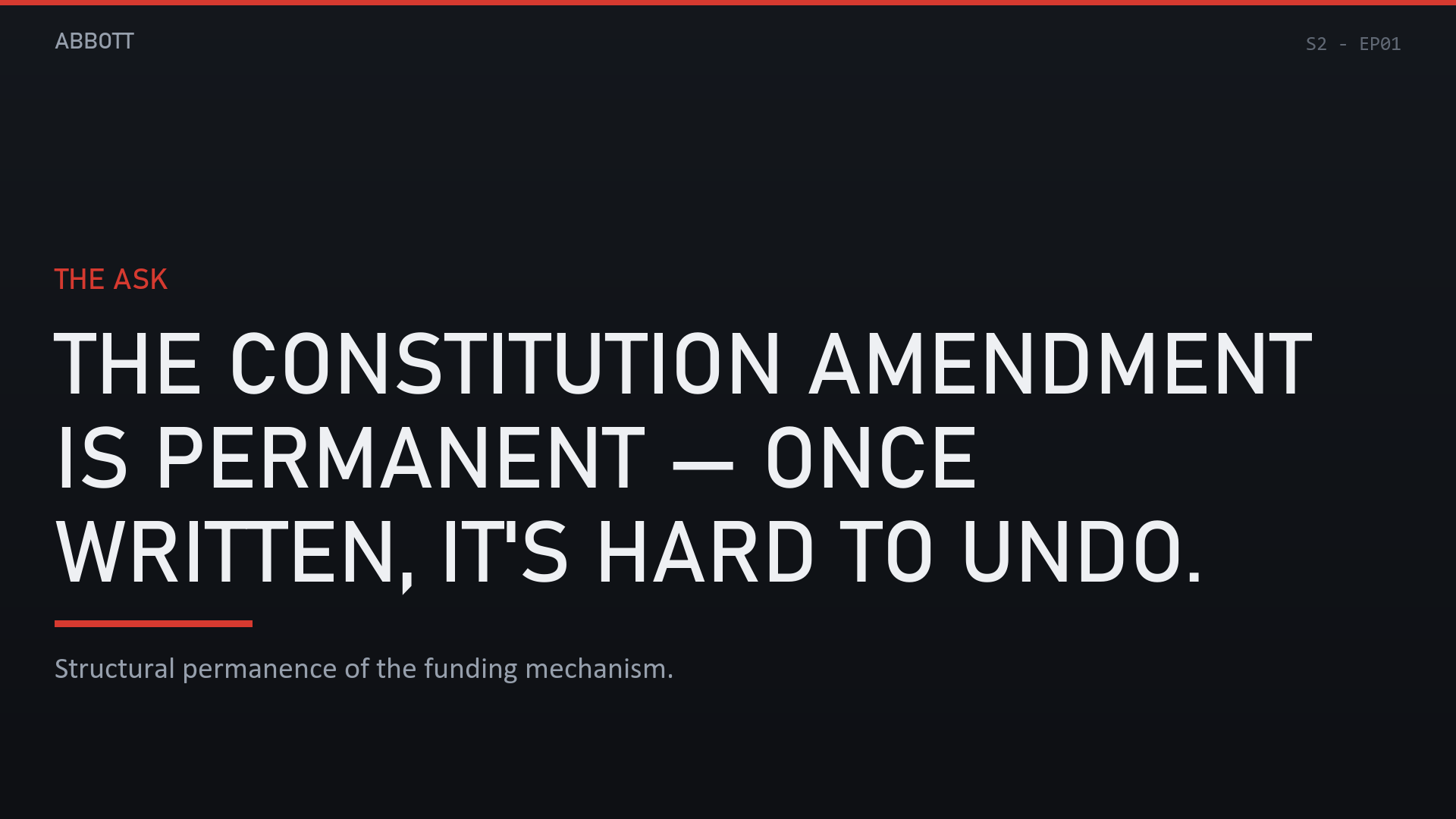
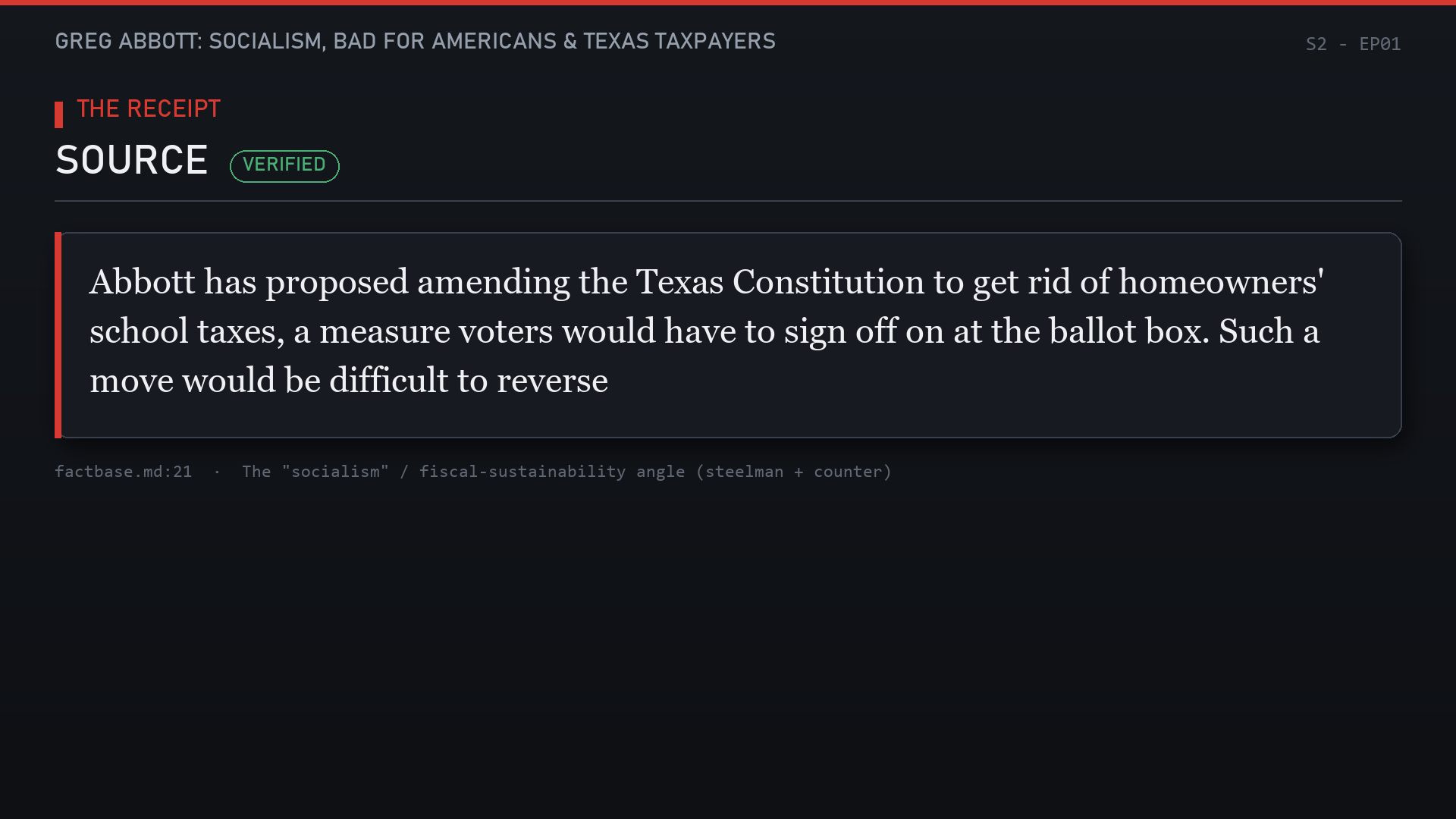
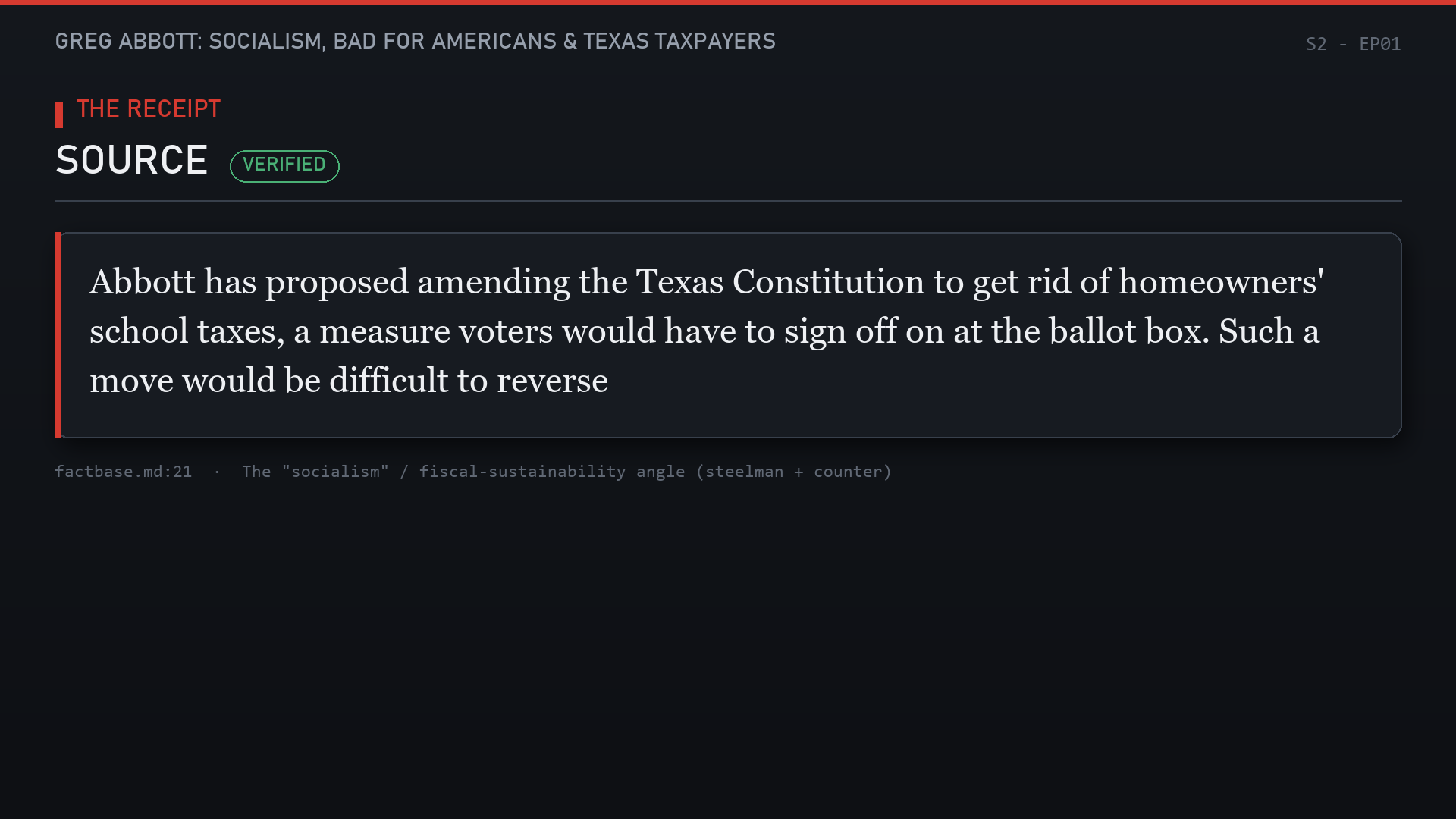
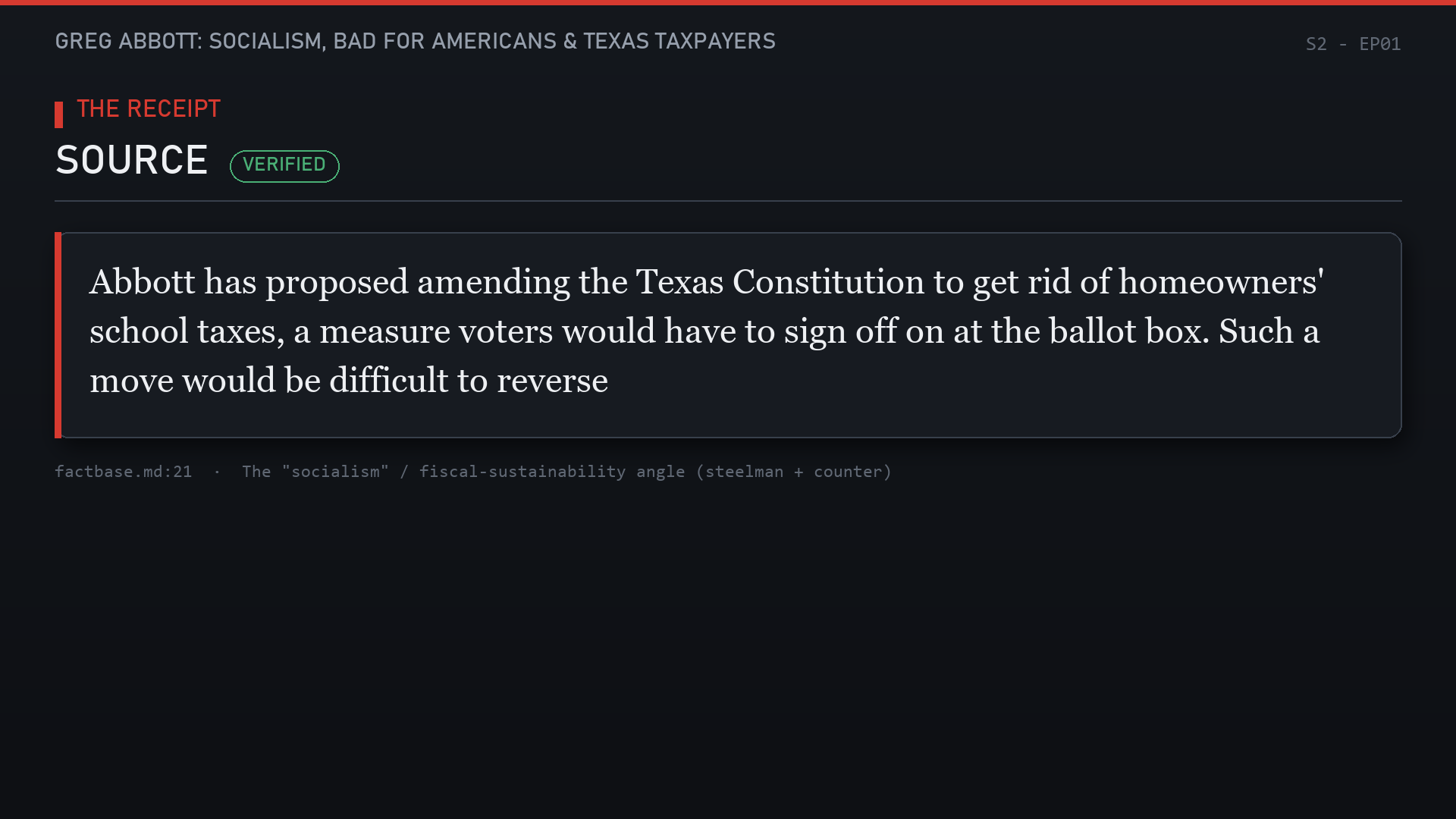
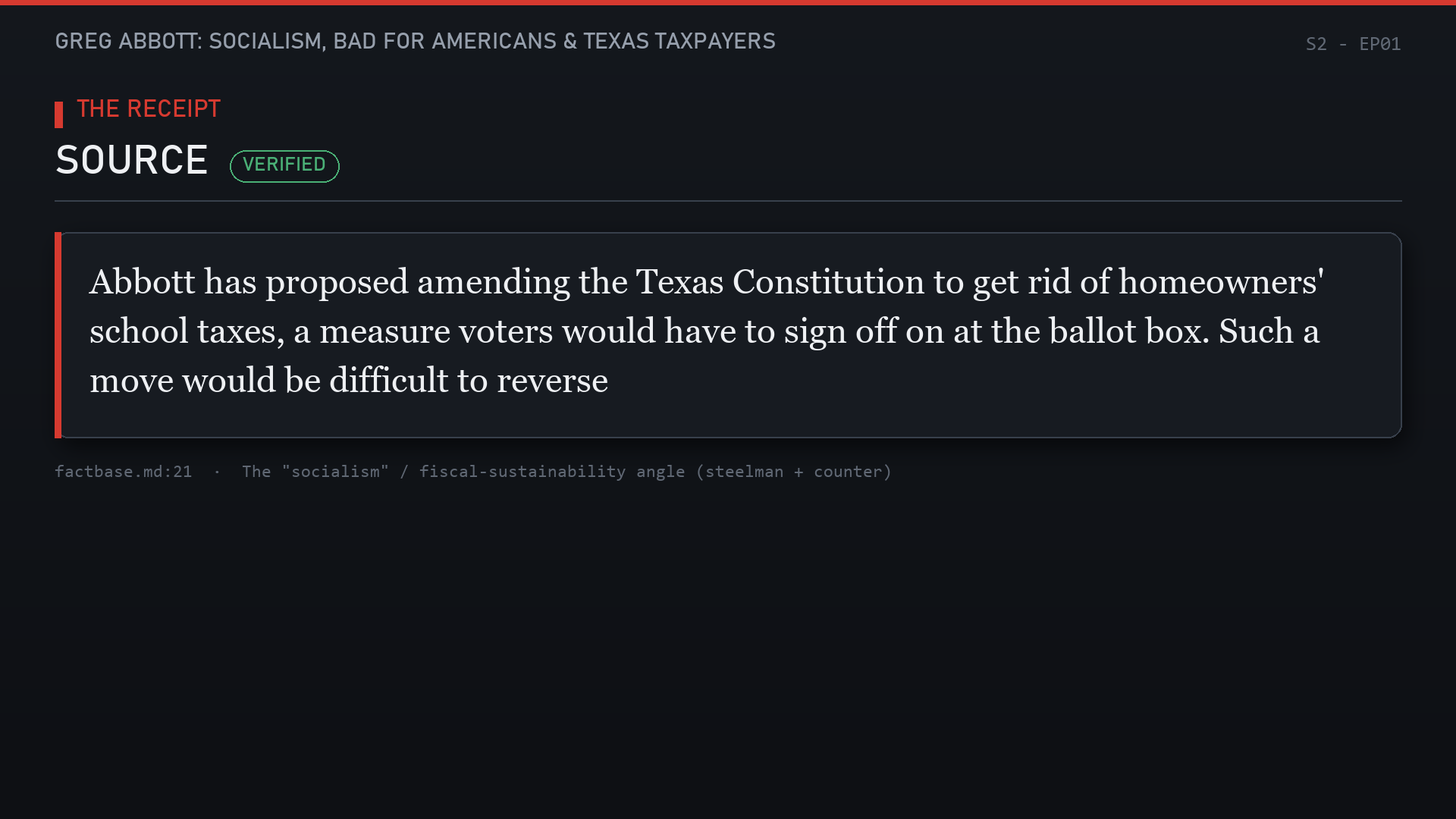
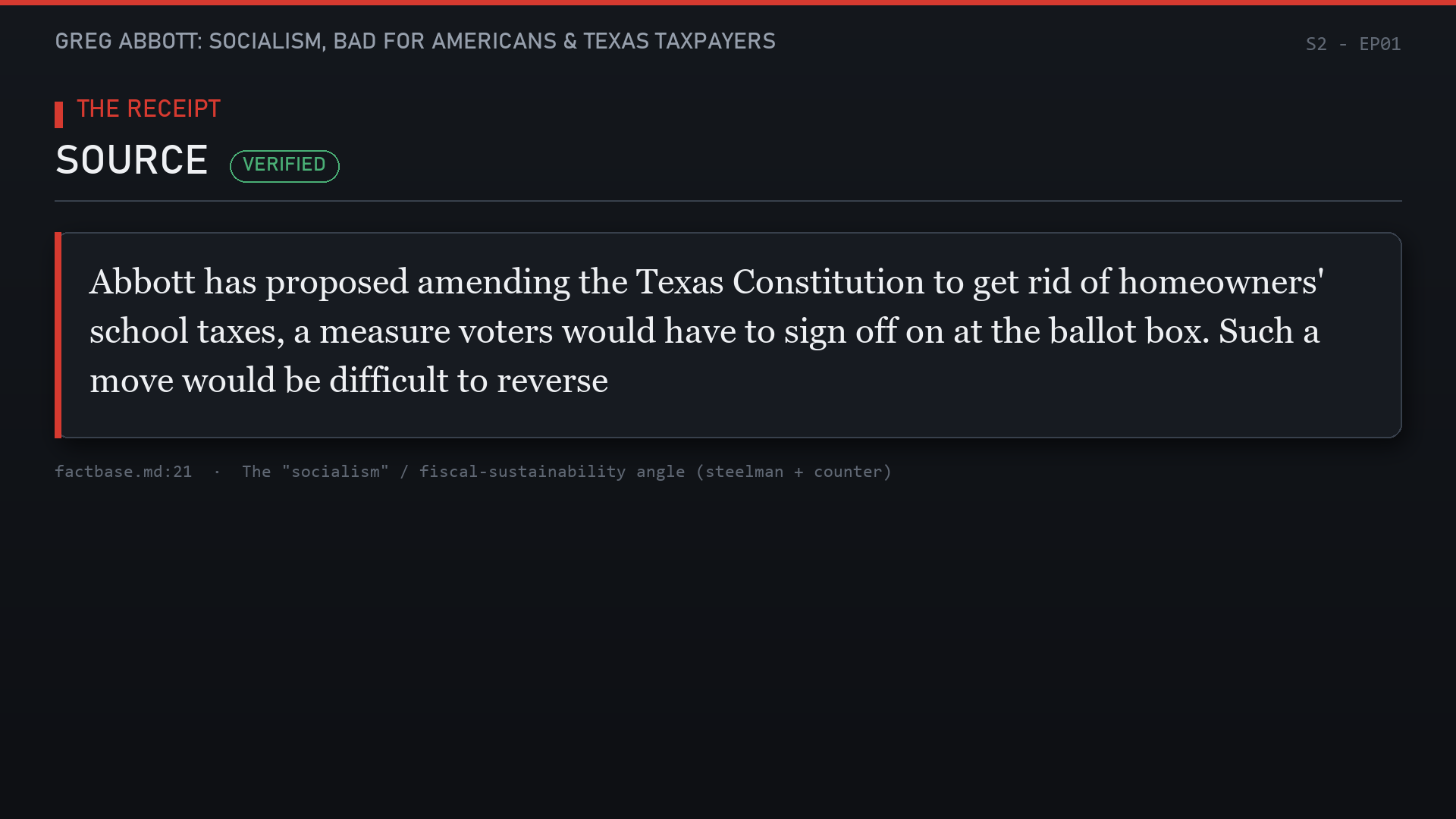
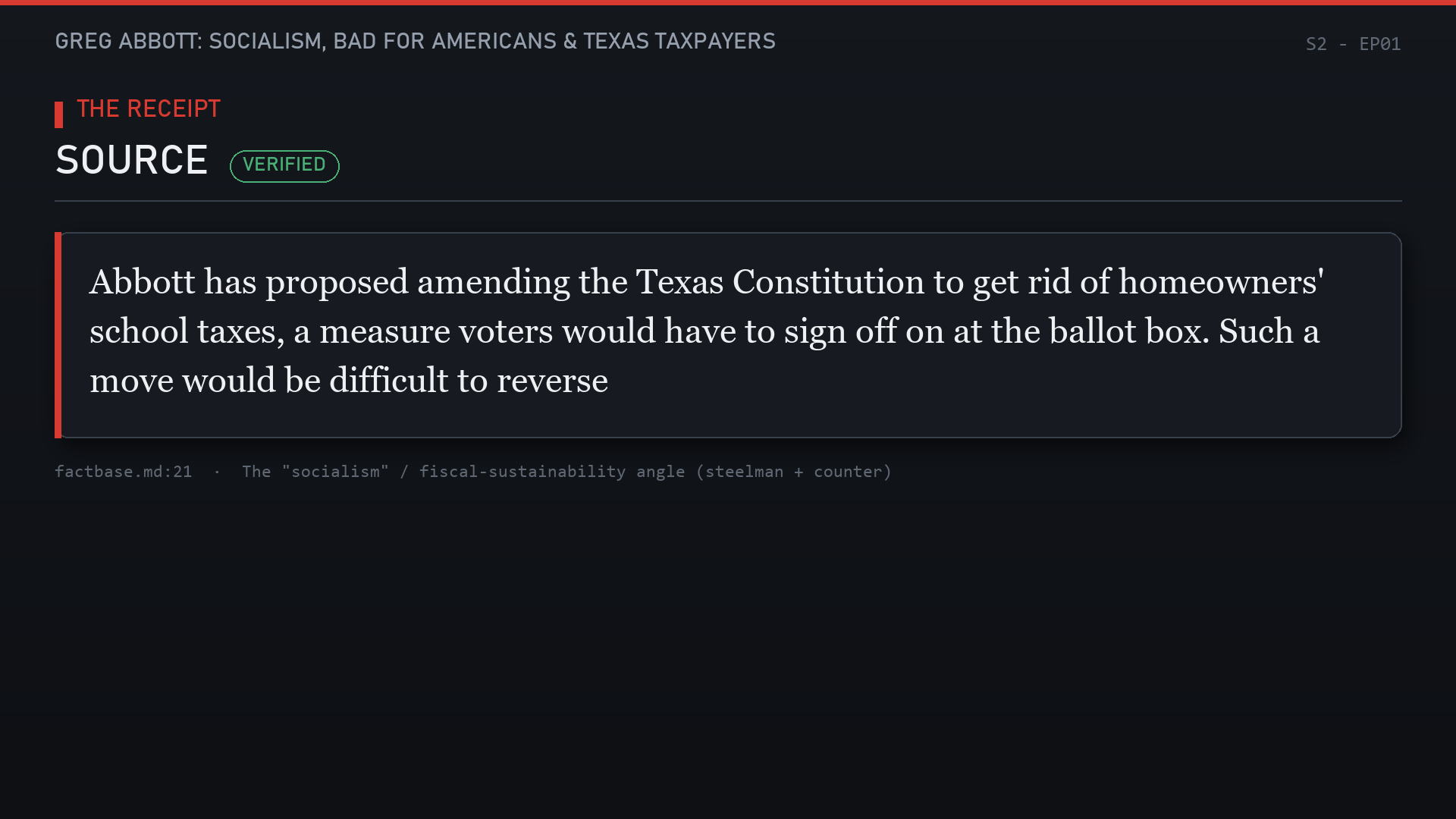
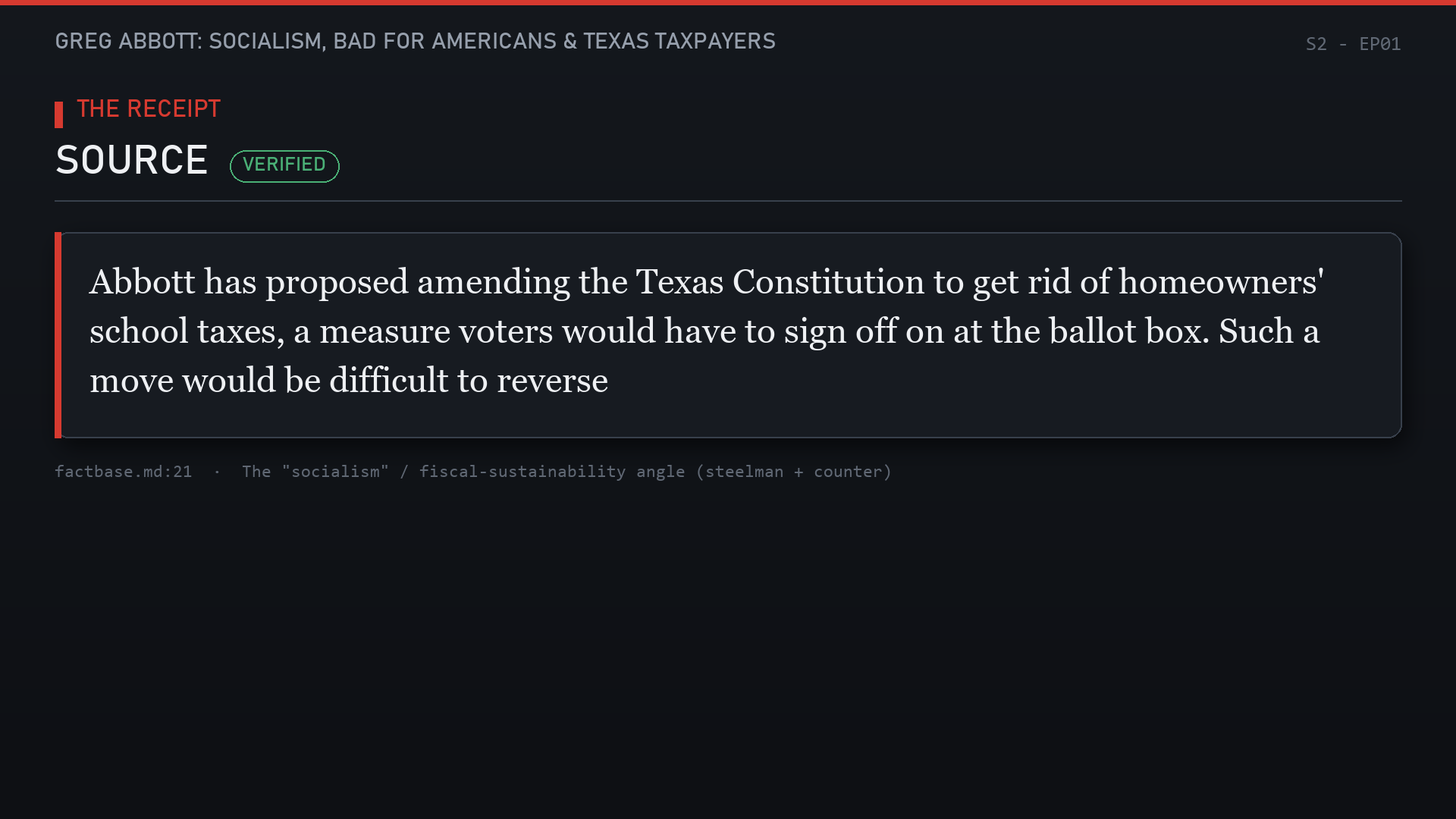
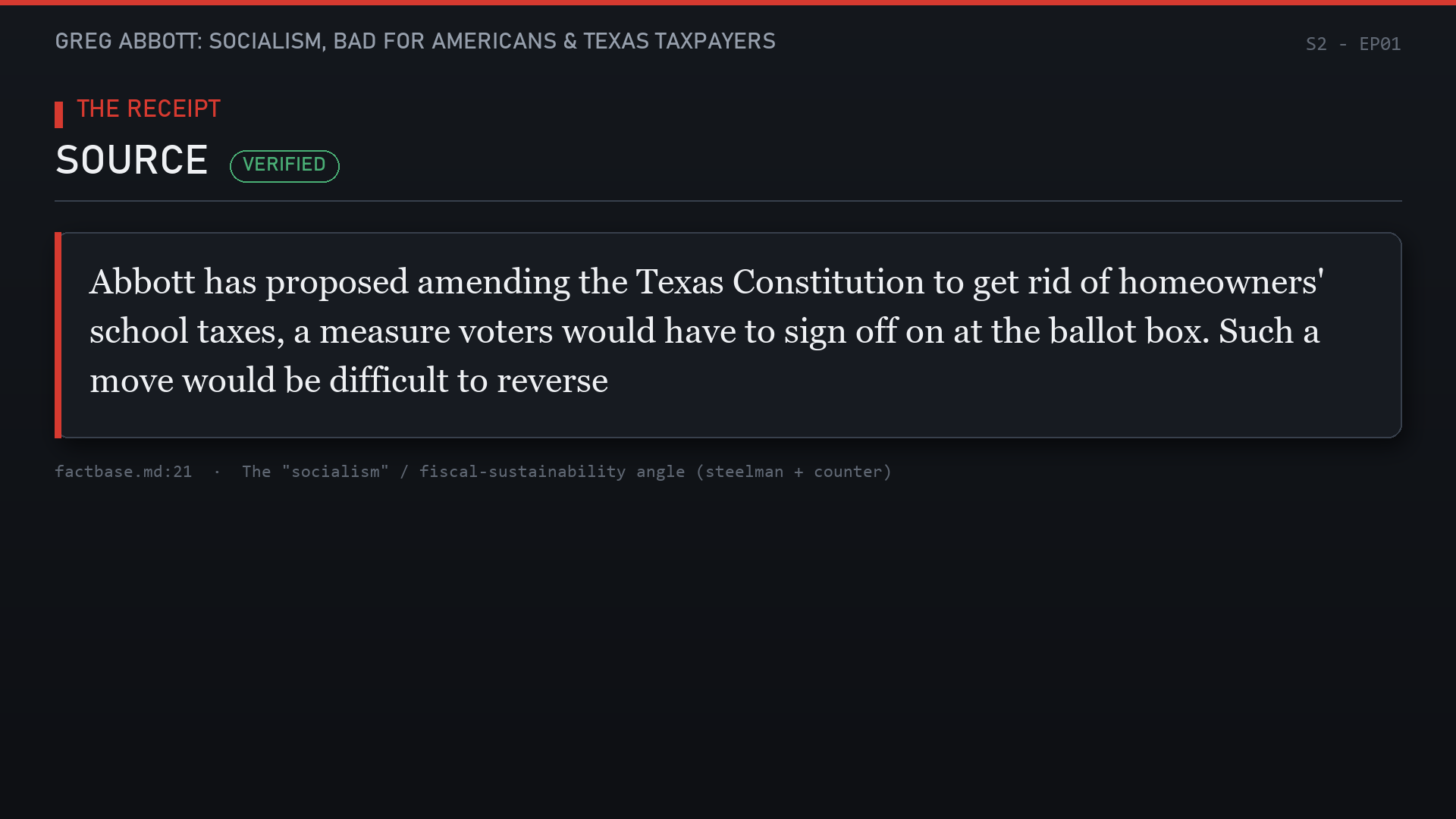
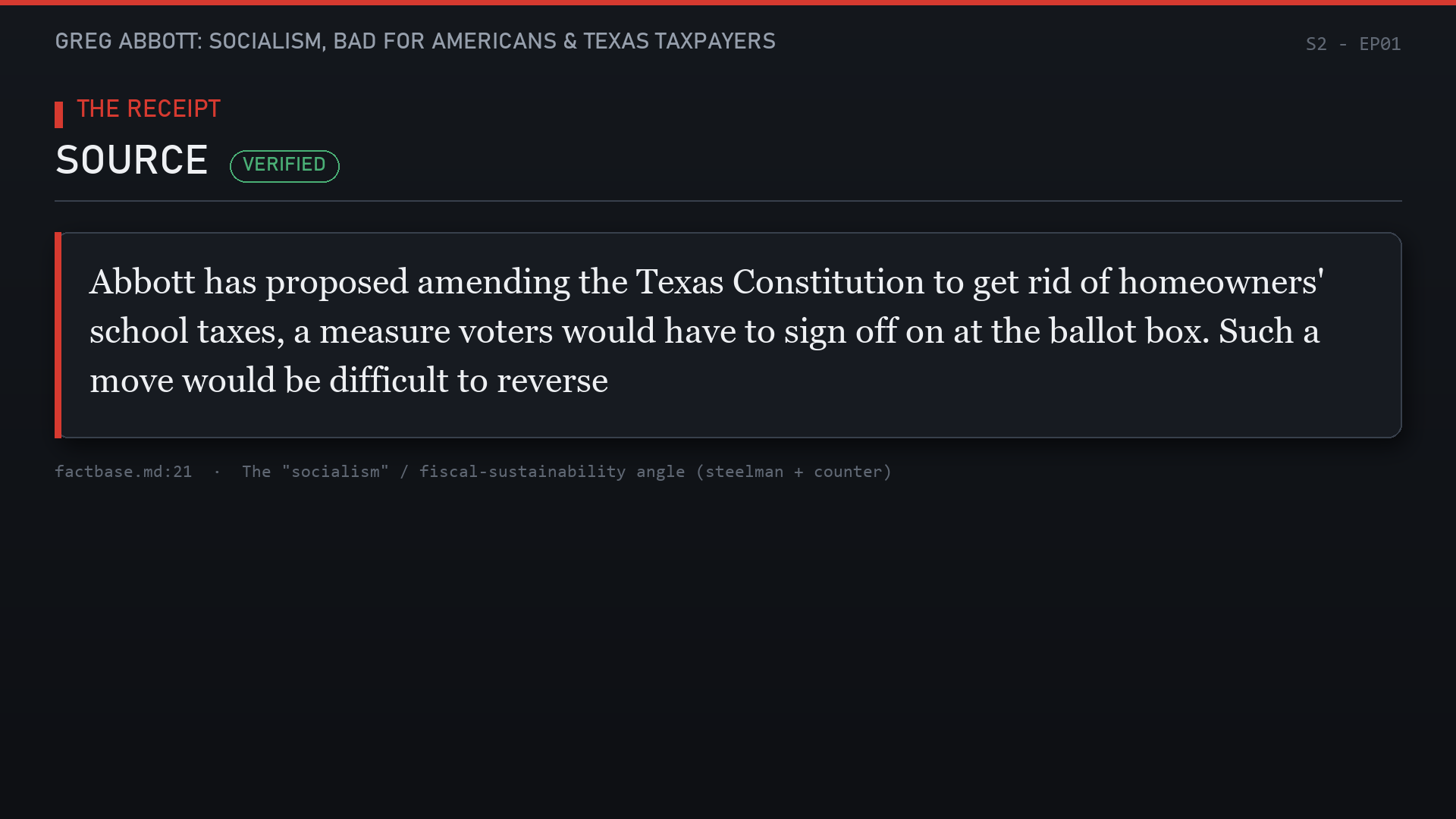
Here's the mechanism. The homestead exemption protects owner-occupiers only. The state collects broadly and transfers the benefit to a specific class of property owner — while renters see none of it and school districts trade local revenue for a state check written at Austin's price. That is the same transfer-of-benefit mechanism Abbott's own speeches call socialism when someone else runs it. And he wants to lock it into the state constitution — a move the Tribune reports would be "difficult to reverse." Even Lt. Gov. Dan Patrick doesn't fully agree with the approach: his own estimate for abolishing school property taxes entirely runs "about $40 billion," and his preferred alternative — lowering the senior homestead freeze age from 65 to 55 — is a different plan sold under the same banner. When the governor and the lieutenant governor of the same party can't agree on what the rescue costs, the number is political, not fiscal.
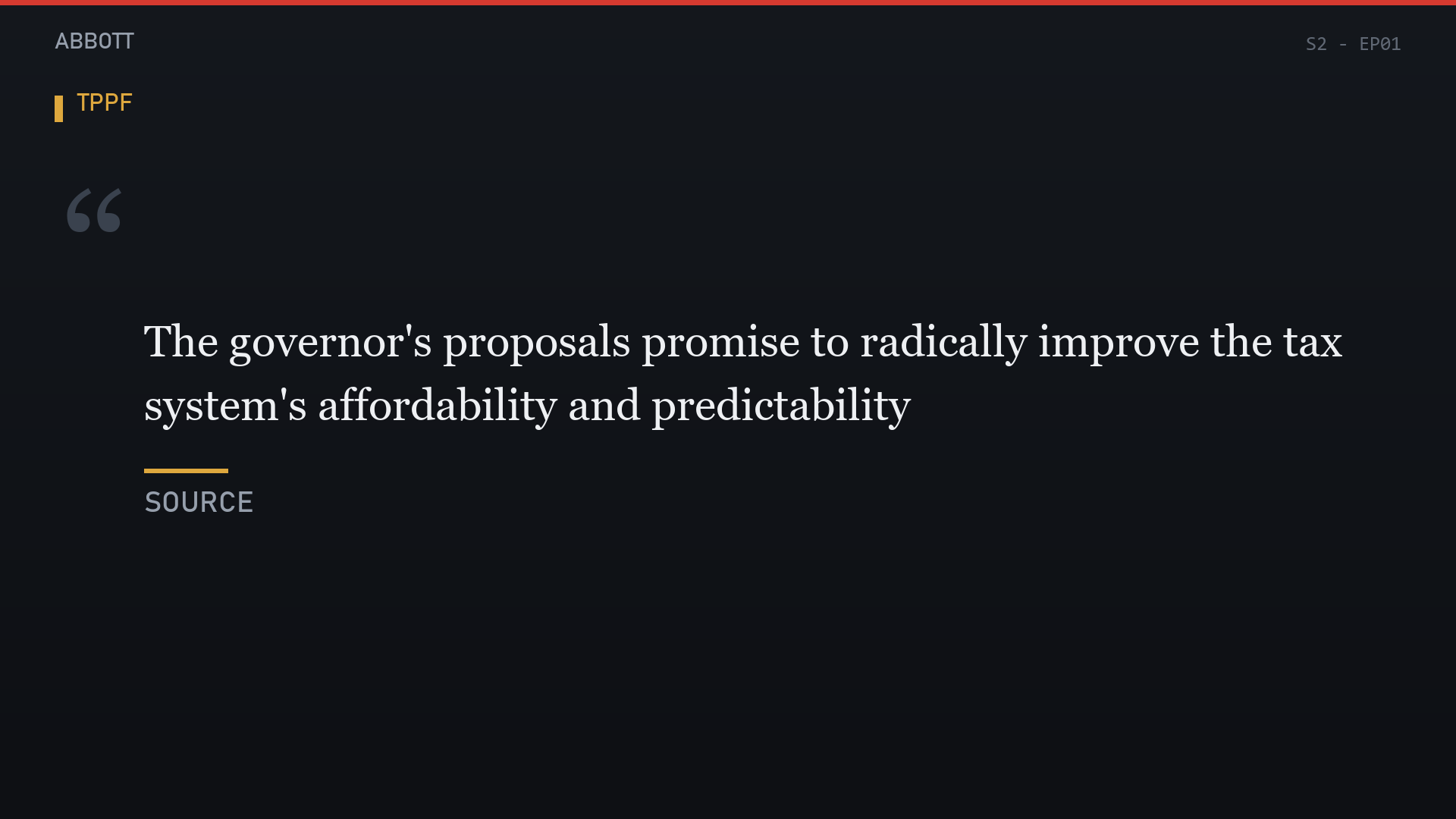
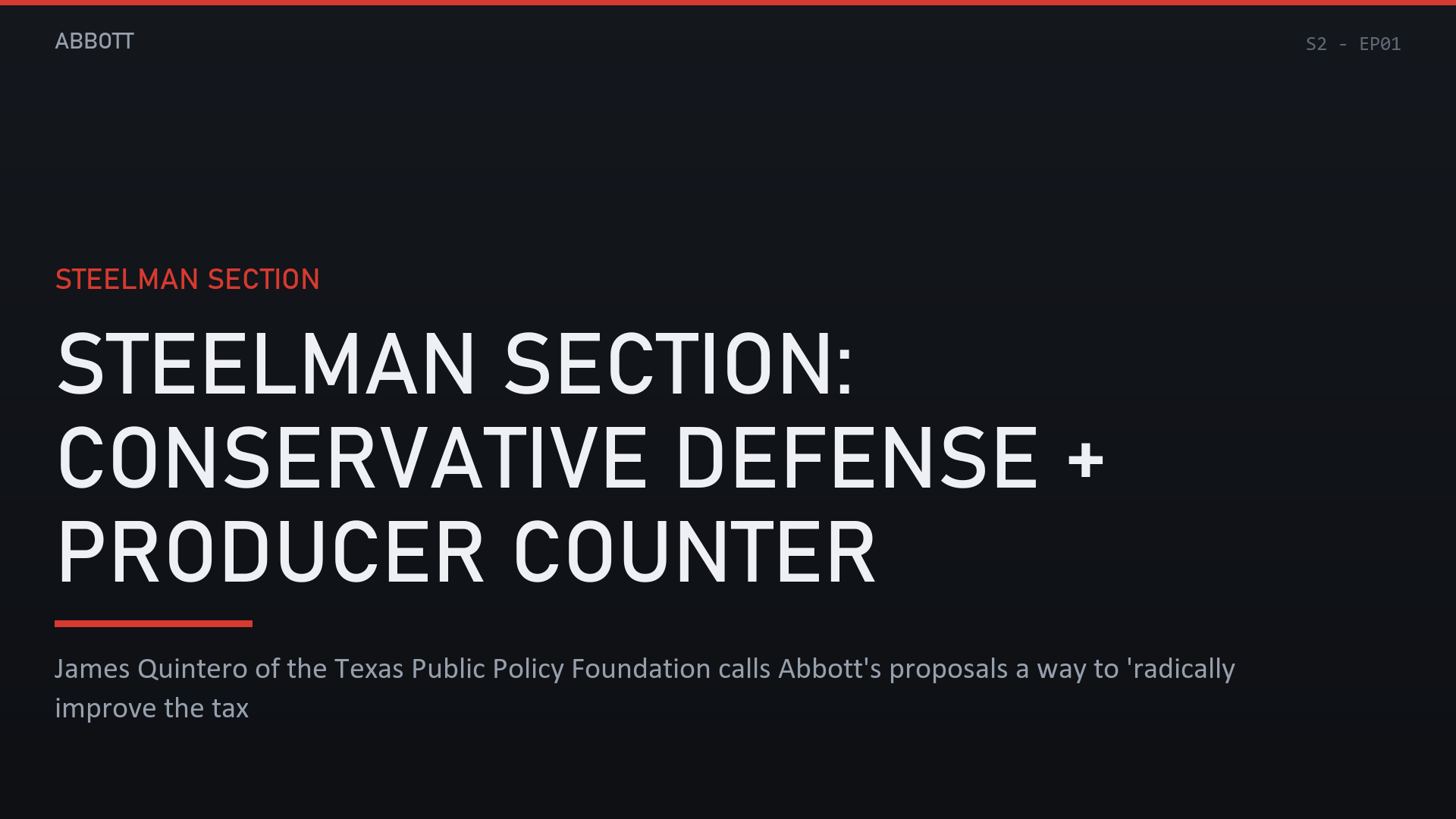
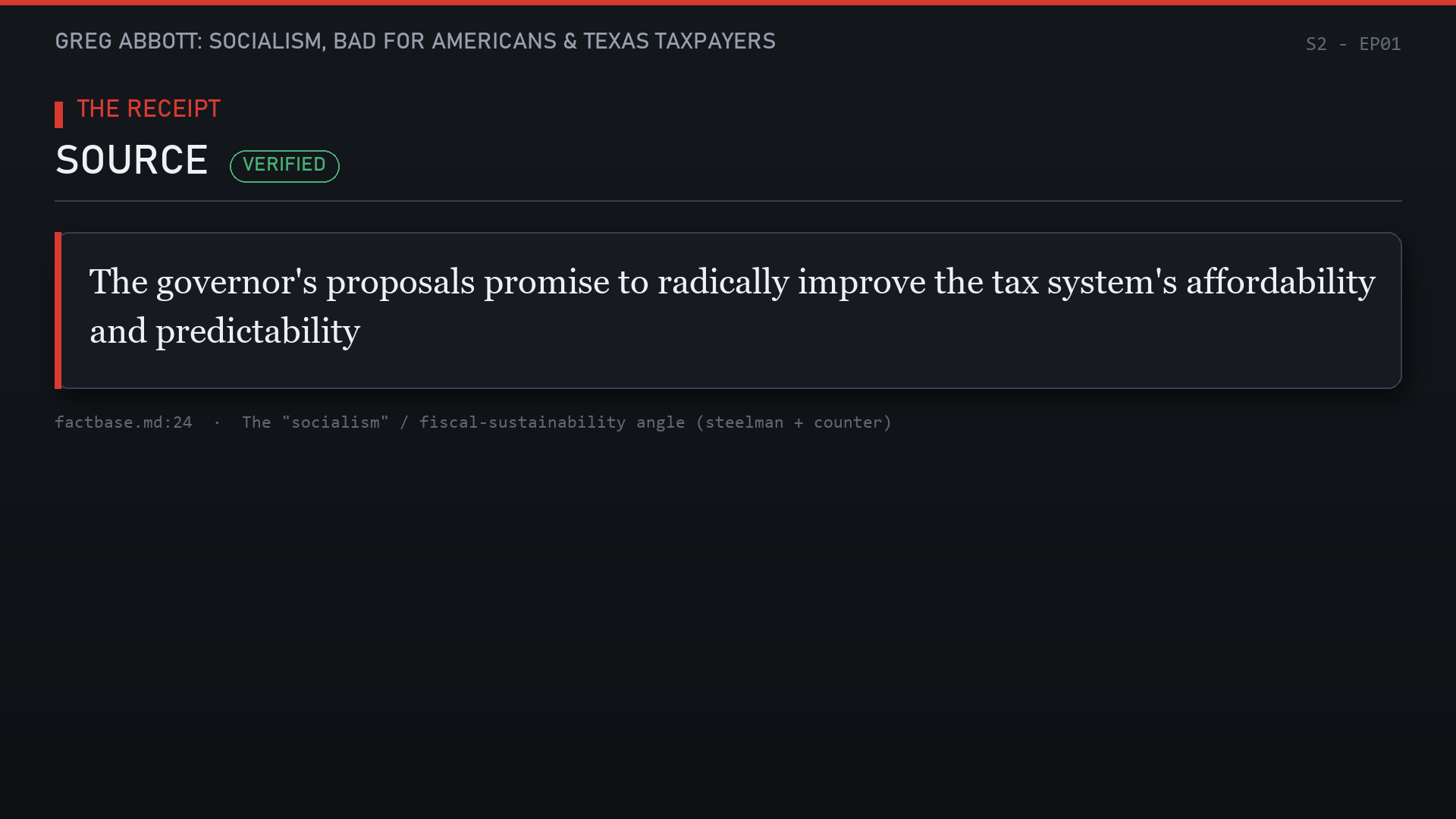
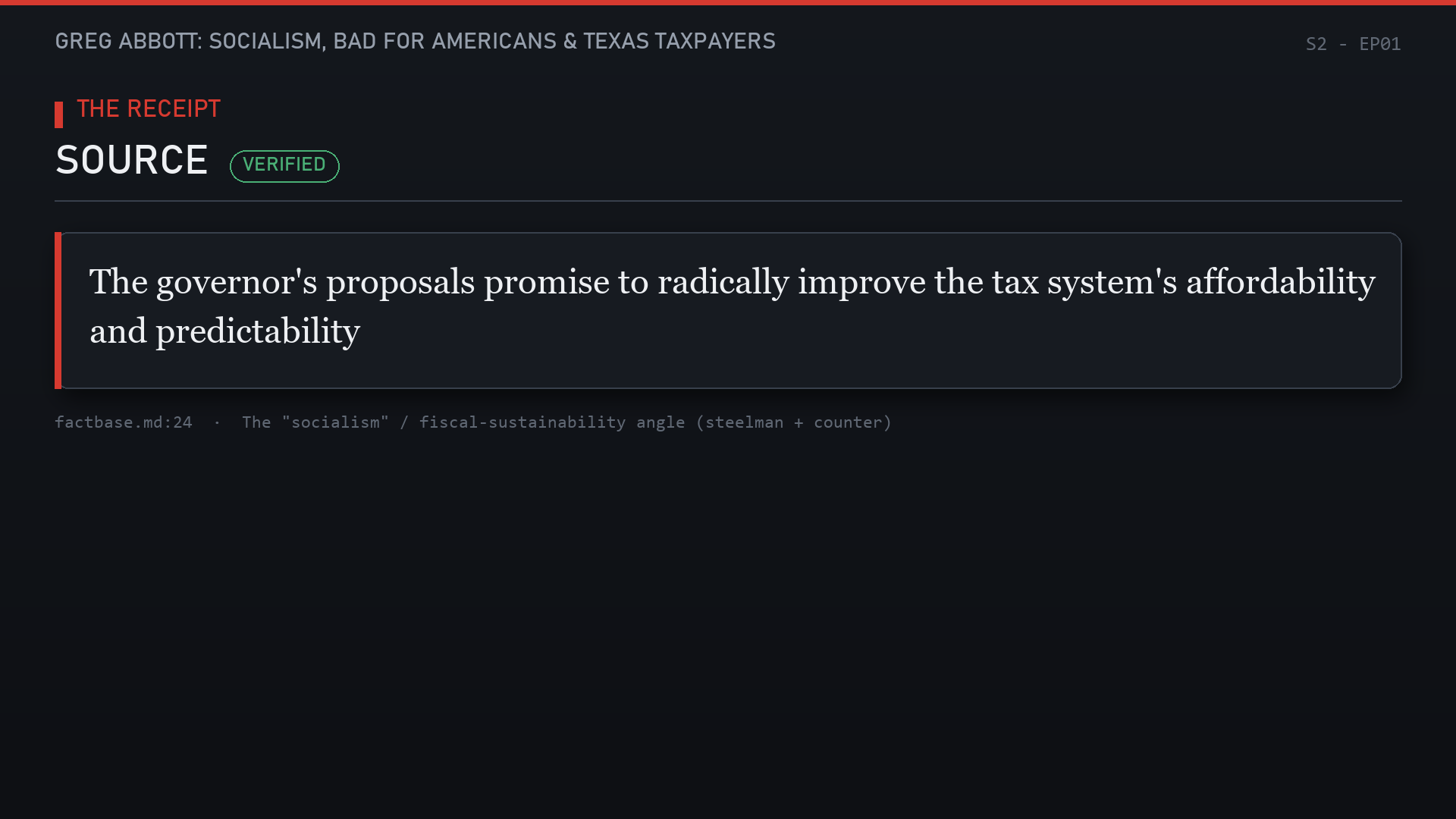
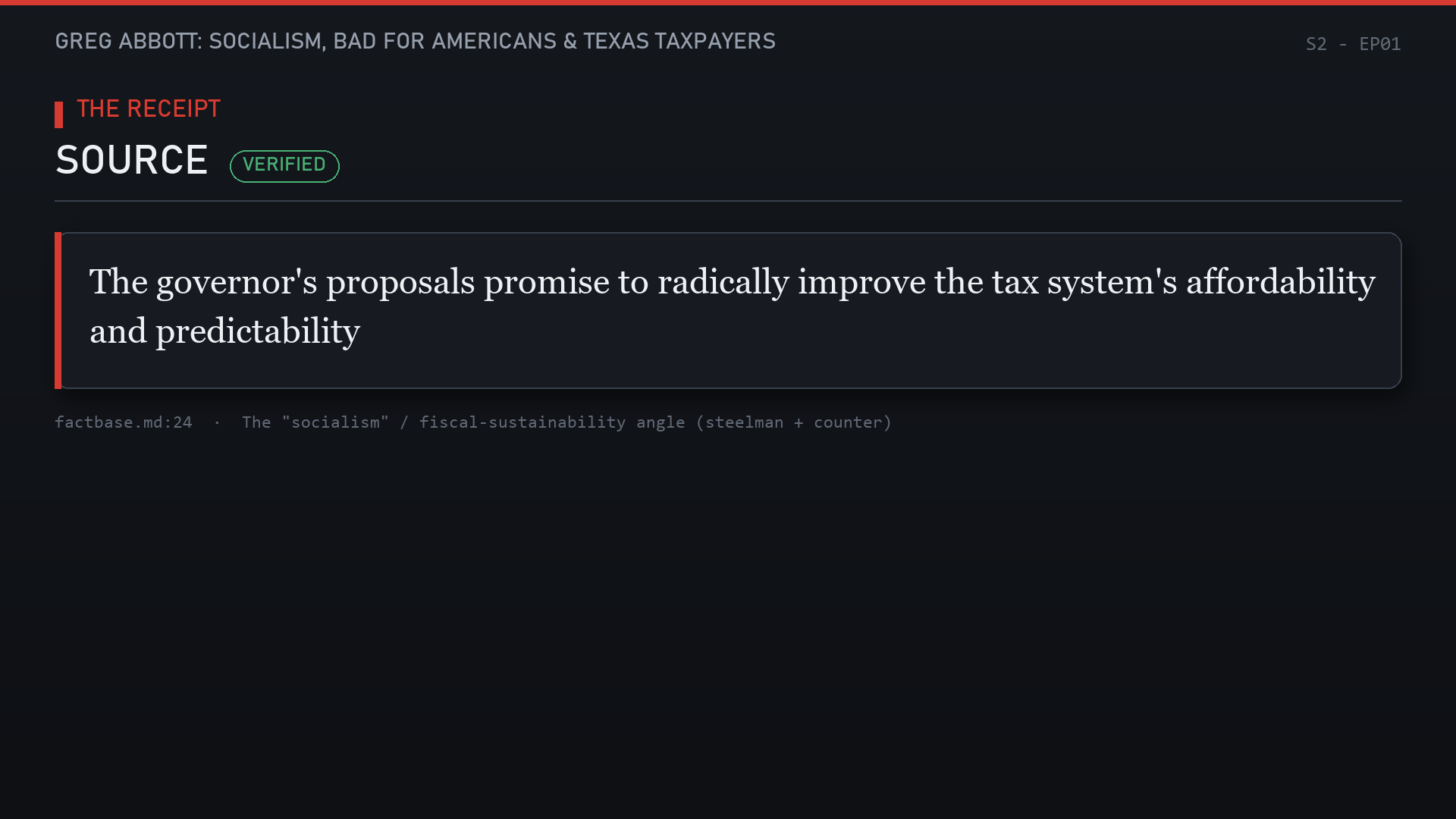
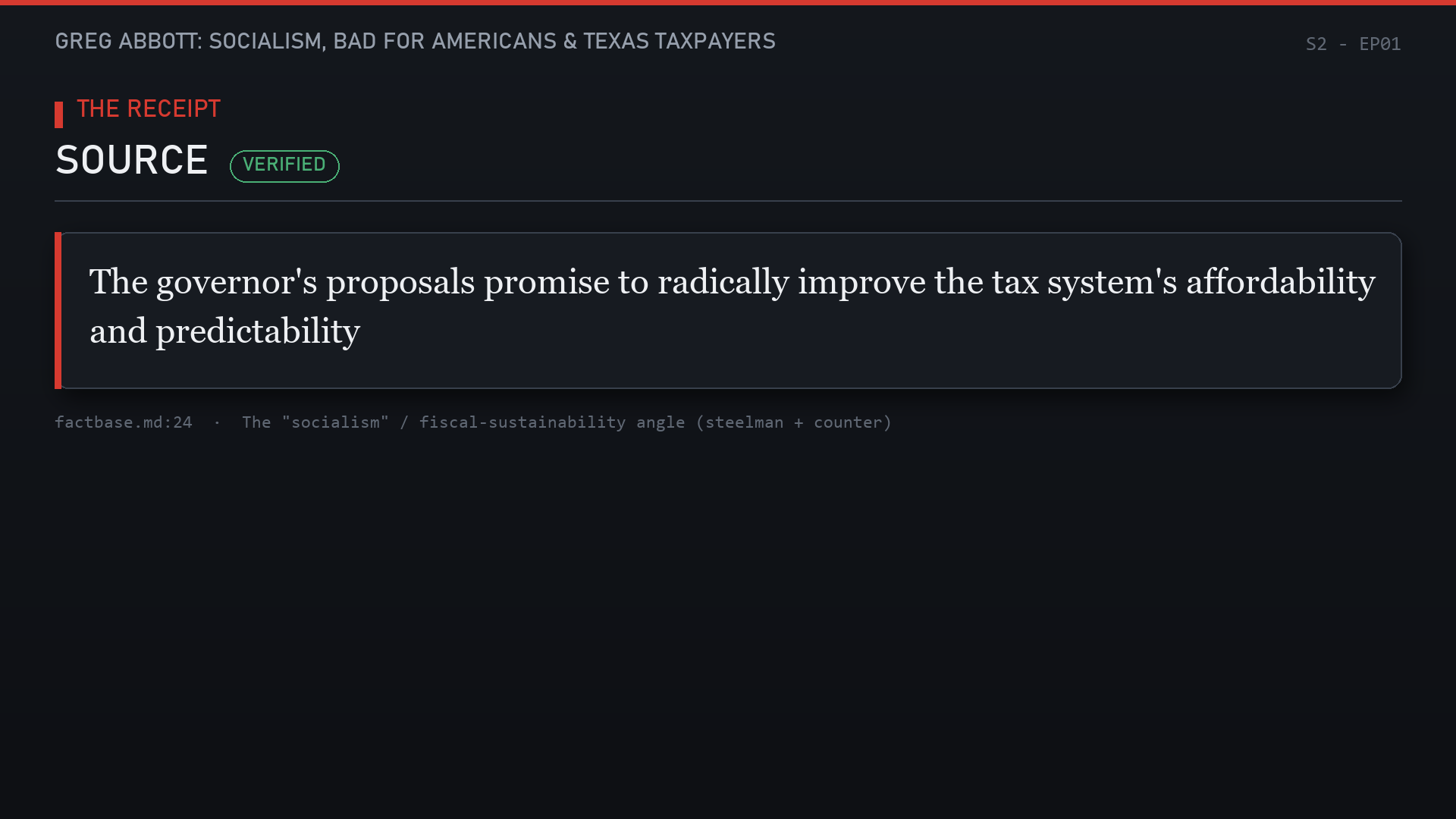
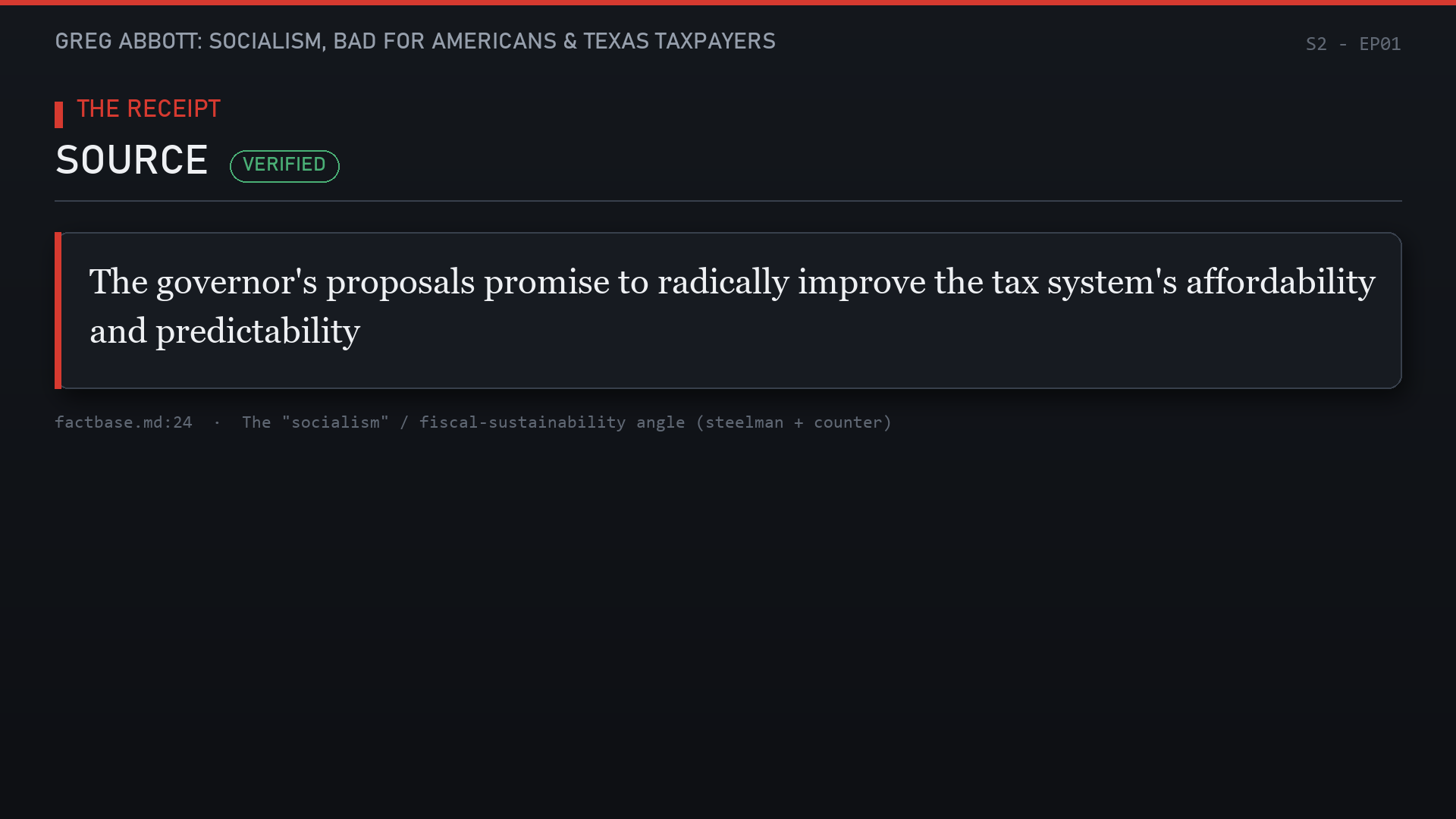
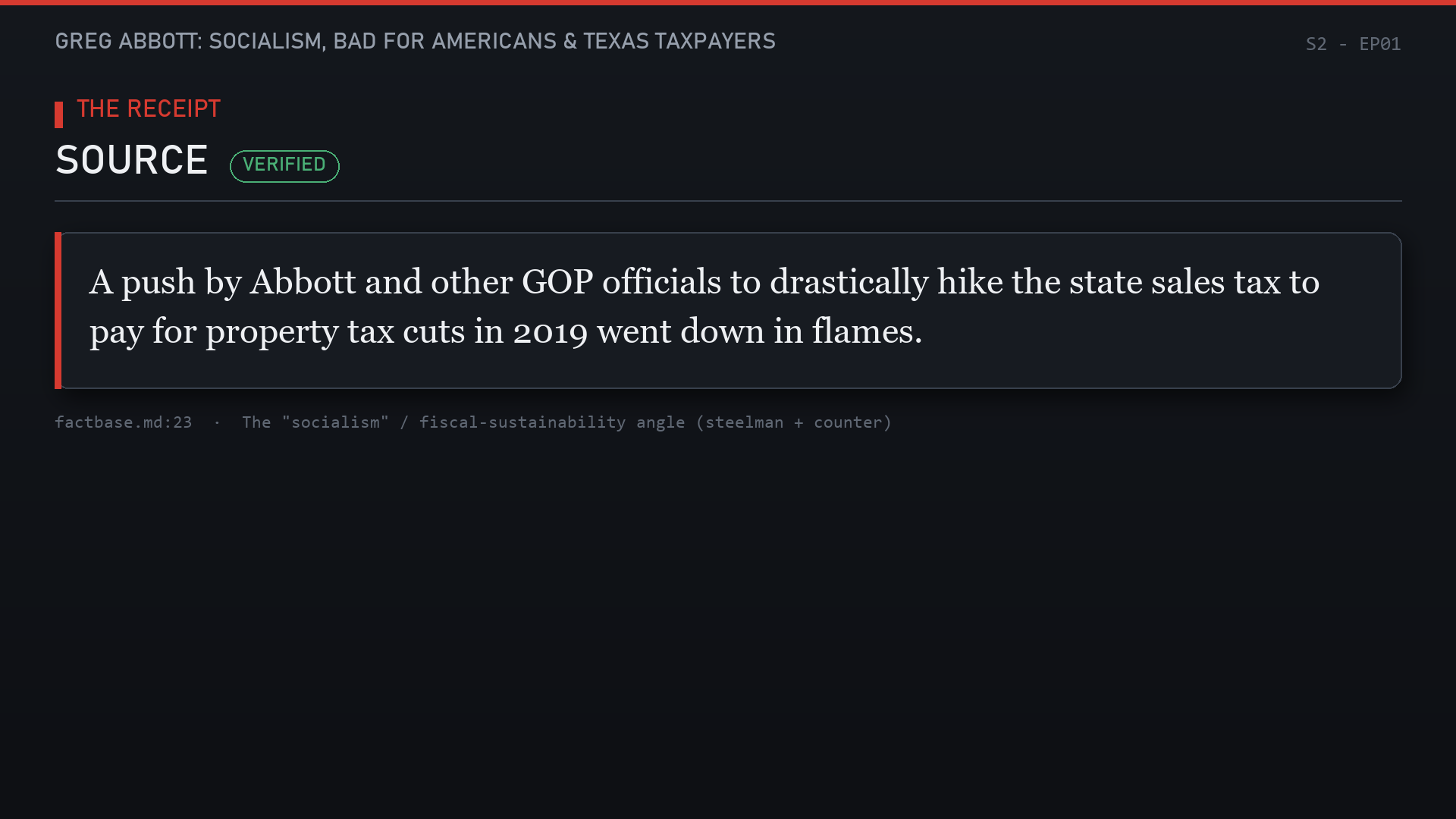
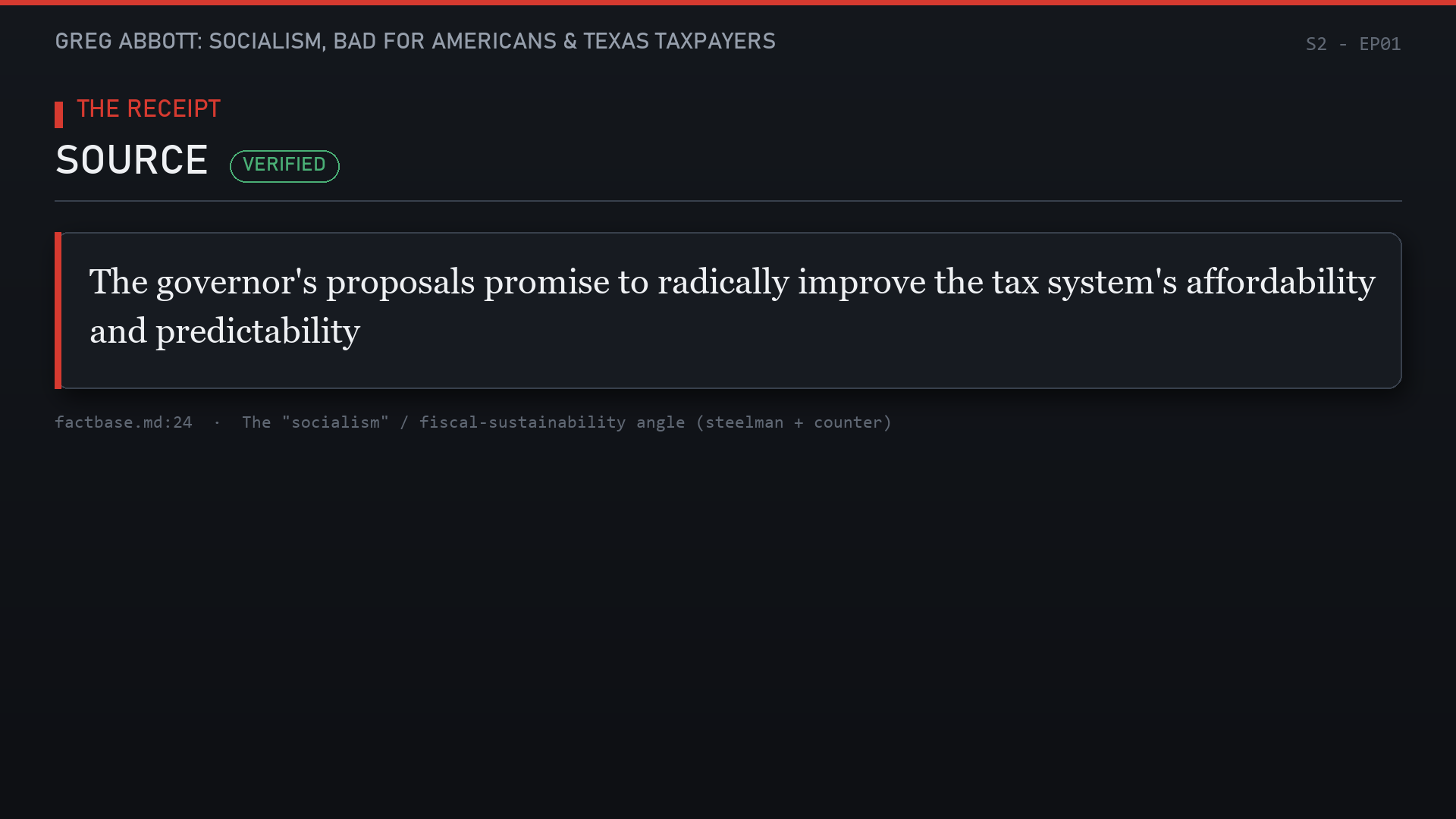
Take the steelman seriously. The Texas Public Policy Foundation's James Quintero says the platform "radically improves the tax system's affordability and predictability." The Tax Foundation's Manish Bhatt calls a tightened local revenue cap "a fair way to curb property tax bills because it doesn't favor one kind of property owner over another." And it's true: per Census Bureau data reported by the Tribune, the typical Texas homeowner today pays less in property taxes than before the pandemic. Those are real, measurable wins — not nothing.
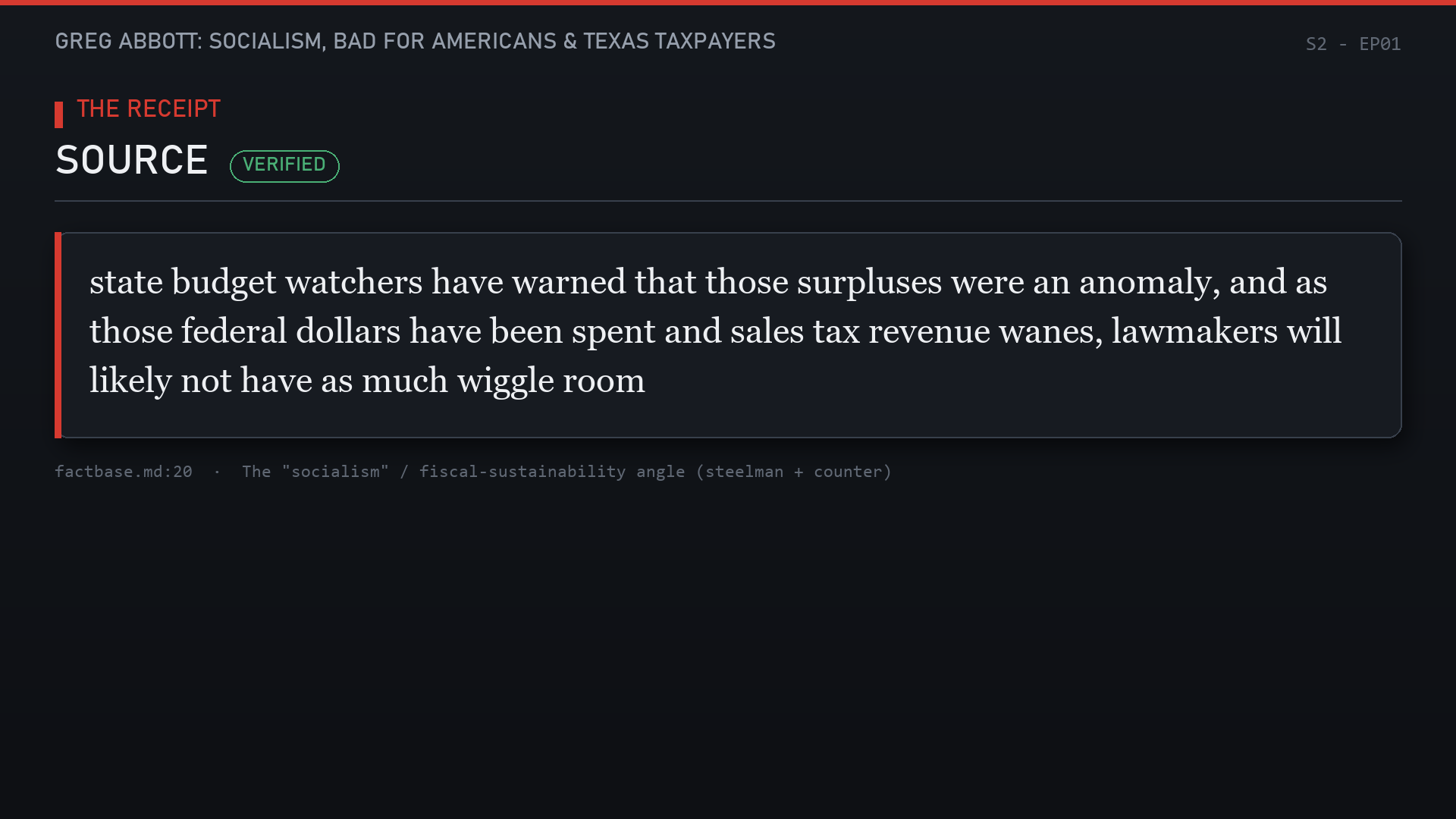
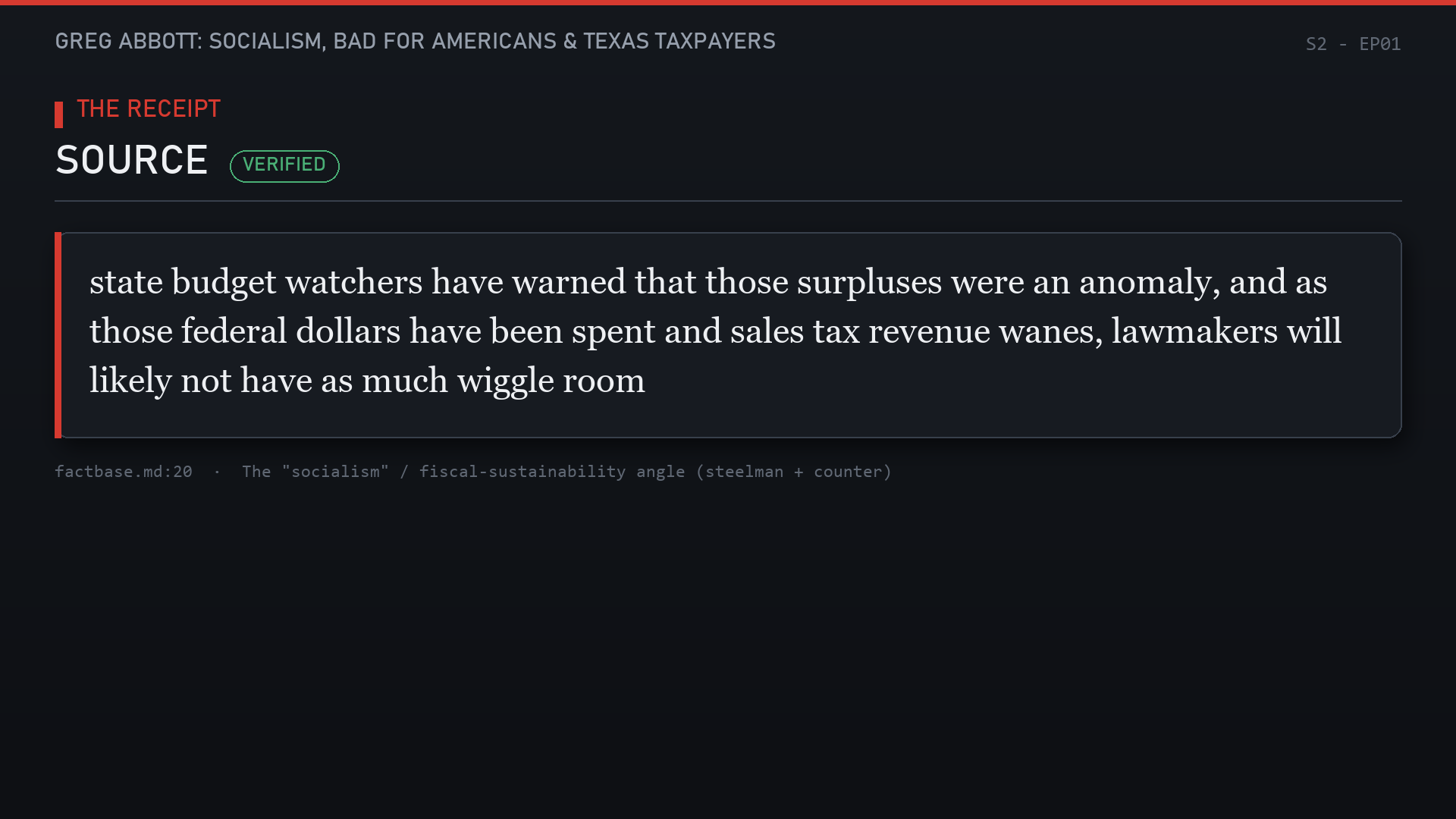
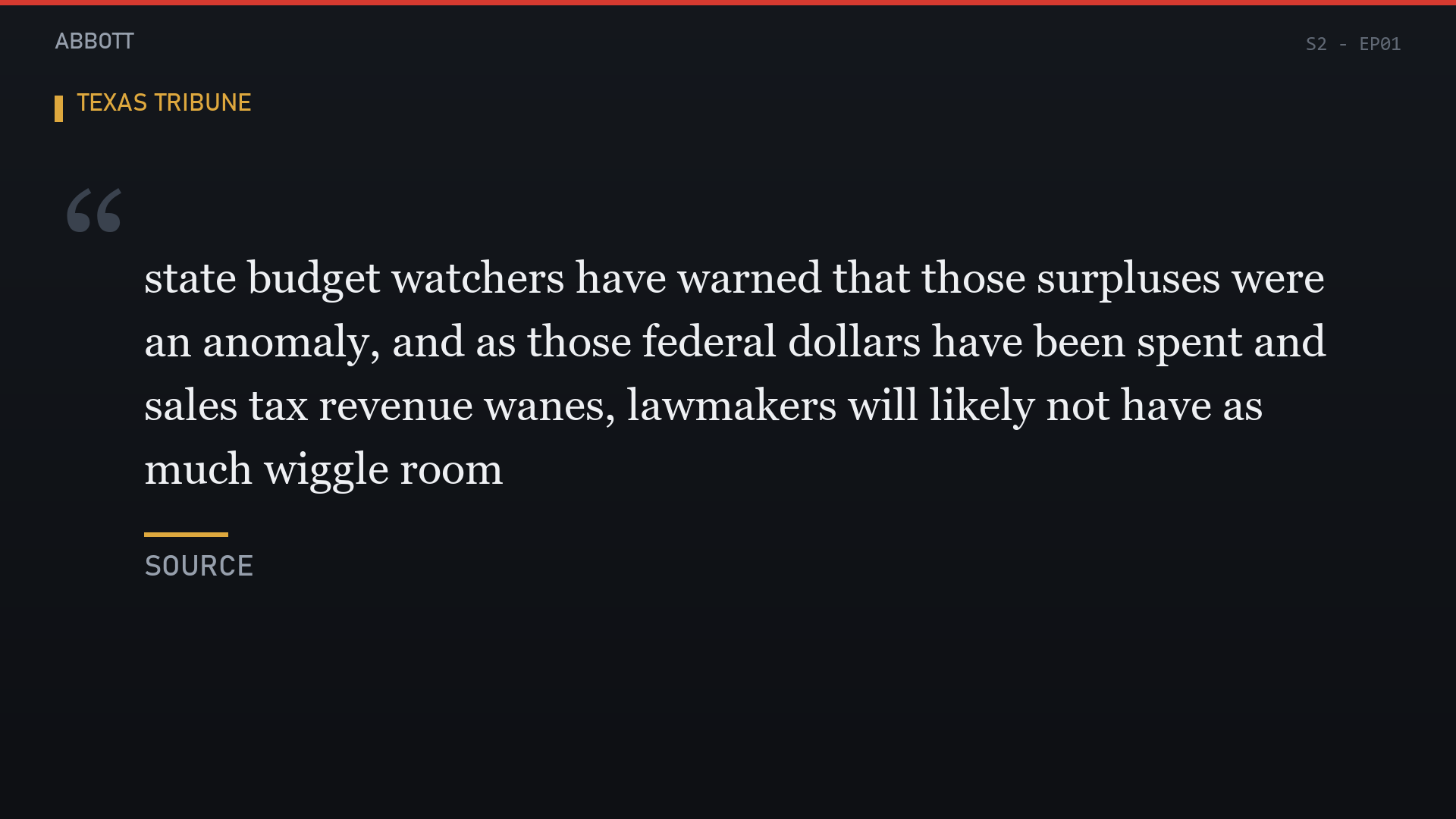
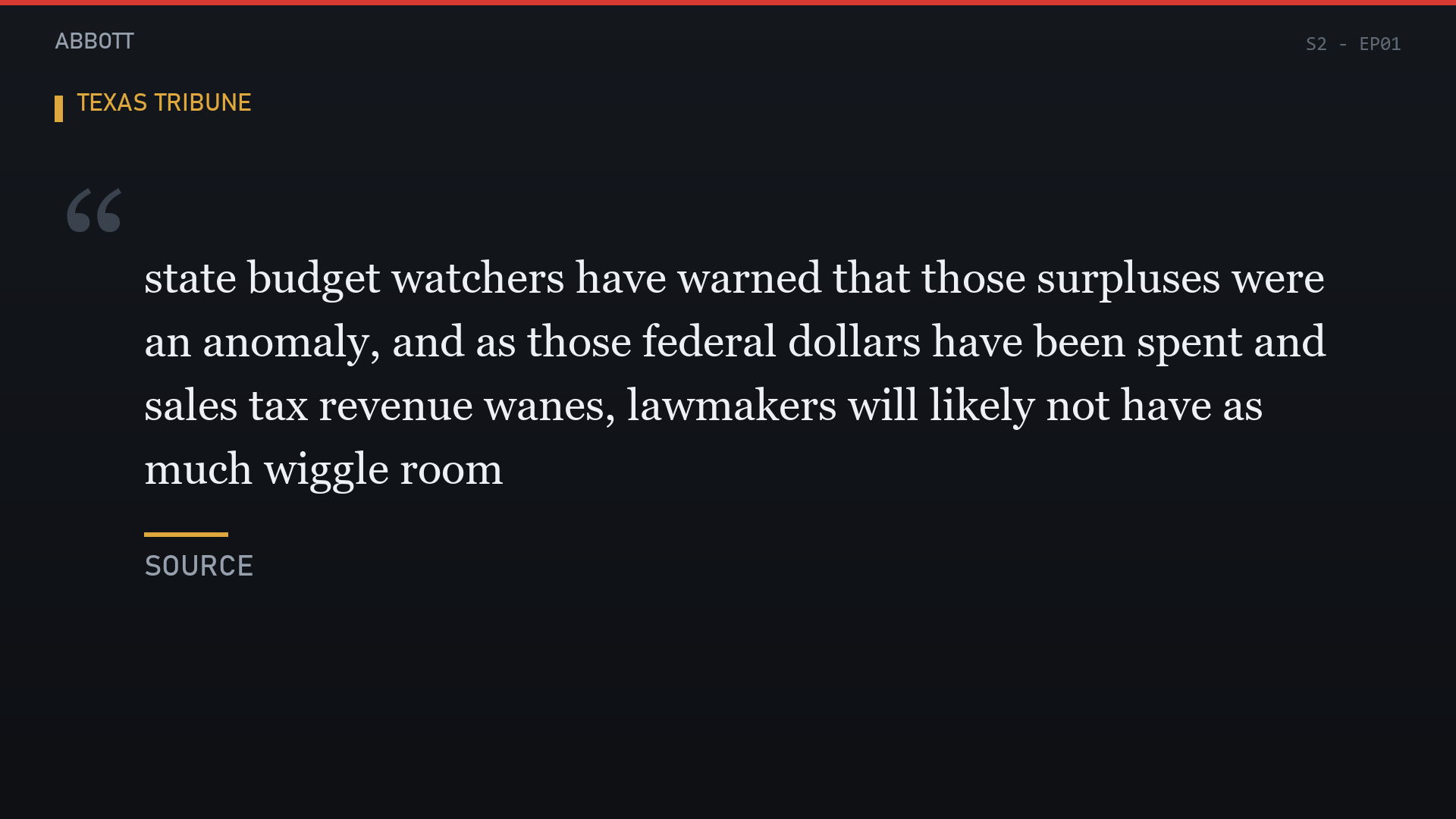
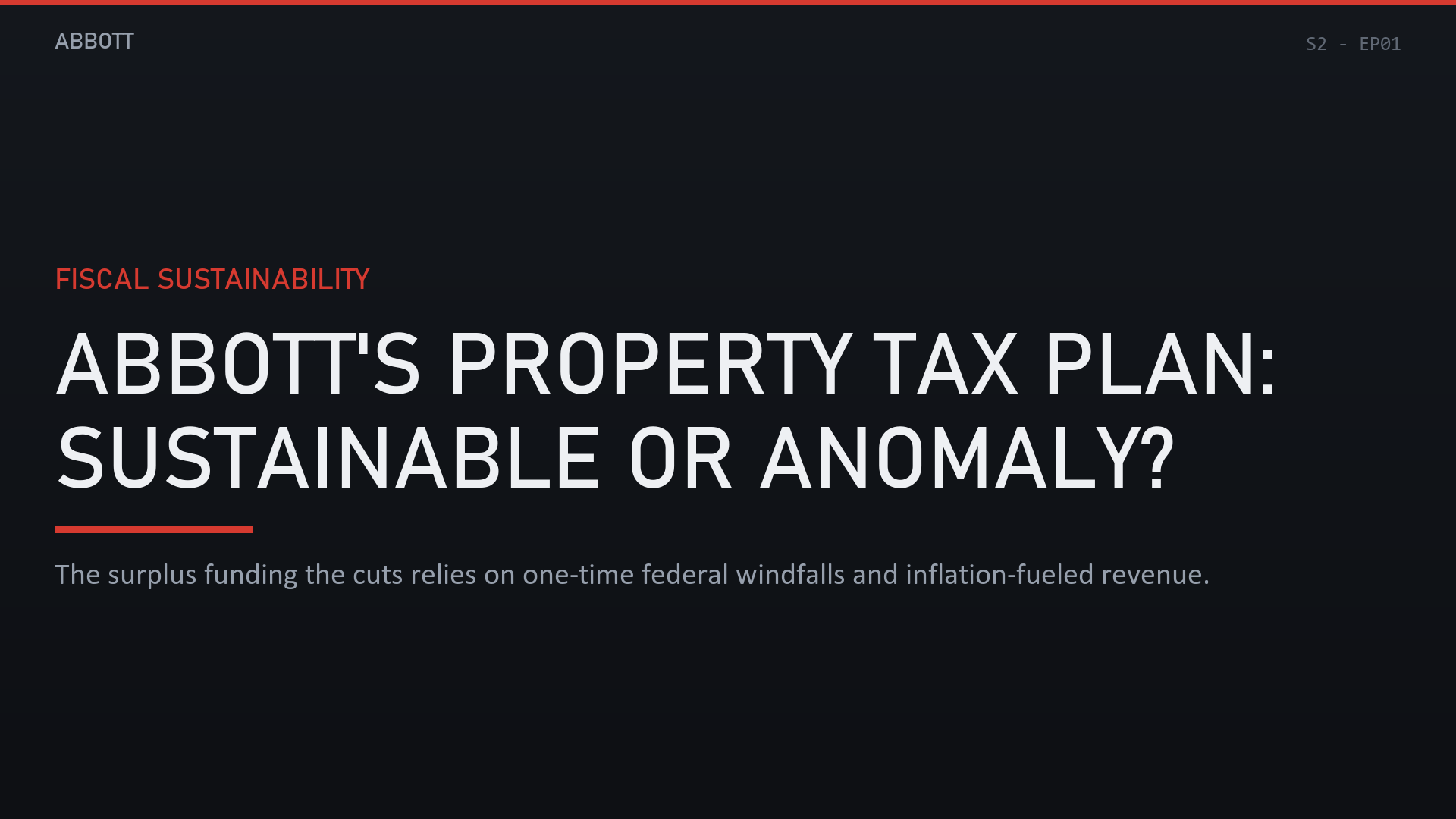
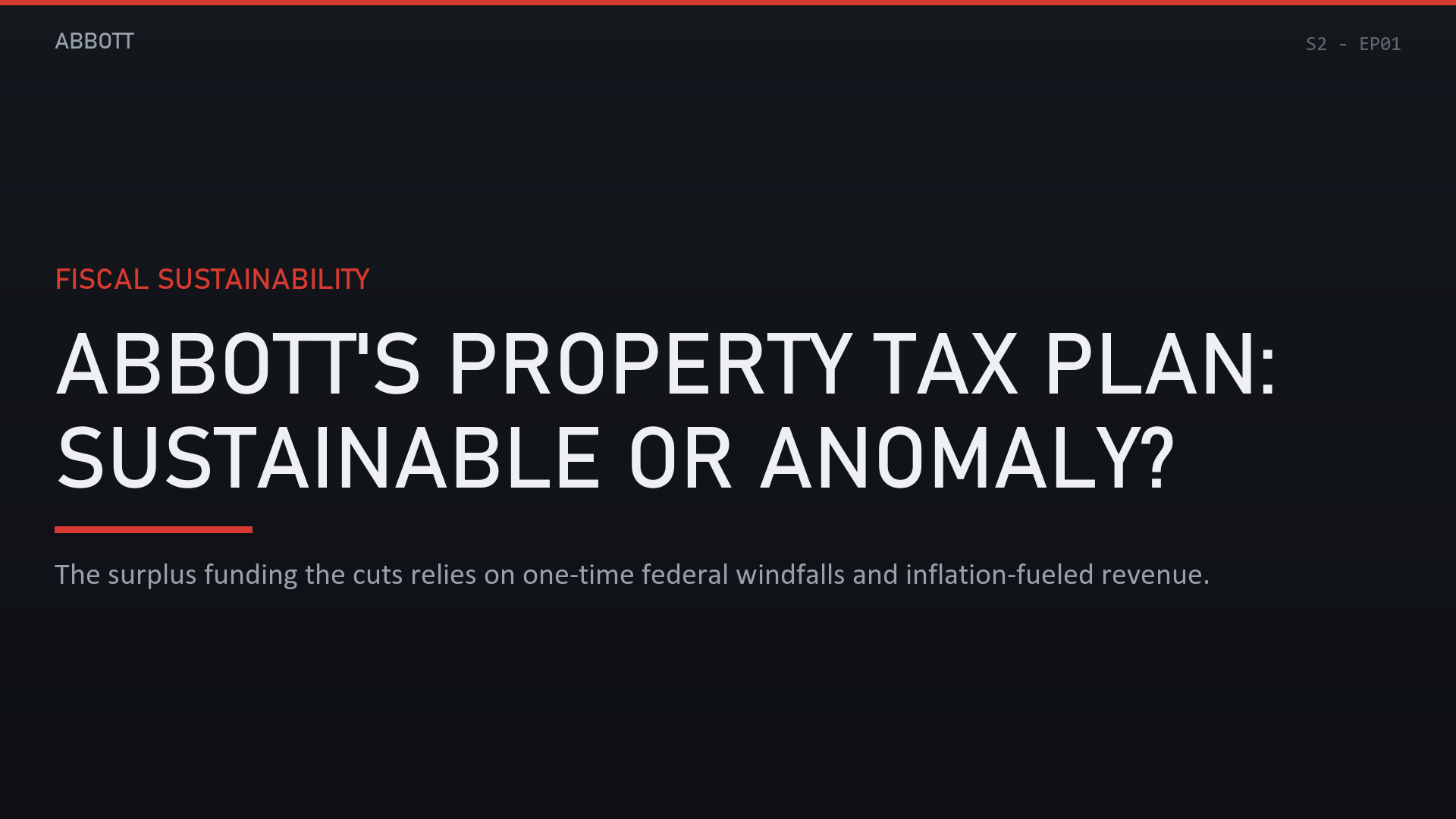
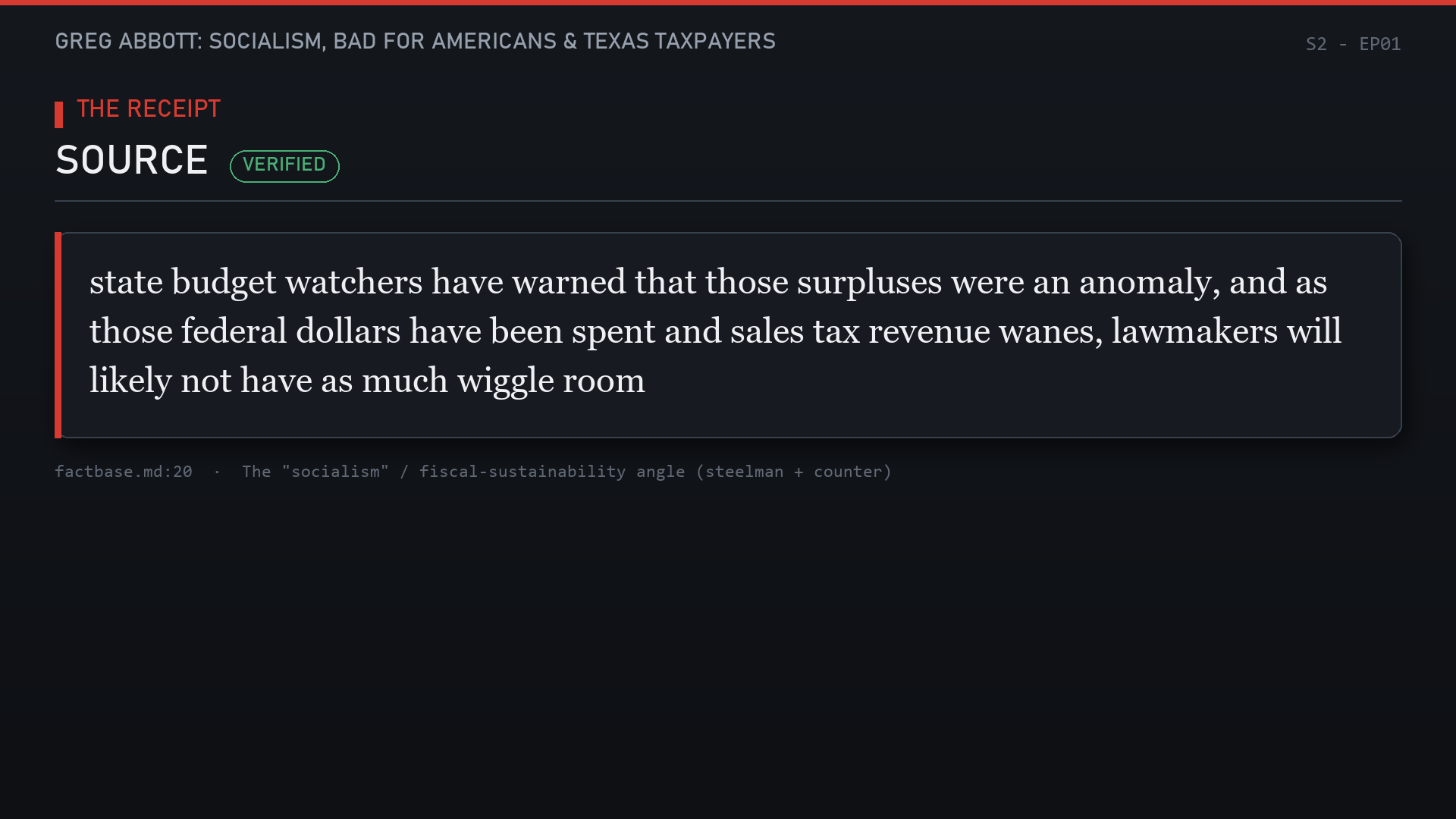
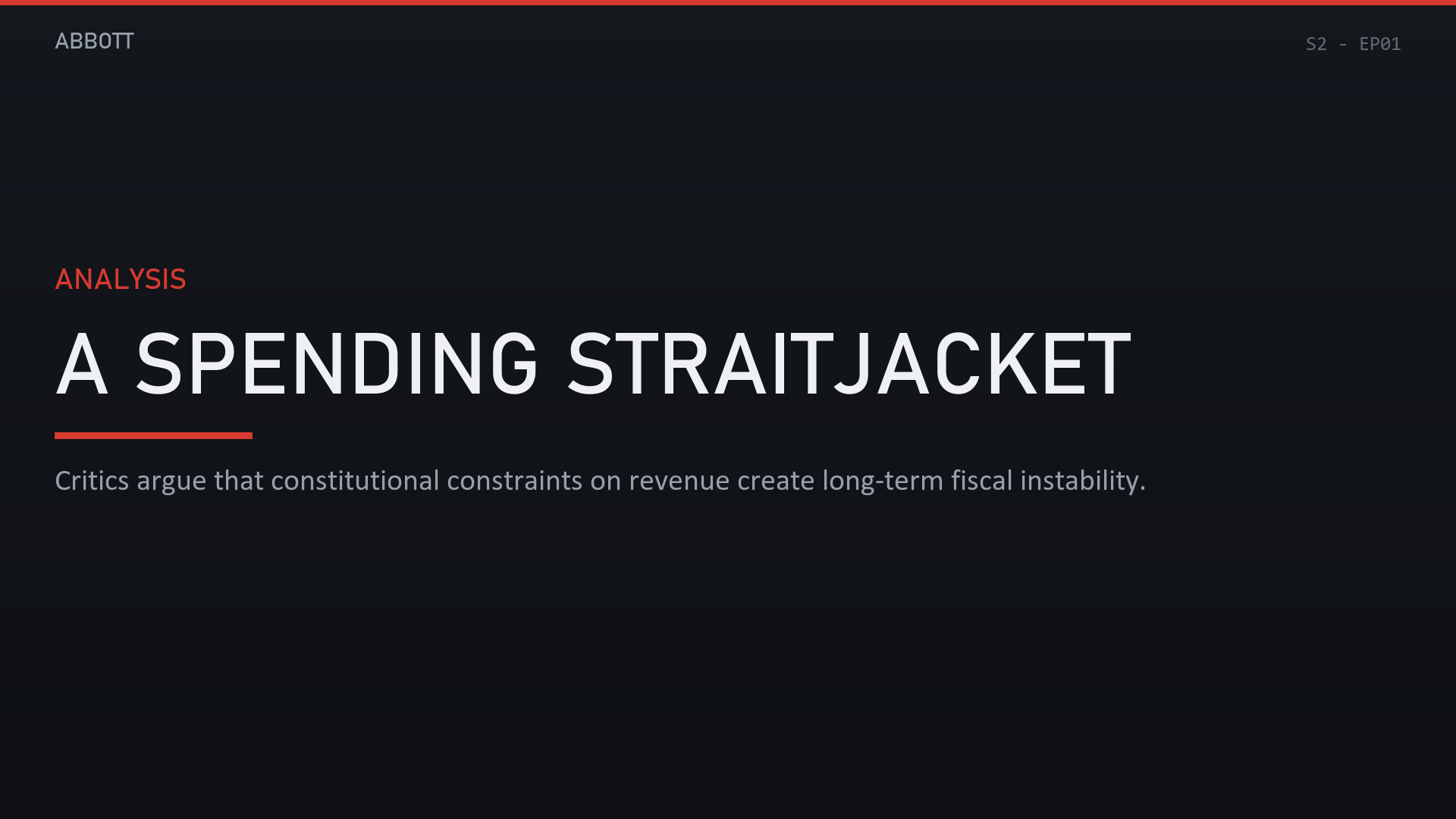
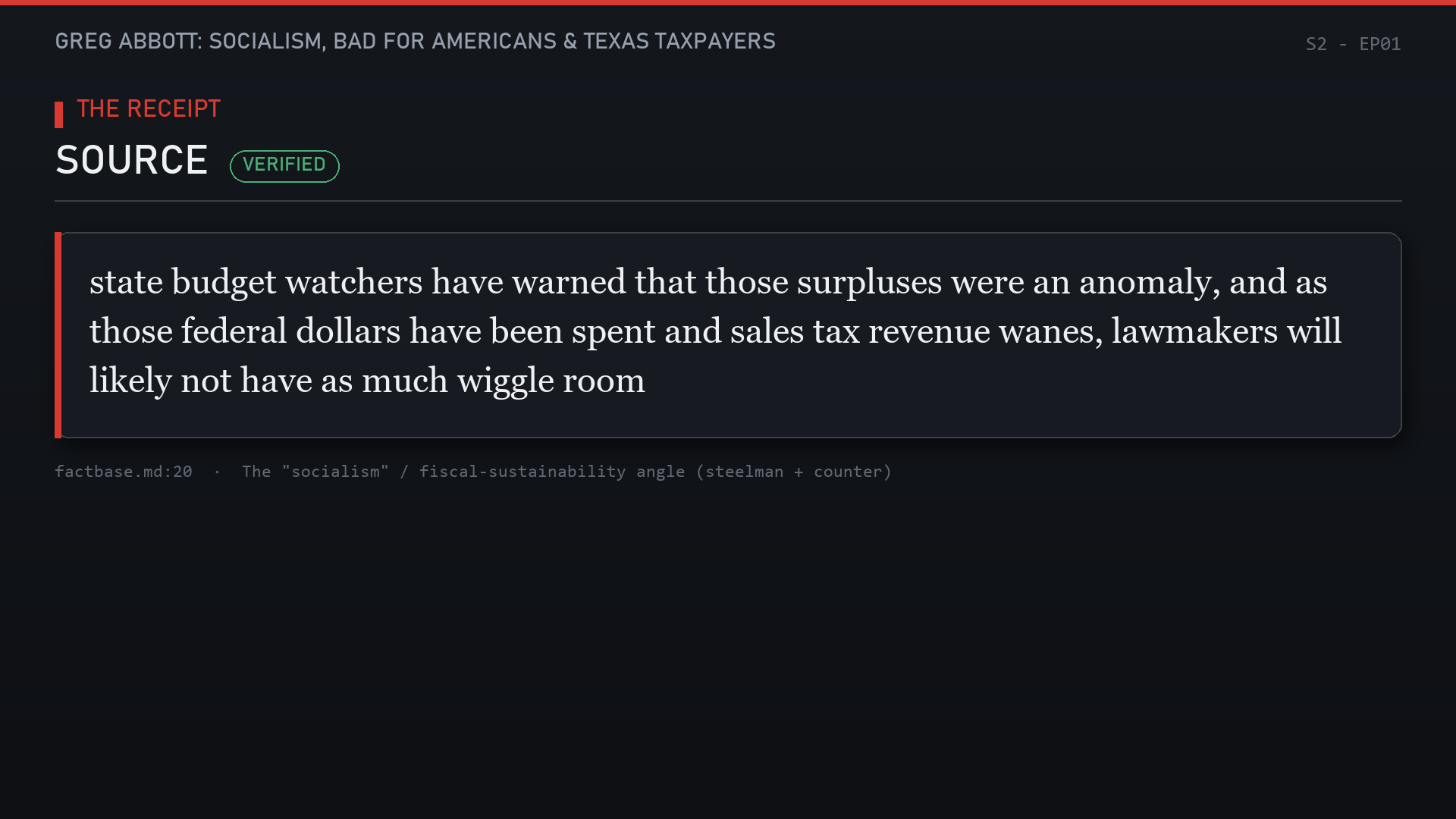
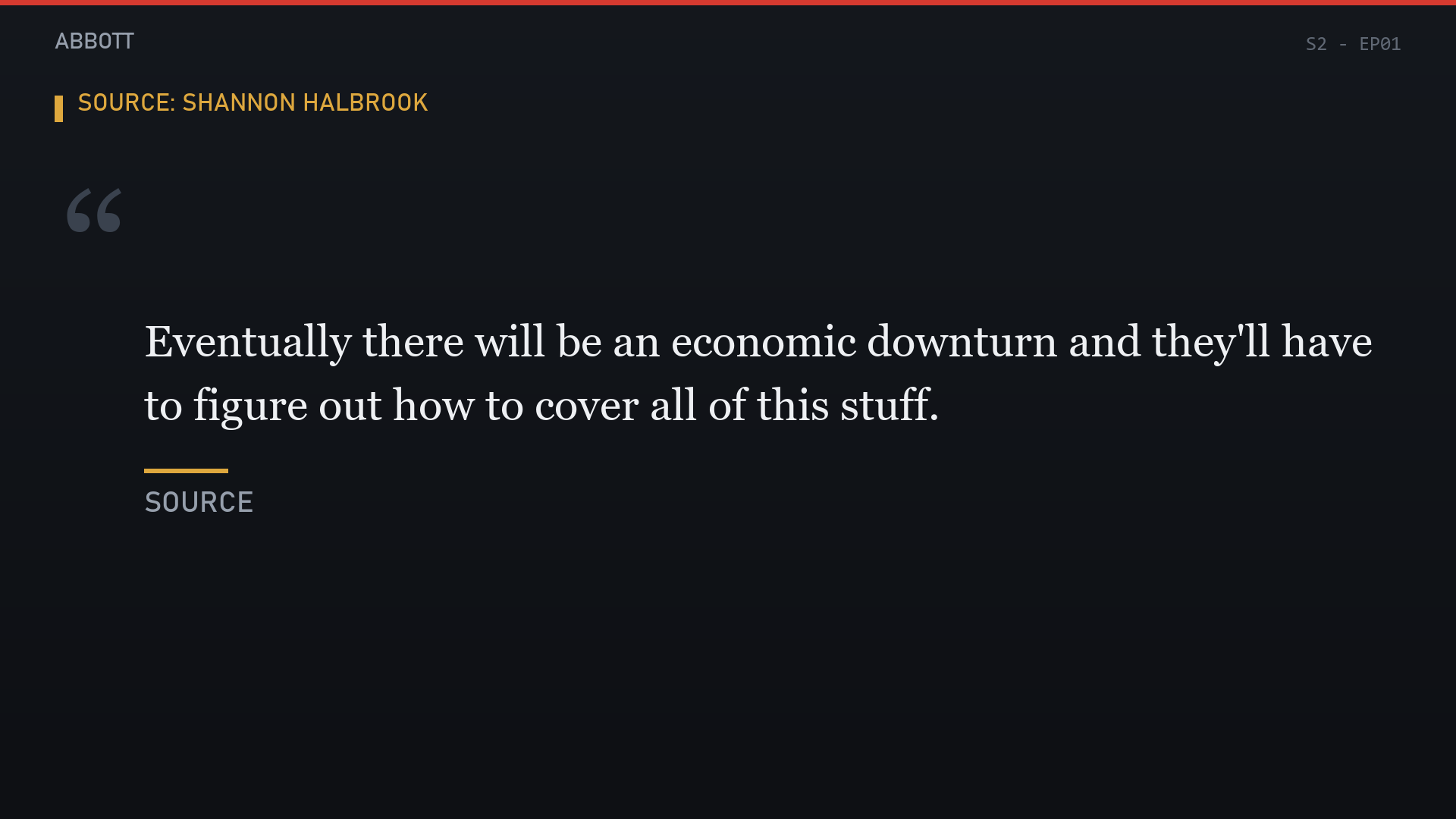
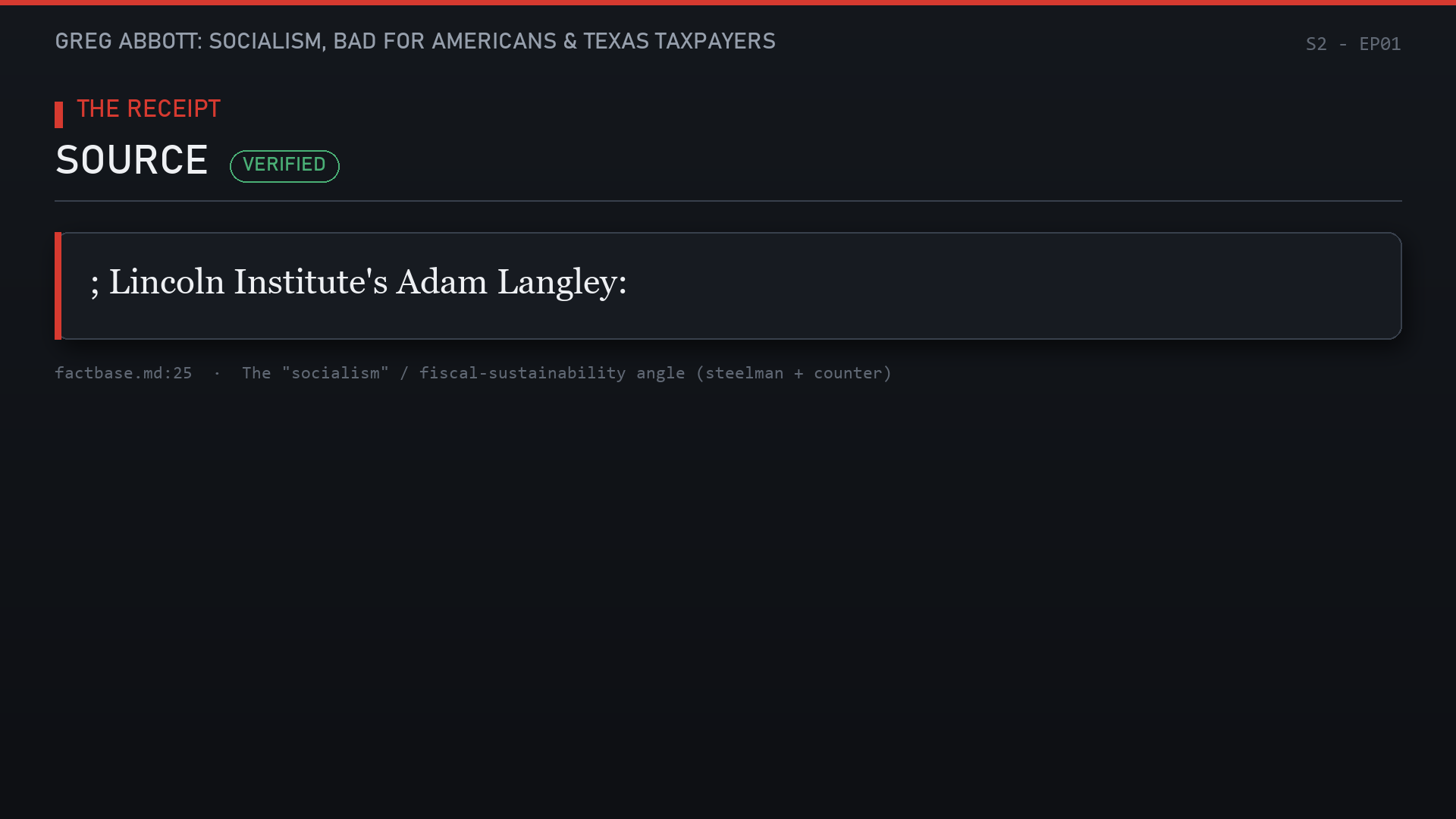
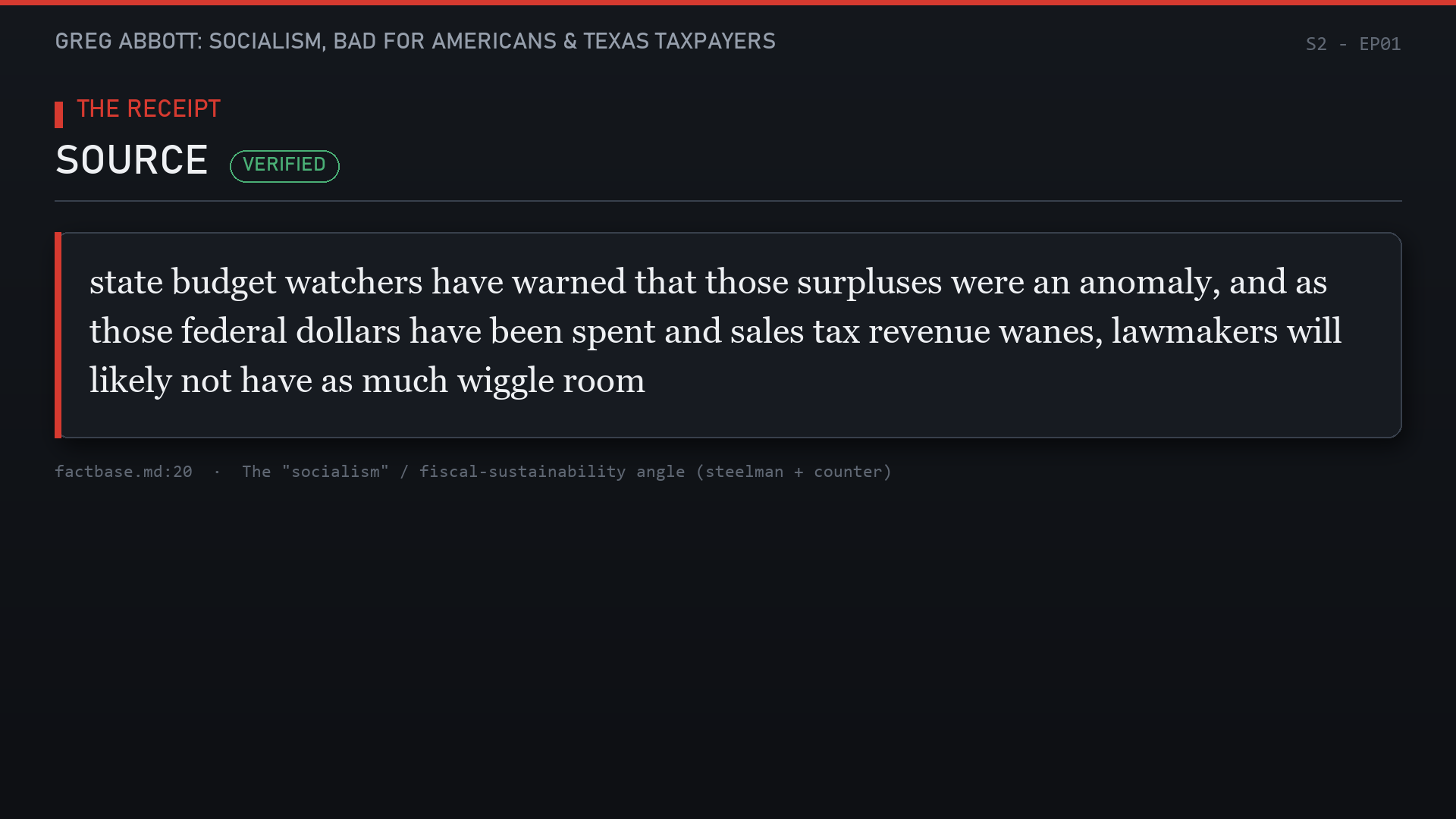
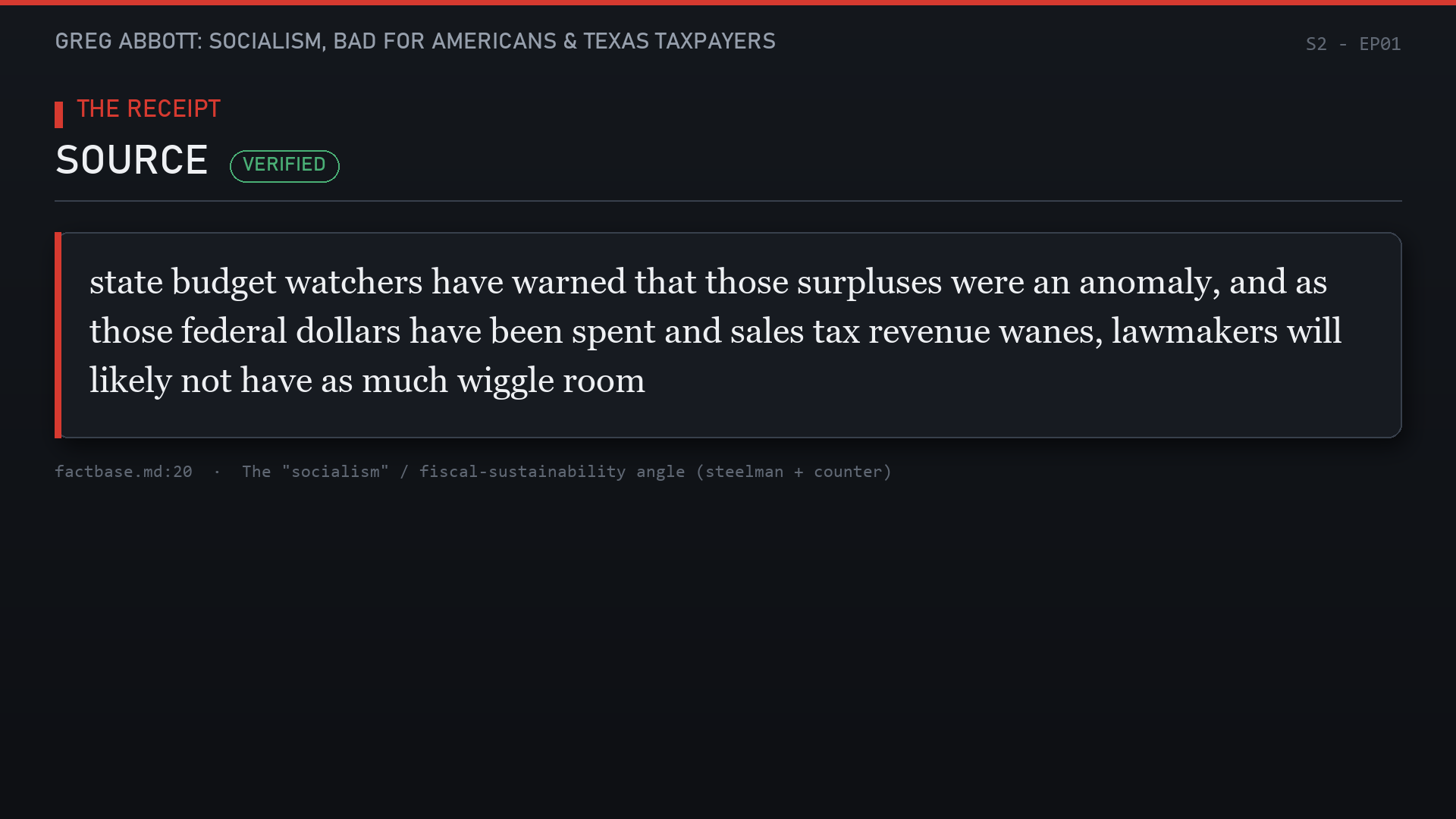
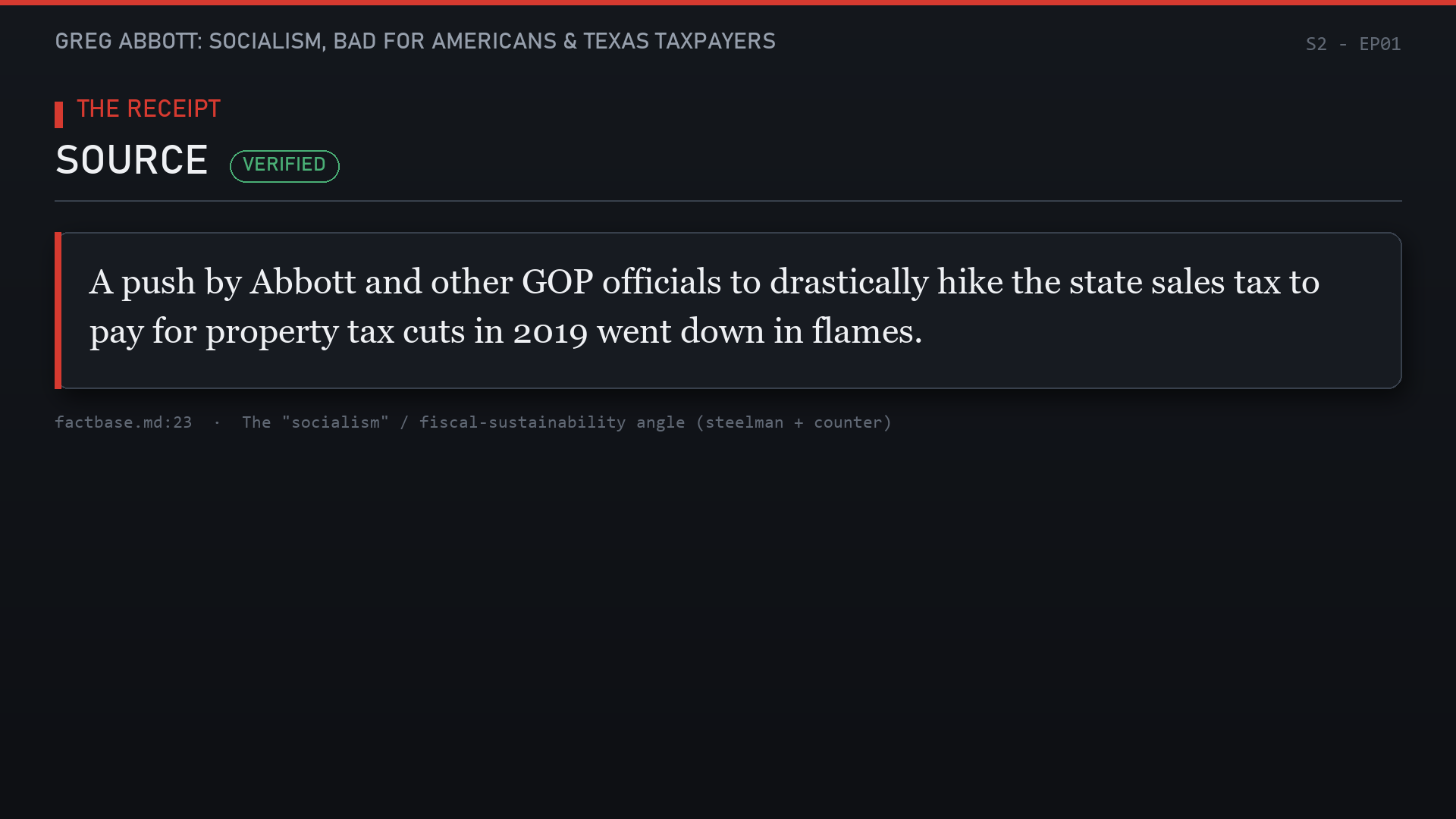
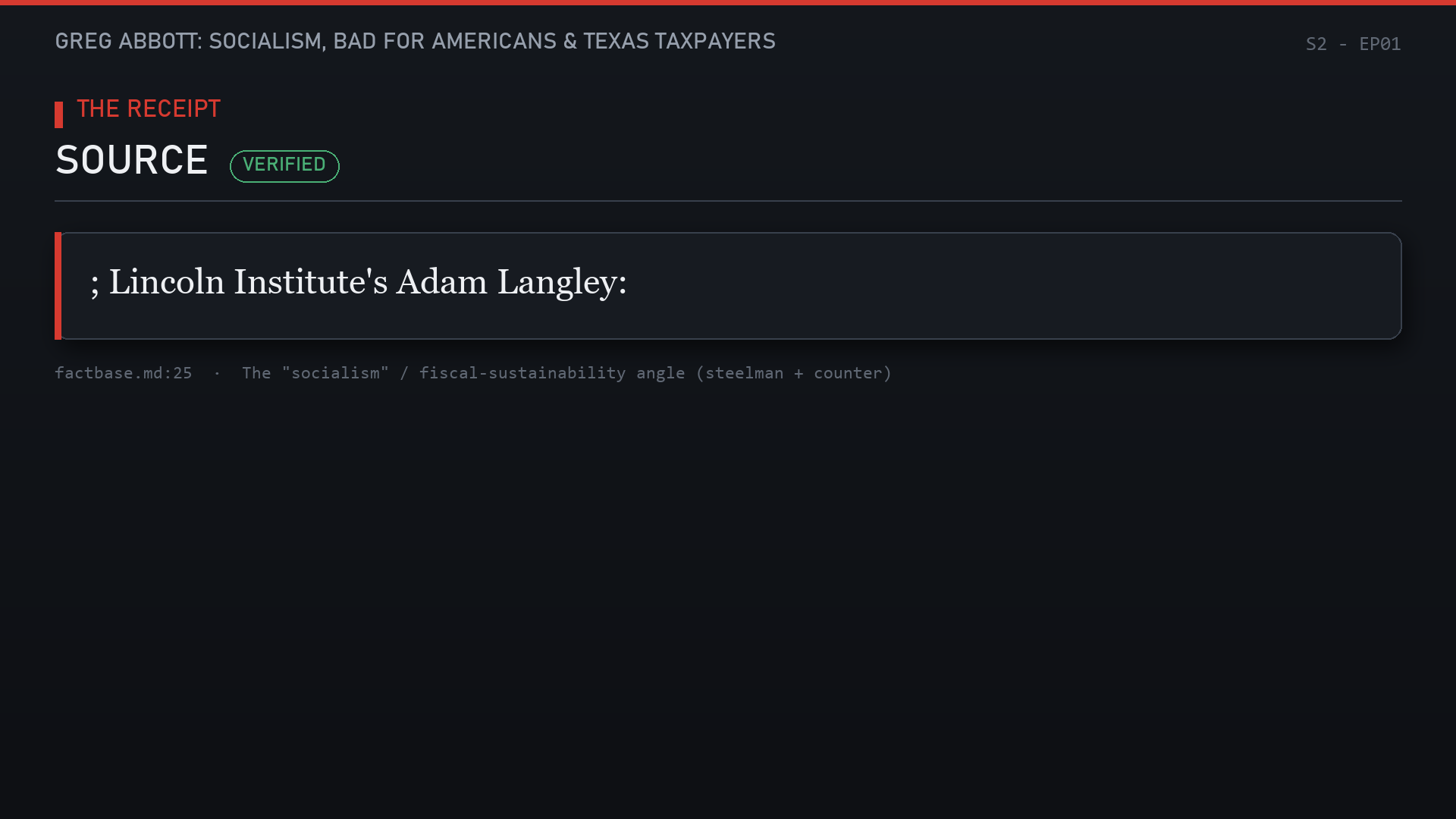
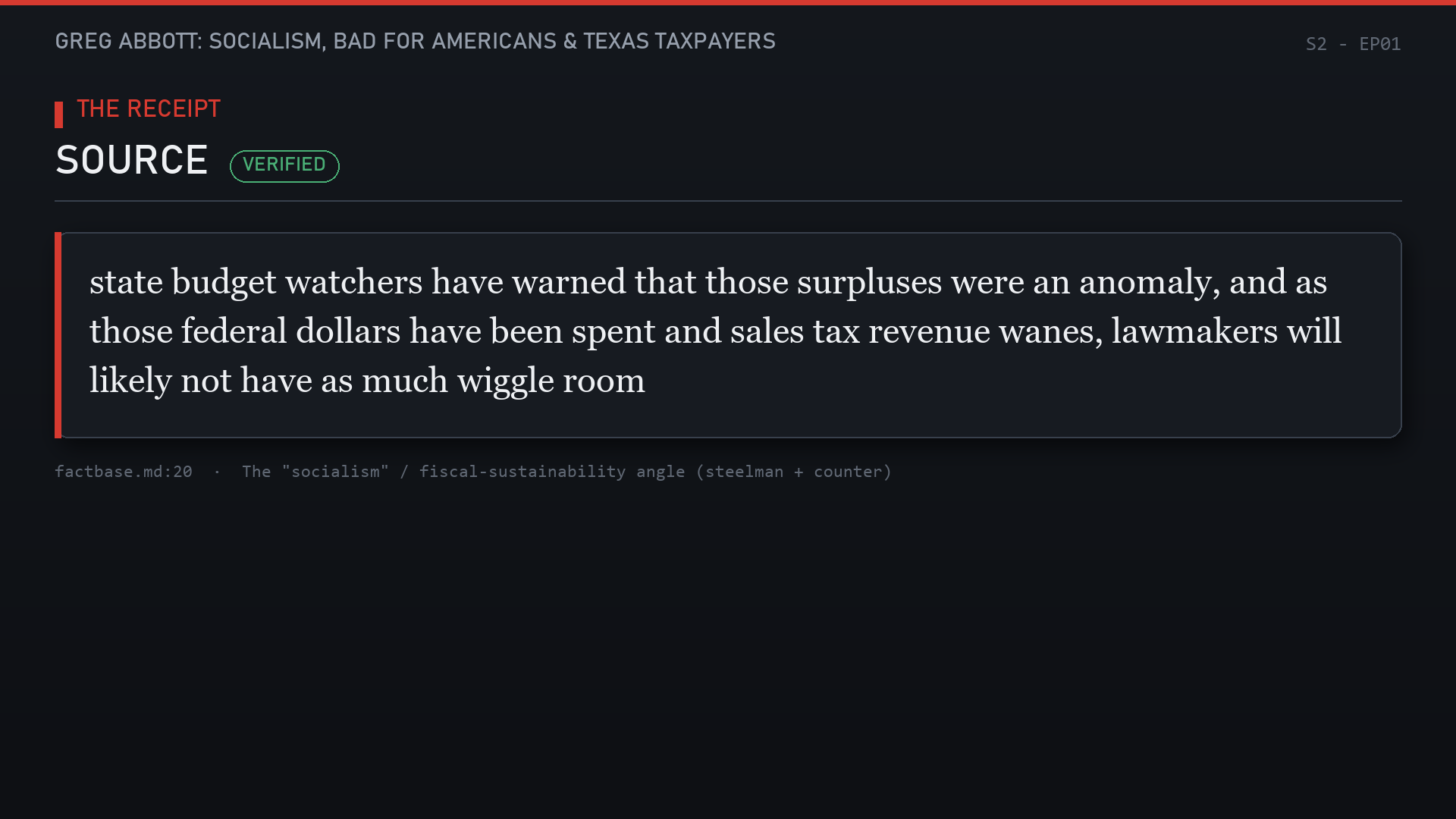
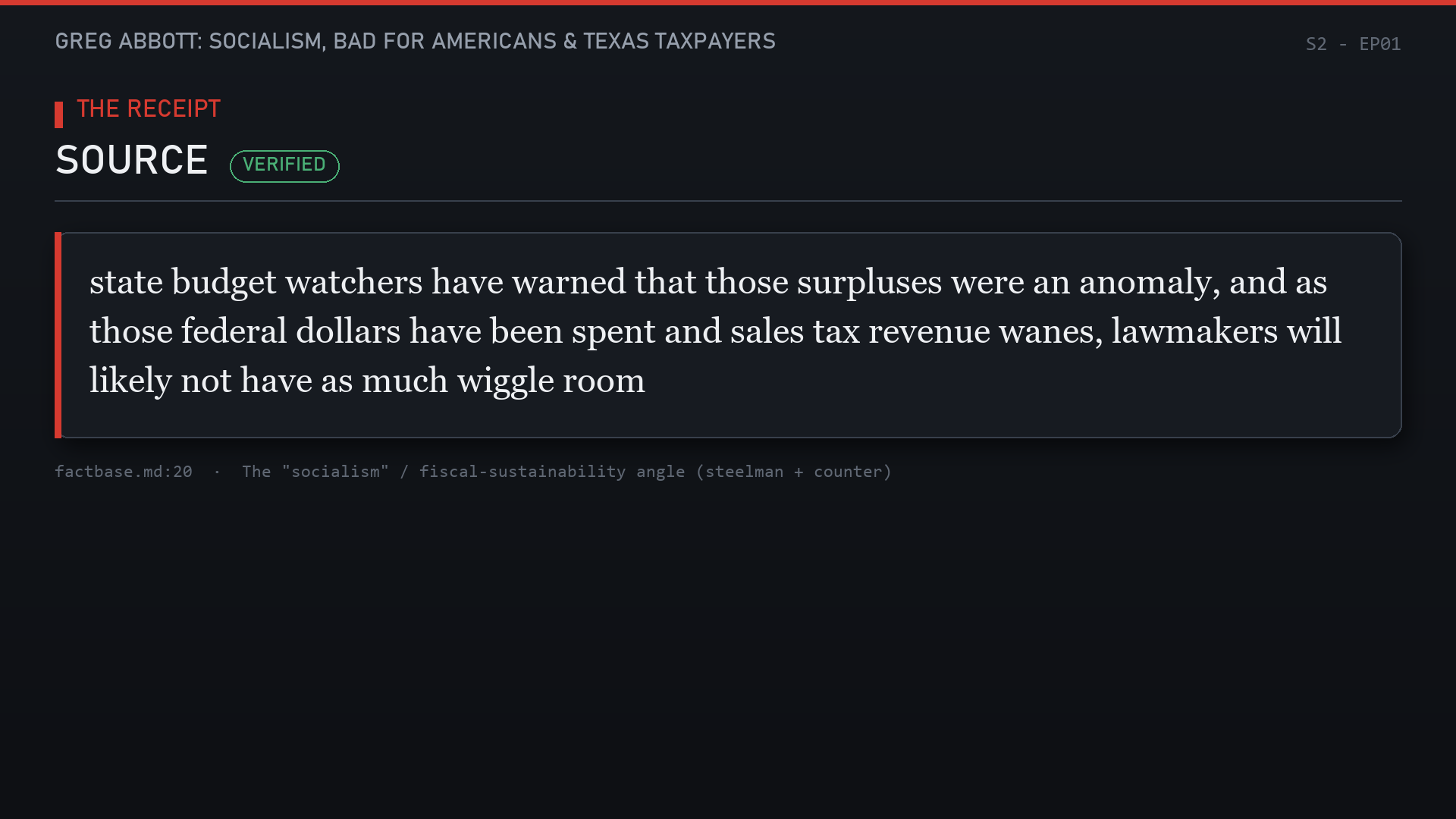
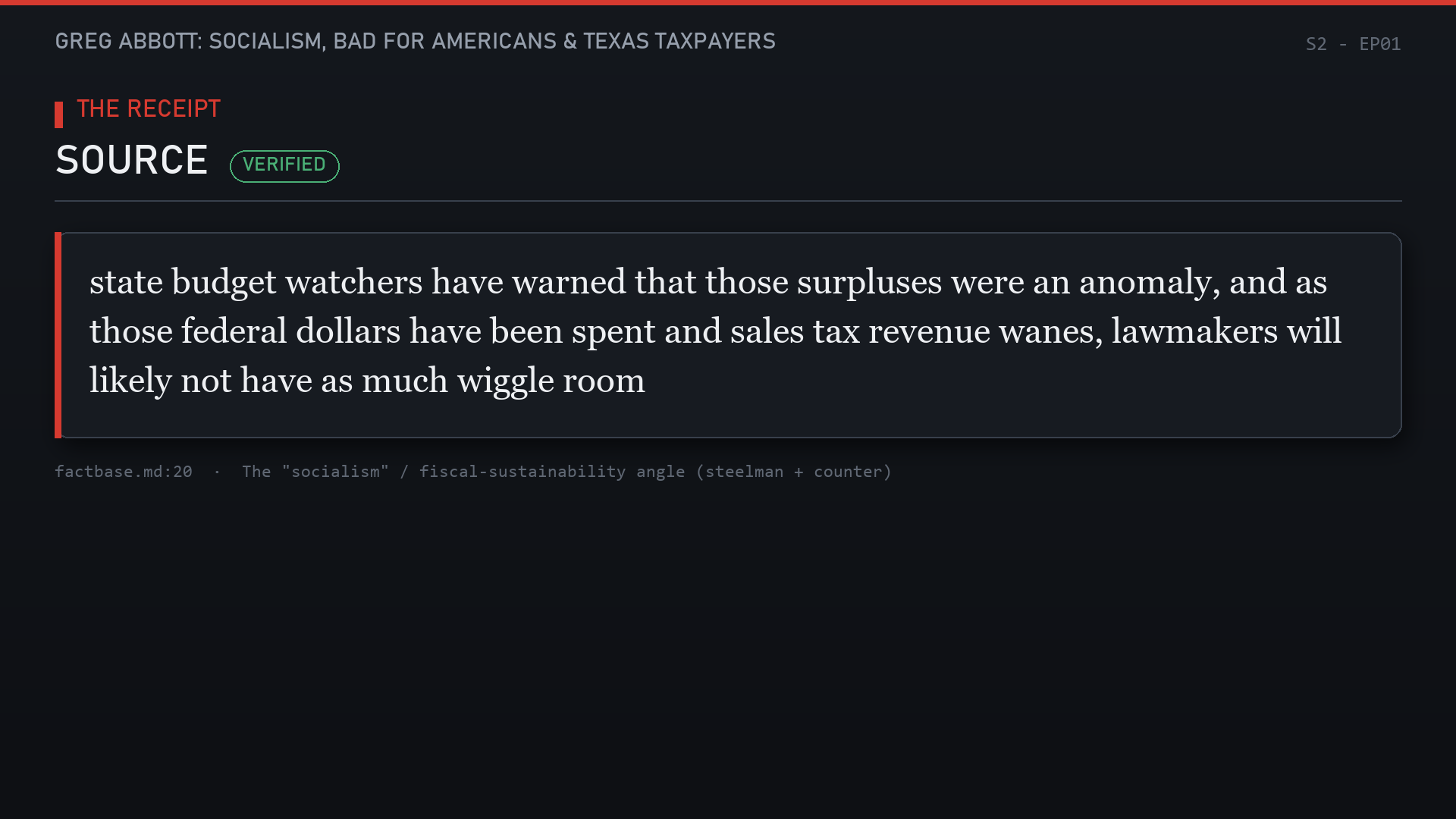
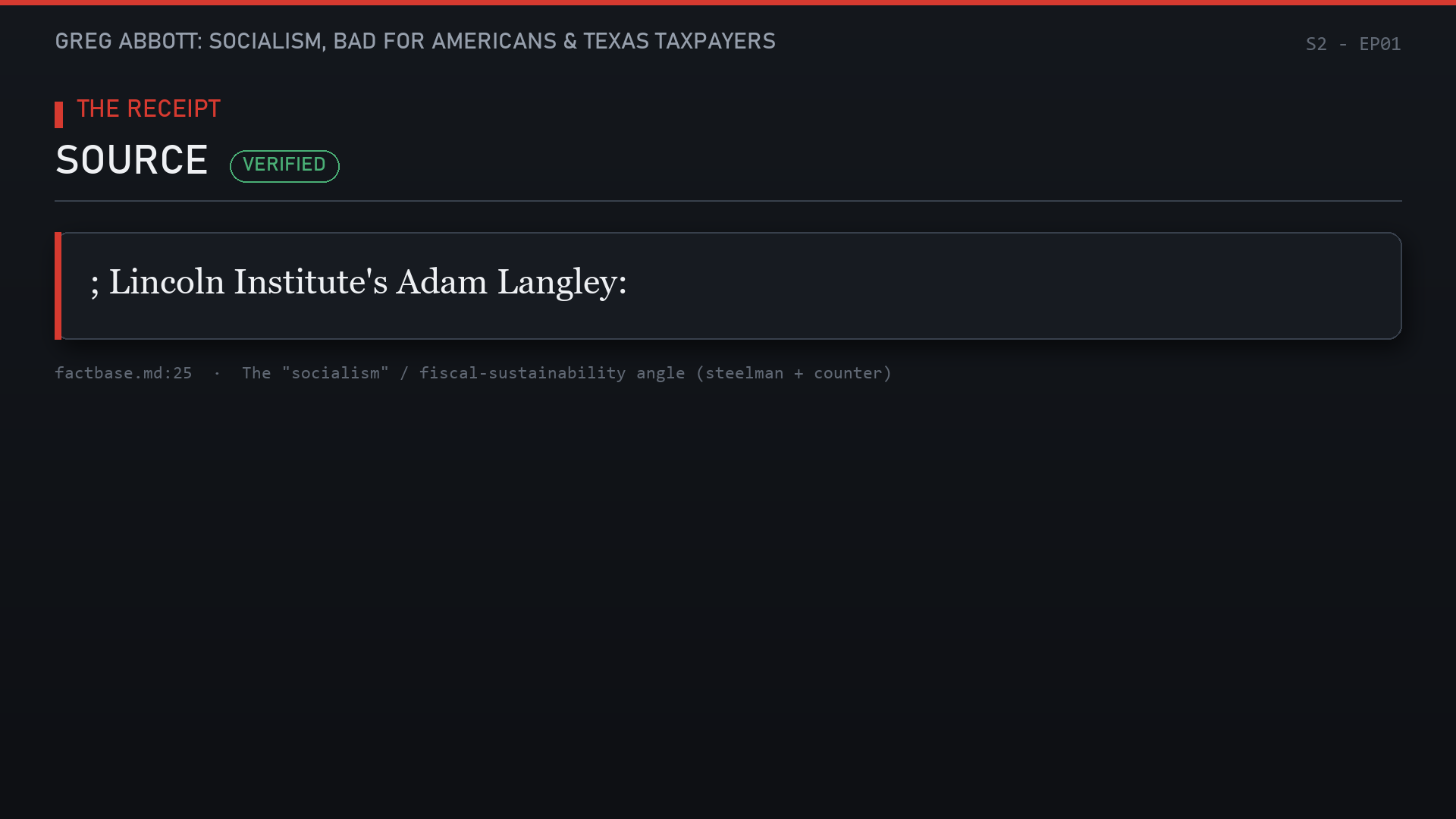
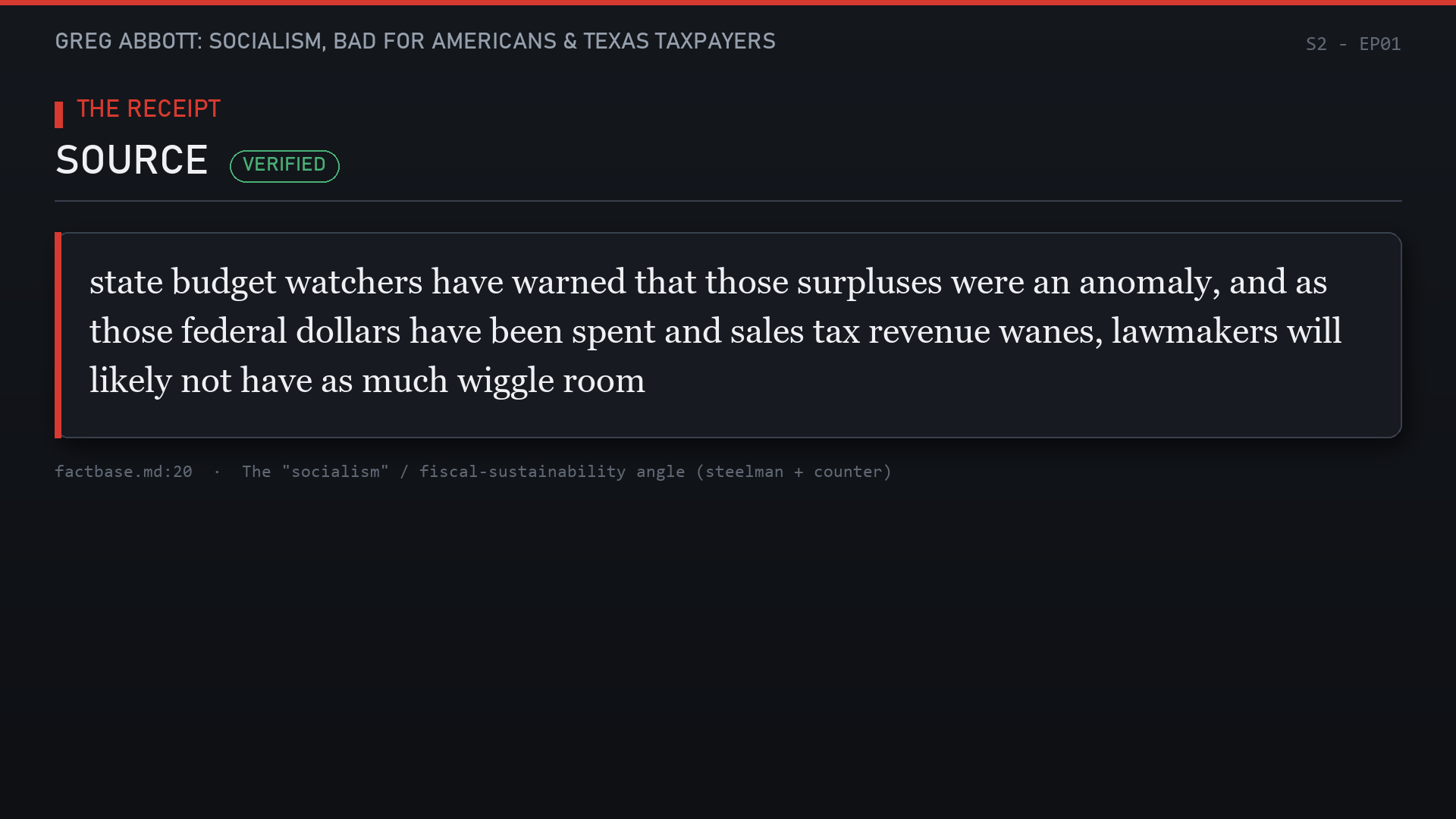
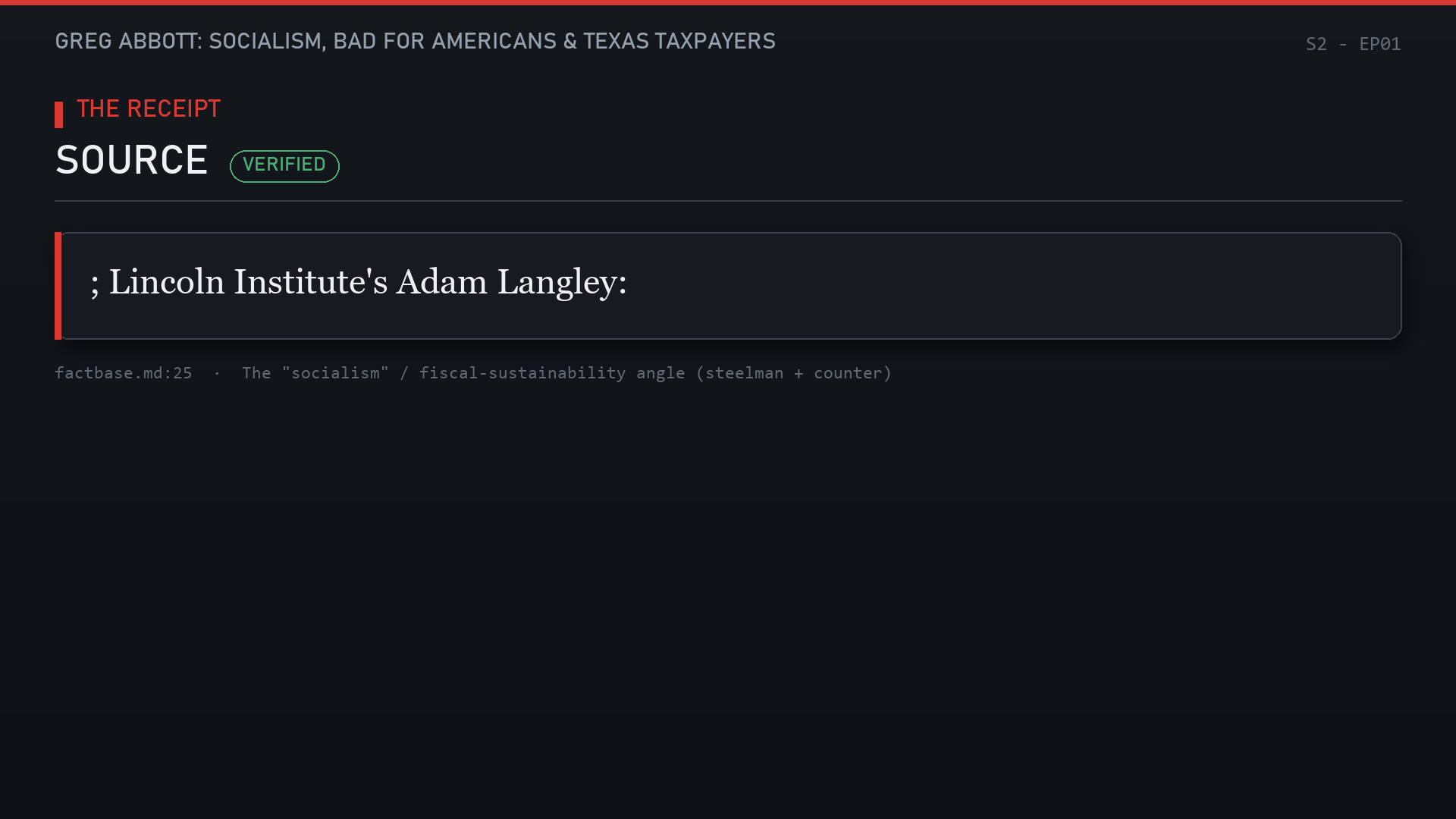
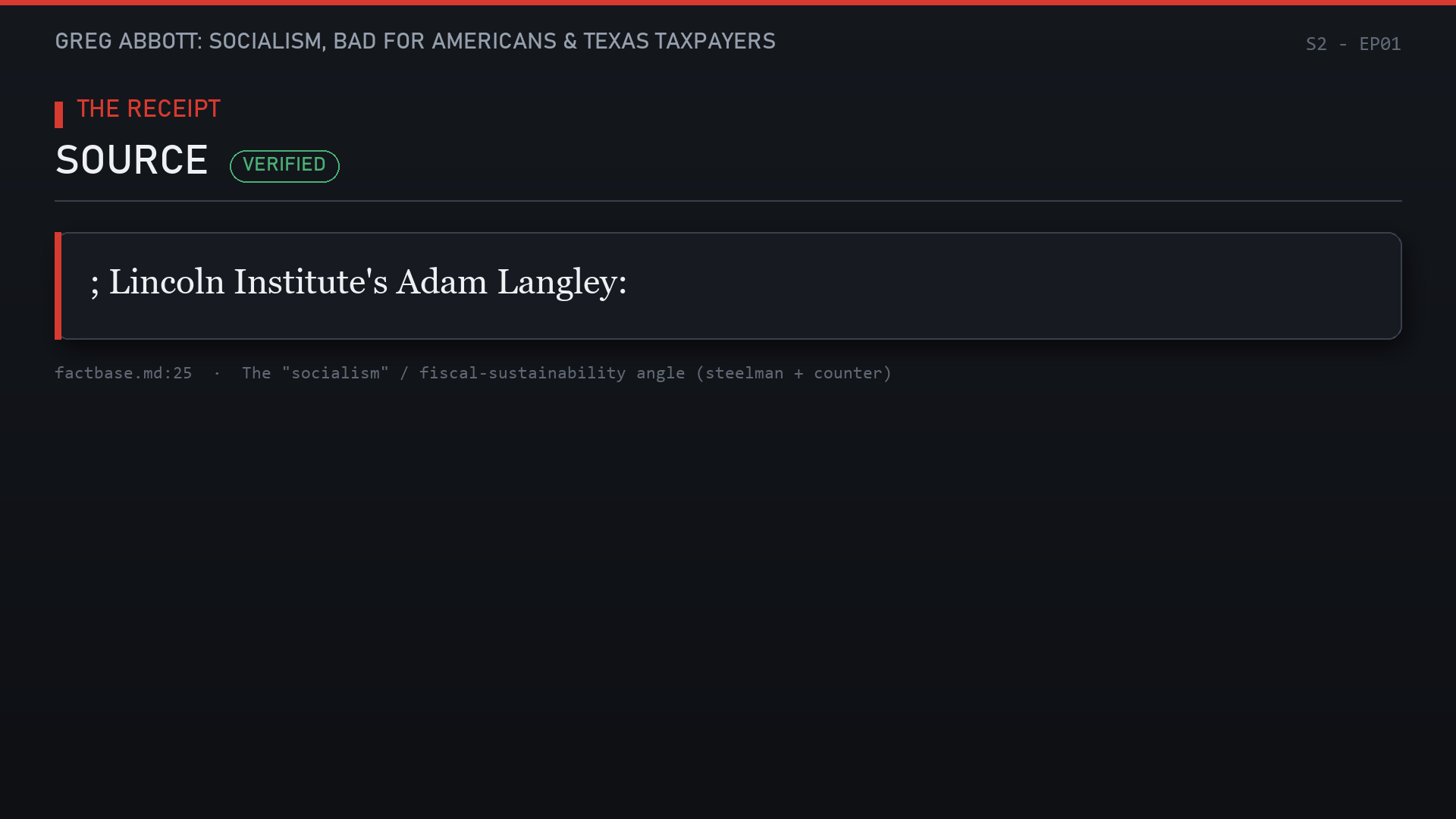
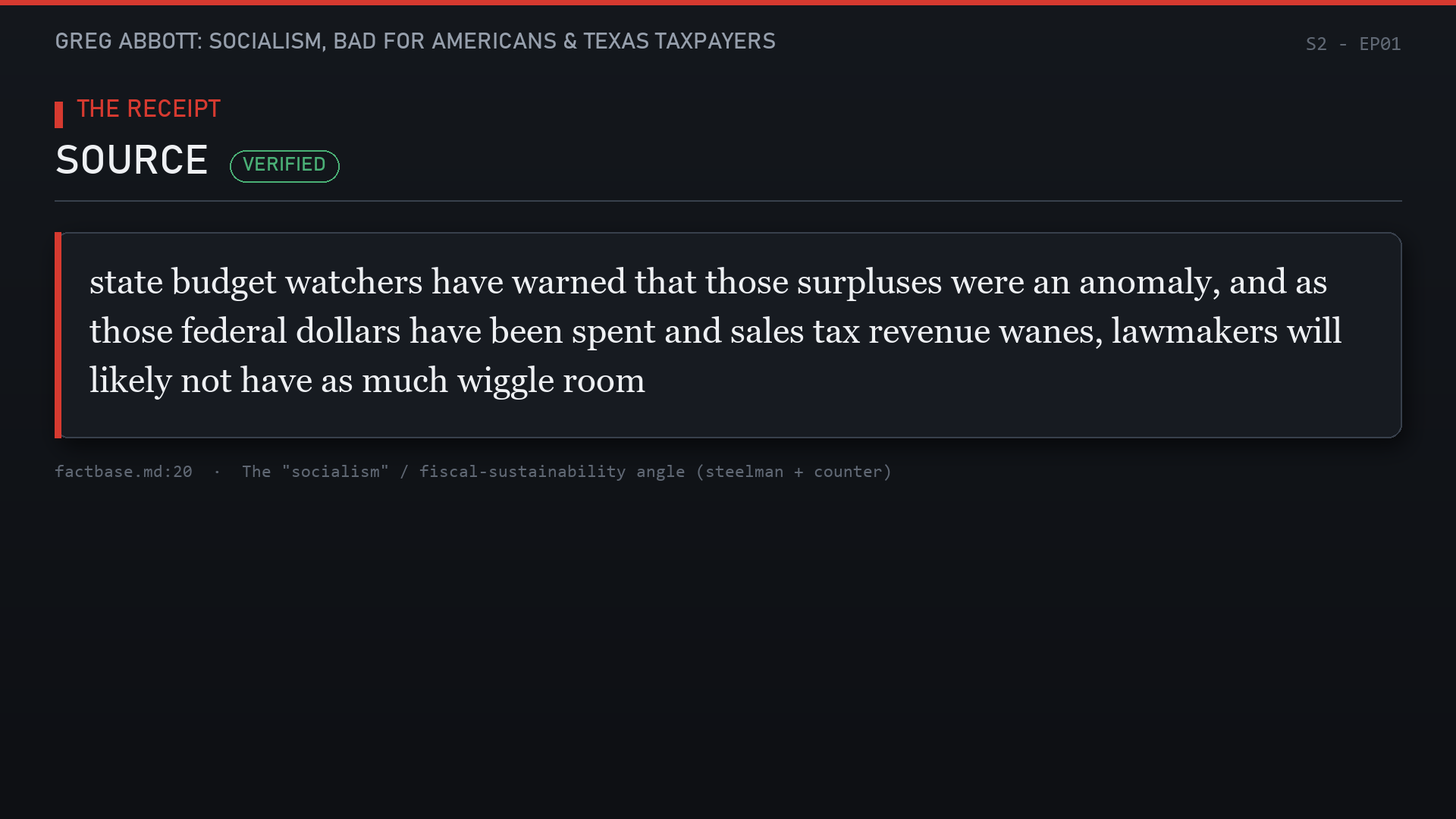
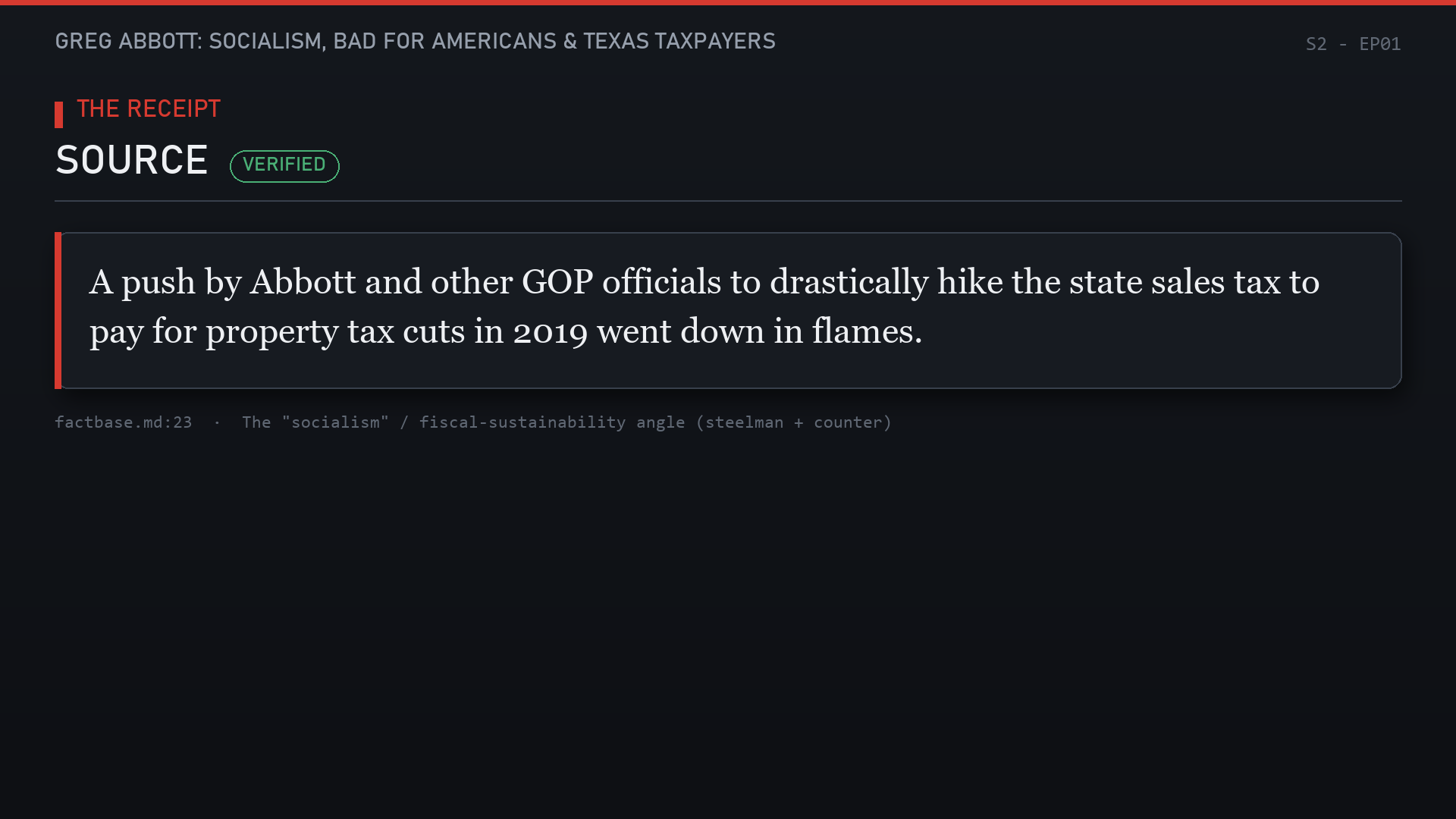
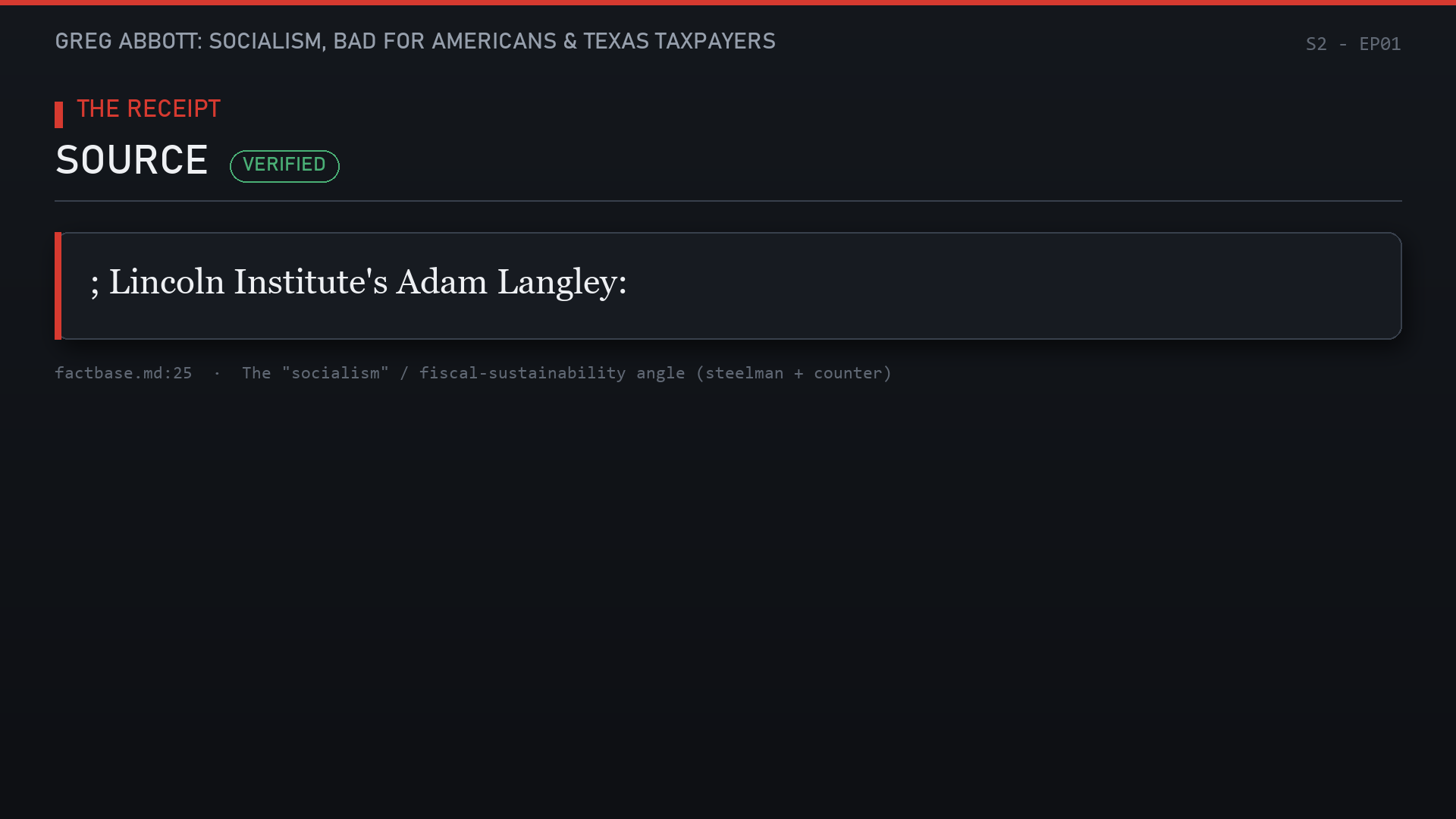
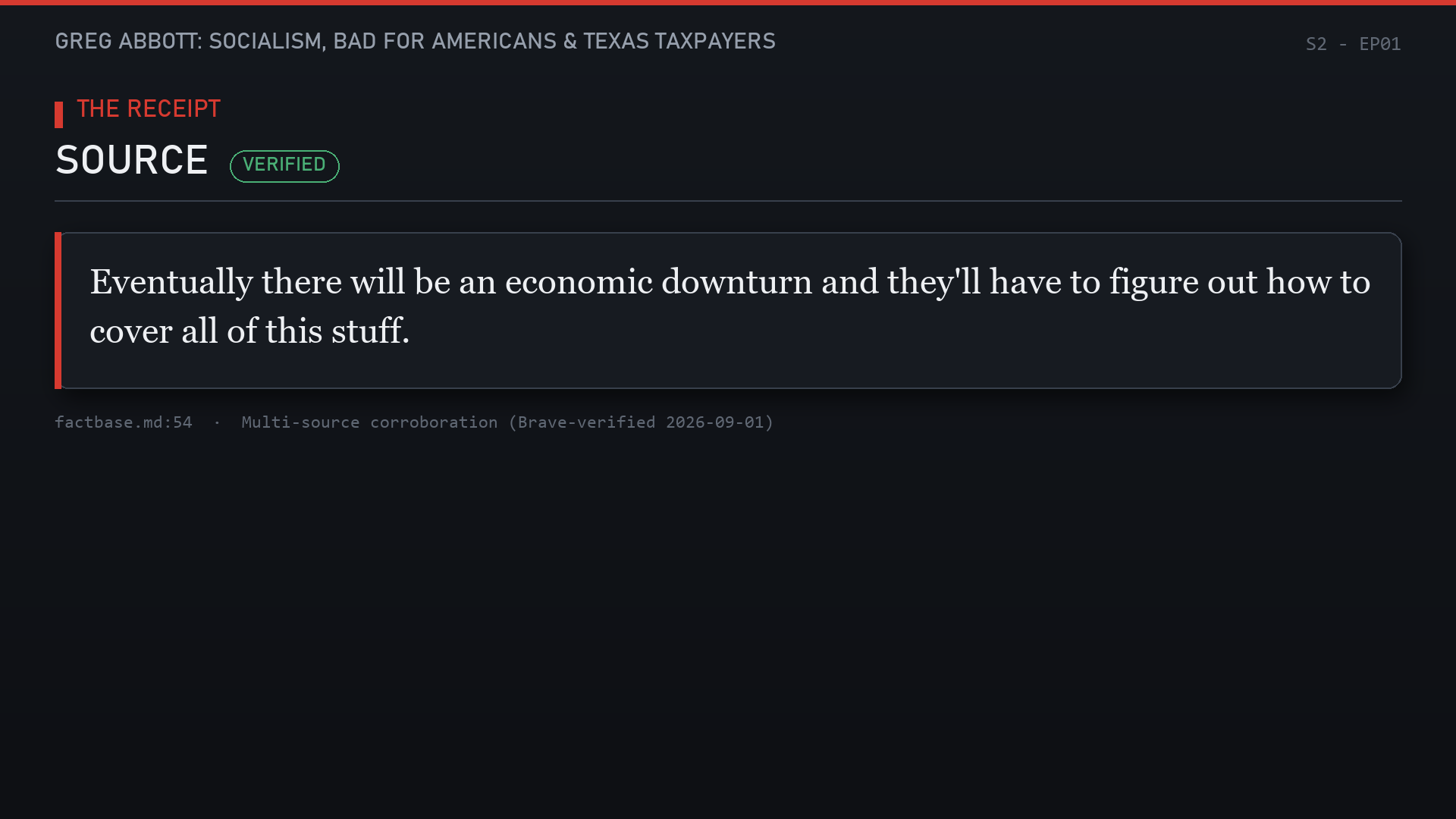
But the money funding this is a one-time windfall: COVID-era federal dollars and inflation-swollen sales tax revenue, both of which state budget watchers have called an anomaly. The Lincoln Institute's Adam Langley calls the abolish-school-taxes plank "basically a collection of the worst types of policies meant to constrain property taxes." Every Texan's Shannon Halbrook is blunter about the platform's messaging function — and about what happens when the surplus runs out: "eventually there will be an economic downturn and they'll have to figure out how to cover all of this stuff." When it does, the constitutional lock means a future legislature has to find the money somewhere: schools, healthcare, or worker pay. That's not fiscal conservatism. It's a spending straitjacket with someone else's name on the bill.
Receipts: Texas Tribune, "Greg Abbott says he'll cut Texans' property taxes..." (Dec 9, 2025) · Legislative Budget Board estimate, via Tribune · Texas Taxpayers and Research Association, via Tribune. Additional quotes (Sen. Paul Bettencourt, Lt. Gov. Dan Patrick, James Quintero/TPPF, Manish Bhatt/Tax Foundation, Adam Langley/Lincoln Institute, Shannon Halbrook/Every Texan) are attributed as verified in this episode's production script (master script) but do not carry an independently archived live URL in this episode's handoff source packet.
The steelman
The strongest case for what he's doing, stated honestly: it constrains local government growth, it's measurably cheaper than before the pandemic for the typical homeowner, and a flat revenue cap "doesn't favor one kind of property owner over another." We take it seriously because our audience deserves the argument at its strongest, not at its easiest to beat.
The counter
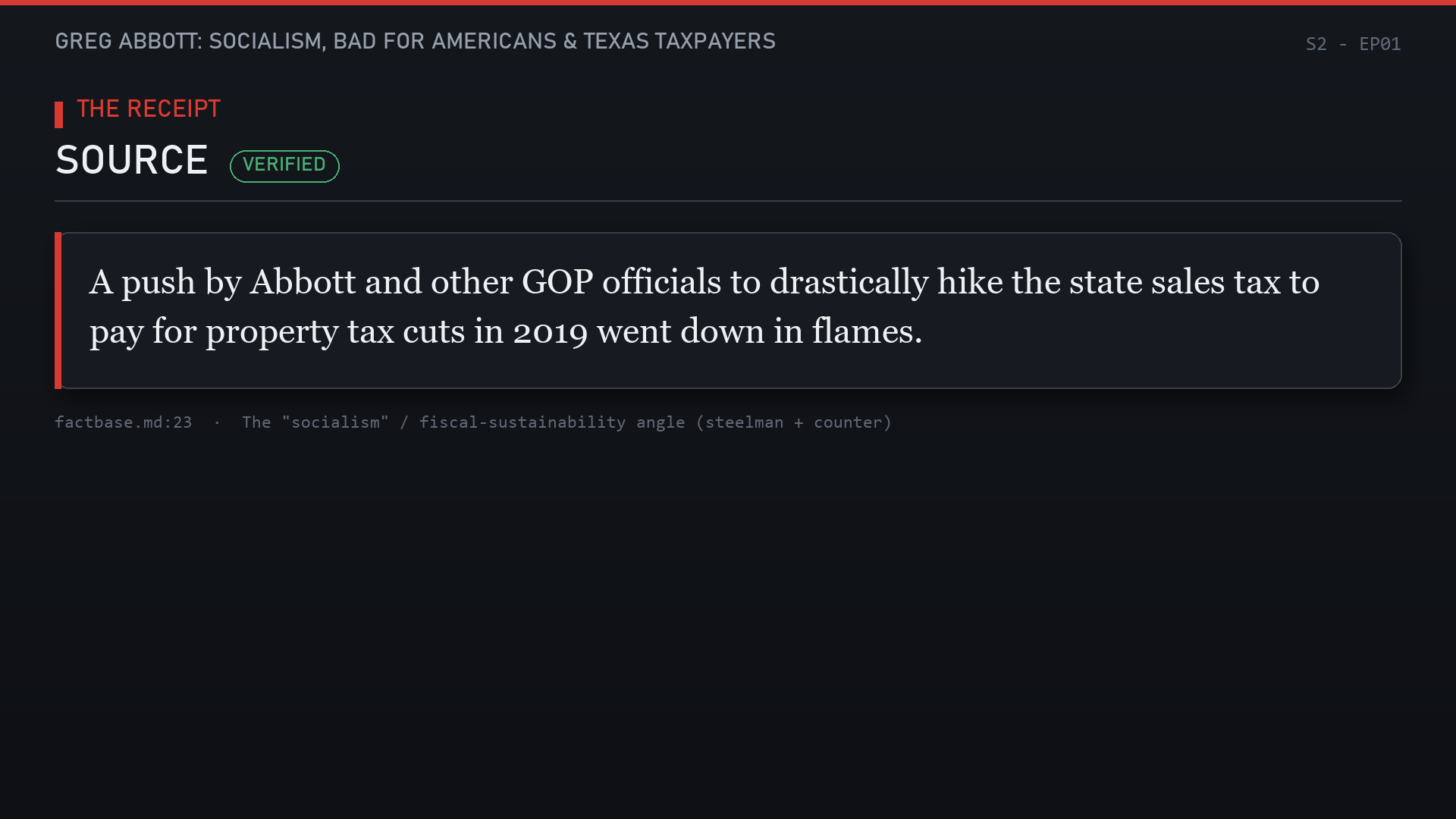
The surplus paying for it is a one-time windfall, not a structural revenue source. The constitutional lock means the bill comes due on a future legislature regardless of whether the surplus survives. And the benefit is means-tested by occupancy, not need — a renter and a commercial landlord get nothing, no matter how the "cut" is marketed. Apply the governor's own definition of socialism — government collecting broadly, directing where the money goes, guaranteeing an outcome the market wouldn't produce on its own, and writing it into the constitution so it can't be undone — and the mechanism is the one his speeches warn about. The only difference is who benefits.
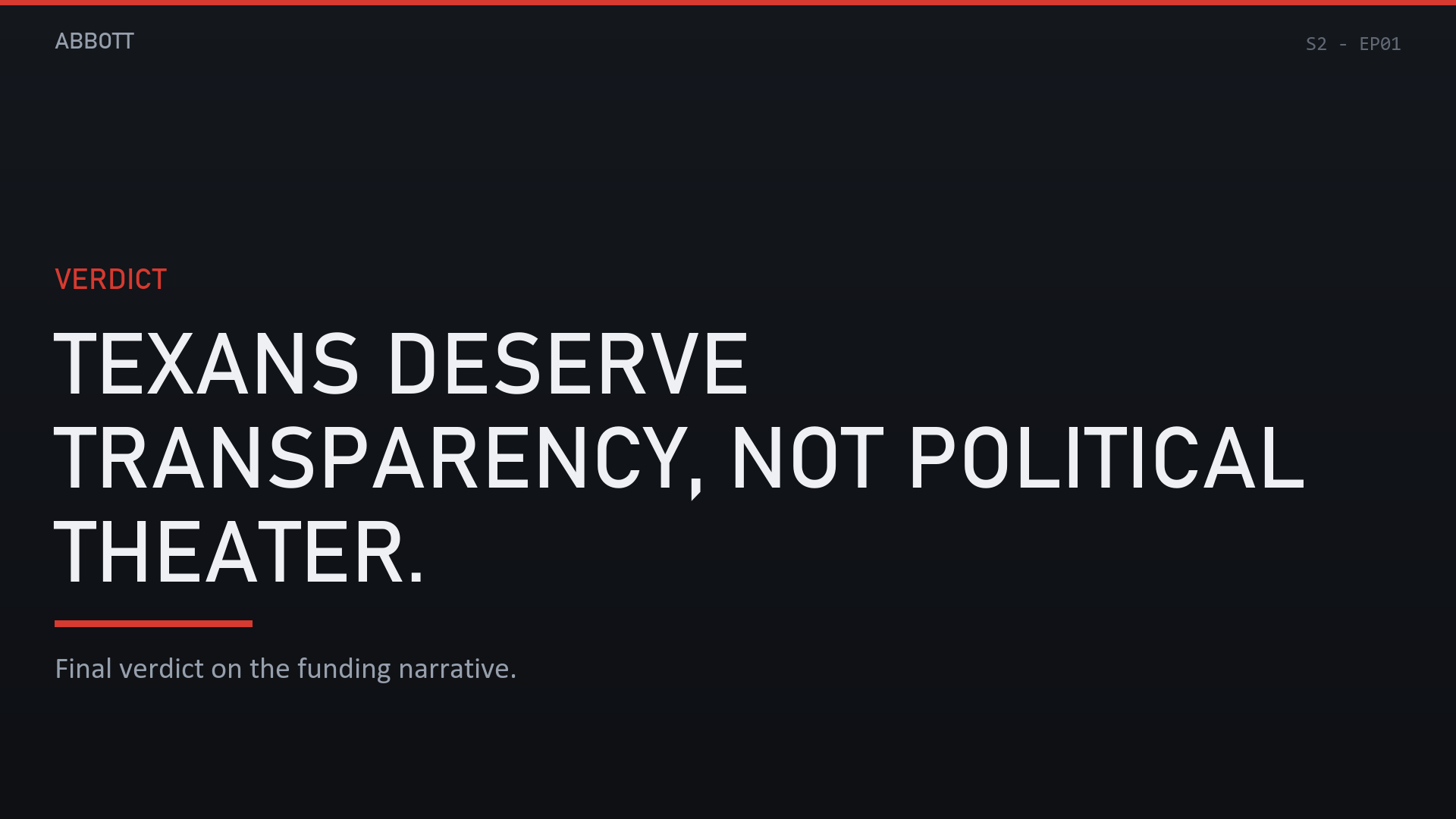
$51 billion. 20% of the state budget. $500 saved. A constitutional lock. That's the socialist in the governor's mansion.
Documents Used to Produce This Episode
- Episode brief
- Narration script (handoff draft)
- Sources & receipts (12 receipts, 1 live URL, 11 verified)
- Backplate generation prompts (non-evidentiary only)
Full production materials (internal — scripts, shot lists, raw renders) →