Republican Socialism Is Bad For America · Episode 01 · Tier A — Capital Socialism
TARP: The Bank Bailout That Made Money
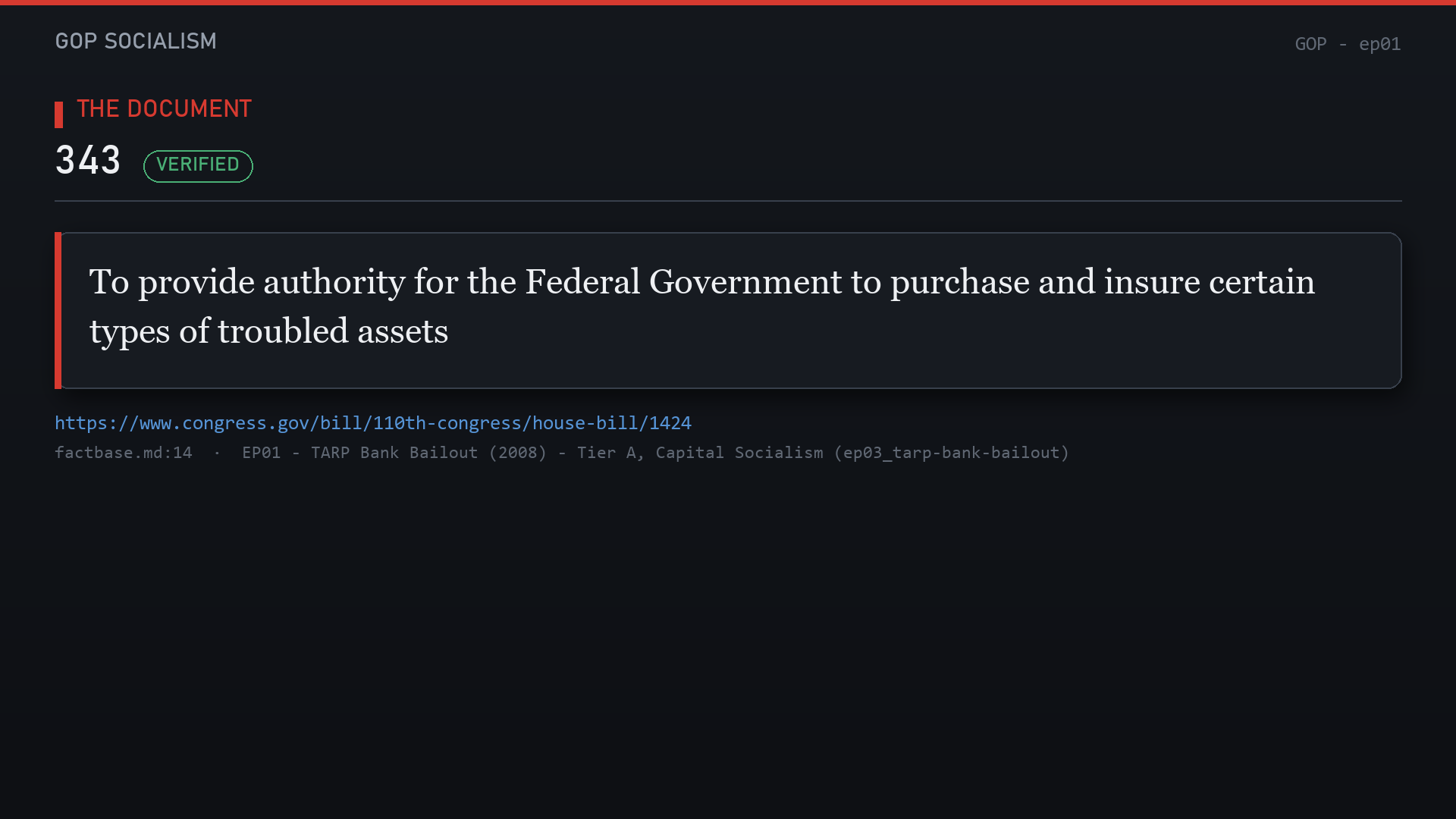
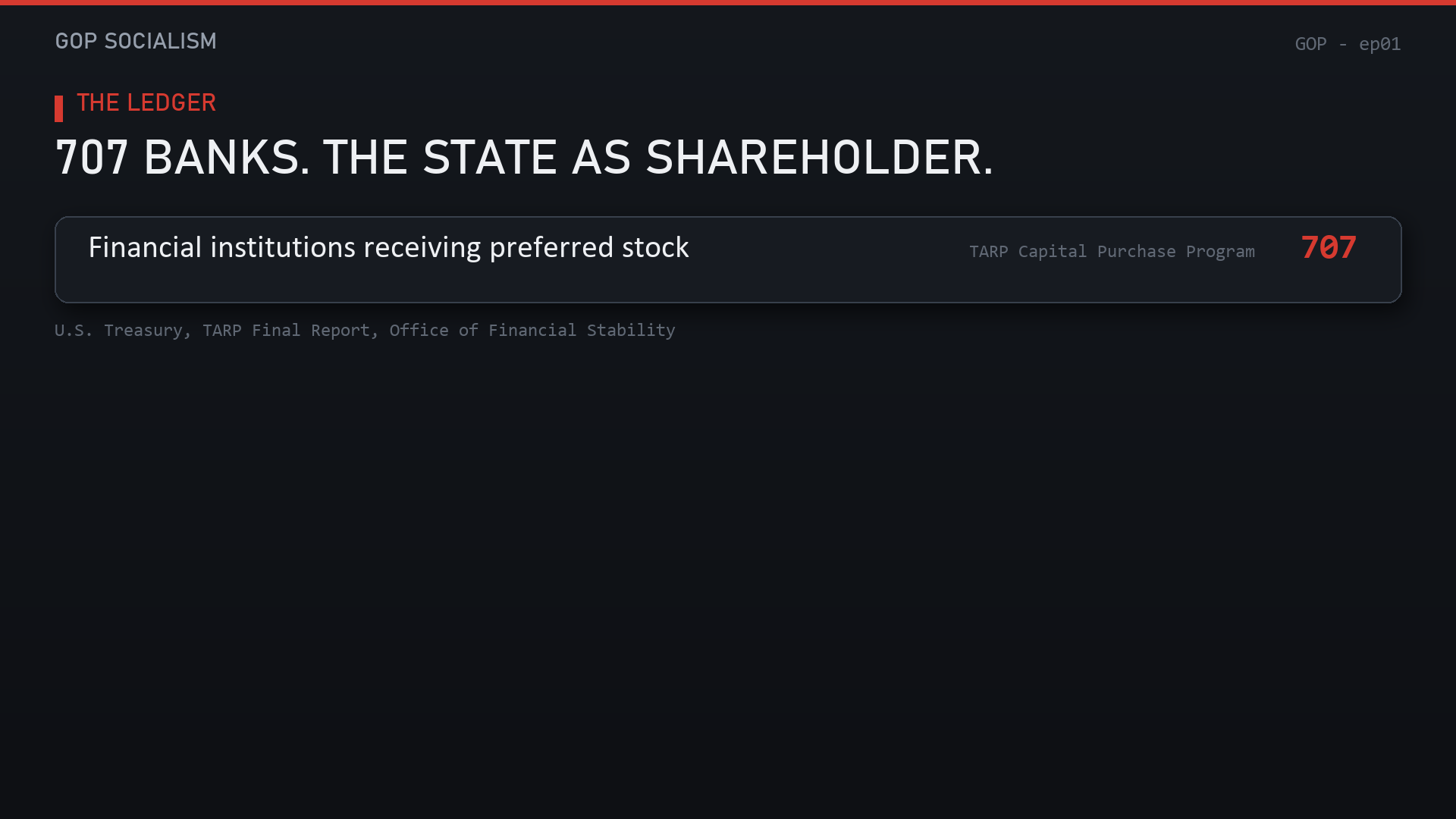
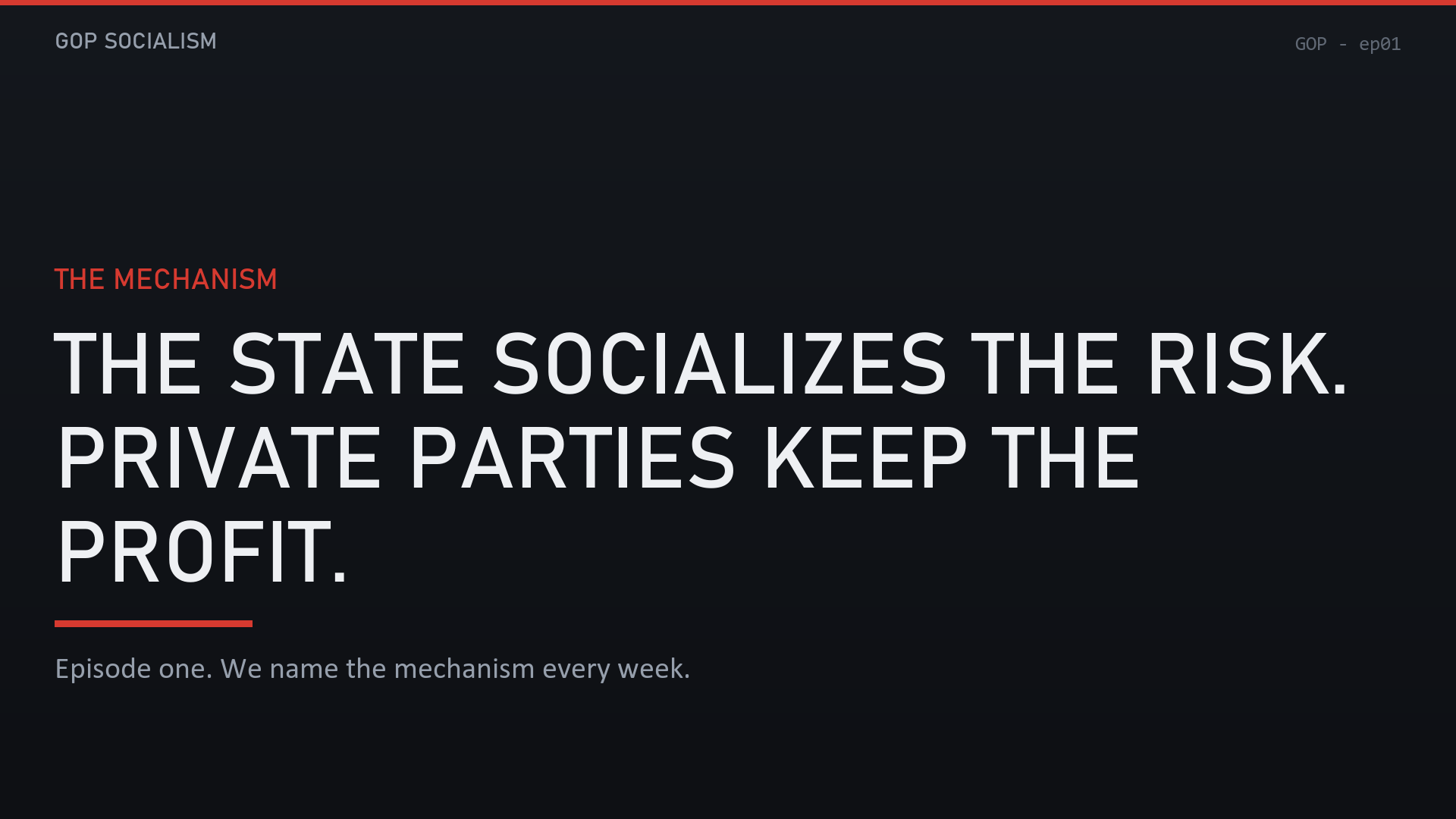
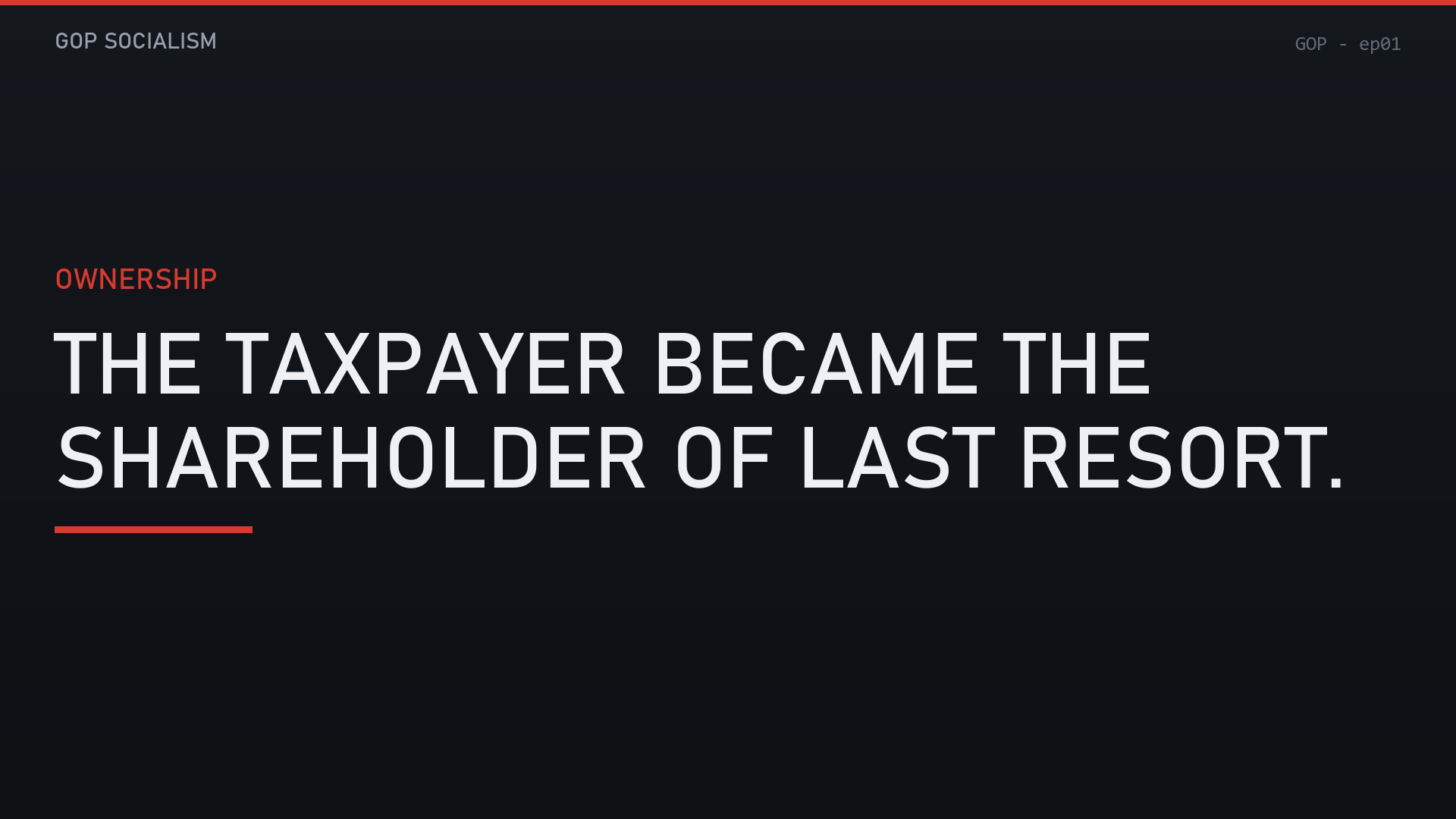
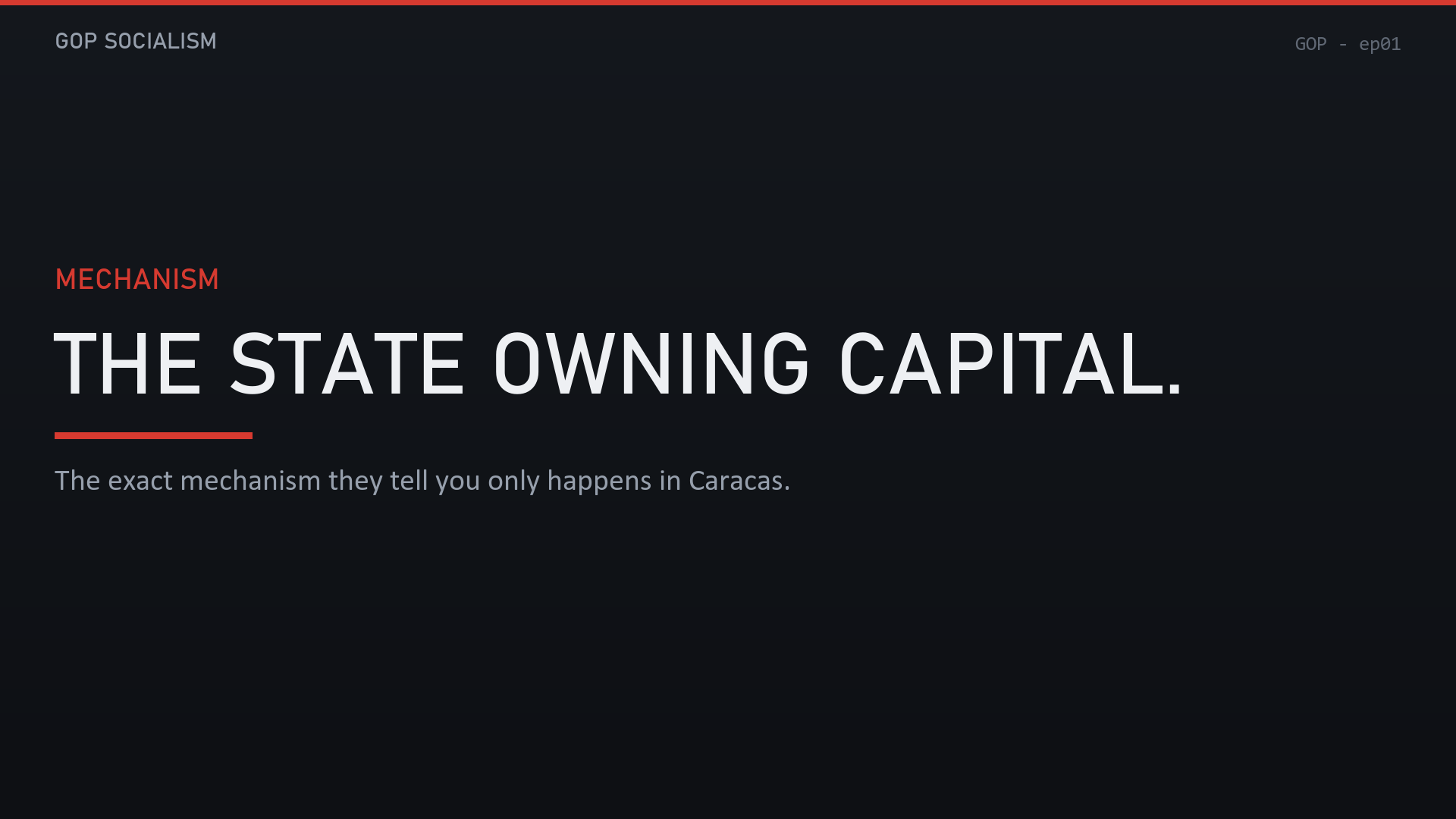
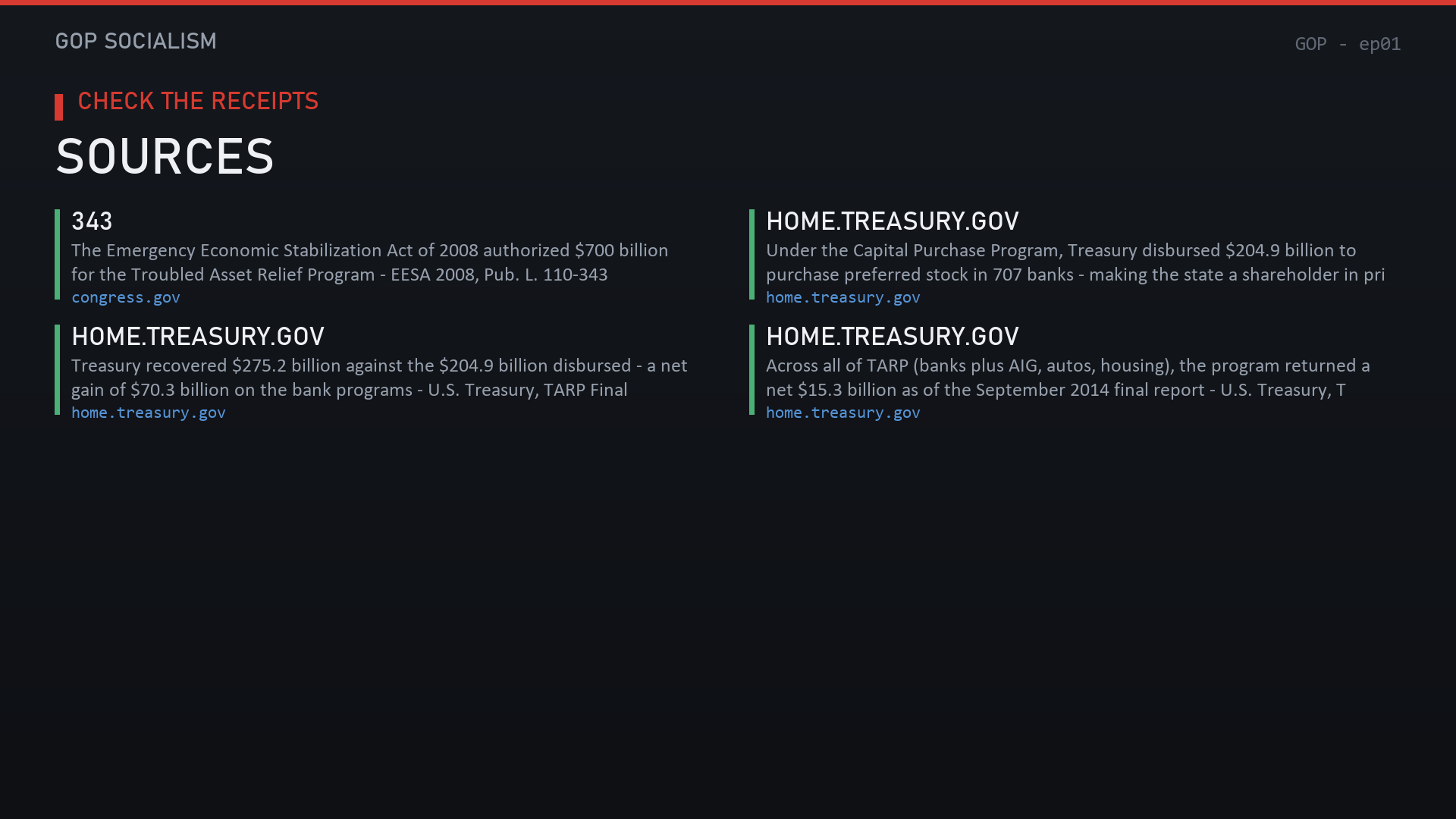
2008. The government did not lend to the banks — it bought them. The state became a shareholder in 707 banks, socialized the downside, and set the precedent for every equity stake Washington takes today.
Tier A · Capital Socialism Every number below traces to a primary receipt. Click through.
Watch
Rough cut preview · real assets, sequenced by the show's own shotlist order · not the final render.
Final edited long-form · runtime pending final render. Vertical and square cuts below play from the same file.
Shorts & cuts
The Visual Basis (37 real production stills)
Every frame below is an actual rendered beat from this episode's build — receipts, ledgers, quotes and act cards, plus the animated version where one exists. These are the raw material the cut is built from, not stock or AI-generated art.
The Story
September 2008. The nightly news says the banks are dying. What actually happens next never made it to prime time: the government doesn't lend the banks a dime. It buys them.
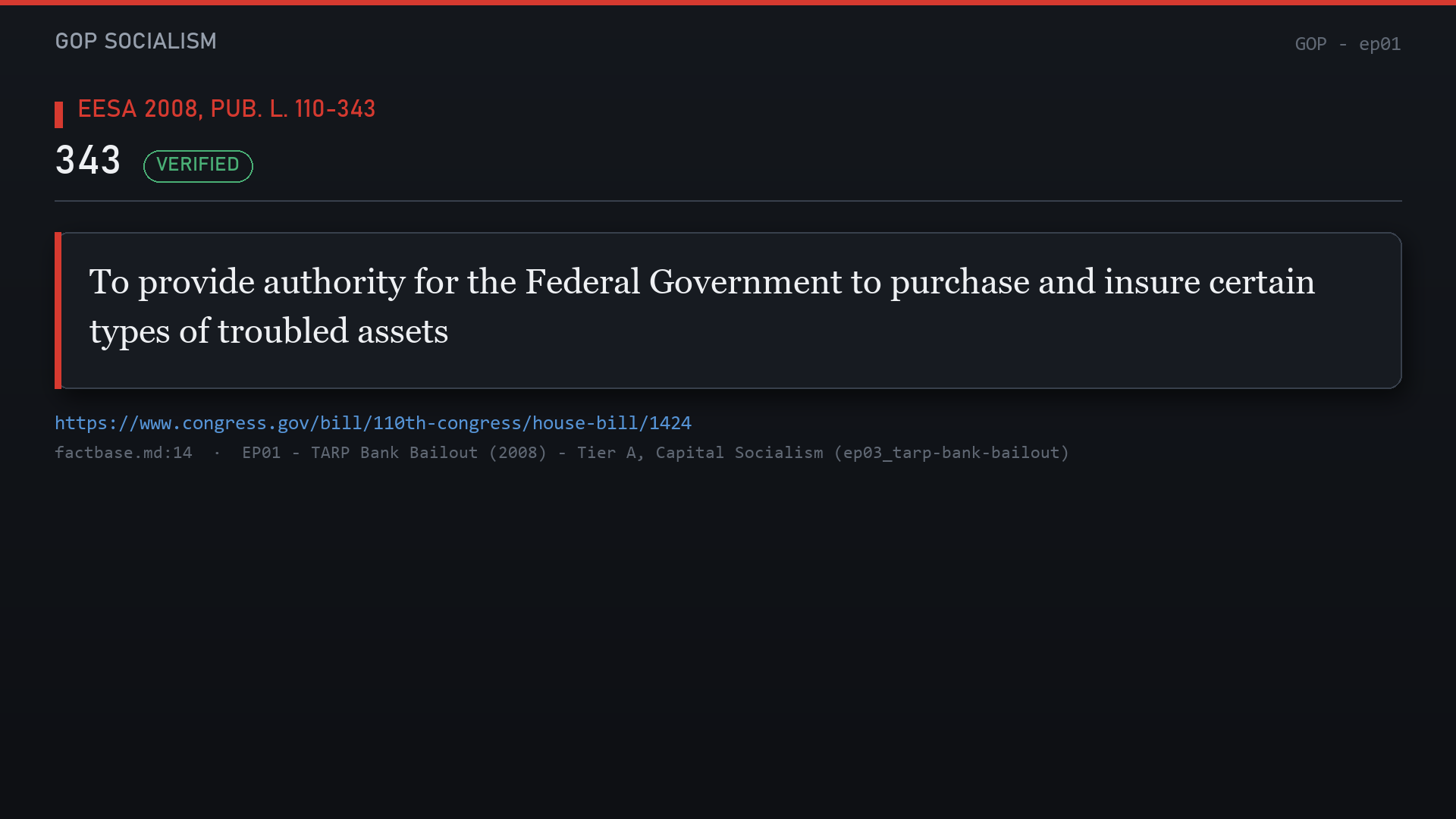
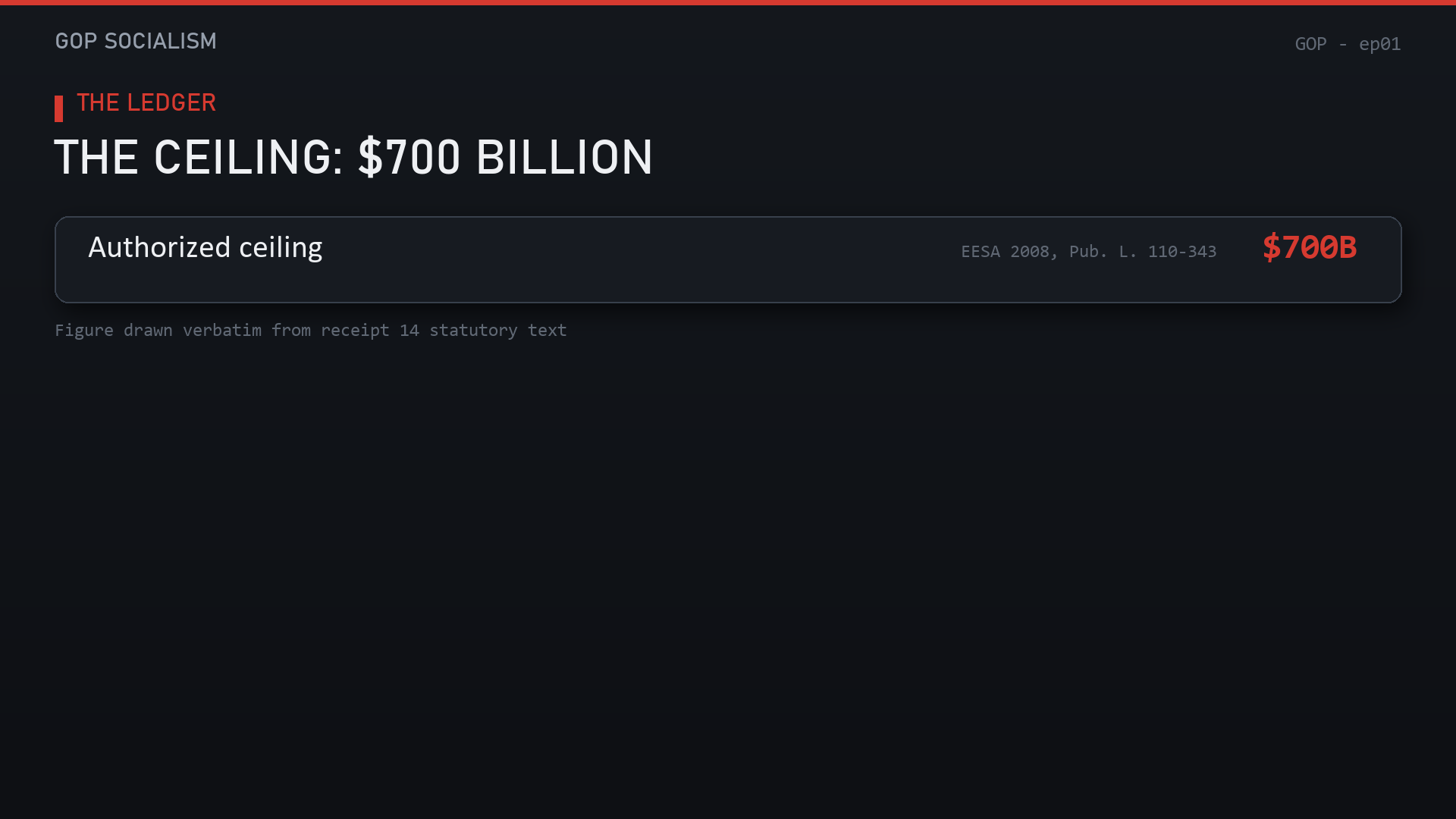
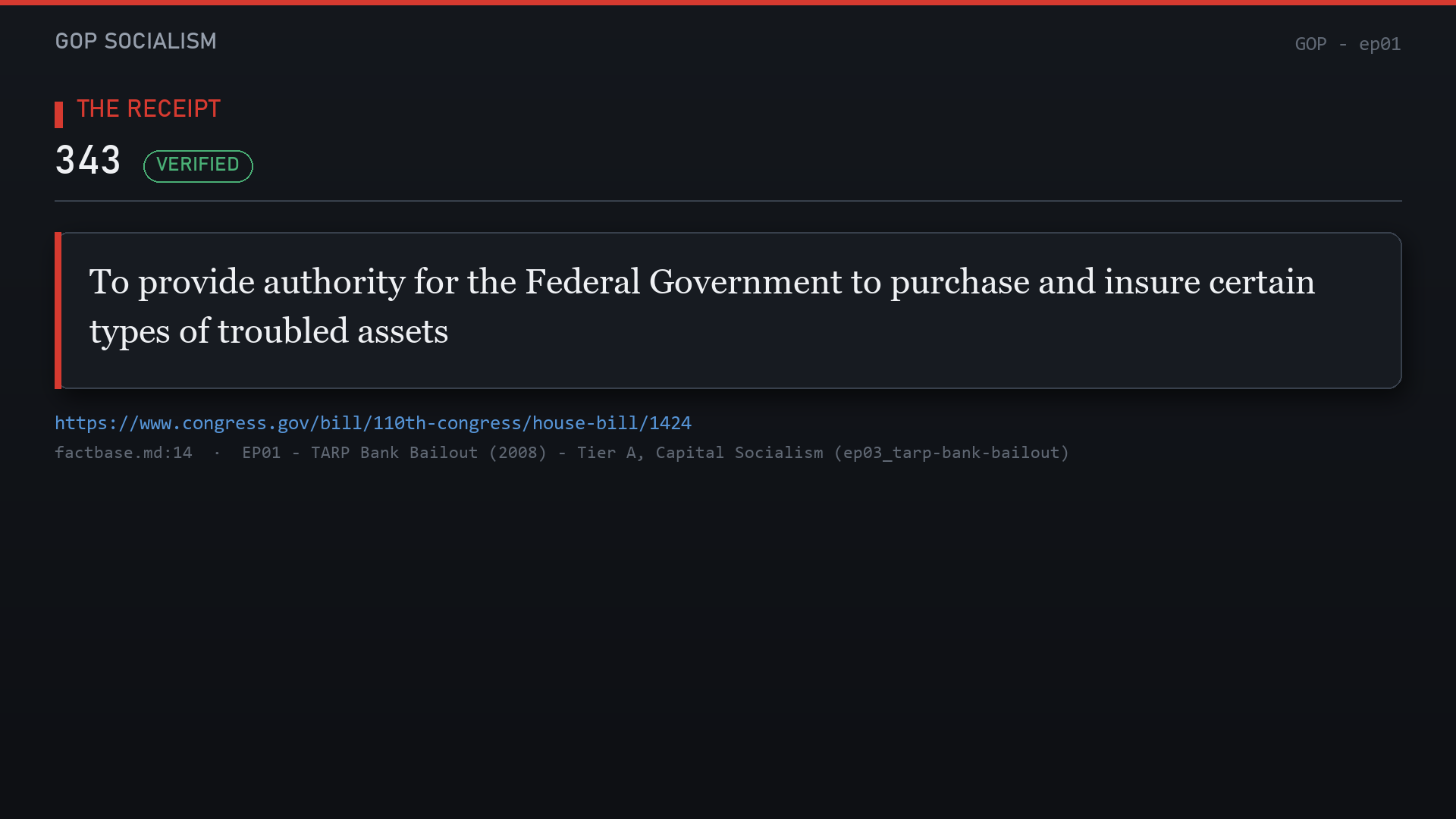
Nine days after the panic peaks, Congress hands the Treasury a blank check — $700 billion, the largest sum a legislature had authorized in a single bill, moving faster than most cities fix a pothole.
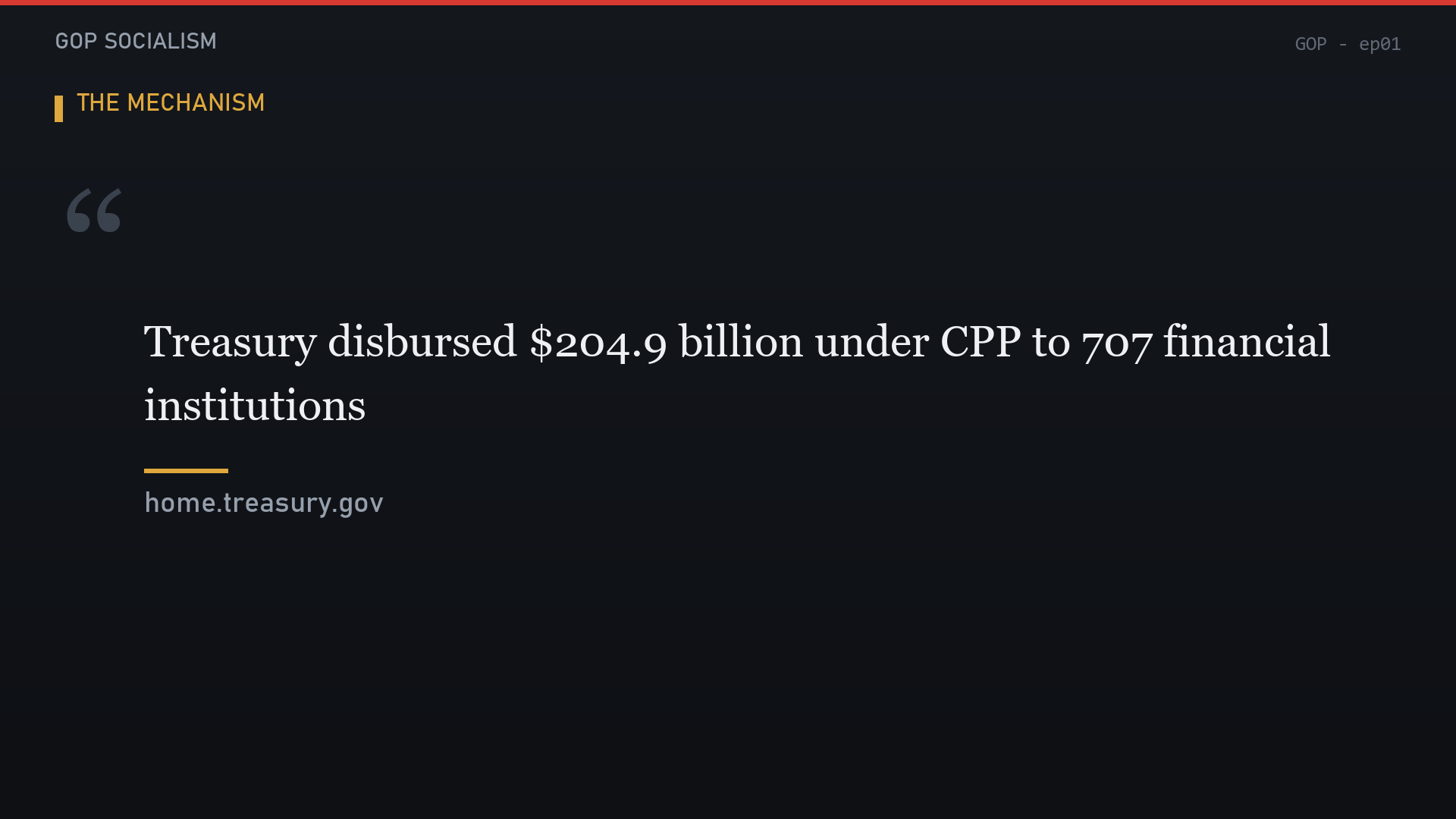
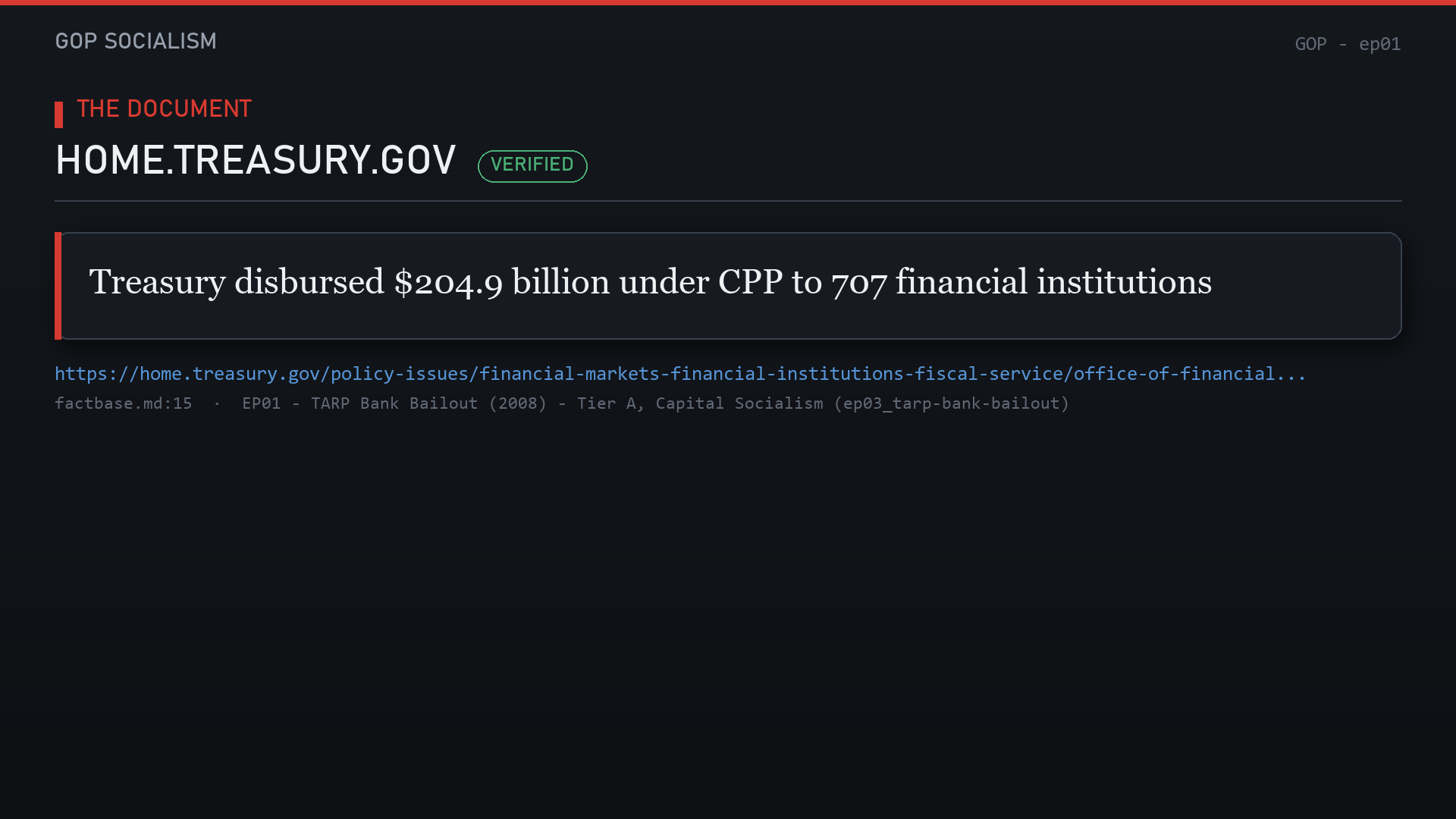
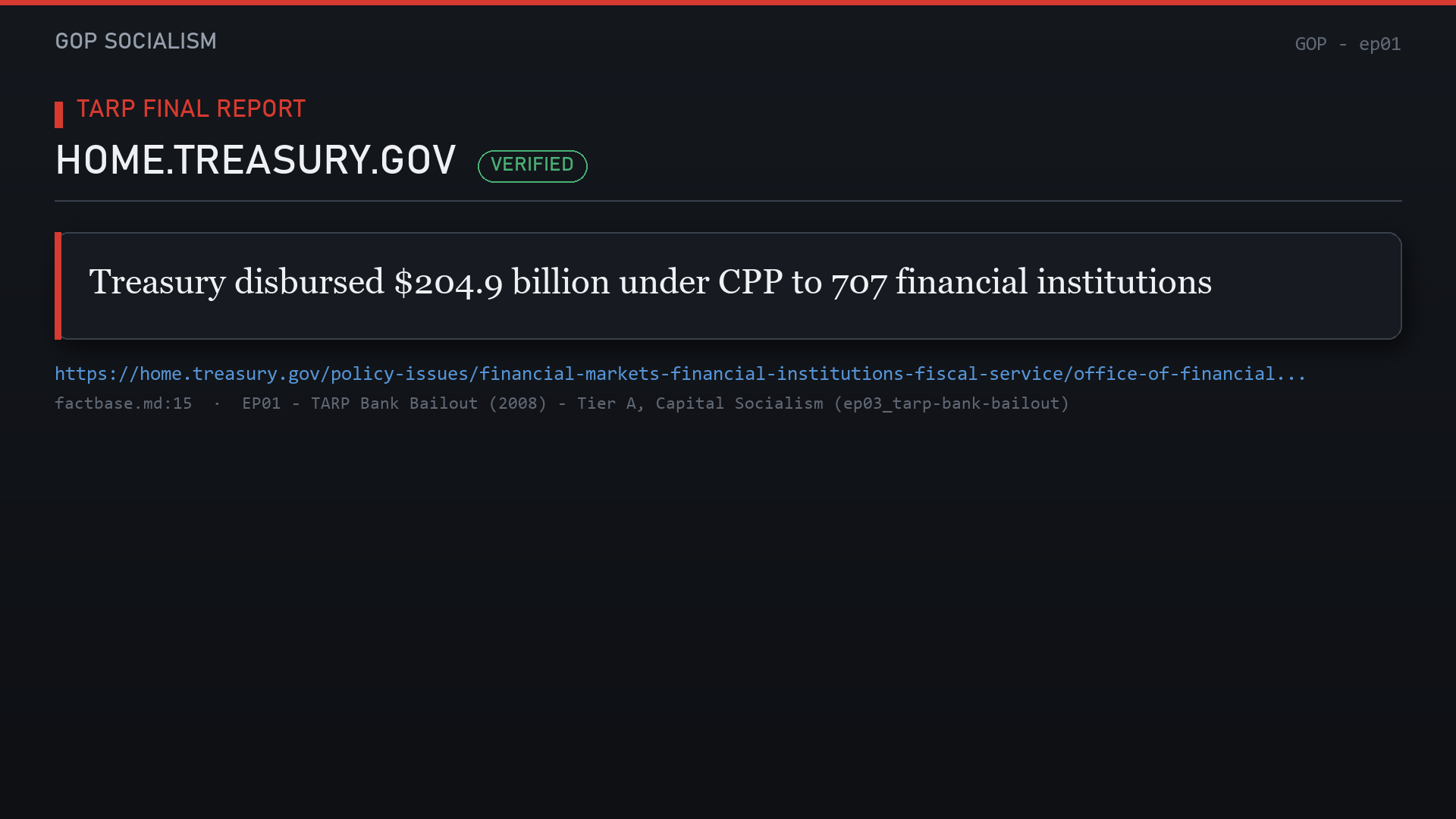
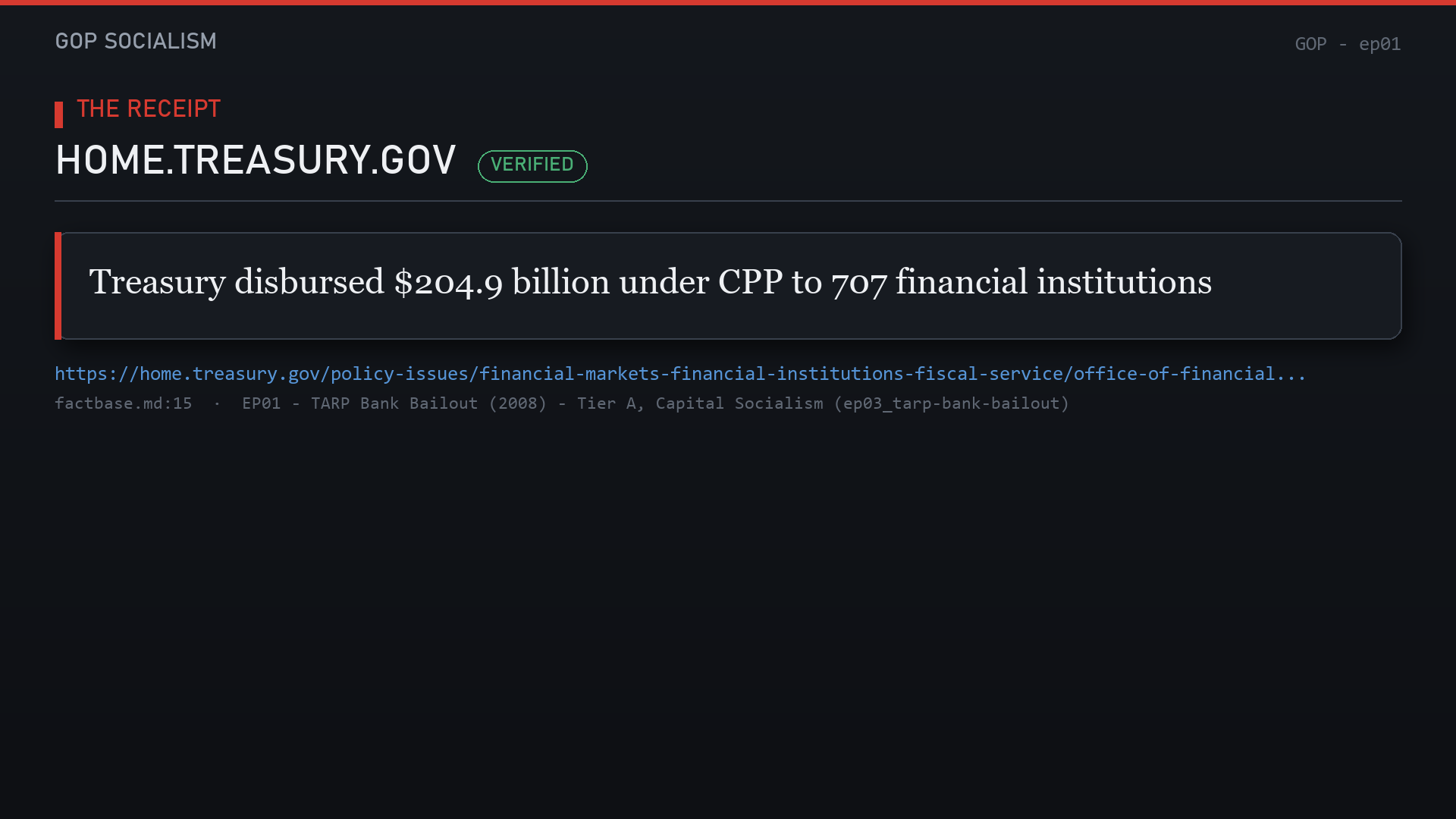
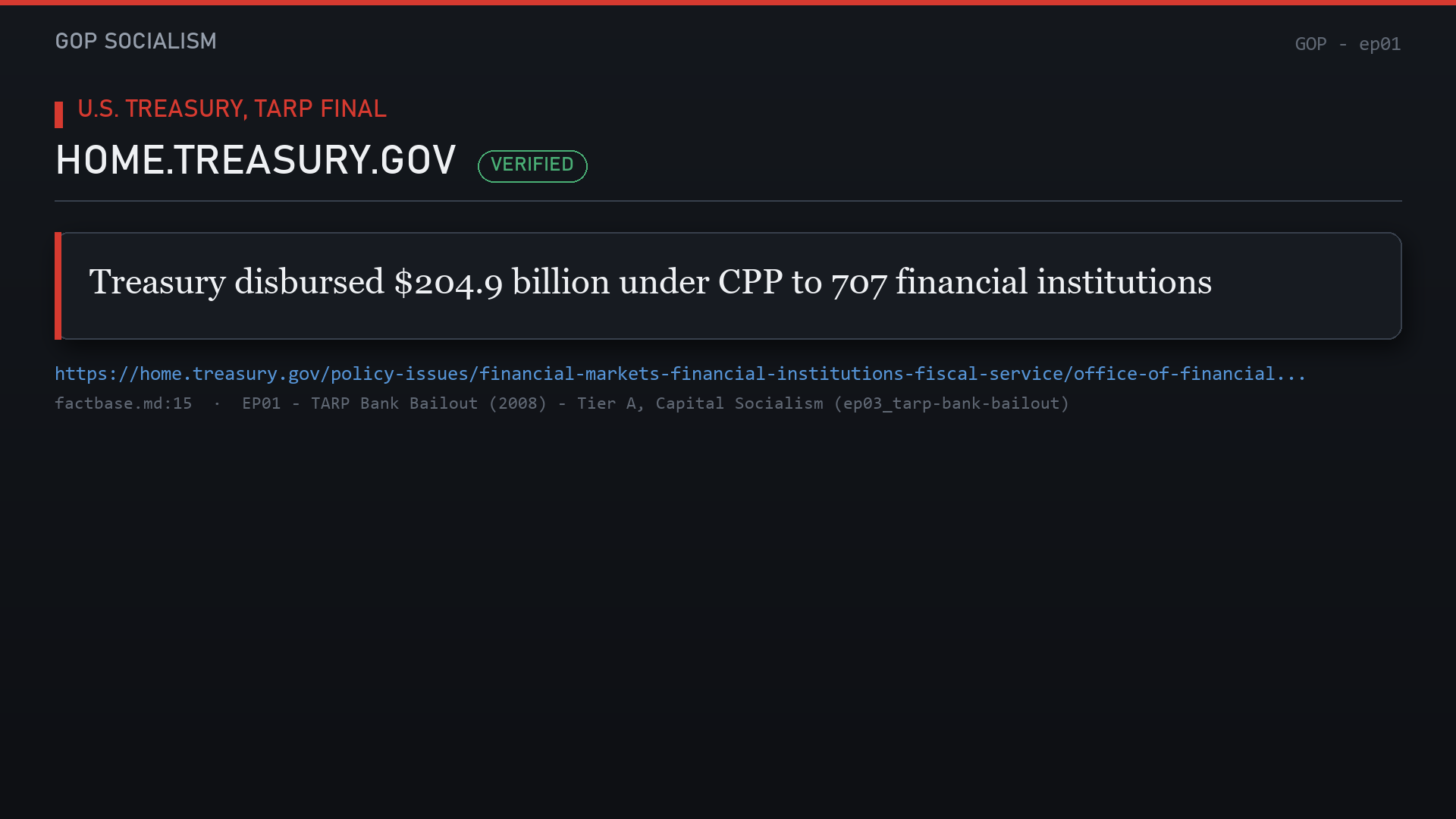
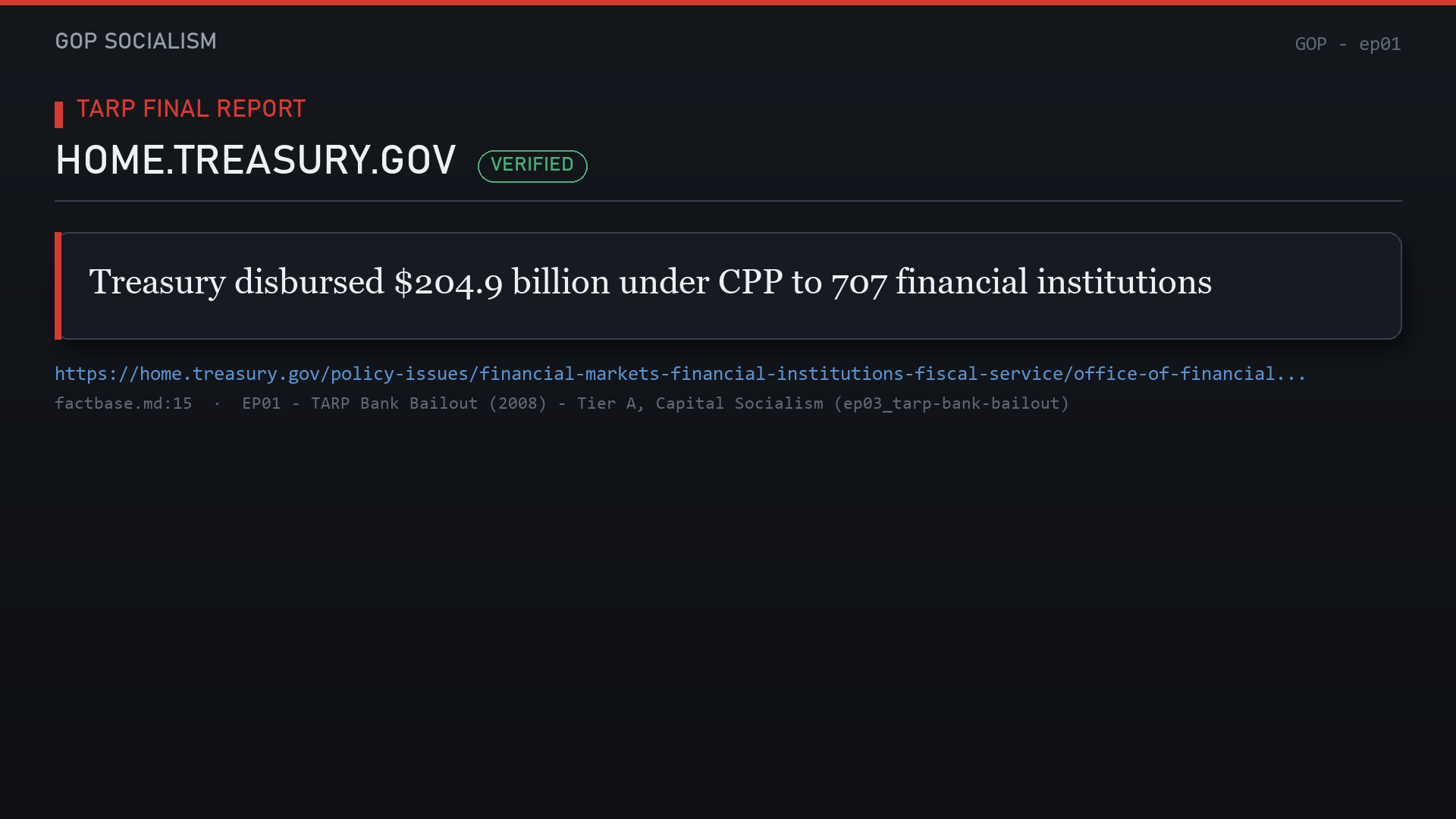
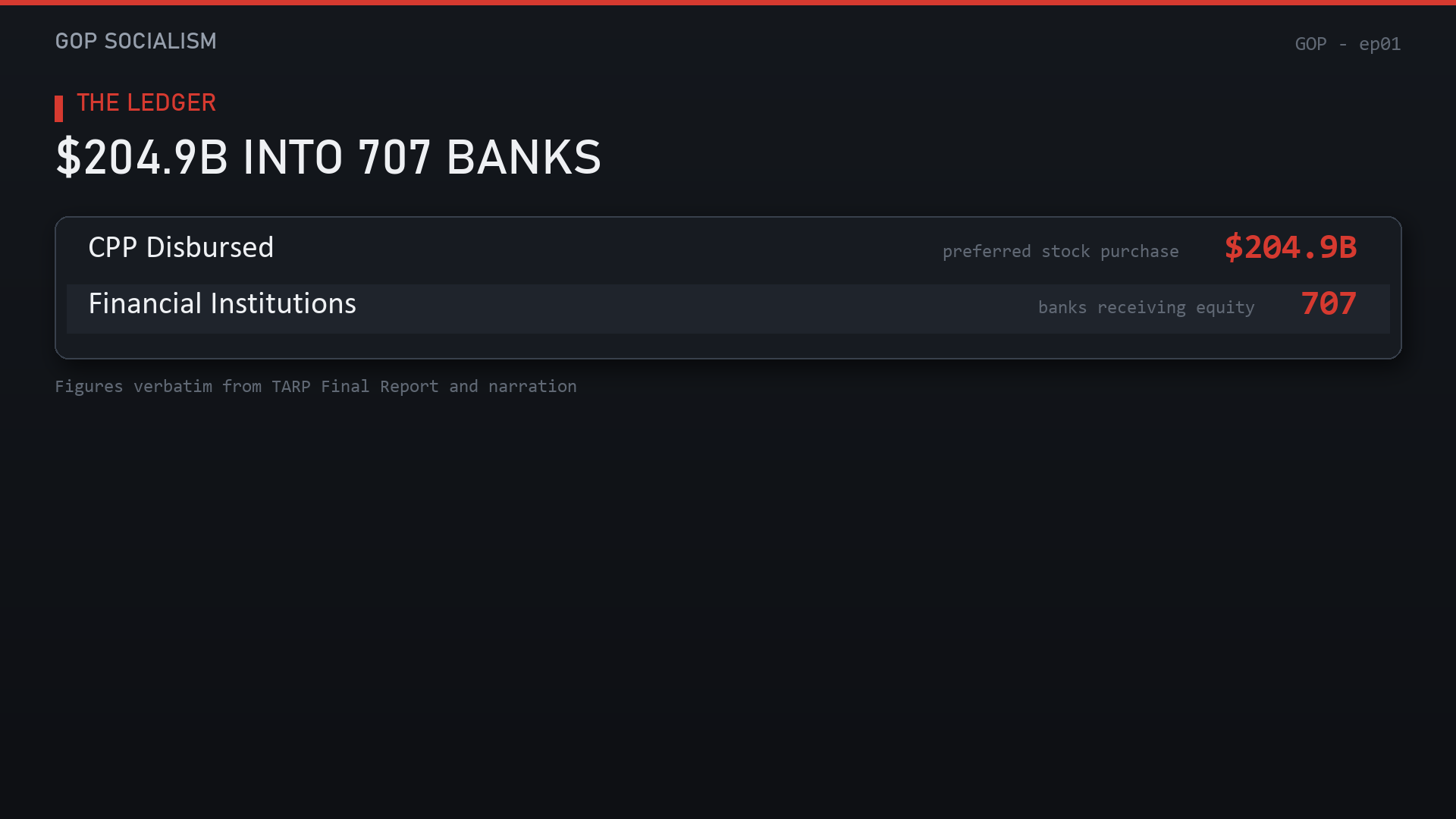
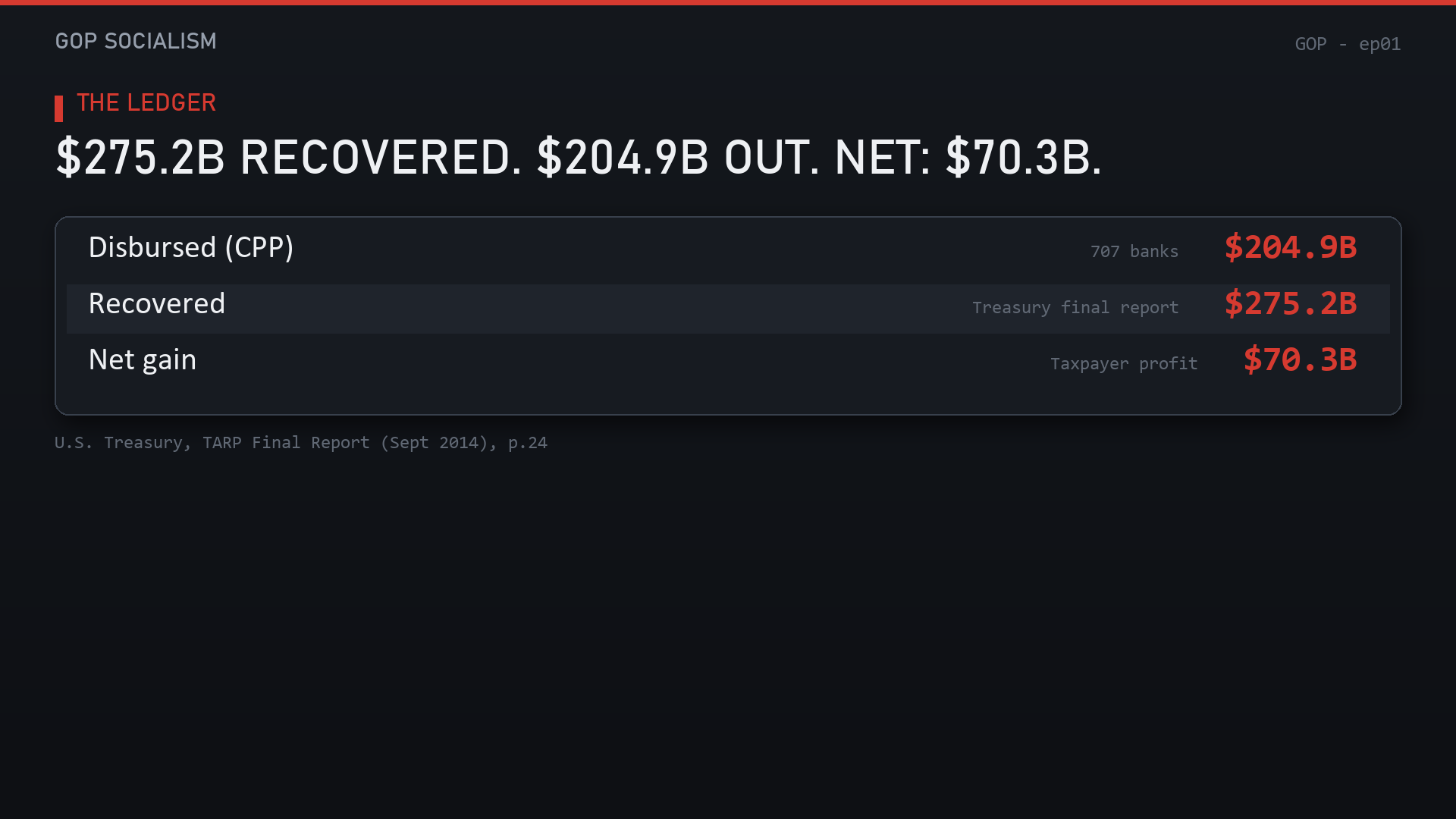
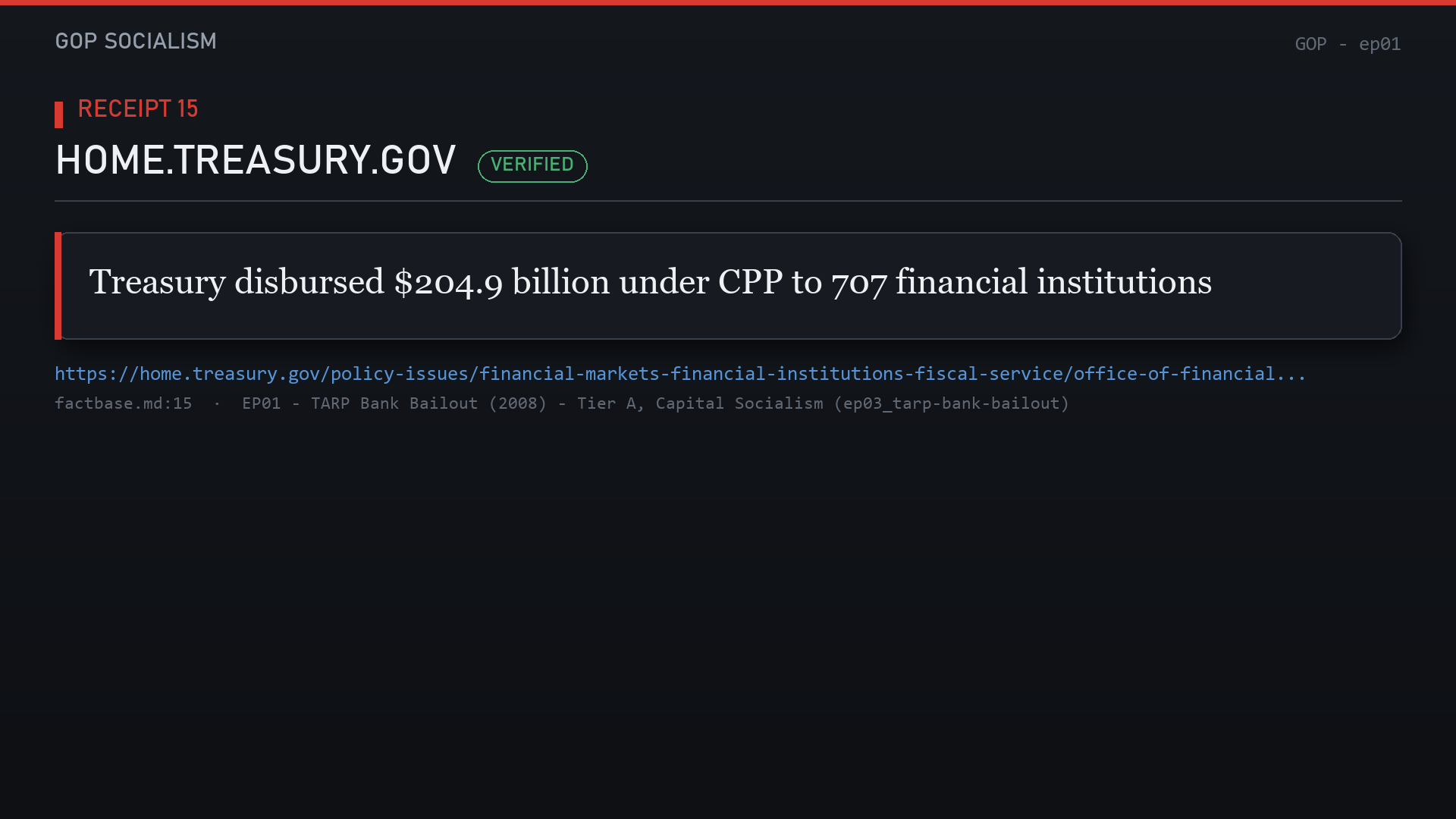
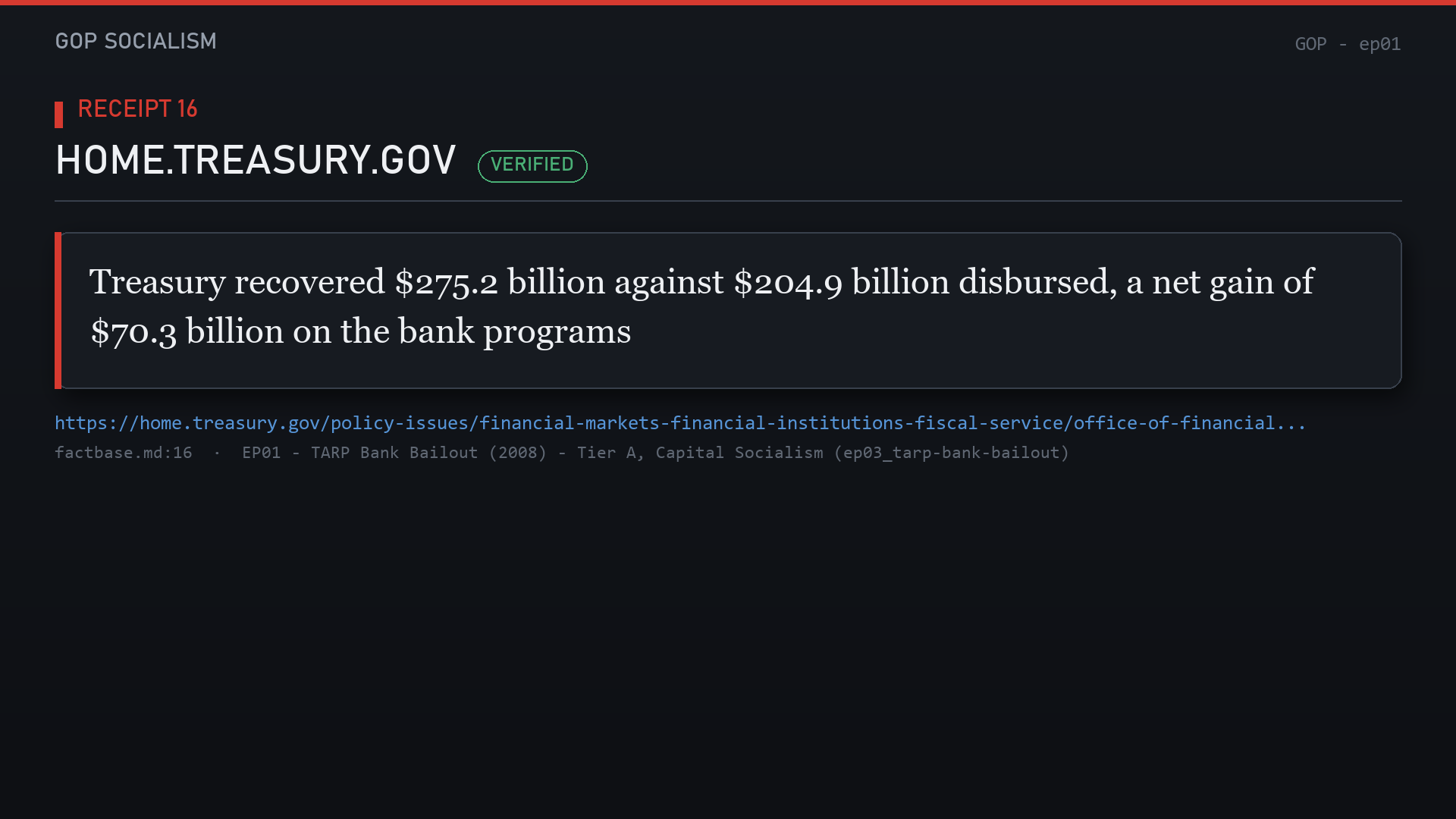
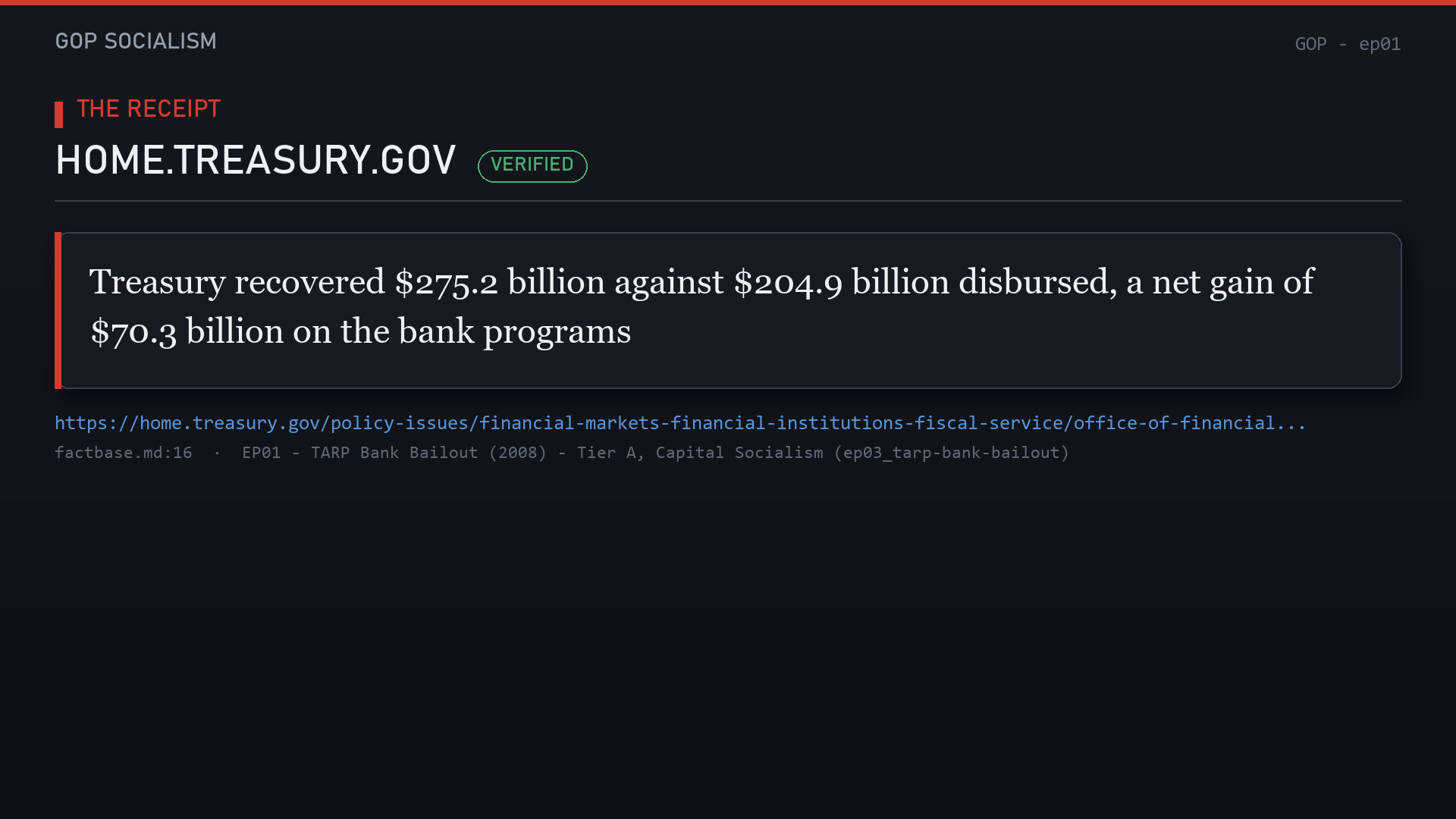
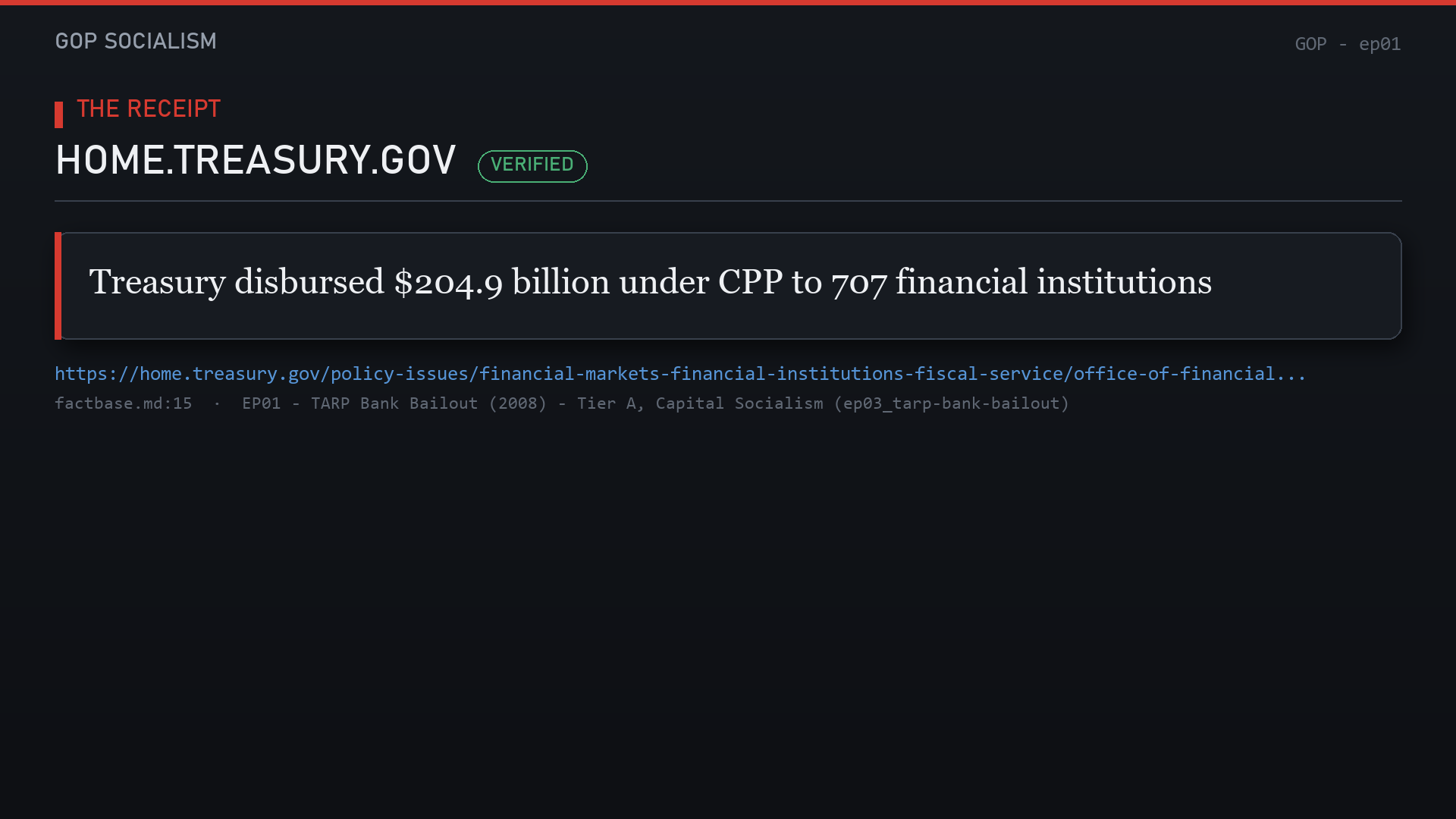
Treasury doesn't sit on it. $204.9 billion goes out to 707 banks — not as loans, as purchases. The United States government becomes a shareholder in the American banking system. You call your branch about a $35 overdraft fee; Washington called theirs and bought equity.
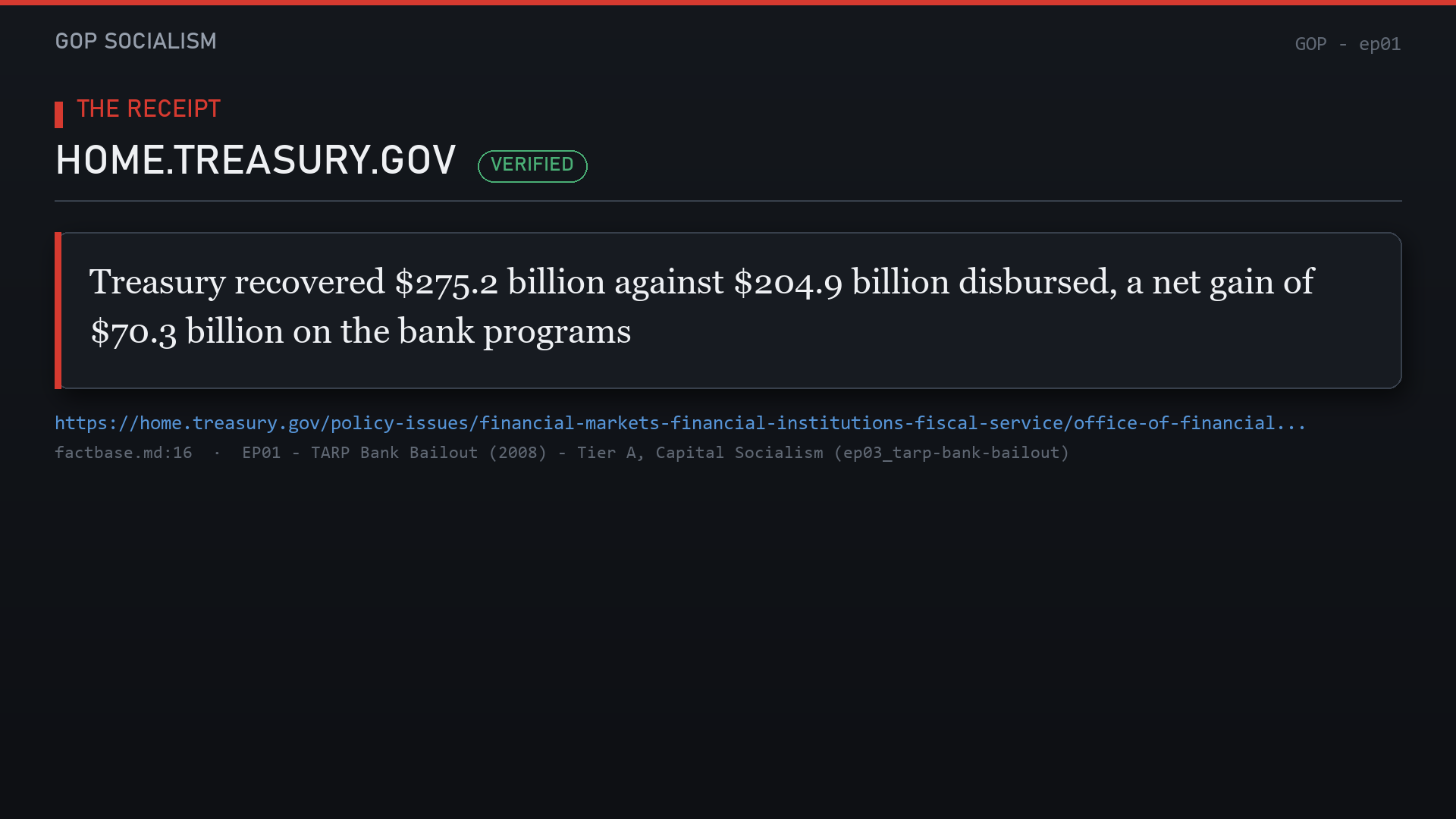
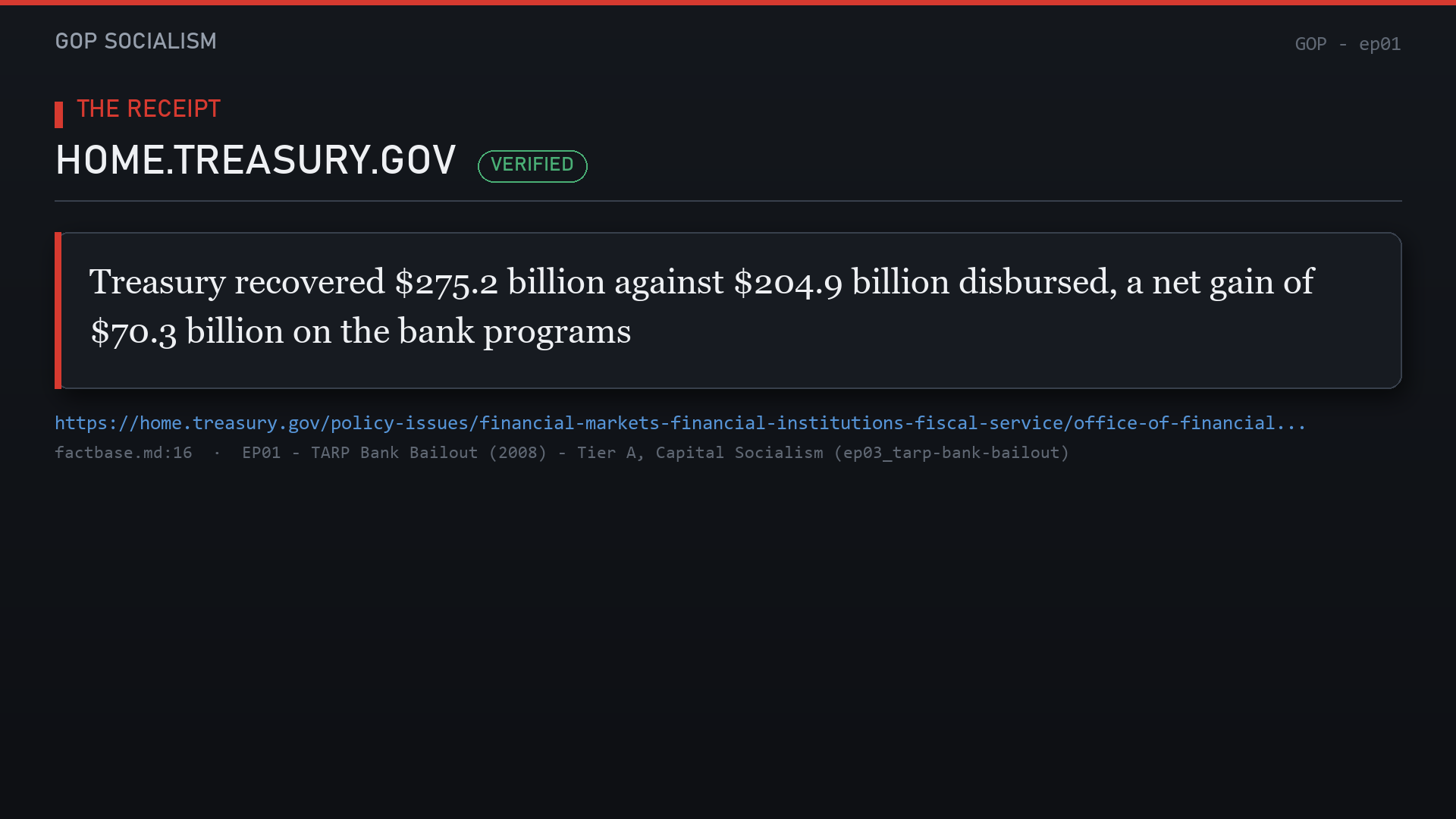
Here's the part that never makes the campaign ad: the state got its money back. $275.2 billion recovered — a $70.3 billion profit on paper. Taxpayers came out ahead. Profit does not make it not-socialism. Heads, the bank keeps the upside. Tails, the state was already standing by to eat the loss. That's not a coin flip — that's the house.
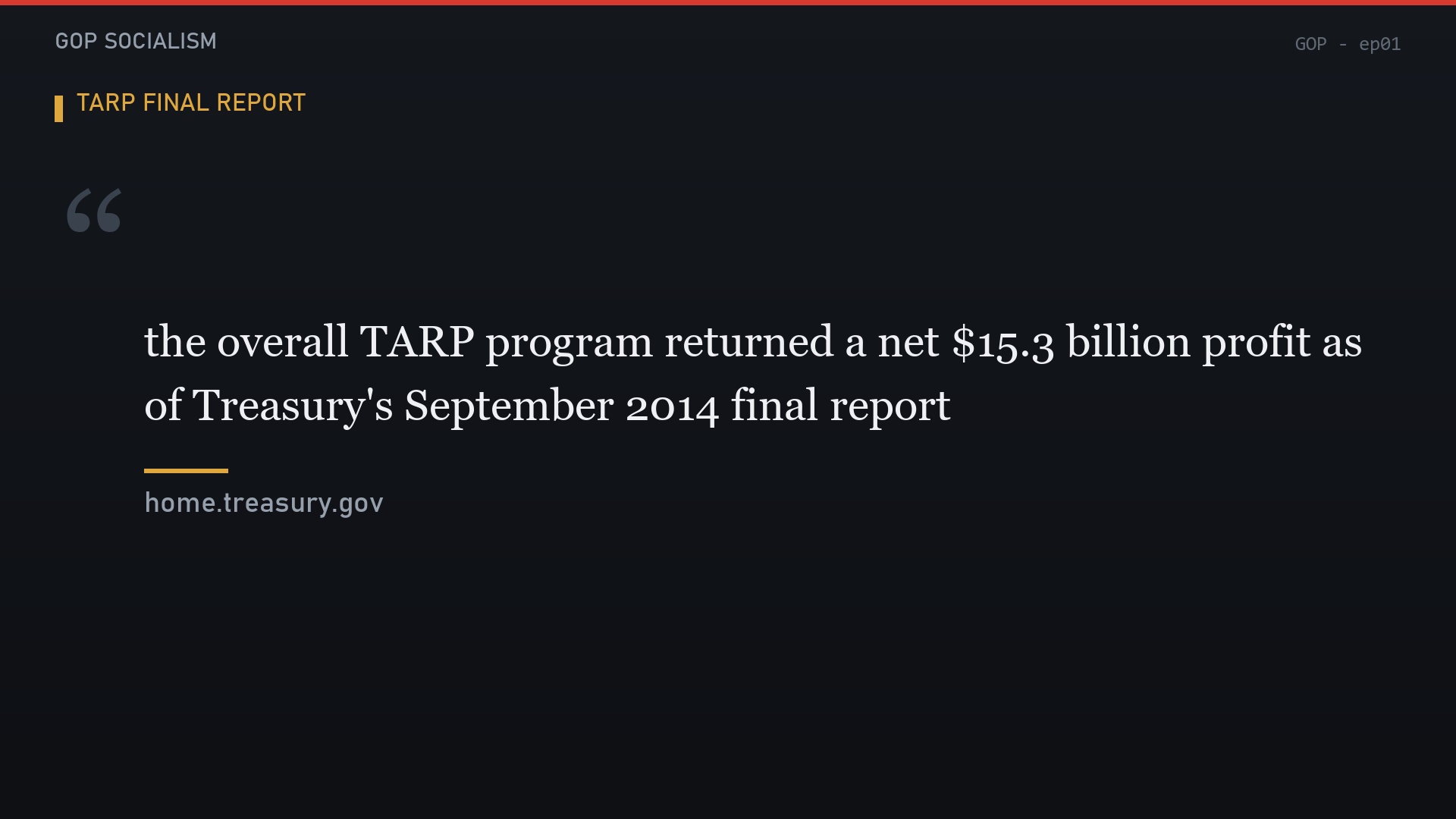
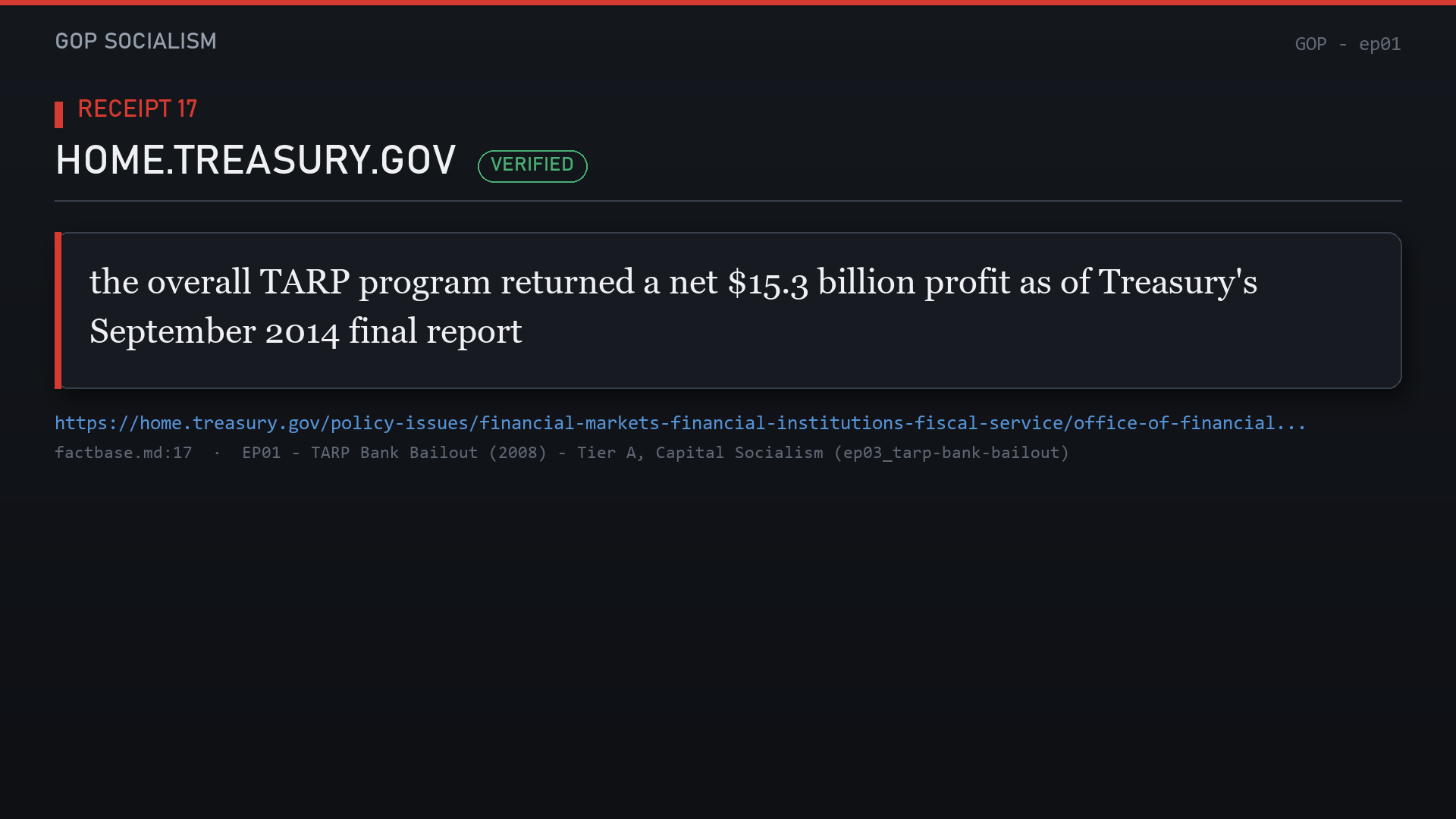
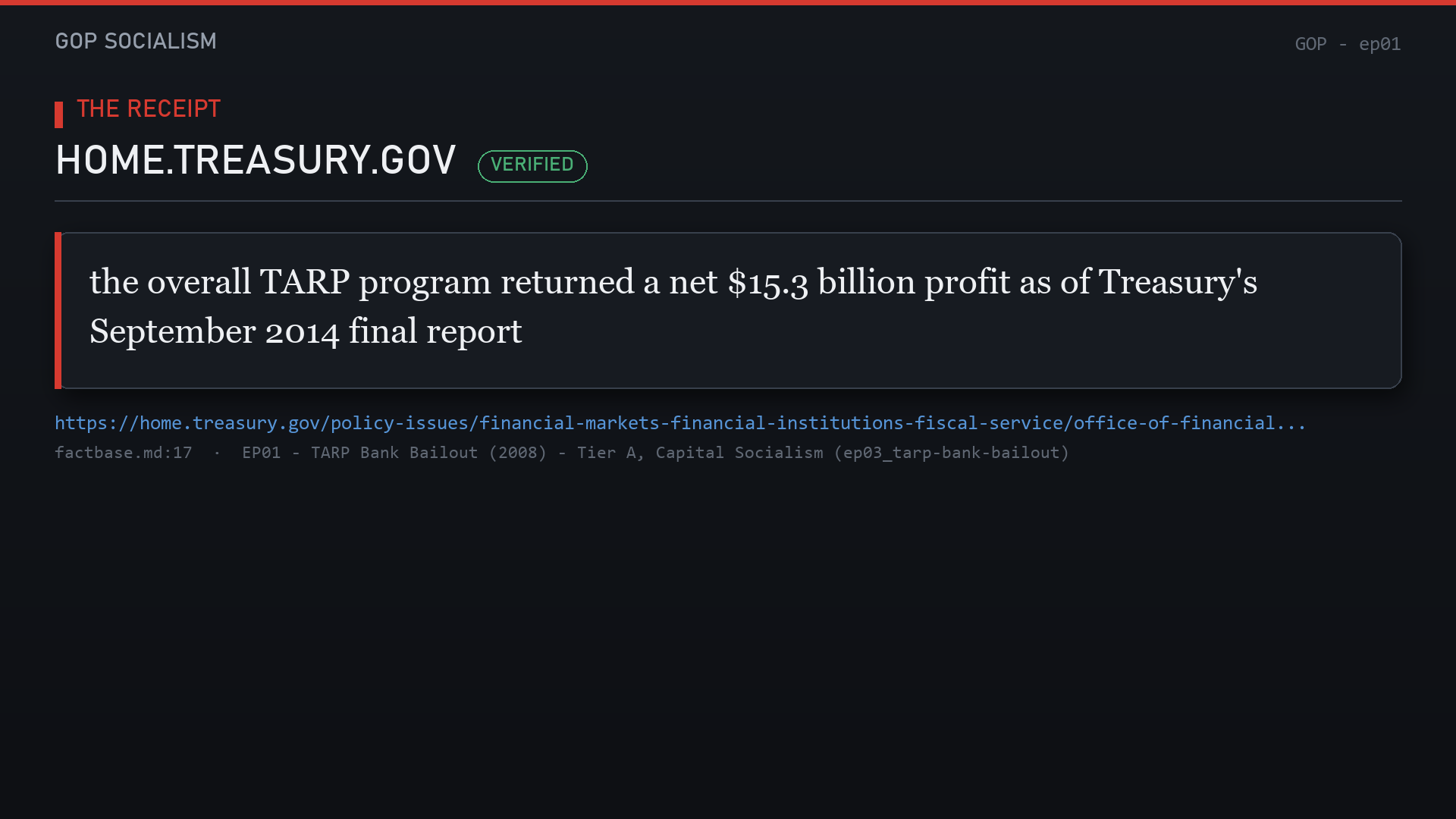
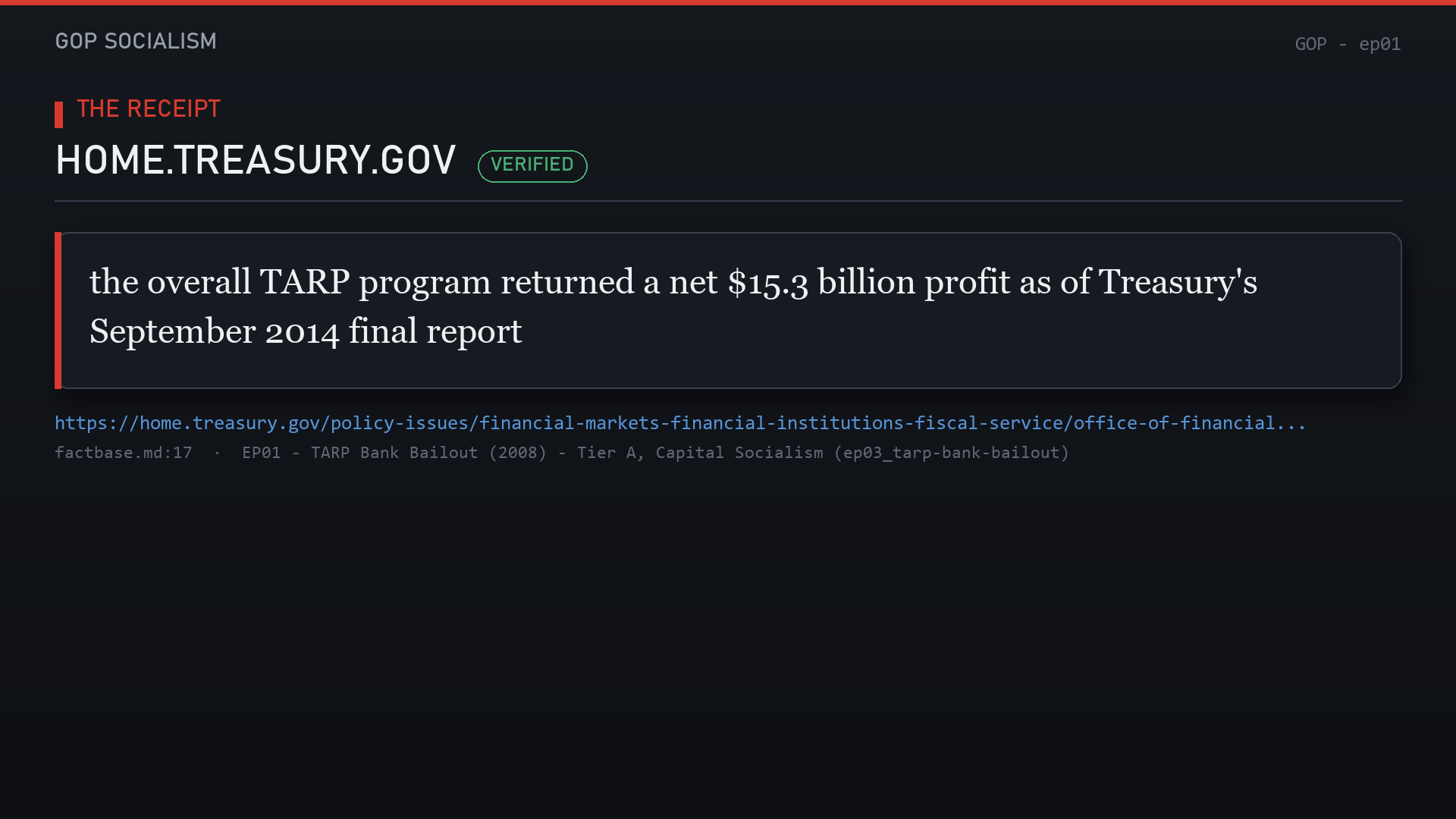
Zoom out and the whole program — banks, AIG, the automakers, housing — still nets +$15.3 billion. Congress will still call it a bailout. It may be the only investment fund in the country that turns a profit and gets treated like a scandal.
Receipts: EESA 2008 — Pub. L. 110-343 · U.S. Treasury, TARP Final Report (Sept 2014), incl. p.24.
The steelman
The strongest counter, aired straight: “TARP prevented a second Great Depression — and it turned a profit. This was emergency stabilization, not socialism.”
The rebuttal
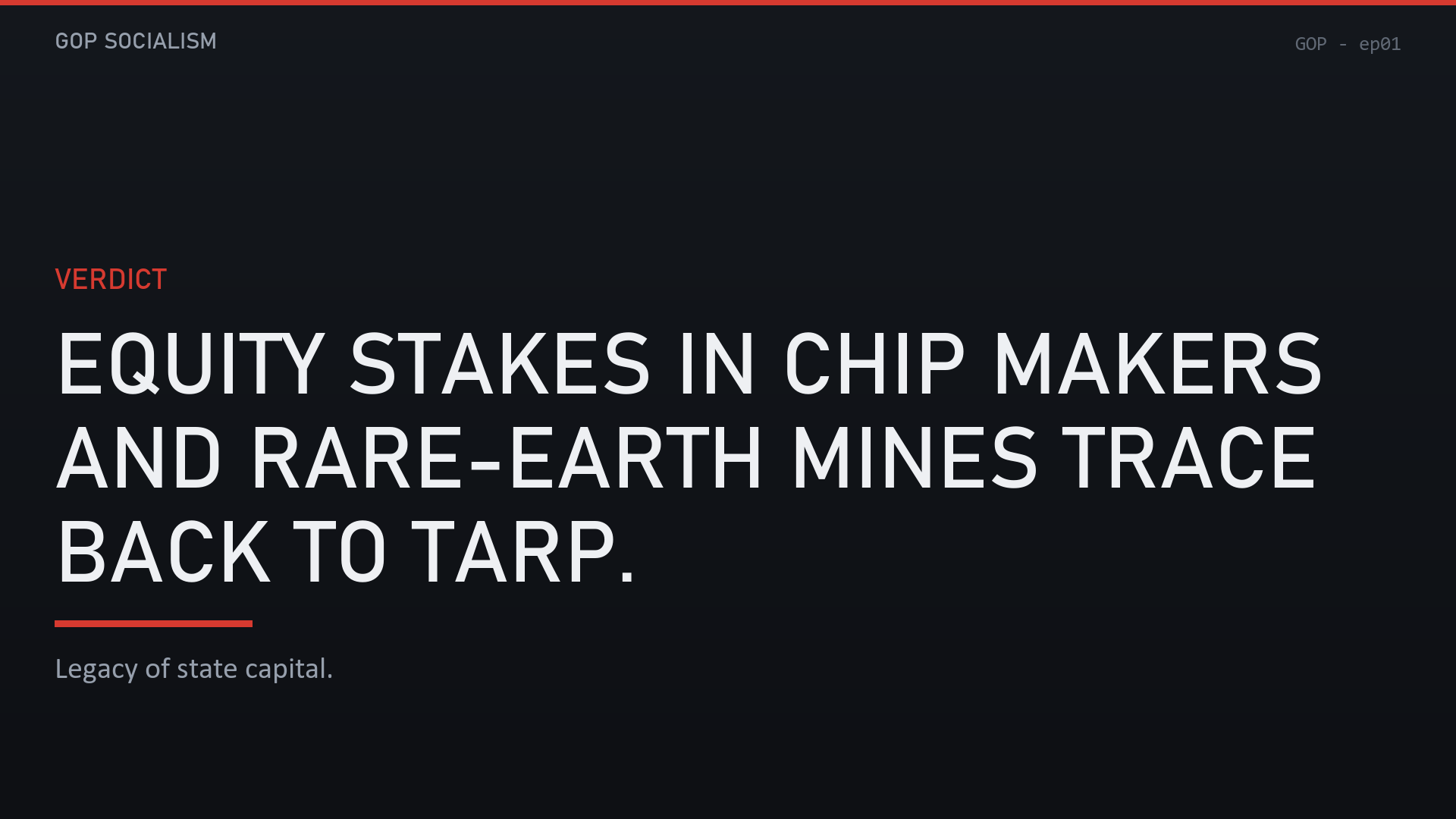
Maybe it prevented a depression. That is the argument for the outcome, not a rebuttal of the mechanism. The state socialized the banks’ losses and kept the option to profit — and it set the precedent for today’s equity stakes in Intel, MP Materials, and the rest. The question is never “did it work.” It is who held the risk while it was being decided. Nobody asks a hostage if the ransom "worked."
Socialism for the well-connected. Capitalism for the poor.
Documents Used to Produce This Episode
Full production materials (internal — scripts, shot lists, raw renders) →