Talarico: Policies Great for Texas · Episode 02 of 8 · Election Collection
Trickle-Down Is Theft: The Wage Floor and the Rig
Seventeen years at $7.25. Texas has no state minimum wage — it defaults to the federal floor by never setting one of its own. MIT's Living Wage Calculator measures the gap; Talarico calls it theft and names the mechanism he says keeps the floor frozen.
Texas Senate 2026 Every number below traces to a named outlet and a date. Click through.
Watch
Rough cut preview · real assets, sequenced by the show's own build order · canon narration runs ~8.9 min · not the final render.
Shorts & cuts
The Visual Basis (29 real production stills)
Every frame below is an actual rendered beat from this episode's build — receipts, act cards, and the closing wall — plus the animated version where one exists. These are the raw material the cut is built from, not stock or AI-generated art.




The Story
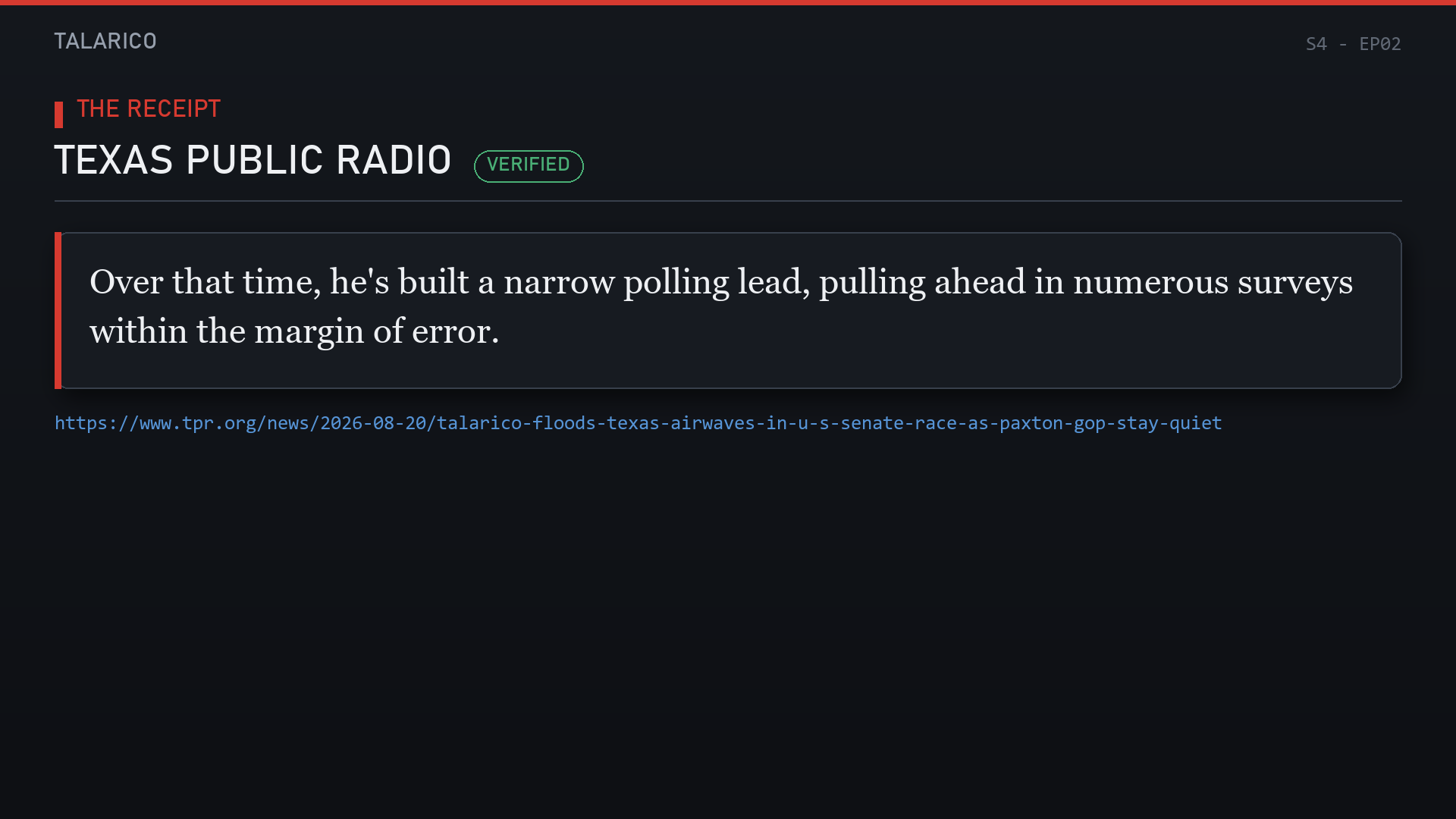
Seventeen years. That's how long Texas has held its minimum wage at $7.25 an hour — not because the state set it there, but because Texas never set one at all. Per the National Conference of State Legislatures: Texas has no state minimum-wage law and defaults to the federal Fair Labor Standards Act floor of $7.25 per hour. A 2009 federal statute is still setting 2026 wage policy in the second-largest economy in the country — not because Congress acted, but because Austin never has.
The yardstick for what that floor should be comes from MIT's Living Wage Calculator, in its own words: "We developed the Living Wage Calculator to help individuals, communities, employers, and others estimate the local wage rate that a full-time worker requires to cover the costs of their family's basic needs where they live." Basic needs — housing, food, childcare, medical, transportation, taxes, not streaming subscriptions. This episode does not read out specific city-level dollar figures; the calculator is built city by city and that fetch has not been pulled. That gap is named here rather than guessed at.
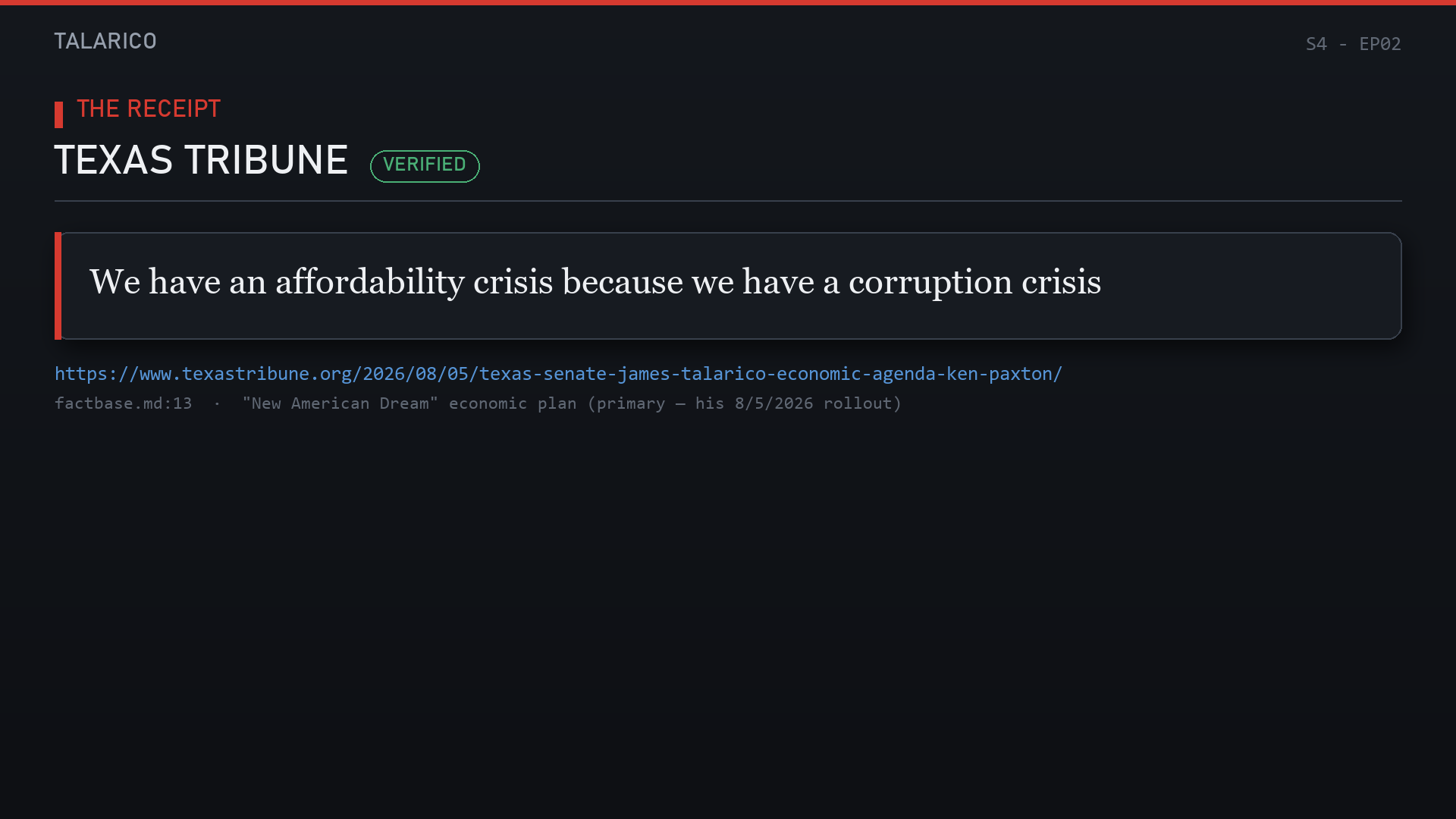
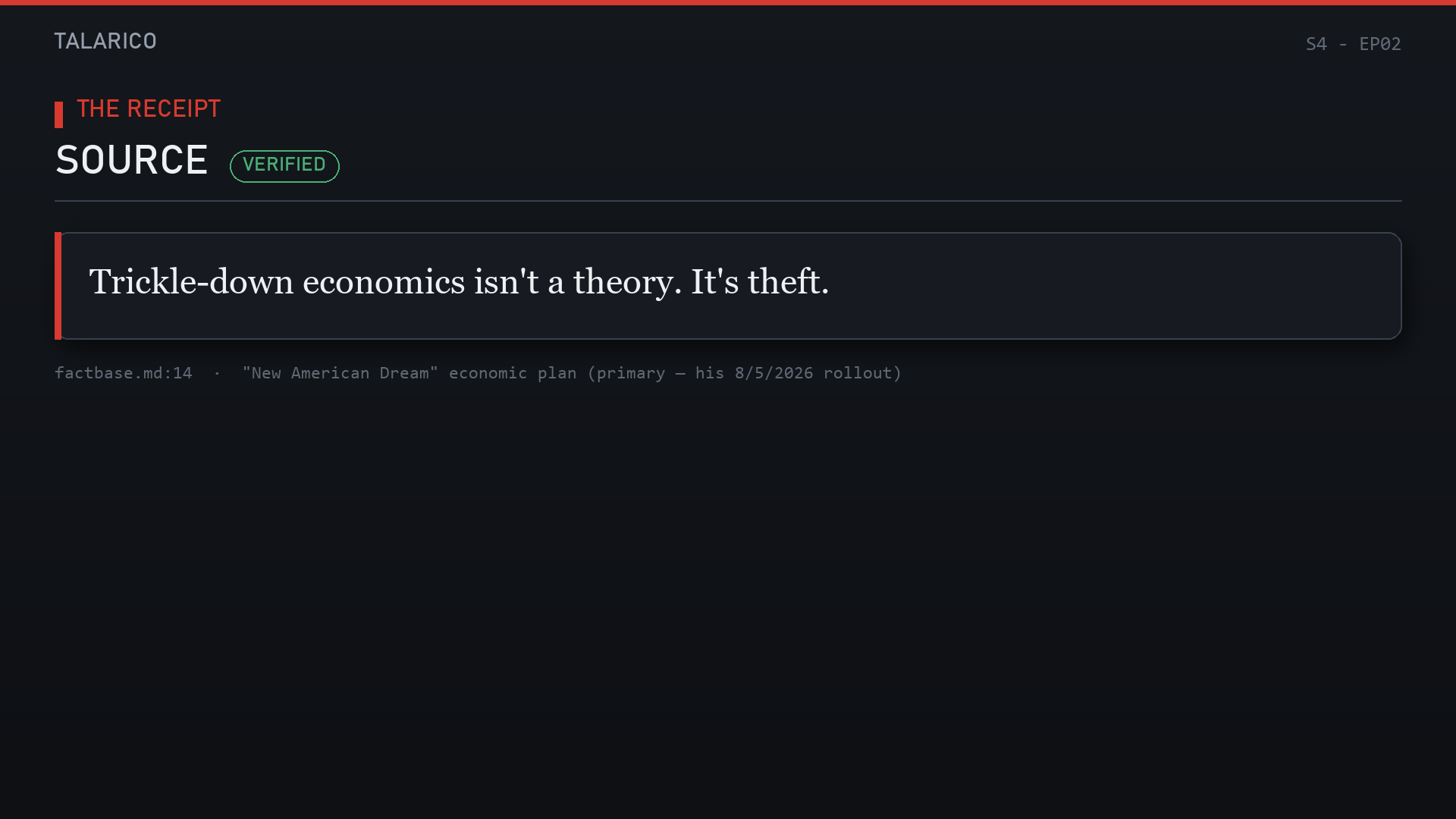
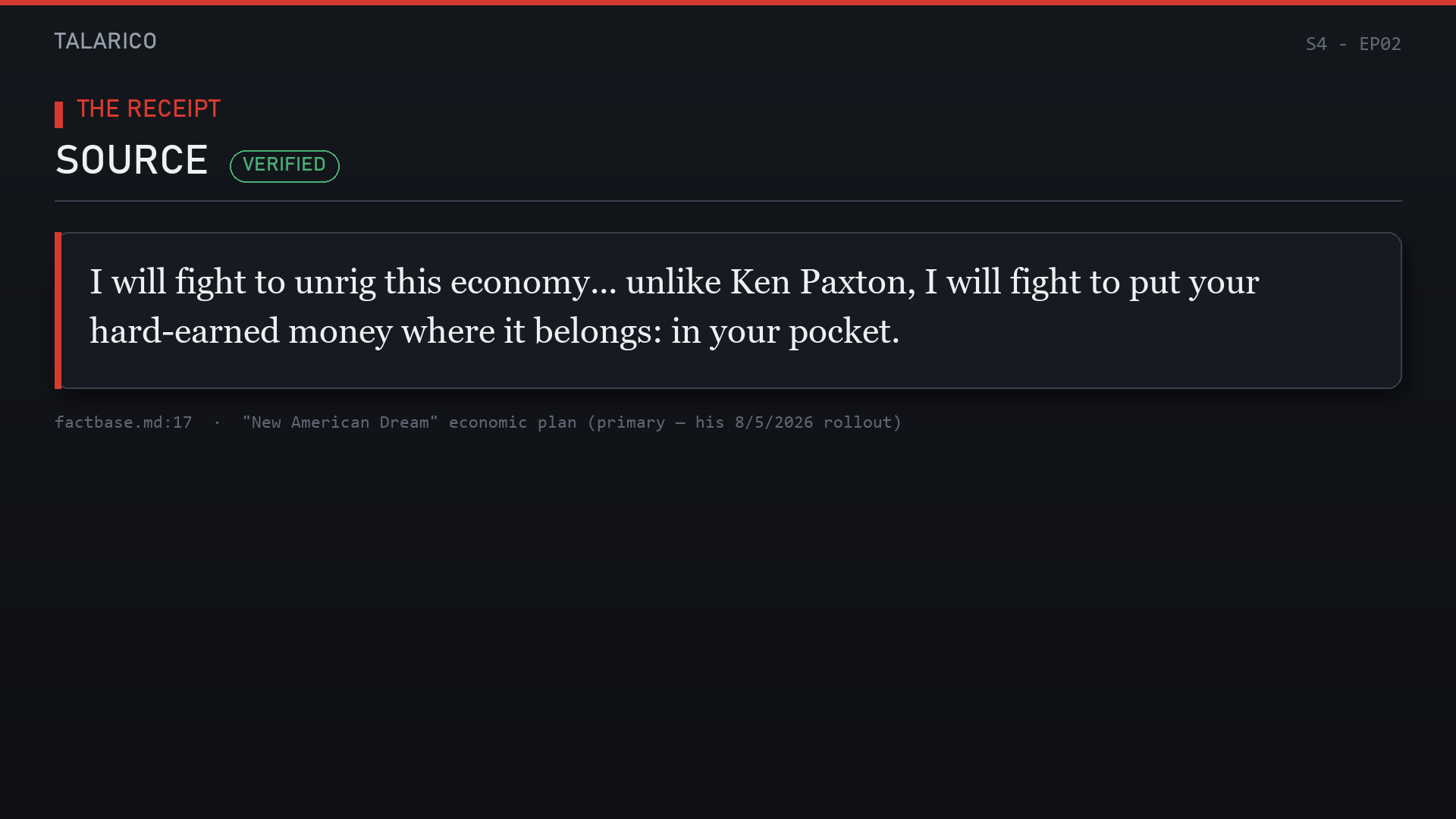
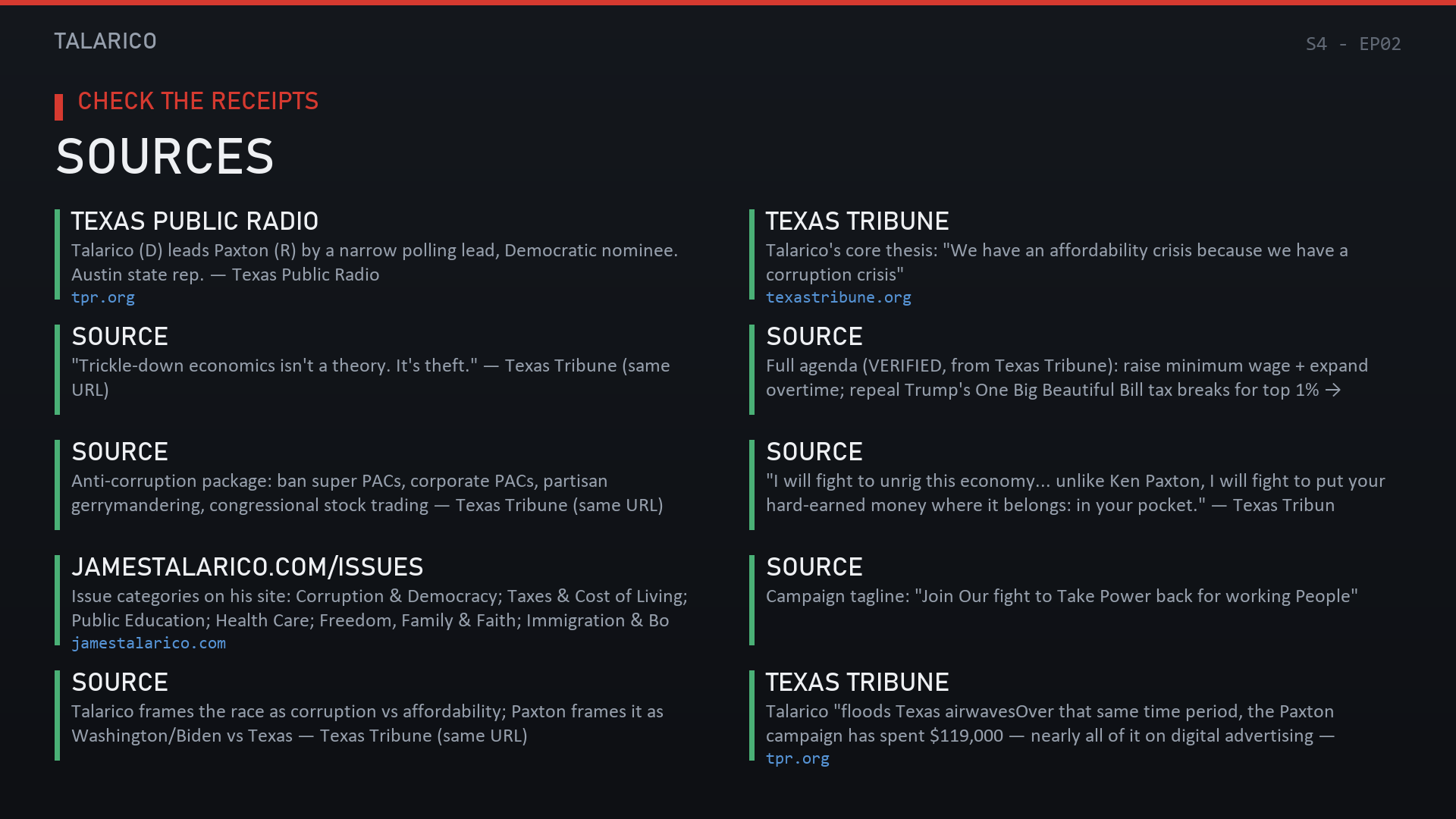
Talarico's answer, from the same Texas Tribune Aug 5 rollout read in Episode One: raise the minimum wage and expand overtime, funded by repealing the One Big Beautiful Bill's tax breaks for the top 1% and replacing them with a cost-of-living tax cut — a transfer, not new spending. The bumper sticker is doing real work here too: "Trickle-down economics isn't a theory. It's theft." "Theft" is a legal word, chosen with a lawyer's precision — a specific, falsifiable claim about a specific mechanism, not a mood.
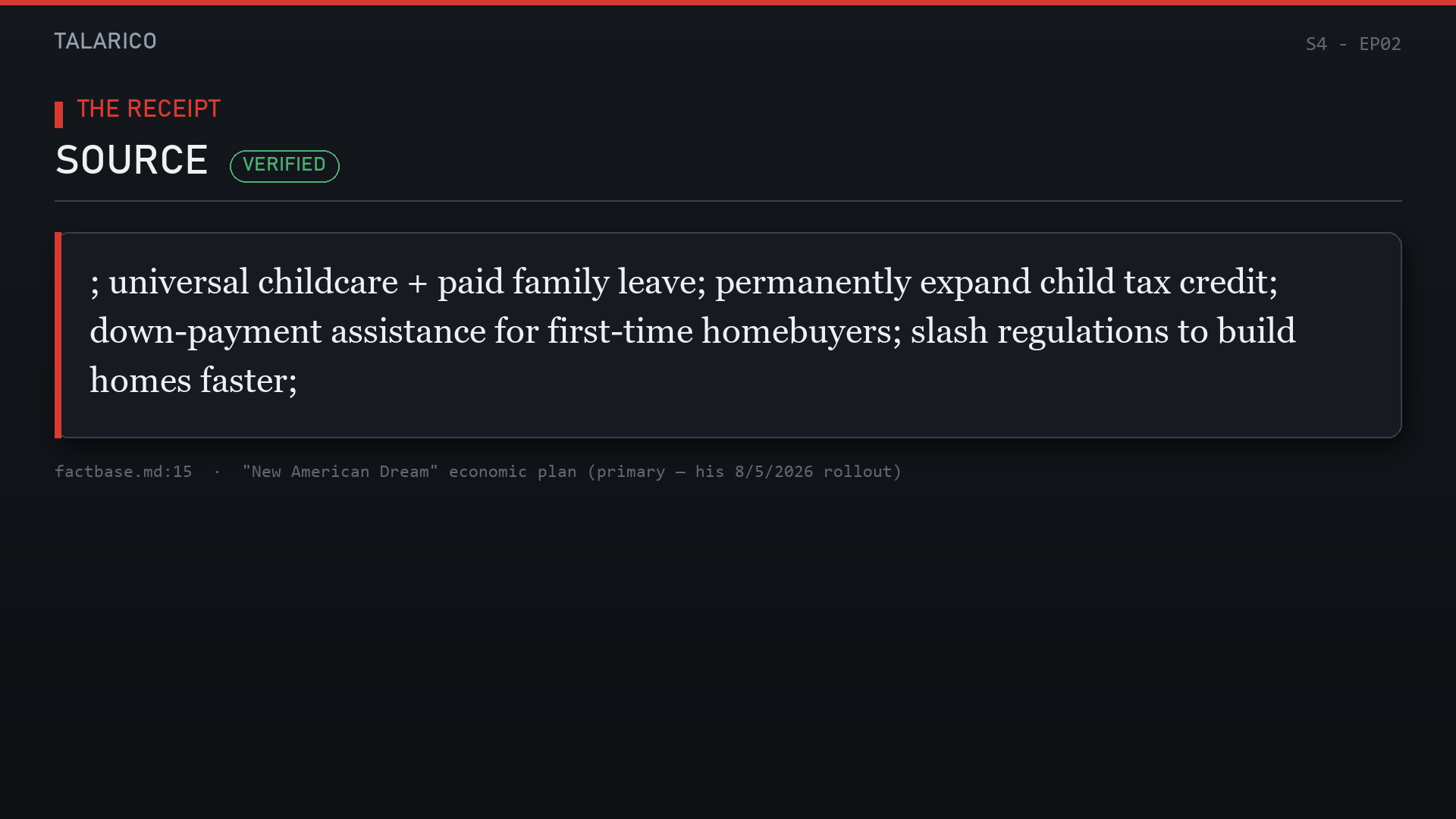
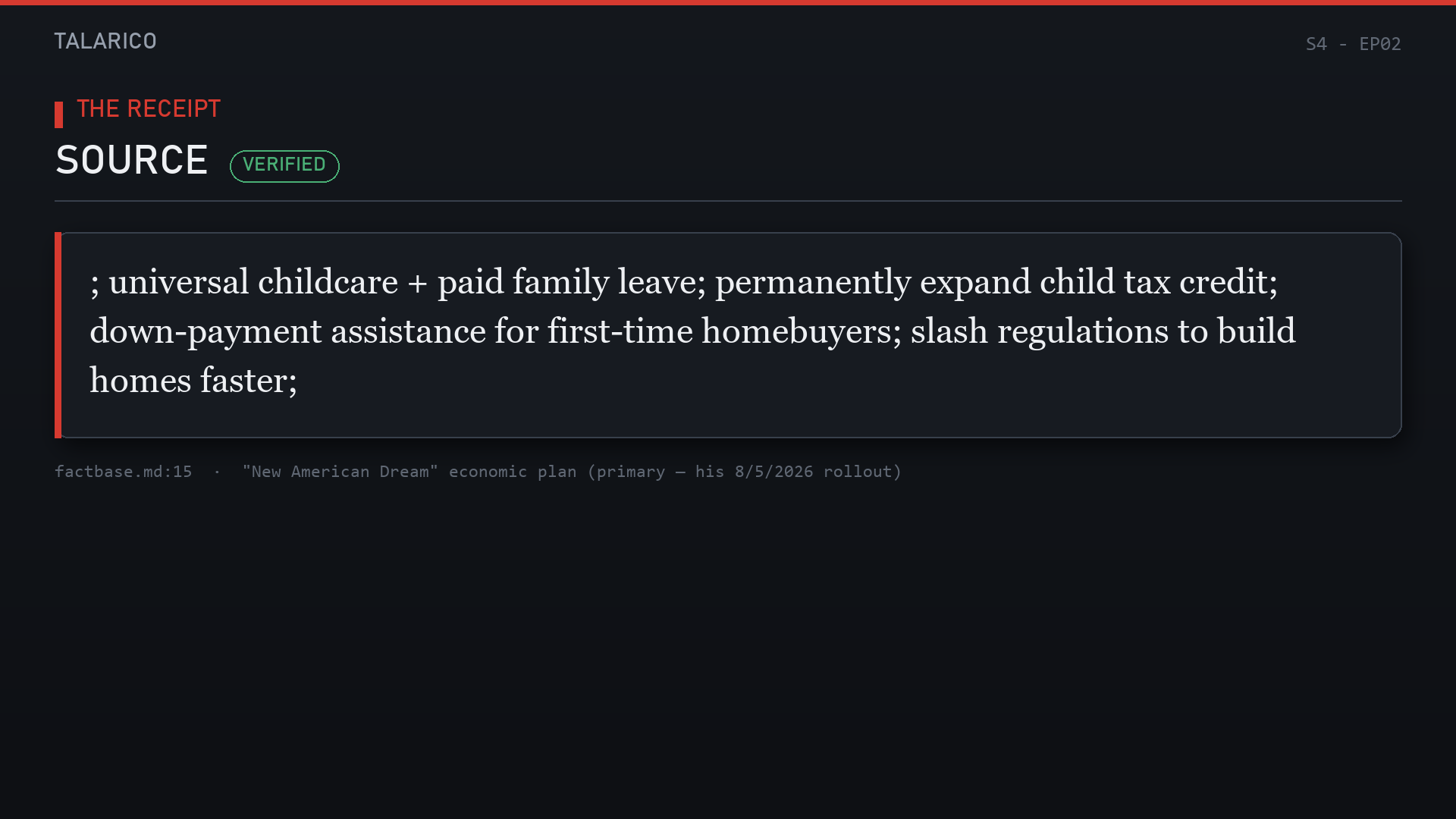
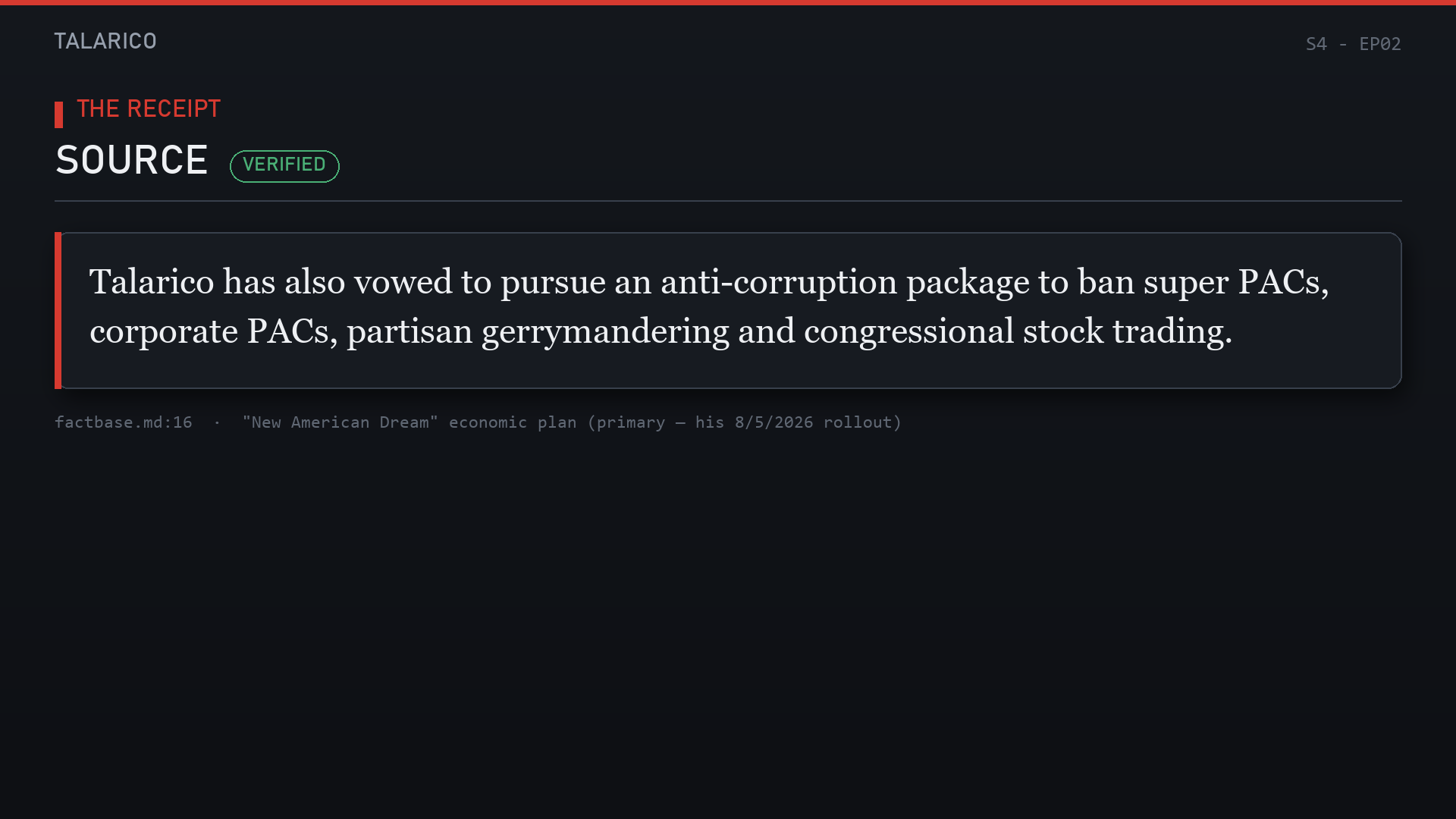
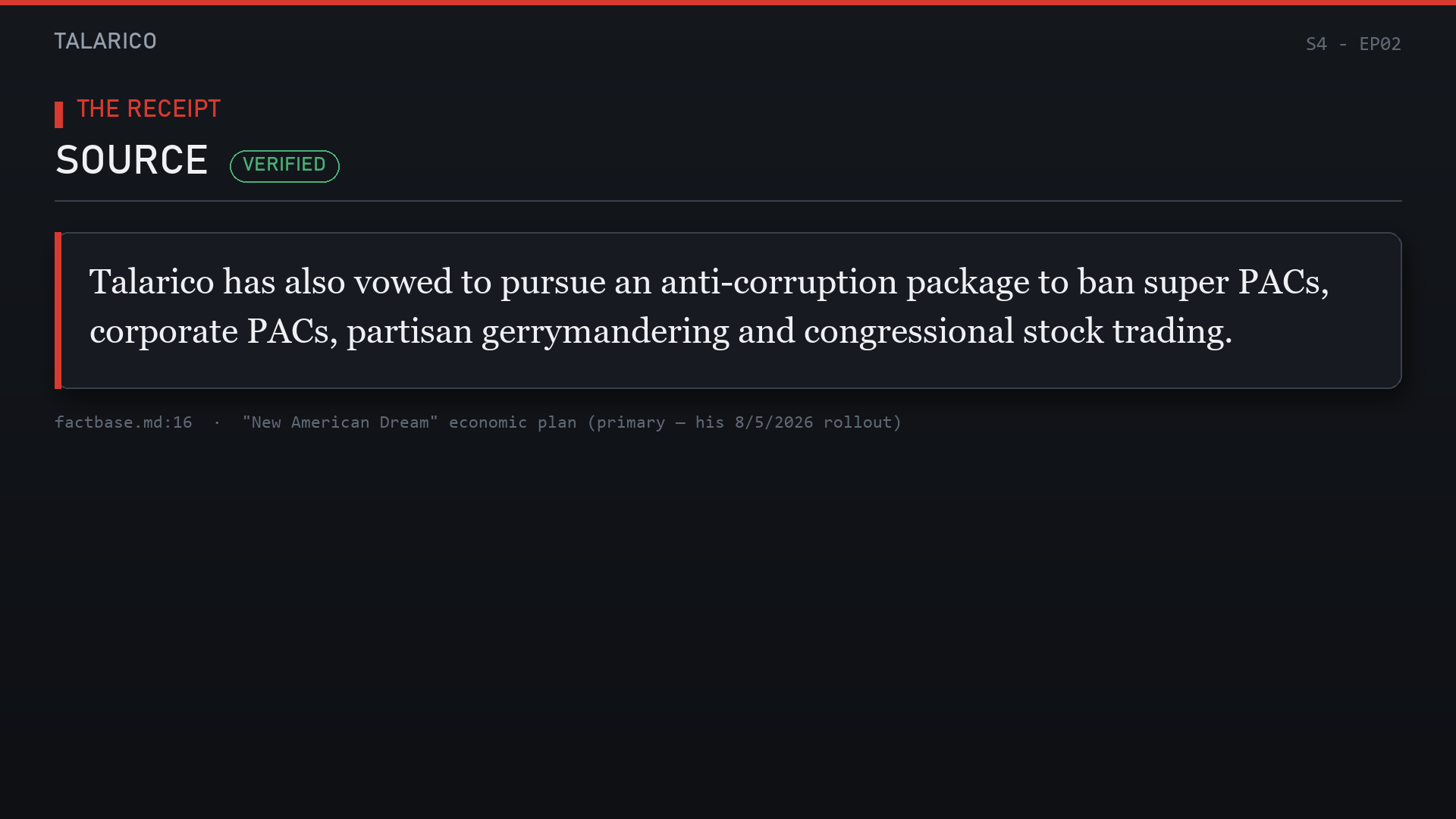
The mechanism Talarico says keeps the floor frozen is the same anti-corruption package from Episode One, verbatim from the Tribune: ban super PACs, corporate PACs, partisan gerrymandering and congressional stock trading. His chain: campaign money, then votes, then a wage floor that hasn't moved since 2009 — what he calls, on the record, "billionaire megadonors and their puppet politicians." Universal childcare, paid family leave, and a permanently expanded child tax credit round out the wage story — a raise is only worth what it buys, and childcare is one of the Living Wage Calculator's own cost buckets.
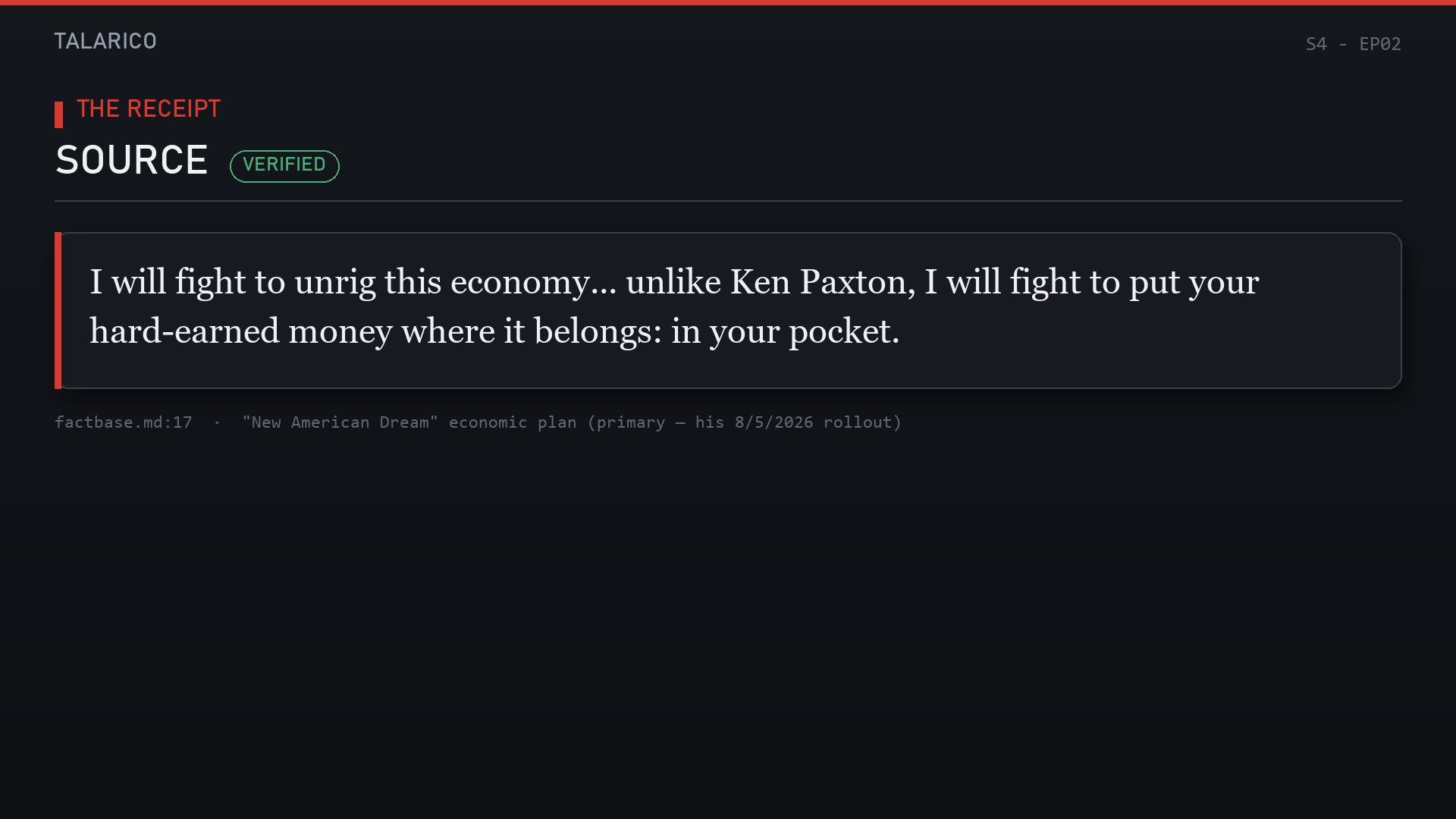
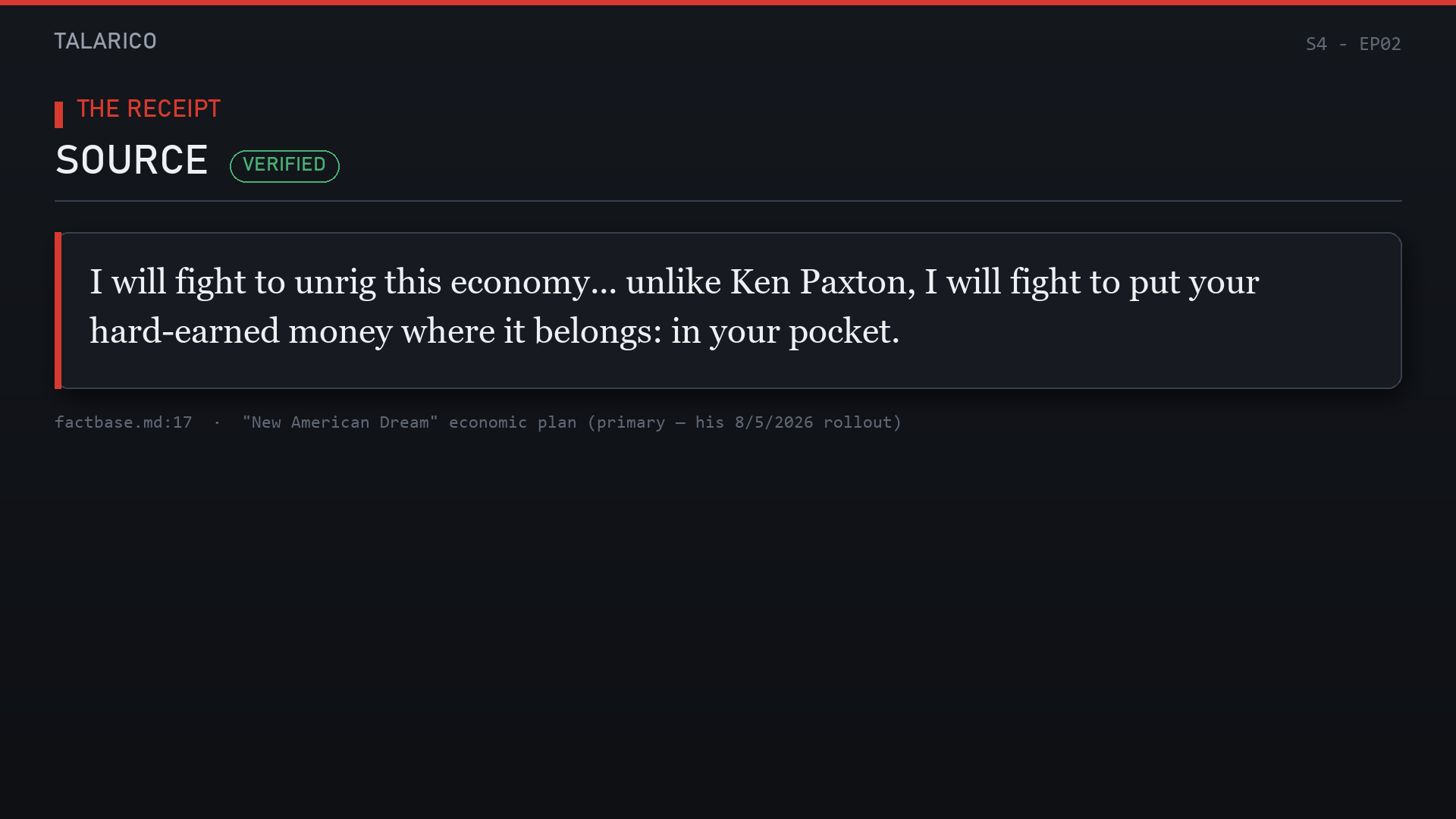
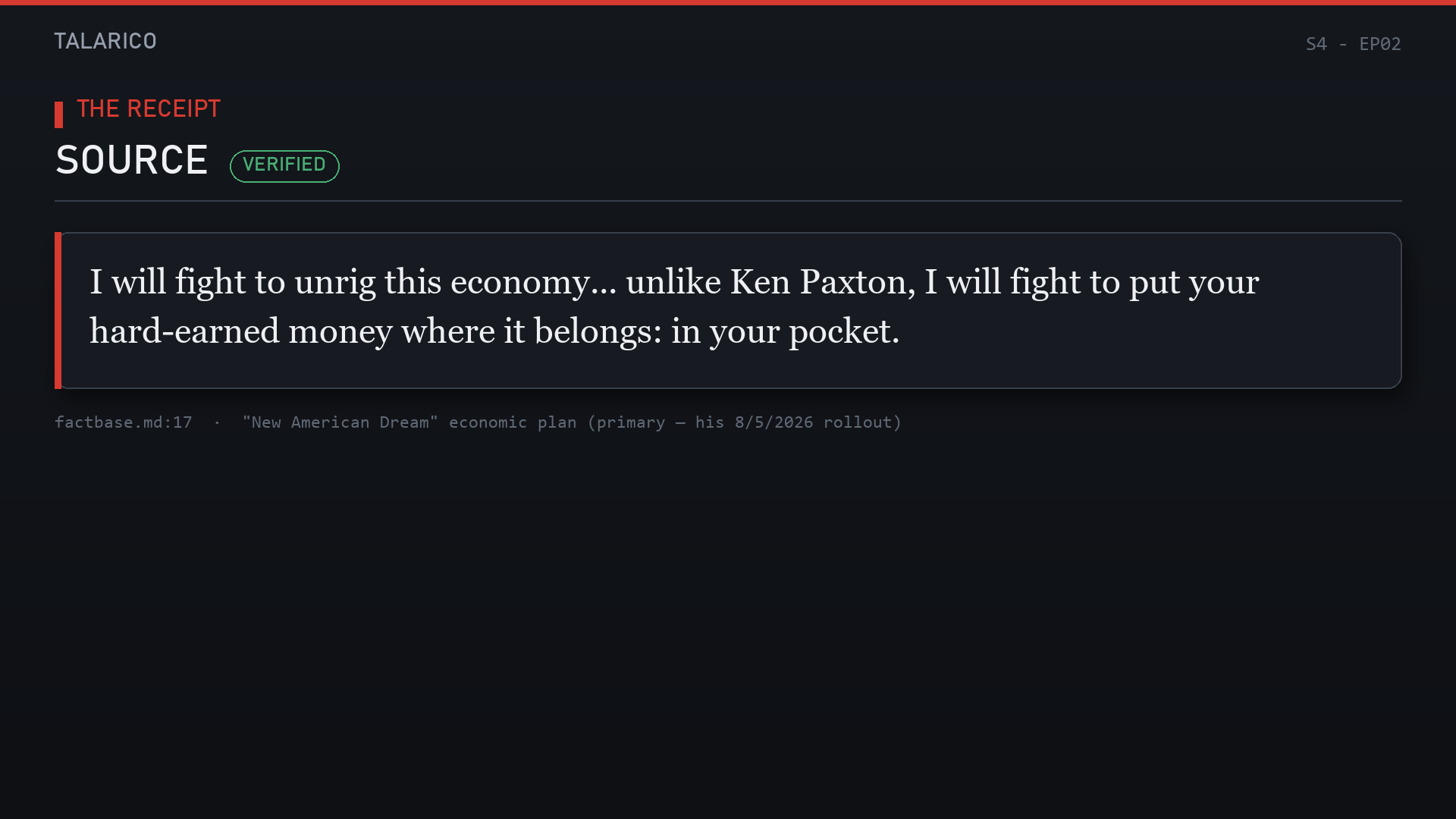
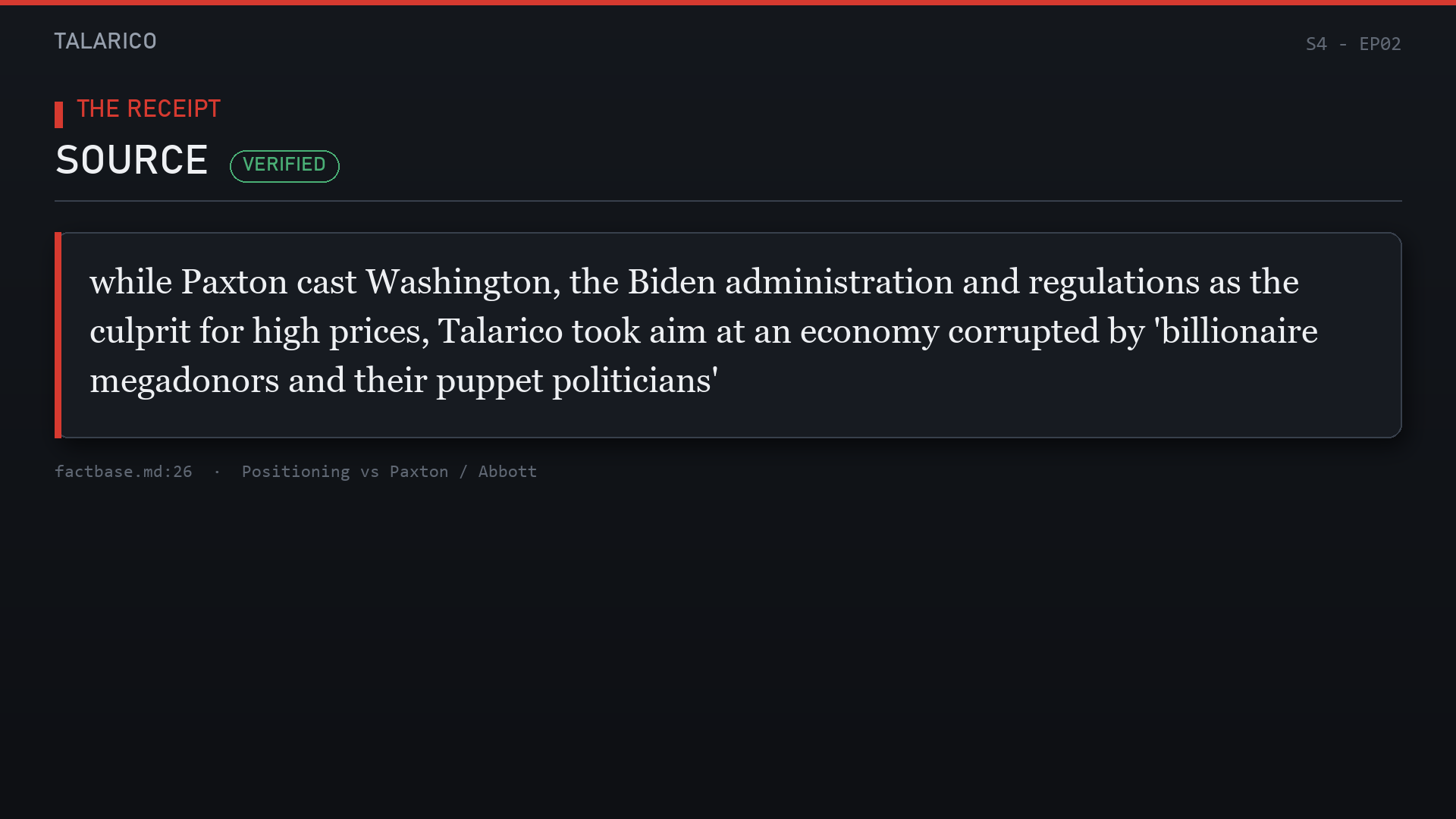
On the same Tribune record: while Paxton cast Washington, the Biden administration and regulations as the culprit for high prices, Talarico's story runs the other direction — the market is being steered by money, so the fix is taking the steering wheel back. Both stories agree government is upstream of the grocery bill. They disagree on who government works for.
Receipts: National Conference of State Legislatures · MIT Living Wage Calculator · Texas Tribune, Aug 5 2026 · Alaska Permanent Fund Corporation.
The steelman
Aired straight, and it's a genuinely strong case in three parts. Mandated wage floors can price out entry-level jobs — the classic, testable prediction. Alaska's citizen dividend proves nothing about a wage plan, since the Alaska Permanent Fund Corporation manages and invests Alaska's oil wealth — a resource windfall, not a template. And the anti-corruption list looks, to skeptics, like a power grab wearing ethics as a costume: every item on it happens to favor the party proposing it.
The rebuttal
Seventeen years of a frozen $7.25, against dozens of states and cities that raised their own floors since 2009, is the actual test of the jobs-catastrophe prediction — and the mass entry-job wipeout the theory predicted has not materialized in that record. Alaska's dividend is oil money, but that's exactly why it's cited: it proves citizen-dividend mechanics work administratively, independent of the funding source. And on the ethics point, the concession is real: every reform proposal in American history carries a partisan valence. That isn't evidence the ethics are fake — courts, auditors, and GAO studies are the neutral referees, and this series keeps citing them.
The floor is $7.25. Texas chose it by choosing nothing. Call the theory wrong if you want — don't call it a vibe.
Documents Used to Produce This Episode
Full production materials (internal — scripts, shot lists, raw renders) →